OPay Pauses Its IPO to Answer Regulators: What This Means for AI-Powered Fintech
One of the most closely watched financial technology companies backed by SoftBank has pressed pause on its plan to go public. OPay has halted its IPO so it can respond to a regulatory inquiry. That single sentence is short, but it carries a lot of weight, not just for the company, but for every business that has built its growth story on artificial intelligence and data.
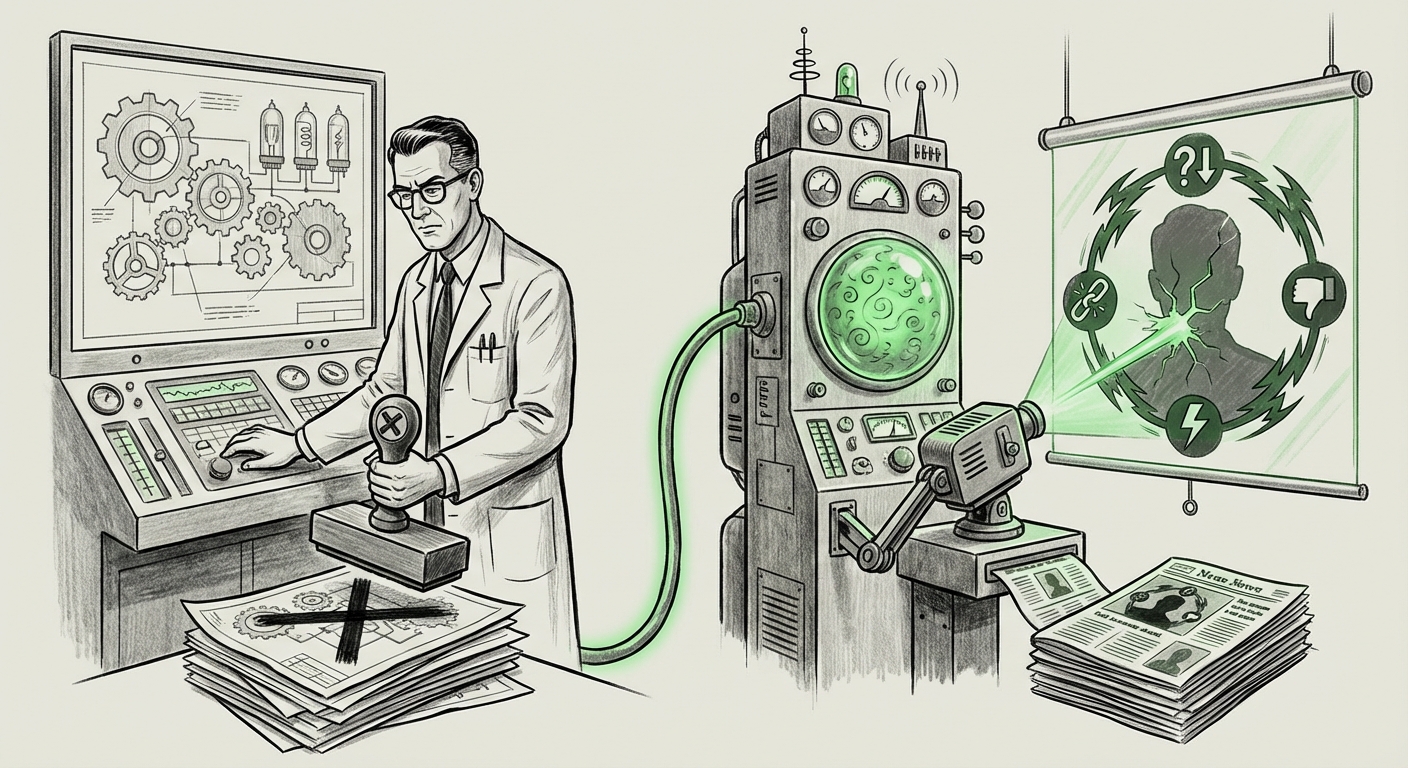
Here is why this matters beyond one company's balance sheet: the modern fintech playbook runs on AI. Machine learning scores loan applicants, flags fraud in milliseconds, verifies identities, and decides who gets credit and who does not. When a regulator asks questions ahead of a public listing, those are often the systems they want to understand. The answers determine whether a company is ready for public markets, and whether the AI that powers it is ready for prime time.
What Happened, in Plain Terms
OPay, a SoftBank-backed payments and financial services company, has put its planned initial public offering on hold. The reason given: the company needs to respond to a regulatory inquiry. Instead of pushing ahead with the listing process, leadership chose to slow down and engage with regulators first.
That is a meaningful choice. Companies preparing to go public face pressure from investors, bankers, and employees who hold stock options. Halting an IPO is expensive and reputationally risky. When a company does it anyway, it usually means the regulatory questions are serious enough that moving forward would be worse.
What we do not yet know, and what the market will be watching for, includes the specific regulator involved, the exact subject of the inquiry, the timeline for a response, and whether the listing resumes, gets restructured, or is shelved. Those gaps are precisely where the analysis gets interesting.
Why a Regulatory Pause Is Different in the AI Era
Ten years ago, a regulatory inquiry into a payments company would likely focus on licensing, capital reserves, customer fund handling, and anti-money-laundering controls. Those things still matter. But today, an audit of a modern fintech is also an audit of its algorithms.
That is the big shift. AI has moved from a back-office helper to the engine room. Consider what a company like OPay would rely on:
- Credit scoring models that decide who qualifies for a loan, often using phone usage, transaction history, and behavioral signals instead of traditional credit bureaus.
- Fraud detection that watches millions of transactions a second and freezes accounts it deems suspicious.
- Identity verification that uses facial recognition and document analysis to onboard customers in minutes.
- Customer support chatbots that handle complaints and disputes, sometimes without a human ever seeing the case.
- Marketing and pricing engines that decide which offers each user sees.
Each of these is a potential regulatory question. Is the credit model fair to customers in different regions or income brackets? Can the fraud system explain why it blocked someone's account? Does the face-matching system work equally well for all users? Can a human override an automated decision? These are not abstract ethics debates anymore. They are due-diligence items.
The Three Questions Regulators Ask About AI
Across markets, the same themes keep surfacing when supervisors look at AI-driven financial companies. Understanding them is useful for any business deploying automated decision-making.
1. Can you explain the decision?
Many high-performing machine learning models are hard to interpret. They find patterns humans would never spot. That is their strength and their weakness. If a regulator asks why a specific customer was denied credit, "the model said so" is not an acceptable answer. Firms increasingly need model documentation, feature logs, and plain-language explanations ready before they are asked.
2. Who is accountable?
Automation can blur responsibility. If a chatbot gives wrong information, or a fraud model wrongly locks an account, someone inside the company must own that outcome. Regulators want to see clear governance: named owners, escalation paths, and a human in the loop for high-stakes decisions.
3. Is the data fair and lawful?
AI systems are only as good as their inputs. Where does the training data come from? Was consent obtained? Are certain groups systematically disadvantaged? These questions grow sharper as companies scale into new markets with different privacy laws.
What the Pause Signals About IPO Readiness
Going public means opening your books, including your technology stack, to a much harsher light. Prospectuses now routinely describe AI systems, data sources, and model risks. Auditors dig into controls. Regulators in the listing jurisdiction want assurance that the business is compliant before public money enters the picture.
A regulatory inquiry in the middle of that process forces a company to do a hard internal review. In practice, that means taking a close look at:
- Model documentation and version histories
- Data governance and consent records
- Customer complaint patterns tied to automated decisions
- Fairness testing across customer segments
- Third-party vendors and the AI tools they supply
- Incident logs and how failures were resolved
Companies that have invested in this groundwork treat a regulatory inquiry as a checklist exercise. Companies that have not often find themselves rebuilding their compliance story from scratch, which is exactly the kind of delay that pushes a listing back by months or quarters.
Practical Implications for Businesses
You do not need to be raising billions to learn from this. Any organization using AI to make decisions about people, customers, borrowers, employees, is exposed to the same dynamics.
Build explainability before you need it
Keep records of how models were trained, what data they used, and how they behave over time. The cheapest time to document an AI system is while you are building it. The most expensive is during a regulatory review or an IPO roadshow.
Treat AI governance as a product feature
Companies that can show clean, auditable AI often find it becomes a selling point with partners, banks, and institutional investors. Governance is no longer just a cost center; it is a signal of maturity.
Keep humans in the loop on big decisions
For credit denials, account freezes, and other high-impact actions, an accessible human review path reduces both regulatory risk and customer anger. It also generates a paper trail that shows good faith.
Map your vendors
Most fintechs do not build every model themselves. They buy fraud tools, cloud AI services, and identity verification APIs. Regulators will ask about those too. Know what your partners' systems do and what they log.
Prepare for slower growth in exchange for durable growth
A paused IPO is a reminder that speed and compliance must travel together. Expanding into new markets with AI-driven products can outrun the local rulebook. The companies that win over the long term build compliance into the expansion plan, not after it.
What This Means for the Future of AI
The next phase of AI adoption in finance will not be defined by who has the smartest model. It will be defined by who can prove their model behaves. Regulators worldwide are staffing up on data science talent. Supervisory technology, software that audits other software, is becoming a real market of its own.
That creates a second wave of opportunity. Tools for model monitoring, bias testing, audit logging, and decision explanation are moving from niche to essential. Startups building this "governance layer" stand to benefit as every AI-heavy company discovers it needs one.
There is also a broader lesson for the AI industry as a whole. The hype cycle has convinced many leaders that deployment speed is everything. OPay's decision to stop and answer questions suggests the opposite: credibility compounds more slowly, but it lasts. An IPO delayed by a quarter is a setback. An IPO that collapses after listing because of undisclosed algorithmic risk is a catastrophe.
What to Watch Next
- The scope of the inquiry. Whether it touches only licensing and capital, or also data and model practices, will tell us how far AI oversight has spread into listing decisions.
- Timeline signals. A fast resolution suggests a narrow, fixable issue. A long silence suggests deeper structural work.
- Investor reaction. Watch whether SoftBank and other backers stay patient or reprice their expectations.
- Copycat caution. Other fintechs eyeing public markets may slow their own timelines and quietly upgrade their AI governance first.
- Regulatory follow-through. A single inquiry can become a template. If supervisors formalize AI expectations for fintechs, the whole sector will adapt.
The Bottom Line
OPay's decision to halt its IPO to respond to a regulatory inquiry is a case study in a new reality: AI has become central enough to a company's operations that it is now central to its regulatory risk. The companies that treat model transparency, data governance, and human oversight as core infrastructure, not afterthoughts, will move faster when it counts, because they will not have to stop and rebuild mid-journey.
For everyone else, the message is simple. Ask the hard questions about your AI now, while you control the timeline. If you wait for a regulator, an auditor, or an investor to ask them for you, the pause will not be yours to schedule.