Why a Good 'Why' Is Not Enough: The Discipline AI Leaders Need in 2026
Every AI project begins with a why. A reason. A purpose. Maybe it's to cut costs, improve customer service, or predict market trends. Having a why feels good. It gives teams a north star. But here's the hard truth: a good why is not enough. Not even close. In 2026, the difference between AI winners and losers is not the quality of their why. It's whether they treat why as a discipline, a daily practice, not a one-time statement.
This shift is the next big trend in AI. Companies are moving past the hype of purpose statements and into the messy work of making purpose operational. The ones that succeed will be those that build a discipline around their why. The ones that fail will keep writing beautiful mission statements while their AI projects stall.
The Why Trap: How Good Intentions Fail in AI
It's easy to fall into the why trap. A leadership team gets excited about AI. They hold a workshop. They craft a why: "We will use AI to make healthcare more accessible." Everyone nods. The statement goes on the website. Then what?
Months later, the AI pilot is stuck. Data is messy. Teams disagree on priorities. No one knows how to measure success. The why was good. But it was never turned into action. This is the why trap: confusing a statement of purpose with a plan for progress.
In AI, the trap is especially dangerous. AI projects are complex. They need clean data, skilled people, and clear governance. A why alone cannot supply any of that. Without discipline, the why becomes a slogan. And slogans don't ship products.
Many organizations learned this the hard way. They invested in AI tools and talent but skipped the hard work of translating purpose into processes. The result? Lots of experiments, few real wins. The why was there. The discipline was not.
Why as a Discipline: Turning Purpose into Practice
So what does it mean to treat why as a discipline? Think of it like exercise. You can't get fit by reading about running. You have to run. You have to do it regularly, track your progress, and adjust. The same goes for why.
A disciplined why is revisited often. It's broken down into concrete goals. It's measured with metrics. It's discussed in every project review. It's not a poster on the wall. It's a tool that guides decisions.
For example, a team that wants to "use AI to improve customer satisfaction" must ask: What does satisfaction mean? How will we measure it? Which AI use cases will move the needle? Who owns this? What trade-offs are we willing to make? These questions turn a vague why into a disciplined practice.
Discipline also means accountability. If the why says "reduce bias in hiring," then every AI model must be tested for bias. If it fails, there are consequences. The why is not optional. It's built into the operating rhythm of the team.
Why a Good Why Is Not Enough: The Missing Operating System
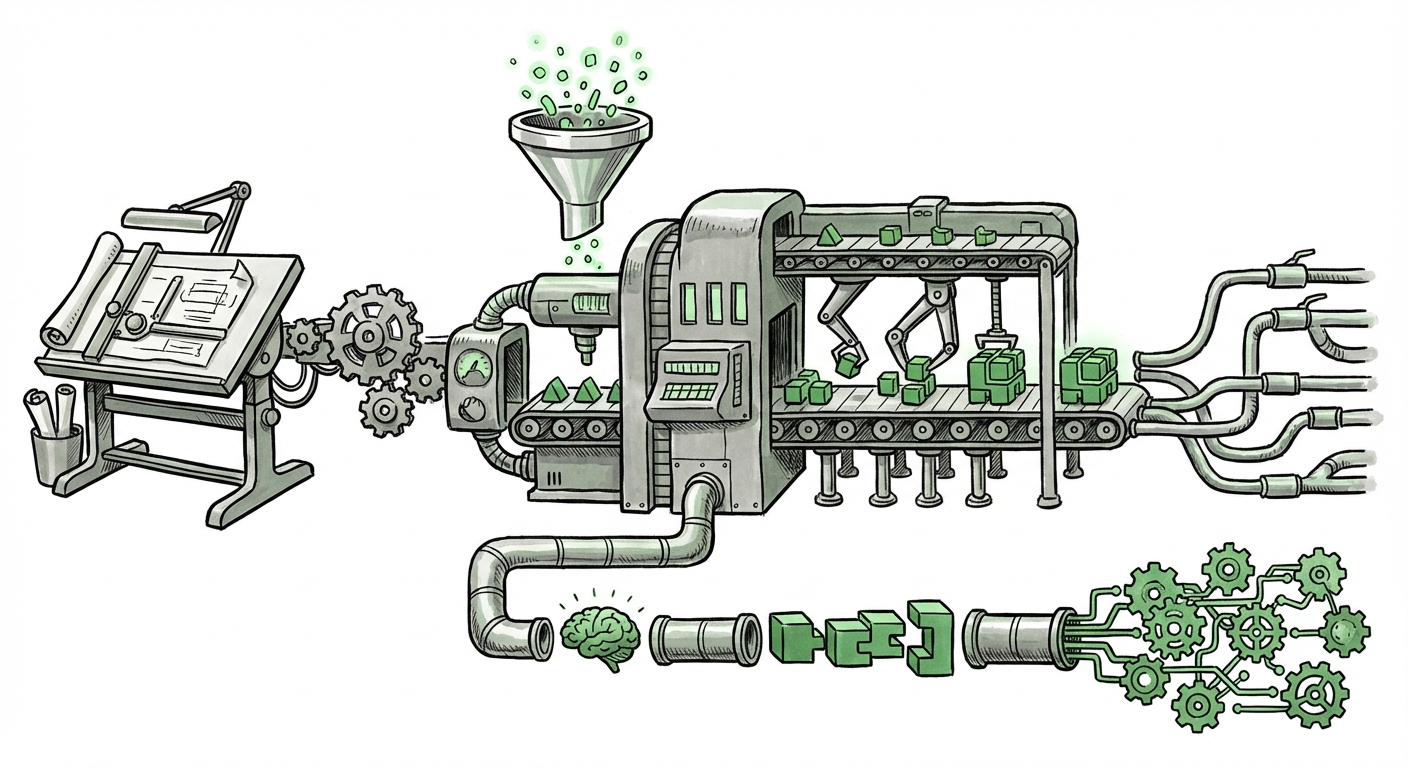
Even a disciplined why needs support. You can't just tell people to be disciplined. You need systems. You need data infrastructure. You need governance. You need the right talent. In short, you need an operating system for AI.
Think of a why as the destination. Discipline is the engine. But you still need wheels, fuel, and a steering wheel. Without these, the engine runs but the car doesn't move.
Many companies have a why and even some discipline. But they lack the operating system. They don't have clean data. They don't have clear decision rights. They don't have a way to scale successful pilots. So their why remains a dream.
The future of AI belongs to organizations that build all three: a clear why, the discipline to act on it, and the operating system to support it. This is the new competitive advantage. It's not about having the best AI model. It's about having the best alignment between purpose, practice, and infrastructure.
What This Means for the Future of AI
This shift has big implications. First, AI will become more outcome-focused. Leaders will care less about flashy demos and more about measurable impact. The why will be tied to numbers, not narratives.
Second, ethical AI will move from principles to practice. Companies will need to prove that their why includes safety, fairness, and transparency. Regulators and customers will demand evidence, not promises. A disciplined why is the only way to deliver that evidence.
Third, AI teams will become more cross-functional. You can't discipline a why in a silo. You need engineers, data scientists, business leaders, and ethicists working together. The why becomes a shared language that breaks down barriers.
Fourth, the pace of AI adoption will depend on how well organizations master this discipline. Those that do will scale AI faster and more safely. Those that don't will get stuck in pilot purgatory.
Practical Implications for Businesses
What should business leaders do right now? Here are some practical steps.
- Make your why testable. Turn your purpose statement into a set of measurable goals. Instead of "improve customer experience," say "reduce average response time by 30%."
- Create a why review rhythm. Add a standing agenda item to every AI project meeting: "How does this work support our why? What evidence do we have?"
- Assign a why owner. Give someone the job of keeping the why alive. This person ensures decisions are checked against purpose.
- Invest in data and governance early. Don't wait until after the pilot. Clean data and clear rules are the foundation of disciplined AI.
- Celebrate disciplined failures. When a project fails but follows the why, treat it as learning. This encourages teams to take smart risks.
These steps are not glamorous. But they work. They turn a good why into a great outcome.
Societal Implications
The stakes go beyond business. AI is shaping healthcare, education, policing, and more. If organizations treat why as a one-time statement, the results could be harmful. Biased algorithms, privacy violations, and opaque decisions are all symptoms of why without discipline.
Society needs AI that is not just smart but aligned with human values. That requires discipline. It requires companies to ask hard questions, measure impact, and change course when needed. A good why is a start. But only a disciplined why can build trust.
Policymakers are watching. New rules may require companies to document their AI purpose and prove they are following it. The organizations that already treat why as a discipline will be ready. The rest will scramble.
Actionable Insights
Here's how to put this into action today.
- Start small. Pick one AI project and apply the discipline of why. Measure the difference. Then scale.
- Use simple language. Your why should be understandable by everyone, not just executives. If a new hire can't explain it, it's too complex.
- Build feedback loops. Create ways for frontline teams to challenge the why. They often see problems that leaders miss.
- Connect why to budget. If a project doesn't support the why, defund it. Put resources behind work that does.
- Be patient. Discipline takes time. Don't expect results overnight. Keep showing up.
These insights are not magic. They are habits. And habits are the heart of discipline.
Conclusion: The Future Belongs to the Disciplined
In 2026, AI is no longer a novelty. It's a core part of how organizations operate. The early adopters have moved past the wow phase. Now comes the hard part: making AI work reliably, ethically, and at scale.
A good why is a starting point. But it's not a strategy. It's not a plan. It's not a guarantee. The future of AI will be shaped by those who treat why as a daily discipline, who measure it, review it, and live it. That is the real competitive edge.
So the next time you craft a why statement, ask yourself: Is this a poster or a practice? If it's a poster, take it down. If it's a practice, get to work. Because a good why is not enough. A disciplined why changes everything.