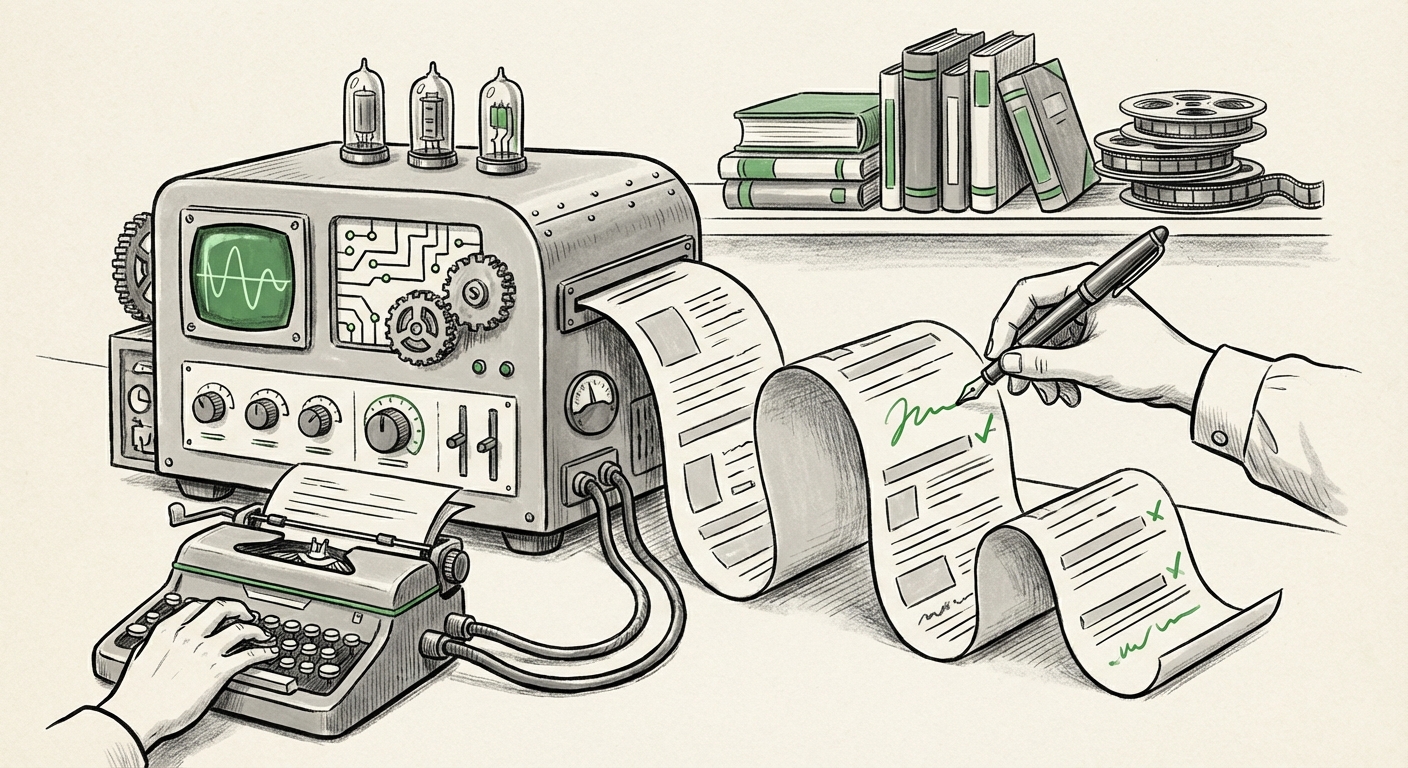
Teaching Students to Ask Better Questions: The Skill That Decides Who Wins in the AI Era
For most of the last century, school rewarded a very specific talent: getting the right answer, fast. The student who could recall the date, solve the equation, or name the formula first got the gold star. That system made sense when information was scarce and the person holding the answer held the power.
That world is gone. With artificial intelligence systems now able to produce a fluent, confident answer to almost any question in seconds, the value of simply knowing things has collapsed. What has not collapsed, and in fact has become far more valuable, is the ability to ask a good question in the first place.
This is the core idea behind a growing push to teach students to think and learn through questions rather than through answers. It sounds like a small change in classroom style. It is not. It is a fundamental rethinking of what education is for, and it tells us a great deal about how AI will actually be used in the years ahead.
The End of the Answer Economy
Every technology shift changes which human skills are rare and which are cheap. Calculators made long division less valuable but made estimation and problem-setup more valuable. Search engines made fact recall less valuable but made source judgment more valuable. AI is the biggest version of that shift yet.
When an AI system can write an essay, explain a concept at any reading level, generate code, or summarize a paper, the bottleneck moves. The bottleneck is no longer producing information. It is deciding what information is worth producing, and then judging whether what came back is any good.
Both of those activities depend on questions. A vague question gets a vague answer. A leading question gets a flattering, misleading answer. A shallow question gets a shallow answer dressed up in impressive language. The quality of the output is almost entirely determined by the quality of the input, and the human is the one holding the input.
Why Questions Beat Answers in an AI World
There are three reasons question-asking has become the critical skill, and each one has direct consequences for how AI products and institutions will be built.
1. AI is a mirror, not an oracle
AI systems respond to direction. They do not know what you actually need. If you ask a fuzzy question, you get a fuzzy answer that sounds authoritative. Teaching students to refine, rephrase, and probe is essentially teaching them to steer a powerful tool. It is the difference between a passenger and a driver.
2. Good questions expose weak answers
One of the most useful habits a person can develop around AI is the follow-up question: How do you know that? What would change your mind? Where is the evidence? What did you leave out? These questions turn a one-shot answer into a conversation, and conversations are where AI is genuinely useful. They also make it much harder to be fooled by a confident-sounding wrong answer.
3. Questions drive original thinking
AI can recombine what it has seen. It does not sit awake at night wondering why something does not add up. That act of noticing a gap, the "wait, why does that happen?" moment, is where new ideas come from. A generation trained to ask rather than only to answer is a generation that can still produce genuinely new work, with AI as a partner rather than a replacement.
What Question-Led Learning Looks Like in Practice
The shift is not about banning AI from classrooms. That would be like banning calculators in a physics class, possible, but beside the point. The practical approaches that are emerging share a common pattern: the AI is used as something to think with, not something to copy from.
- Student questions become the curriculum. Instead of handing students a list of things to memorize, teachers start with what students are curious about and build the investigation from there.
- AI is prompted to ask, not tell. A well-designed tutoring setup can respond to a student's question with a better question, nudging them toward the reasoning themselves instead of handing over the conclusion.
- Answers are treated as drafts to be interrogated. Students are asked to generate an AI answer and then systematically poke holes in it. This builds judgment, which is the skill that actually transfers to real work.
- Failed questions are visible. When the class can see that a weak prompt produced a weak result, the lesson lands. The failure is the teaching moment, not an embarrassment.
- Reflection replaces recall. Assessment shifts toward how well a student framed a problem, tested an idea, and revised their thinking after seeing evidence.
None of this requires exotic technology. It requires a change in what gets rewarded. That is harder than buying software, and slower, but it is also the part that actually matters.
The Risk: Thinking Made Optional
There is an obvious danger here, and it deserves to be stated plainly. AI makes it extremely easy to skip the thinking. A student can get a polished answer to anything without ever forming a question, evaluating evidence, or sitting with confusion long enough to learn something.
If that becomes the default, we will get people who can produce output but cannot judge it. That is a genuinely dangerous combination in a world where AI systems are increasingly trusted to make or support decisions in medicine, law, finance, and engineering. The person who cannot tell a good answer from a bad one is not in control of the tool, they are a conduit for it.
The counterweight is not less AI. It is more deliberate practice at the parts AI does not do: framing, questioning, verifying, and deciding. Schools that treat these as core skills rather than nice-to-haves are effectively building the workforce that will be able to supervise AI rather than simply operate it.
What This Means for Businesses
The classroom shift has a direct read-across to how companies will hire, train, and build in the coming years.
Hiring changes first
If AI can produce a competent first draft of almost any deliverable, then hiring for the ability to produce that draft is hiring for a commodity. The differentiator becomes whether a candidate can define a problem worth solving and judge whether a proposed solution holds up. Interview processes built entirely around "can you do this task?" will increasingly fail to separate strong candidates from people who are simply good at prompting.
Training becomes about calibration
The most valuable internal training in an AI-heavy workplace is not tool tutorials. It is calibration: teaching people what these systems are good at, where they reliably fail, and how to structure questions that surface the difference. Teams that learn to interrogate AI output catch errors earlier and ship more reliable work. Teams that don't inherit every mistake the model makes, at scale.
Product design shifts toward dialogue
Where this gets really interesting is in the products themselves. If the core user skill is question-asking, then the best AI products will be the ones that help people ask better questions. That means interfaces that suggest ways to sharpen a vague request, that show their reasoning so it can be challenged, that flag uncertainty instead of hiding it, and that ask a clarifying question rather than guessing when a request is ambiguous.
Products designed purely to deliver answers will feel fast at first and frustrating later. Products designed to hold up a conversation will earn trust, and trust is what turns a tool into something a business actually depends on.
The New Skills Stack
Pulling this together, a picture emerges of the capabilities that will matter most. They are not technical in the narrow sense, most do not require writing code, which is precisely why they are broadly valuable.
- Question framing: turning a fuzzy need into a clear, answerable question.
- Follow-up discipline: pushing past the first answer, asking for evidence and reasoning.
- Verification: checking claims against independent sources rather than trusting fluency.
- Judgment: knowing when an answer is good enough and when it is not.
- Curiosity that survives being wrong: treating confusion as information rather than failure.
These are old human skills. What has changed is their price. They used to be a nice bonus on top of factual knowledge. Now they are the load-bearing part.
The Road Ahead
The most likely near-term future is not one where AI replaces thinking, nor one where schools and workplaces successfully keep AI out. It is one where AI becomes the default first stop for any question, and human value concentrates in the questions asked before that stop and the judgment applied after it.
That means the education debate is not really an education debate. It is a debate about what kind of workforce, and what kind of society, we are building. A system that trains people to ask good questions produces adults who can direct powerful tools with intent. A system that trains people to accept the first fluent answer produces adults who can be steered by them.
The encouraging part is that question-asking is teachable. It is not a personality trait you either have or you don't. It is a habit, and habits can be built, in a classroom, in a training program, or in the design of the software people use every day. The organizations and schools that build that habit early will have a real advantage, because they will be the ones who can actually use AI well instead of just using it a lot.