Binance's $6.3 Billion Hack: What It Means for AI Security and the Future of Digital Finance
Some numbers are so large they stop being numbers and start being a warning. The breach at Binance that put $6.3 billion on the line is one of those. It is not just the biggest story in crypto this year, it is a stress test for every assumption we have about how digital money, machine learning, and automated security work together.
The most important question is not only how it happened. It is what happens next now that attackers, defenders, and regulators all know this scale is possible. And a huge part of that answer runs straight through artificial intelligence, the tool that failed to stop it, the tool that may have helped enable it, and the tool that will almost certainly define the response.
The Scale Is the Story
Security teams are used to thinking in thresholds. A breach that costs millions is painful. A breach that costs billions is a different category of event, one that reshapes insurance markets, regulatory attention, boardroom priorities, and public trust all at once.
At $6.3 billion, the Binance incident sits firmly in that second category. Numbers at this level do not just describe a loss. They describe a shift in what attackers believe is achievable. Once a ceiling is broken, it stops being a ceiling. Copycat groups, from sophisticated state-linked crews to smaller criminal outfits, now have a new benchmark to aim at.
That is the first AI-relevant takeaway, and it has nothing to do with code. Adversaries learn from visible wins. The same way large language models improve by ingesting huge amounts of data, criminal ecosystems improve by ingesting huge amounts of evidence about what works.
Why AI Was Always Going to Be Part of This Story
Crypto exchanges are, at their core, machines that move value at incredible speed across many systems at once. Humans cannot watch that traffic. Nobody can manually review millions of transactions, logins, API calls, and wallet movements per hour. So the industry leans on automation, and increasingly, on machine learning models that flag anomalies, score risk, and block suspicious behavior in milliseconds.
That is exactly the environment where AI creates both enormous leverage and enormous blind spots.
The defender's dilemma
AI-based fraud detection is trained on patterns. It gets better at catching what it has seen before. But a determined attacker does not repeat old patterns, they probe for the edges of the model. They test small amounts, learn what triggers an alert, and adjust. In security language this is called adversarial behavior. In AI language it is called data drift, or worse, model evasion.
A $6.3 billion event is a strong signal that somewhere in the chain, automated defenses either did not see the pattern, saw it too late, or saw it and were overruled by workflows designed for speed rather than caution.
The attacker's accelerator
AI has lowered the cost of attack across the board. It writes phishing emails with perfect grammar. It clones voices for social engineering calls. It scans open-source code for weaknesses faster than any human team. It lets small groups operate with the reach of large ones.
None of that requires a genius. It requires a subscription. When the cost of a sophisticated attack falls, the number of attacks rises, and the pool of targets that can be hit at scale widens.
The Machine-Speed Problem
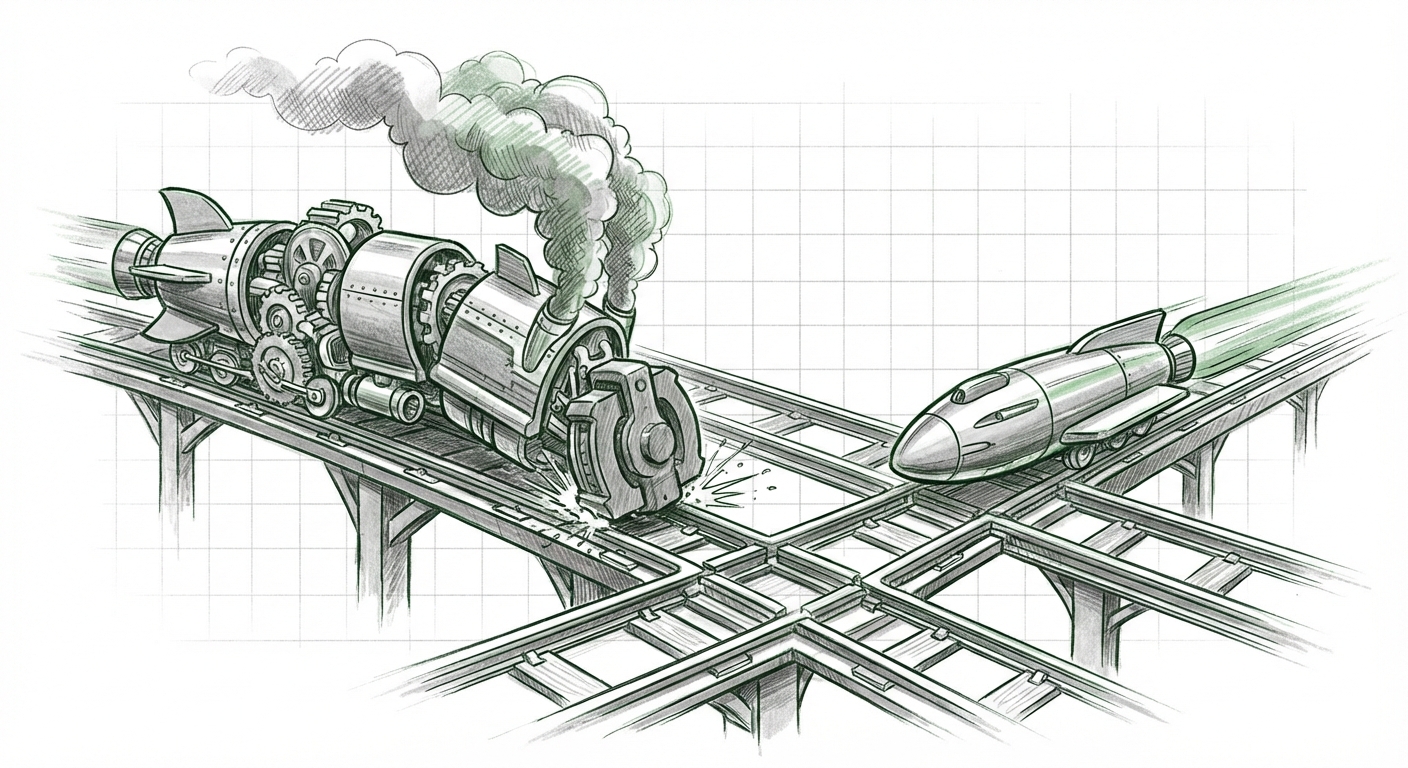
Here is the uncomfortable truth about modern finance: the attackers are already operating at machine speed, and most organizations still respond at human speed.
A transaction can move in milliseconds. A human analyst needs minutes at best. In a $6.3 billion breach, those milliseconds are the whole game. By the time a person is in the loop, the money is already somewhere else.
This is where agentic AI, systems that can take actions, not just give advice, becomes unavoidable. The future of defense is not a dashboard with a red alert. It is a system that can freeze a wallet, revoke a key, throttle an API, and open an incident record before a human has finished reading the alert.
But giving software the power to move billions also creates a terrifying new risk: what happens when the defender's AI is wrong? Or when it gets manipulated? Or when it is the target itself?
The New Attack Surface: The AI Itself
Every company rushing to bolt AI onto its security stack is also adding a target. Consider what attackers can now go after:
- The model: Poisoning training data so a fraud detector quietly stops flagging a certain pattern.
- The prompt: Tricking a customer-support or compliance assistant into revealing information or approving an action it should refuse.
- The agent: Stealing credentials or tool access that let an automated system act on the attacker's behalf, with all the trust the system already has.
- The humans around it: Using deepfakes and synthetic voices to convince staff that a machine-approved request is legitimate.
The pattern is consistent: AI does not remove the need for trust. It moves trust to new places, model pipelines, vendor APIs, permission settings, where few organizations have strong controls.
What This Means for the Future of AI in Finance
A breach of this size will accelerate several trends that were already forming.
1. AI security becomes a board-level issue
Boards that once asked "what is our AI strategy?" will start asking "what happens if our AI is wrong, or if someone turns it against us?" The answer will need to be documented, tested, and insured.
2. Machine-speed defense becomes table stakes
Manual review of alerts is already unsustainable. Expect investment to shift toward automated containment, systems that can act first and explain later, with strict limits on what they are allowed to touch.
3. Human-in-the-loop becomes a design choice, not a slogan
The useful question is no longer "is there a human in the loop?" It is "which decisions require one, and how fast can that human realistically respond?" For a $50 transfer, no human. For a $50 million movement, absolutely.
4. Proof and transparency become competitive advantages
After a loss of this scale, trust is the scarcest asset in crypto. Exchanges that can show real-time, auditable proof of reserves and independently verified security controls will separate themselves from those that cannot.
5. Regulation moves faster than usual
Lawmakers rarely need a second invitation after a headline like this. Expect pressure on custody rules, incident reporting timelines, and mandatory security standards, likely with explicit requirements around automated monitoring.
Actionable Steps for Businesses Right Now
You do not need to run a crypto exchange to learn from this. The same lessons apply to any organization using AI to protect money, data, or access.
- Map your AI's blast radius. List every automated system that can move money, grant access, or approve a request. Then ask what the worst-case outcome is if that system is fooled.
- Set hard limits. Give automated systems spending caps, rate limits, and required second approvals above a threshold. This is the single cheapest control available.
- Test your models like attackers. Run regular adversarial exercises against fraud detection and identity systems. If you are not trying to break them, someone else is.
- Secure the pipeline, not just the model. Training data, prompts, API keys, and tool permissions are all part of the attack surface.
- Rehearse the incident. Practice the first fifteen minutes of a machine-speed breach. Who gets called? Who can freeze what? How fast?
- Verify with humans at the right moments. Deepfake-aware verification, callbacks on known numbers, code words, out-of-band confirmation, is still remarkably effective.
- Log everything an agent does. If an automated system takes an action, you need to be able to reconstruct exactly why, with the inputs it saw.
The Bigger Picture: Trust at Machine Speed
The deeper lesson of the Binance breach is not really about crypto. It is about a world where software increasingly makes decisions on our behalf, at speeds we cannot match, with consequences we cannot fully predict.
AI will make finance faster, cheaper, and more accessible. It will also make failures faster and larger. The organizations that thrive will not be the ones with the most automation. They will be the ones that paired automation with clear limits, real accountability, and a genuine willingness to slow down at the moments that matter most.
A $6.3 billion loss is a terrible way to learn that lesson. But it is also a very clear one, and the industry has no excuse not to hear it.