Qwen3-8B Agent Acceleration on Intel Core Ultra: How Depth-Pruned Draft Models Bring AI Agents to Your PC
AI agents are moving closer to everyday computers. A new development shows how a powerful 8-billion-parameter model called Qwen3-8B can run faster as an agent on Intel Core Ultra processors by using depth-pruned draft models. This matters because it points to a future where AI helpers live on your laptop, phone, or desktop instead of only in distant data centers. That shift could change how people work, how businesses build products, and how society thinks about privacy and access to AI.
This article breaks down what this progress means for the future of AI. We will look at the technology behind the headline, why agent workloads are different, what Intel Core Ultra brings to the table, and how companies and regular people can prepare. The goal is to make the topic clear for both technical teams and business leaders, without getting lost in jargon.
The Big Shift: AI Is Moving From the Cloud to Your Device
For the past few years, most advanced AI has run in the cloud. You type a question, it travels to a server farm, a large model thinks, and the answer comes back. This works well, but it has limits. It needs an internet connection. It adds delay. It can cost a lot at scale. And it sends your data to someone else's computer.
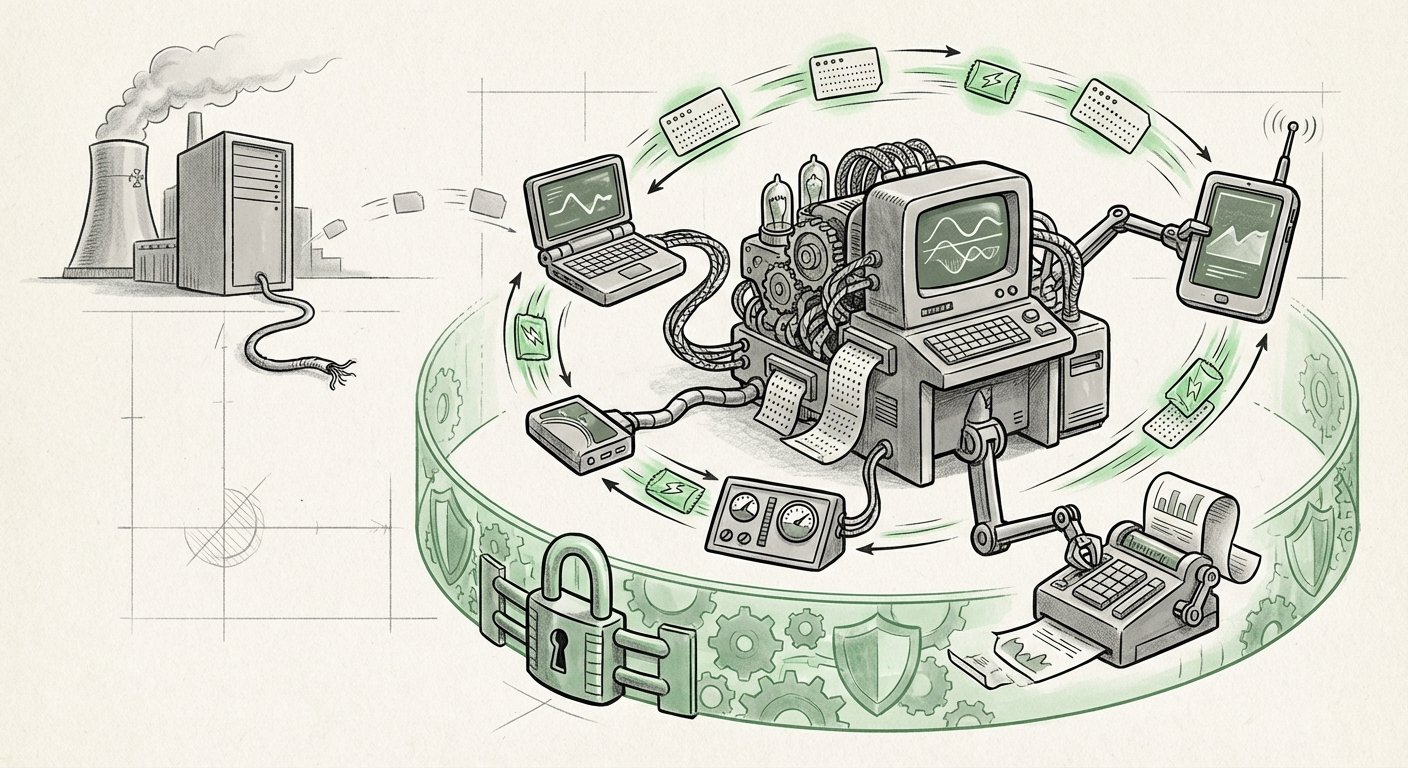
Now the industry is pushing toward local AI. Smaller, efficient models run directly on devices. Your laptop can answer questions, summarize documents, or control apps without sending everything to the cloud. This is sometimes called edge AI or on-device AI. The Qwen3-8B work on Intel Core Ultra fits squarely in this trend. It shows that a capable 8B model can be accelerated on PC-class hardware for agent tasks.
Why does 8B matter? An 8-billion-parameter model is small enough to fit on a modern PC but large enough to handle useful work. It is a sweet spot. Bigger models are more capable but harder to run locally. Smaller models are faster but often less reliable. Qwen3-8B sits in the middle, making it a practical choice for local agents.
What Are Depth-Pruned Draft Models?
To understand the acceleration, you need to know two ideas: speculative decoding and draft models. When a large language model writes text, it produces one token (a word piece) at a time. Each token requires a full pass through the model. That is slow and expensive.
Speculative decoding speeds this up. A small, fast draft model guesses several tokens ahead. Then the larger model checks those guesses in one pass. If the guesses are good, the larger model accepts them and saves time. If not, it corrects them. This is like a junior writer sketching a paragraph and a senior editor quickly approving or fixing it.
The draft model must be very fast. That is where depth pruning comes in. A neural network has layers stacked in depth. Depth pruning removes some of those layers from the draft model. Fewer layers mean less computation, so the draft model runs faster. The trick is to keep enough quality that the larger model accepts its guesses often.
This new work applies depth-pruned draft models to accelerate Qwen3-8B on Intel Core Ultra. The exact speed gains are not the point here. The bigger signal is that researchers and engineers are tuning the whole stack, model, draft model, and hardware, to make local agents practical. That is a shift from just making models bigger to making them work better where they run.
Why Agent Workloads Need Special Attention
Not all AI use is the same. A simple chatbot answer is one request and one response. An AI agent is different. It plans, takes steps, uses tools, checks results, and repeats. For example, an agent might read a spreadsheet, search the web, draft an email, and update a calendar. That means many model calls in a row.
Each call adds latency. If each step is slow, the whole task feels broken. Agent workloads also need reliability because one bad step can derail the plan. This is why acceleration matters so much for agents. Faster inference on local hardware means agents can respond in real time. It also means they can run offline or in private environments.
Qwen3-8B is a model that can support agent-style tasks. Running it on Intel Core Ultra with speculative decoding and depth-pruned drafts is a way to make those tasks feel smooth. The headline is not just about a benchmark. It is about making a capable agent usable on a device you own.
Intel Core Ultra as an AI PC Platform
Intel Core Ultra is a processor family designed for modern PCs. It includes different compute engines, including CPU, GPU, and NPU (neural processing unit). The NPU is built for AI tasks that need low power and steady performance. This mix of engines matters for local AI because different parts of a model can run on different hardware.
Accelerating Qwen3-8B on Intel Core Ultra shows that PC hardware is becoming a real target for AI optimization. In the past, AI engineers mostly optimized for data center GPUs. Now they are looking at laptops and desktops. That changes the design goals. Power efficiency, memory use, and heat matter. A model that runs fast but drains the battery is not useful.
This also creates a new software layer. Toolkits, runtimes, and compilers need to support these processors. Depth-pruned draft models are one piece of that puzzle. They reduce work so the hardware can keep up. The broader trend is co-design: model architecture, inference method, and chip design improving together.
What This Means for Businesses
For companies, local AI agents open new options. Here are the practical implications.
1. Privacy and Data Control
Many organizations cannot send sensitive data to the cloud. Local agents can process documents, emails, and customer records on the device. That reduces legal and compliance risk. It also makes AI usable in regulated industries like healthcare and finance. A depth-pruned draft model may sound technical, but the business value is simple: more AI where the data already lives.
2. Lower Latency and Better UX
Agents that run locally respond faster. There is no round trip to a server. For tasks like coding assistants, customer support copilots, or field-service tools, speed changes adoption. People stop using tools that feel slow. Local acceleration can make agents feel instant.
3. Cost Control
Cloud AI costs scale with usage. Local inference shifts cost to hardware you already own. That does not mean free, but it can be more predictable. Businesses can avoid surprise bills for high-volume agent tasks. They can also keep working during network outages.
4. New Product Categories
When agents run on devices, developers can build apps that work offline, protect privacy, and react in real time. Think of a sales rep's laptop that drafts follow-ups without internet. Or a doctor's workstation that summarizes notes locally. The Qwen3-8B and Intel Core Ultra combination is a signal that these products are getting closer.
5. Hardware Refresh Planning
Businesses should watch how these optimizations mature. AI PC hardware may become a procurement factor. Laptops with stronger NPUs and better AI runtimes could run more capable agents. IT teams should test local agent workloads before committing to big cloud contracts.
What This Means for Society
The shift to local AI has broad effects. On the positive side, it can make AI more accessible. People with unreliable internet can still use smart tools. It can reduce energy use from data centers by moving some work to devices. It can improve privacy because data stays with the user.
But there are risks. Local models may be less capable than cloud models, creating a two-tier experience. Security is harder when models run on many devices. If an agent has access to your files, it needs strong guardrails. And hardware acceleration can widen the gap between people who can afford new devices and those who cannot.
There is also the question of control. When AI runs on your device, you own more of the stack. That is good for sovereignty and customization. But it also means users and businesses must manage updates, safety, and misuse themselves. The cloud made AI someone else's operational problem. Local AI brings it home.
Actionable Insights
Here is what technical teams and business leaders can do now.
- Test local agent use cases. Pick one workflow with sensitive data or low-latency needs. Try a small model like Qwen3-8B on AI PC hardware. Measure speed, quality, and user satisfaction.
- Learn the inference stack. Understand speculative decoding, draft models, and quantization. These are no longer research curiosities. They are practical tools for deployment.
- Plan a hybrid architecture. Not every task should run locally. Use local agents for privacy and speed, and cloud models for heavy reasoning. Design routing rules early.
- Evaluate AI PC hardware. Include NPU performance and software support in procurement. Ask vendors about agent workloads, not just office benchmarks.
- Update security policies. Local agents can access files and apps. Define what they can touch, how logs are kept, and how models are updated.
- Train teams on new workflows. Agents change how work gets done. People need to know when to trust the agent, how to review output, and how to correct mistakes.
- Watch model compression research. Depth pruning and draft models are part of a larger trend. Better compression means more capable AI on smaller devices.
The Road Ahead
The Qwen3-8B acceleration work on Intel Core Ultra is a small headline with a big signal. It shows that the AI industry is maturing. The focus is shifting from raw model size to efficient, usable intelligence. Agents are becoming practical on personal computers. That changes where AI lives and who controls it.
In the next few years, expect more co-designed systems: models built for specific chips, draft models tuned for specific tasks, and runtimes that squeeze more from every watt. The winners will not just be the companies with the biggest models. They will be the ones that make AI fast, private, and affordable on the devices people already use.
For businesses, the message is clear: start experimenting with local agents now. For society, the message is hopeful but cautious. Local AI can democratize access and protect privacy, but it needs thoughtful rules. The technology is moving quickly. The organizations that understand depth-pruned drafts, speculative decoding, and AI PC hardware will be better prepared for what comes next.