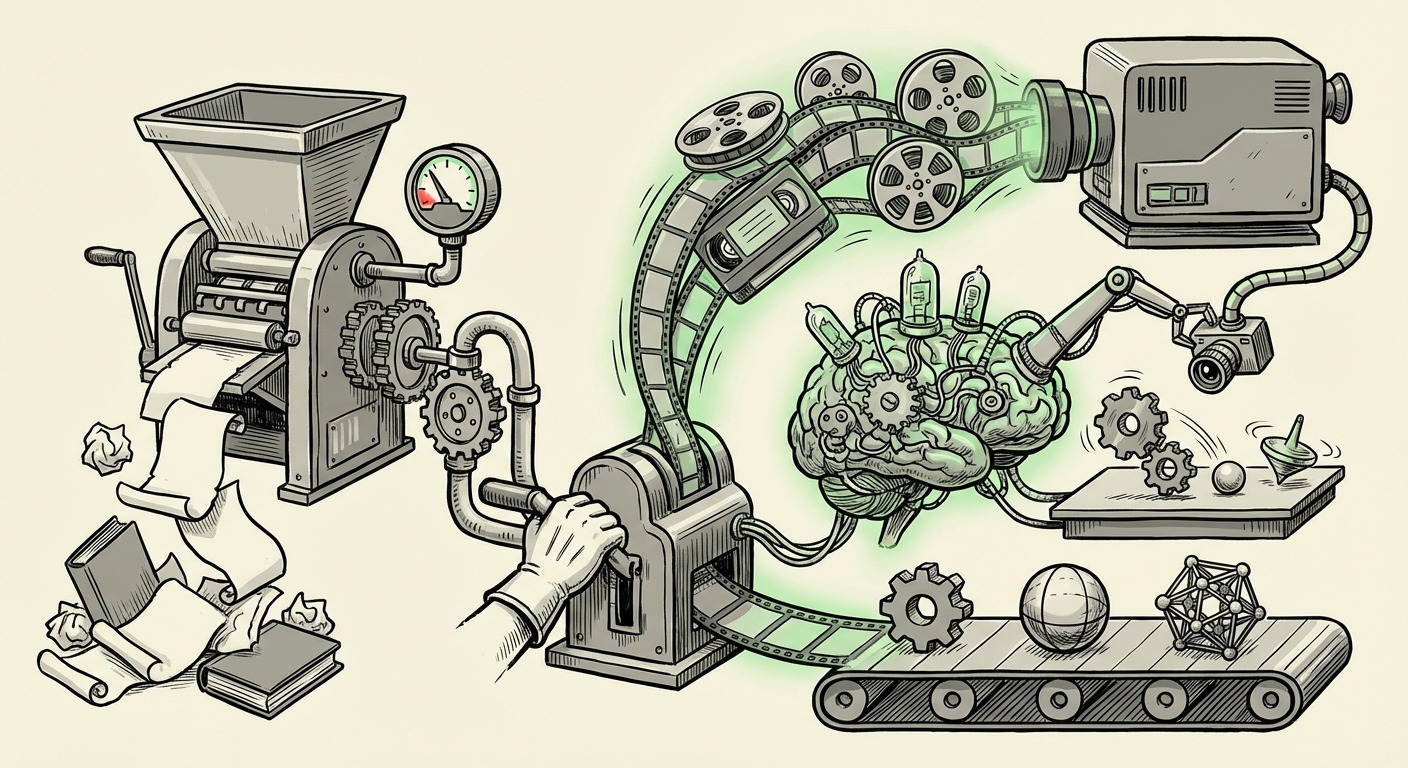
Whatever Happened to 8K TVs? The Quiet Lesson for AI’s Next Big Leap
A few years ago, 8K TVs looked like the future of television. They were the star of every big electronics show. Manufacturers promised sharper pictures, deeper detail, and a viewing experience that would make 4K feel old. Retailers put them on pedestals. Early buyers paid a lot for bragging rights.
Then the noise faded. Today, 8K TVs are still around, but they are no longer the main event. The shelves are more likely to highlight picture brightness, gaming features, or smart software. The question “whatever happened to 8K TVs?” is not just about televisions. It is a preview of a much bigger story about technology, human needs, and artificial intelligence.
The short answer: 8K did not fail because the technology was bad. It stalled because the world around it was not ready. There was little native 8K content. The hardware was expensive. The files were huge. And for most people, the jump from 4K to 8K was hard to see from the couch. That gap between what a screen can do and what people actually need is the same gap AI must close in the next phase of its growth.
The 8K Promise vs. the Reality of the Living Room
8K sounds simple: more pixels, better picture. An 8K screen has four times as many pixels as a 4K screen. In theory, that means finer detail, smoother edges, and a more immersive image. For sports, nature films, and big-budget movies, the idea was exciting.
In practice, several problems showed up at once.
- Content was scarce. Very little video is shot and delivered in native 8K. Cameras are costly. Editing and storage are heavy. Streaming an 8K file takes serious bandwidth. Most studios and services did not rush to rebuild their pipelines for a small audience.
- Bandwidth and storage became bottlenecks. More pixels mean larger files. That puts pressure on home internet, streaming servers, and device storage. Consumers may tolerate one more subscription, but they do not want a new router and a bigger data plan just to watch the news.
- Human eyes have limits. At a normal viewing distance, many people cannot tell 8K from high-quality 4K. The difference is real on a huge screen or up close. In a typical living room, it is subtle. That makes the upgrade hard to justify.
- Prices stayed high. Early 8K sets cost much more than good 4K sets. Most buyers chose better contrast, brighter screens, or larger sizes over a resolution number they could not easily see.
- The story was about specs, not problems. “More pixels” is an engineering claim. “A better movie night” is a human benefit. The marketing leaned toward the number, and the number did not sell enough sets.
This does not mean 8K disappeared. It became a background capability. High-end sets still carry it. Professional cameras and displays use it. But the consumer market moved on to features people could feel right away: better brightness, smoother motion, smarter software, and easier streaming.
Why This Matters for AI: The Same Trap Is Waiting
The 8K story is a warning for the AI industry. It shows what happens when a technology is pushed by what engineers can build rather than pulled by what people need.
AI is now in a similar moment. Every week brings bigger models, longer context windows, faster chips, and more impressive demos. Those things matter. But they do not automatically create value. A business does not need the largest model. It needs a model that solves a real problem at a cost that makes sense. A customer does not need a chatbot that can write a poem and plan a vacation. They need one that answers a question correctly and quickly.
The 8K lesson is simple: a technology wins when it becomes useful, not when it becomes impressive. AI is moving from the demo phase into the usefulness phase. That shift will reward companies that focus on outcomes, not spec sheets.
AI Upscaling: The Bridge That Keeps High-Resolution Displays Relevant
One of the most important AI roles in the 8K story is upscaling. Instead of waiting for native 8K content, AI can take lower-resolution video and improve it in real time. It can sharpen edges, reduce noise, and fill in detail. It can make older content look better on a modern screen.
This is a quiet but powerful shift. The value moves from the panel alone to the processor behind it. A screen with strong AI upscaling can deliver a better experience with ordinary content. That makes the hardware more useful today, not years from now.
The same pattern is appearing across technology. AI is becoming a quality layer that sits between raw data and human experience. It improves what we already have instead of asking us to replace everything. That is often the fastest path to adoption.
For businesses, the lesson is direct: do not wait for perfect data or perfect content. Use AI to improve the data and content you already have. Upscaling is one example. Others include cleaning customer records, summarizing long documents, translating support tickets, and improving images for online stores.
The Real 8K Future May Be Machine Vision, Not Human Television
While 8K TVs stalled in living rooms, high-resolution imaging kept advancing in other areas. Machines do not get tired, and they do not sit on a couch. They can analyze huge images pixel by pixel. That changes the economics of 8K.
In manufacturing, high-resolution cameras can spot tiny defects. In medicine, detailed images can help doctors see more. In agriculture, drones can capture fine detail across large fields. In security and traffic systems, wide images can be cropped and analyzed without losing clarity. In sports, a high-resolution frame can be reframed for replays or different viewing angles.
This is a key insight for the future of AI: some technologies find their first real value in machine-to-machine use, not in consumer products. Humans may not need to see every pixel. AI can process those pixels and tell us what matters.
That flips the 8K question. The point is not “Can people see the difference?” The point is “Can a machine use the extra detail to make a better decision?” For many industries, the answer is yes.
What This Means for the Future of AI
The 8K story points to several shifts that will shape AI in the coming years.
1. AI will be embedded, not just accessed
Today, many people think of AI as a chatbot or a website. The next wave will be AI inside devices: TVs, phones, cameras, cars, factory machines, and medical tools. It will work in the background. The best AI will often be invisible. It will improve a picture, route a delivery, or catch a defect without asking for attention.
2. Efficiency will matter as much as size
8K showed that more data can hit real limits: bandwidth, storage, power, and cost. AI faces the same limits. Bigger models can be better, but they are not always practical. The winners will be models that deliver strong results with less energy and less data. Small, efficient AI that runs on a device will be just as important as giant AI in a data center.
3. AI will improve existing content before generating new content
Generative AI gets headlines. But enhancement AI may have a bigger near-term impact. Upscaling video, cleaning audio, restoring old films, sharpening medical images, and improving product photos are all practical uses. They save money and improve quality without requiring a full rebuild.
4. The line between real and synthetic will blur
When AI can upscale, sharpen, and generate detail, it becomes harder to know what is real. That is exciting for creators and risky for trust. Businesses will need to think about labeling, provenance, and verification. A video that looks sharper may not be more authentic. In fact, it may be partly synthetic.
5. The interface will fade into the background
8K TVs did not fail because people hate sharp pictures. They stalled because the interface, the content, the bandwidth, the price, the visible benefit, did not line up. AI faces the same challenge. The best AI products will not feel like AI. They will feel like a faster answer, a clearer image, a smoother process, or a lower cost.
Business Implications: Stop Selling Specs, Start Selling Outcomes
For business leaders, the 8K story offers practical lessons.
- Test for visible value. Before investing in a new AI model or feature, ask what a customer will notice. Faster service? Fewer errors? Lower cost? If the benefit is hard to see, adoption will be slow.
- Build for real constraints. Bandwidth, power, budget, and staff time are not side issues. They are the design. AI that ignores constraints will stay in the lab.
- Treat enhancement as a product. AI upscaling and data cleaning are not boring chores. They are often the fastest way to improve quality and cut waste.
- Invest in data pipelines. High-resolution AI needs high-quality data. So does ordinary AI. Companies that organize, label, and secure their data will move faster.
- Plan for machine viewers. If your products or processes create images, video, or sensor data, ask how AI will analyze them. The next customer may be a machine.
- Do not bet on format wars. Consumers and businesses dislike being forced to pick a side. Build flexible systems that can handle multiple formats and quality levels.
- Measure real-world quality. A spec sheet is not a customer experience. Test AI in the conditions where people actually use it: poor lighting, noisy data, slow internet, and busy workflows.
Societal Implications: Access, Energy, and Trust
The 8K story also raises questions that go beyond business.
Access: High-resolution content needs fast internet and expensive devices. If AI-enhanced experiences become the norm, people with slower connections or older devices could be left behind. Companies and governments should think about how to keep quality within reach.
Energy: More pixels and bigger AI models both use more power. Efficiency is not just a cost issue. It is an environmental one. The most useful AI may be the AI that does more with less.
Trust: AI upscaling can make a blurry video look sharp, but it can also invent detail that was never there. In news, security, and medicine, that matters. Clear labeling and strong verification will be essential.
Actionable Insights for Leaders
If you are planning an AI strategy, use the 8K question as a filter.
- Ask “What problem does this solve?” before “How powerful is it?” The most impressive model is not always the most useful one.
- Look for invisible wins. AI that improves an existing process may deliver more value than a flashy new interface.
- Design for the edge. Some AI will run on devices, not in a central cloud. Plan for speed, privacy, and low power use.
- Prepare for synthetic detail. If your business uses images or video, set rules for labeling and verification.
- Use AI to close content gaps. Like upscaling old video for a new screen, AI can make existing assets more valuable.
- Watch machine customers. High-resolution sensors and AI analysis may create new markets you have not considered.
Conclusion: The Quiet Technology Wins
Whatever happened to 8K TVs? They did not vanish. They moved from the spotlight to the background. The hype faded because the ecosystem was not ready. The content, the bandwidth, the price, and the visible benefit did not line up with the promise.
That is not a failure story. It is a maturity story. The same arc is likely for many AI products. The first phase is loud: big demos, big claims, big numbers. The second phase is quieter and more important. AI becomes useful. It improves what we already do. It runs inside devices. It solves real problems at a cost that makes sense.
The future of AI will not be won by the biggest model or the highest resolution. It will be won by the technology that disappears into daily life and makes it better. The next time a company asks how many pixels or parameters it needs, the better question is simpler: What will people actually notice?