The Whole Stack Wins: Why Owning Chips, Models, and Distribution Is the New AI Moat
For the last few years, the AI race looked like a model race. Whoever shipped the smartest model got the headlines, the users, and the money. That story is starting to break down.
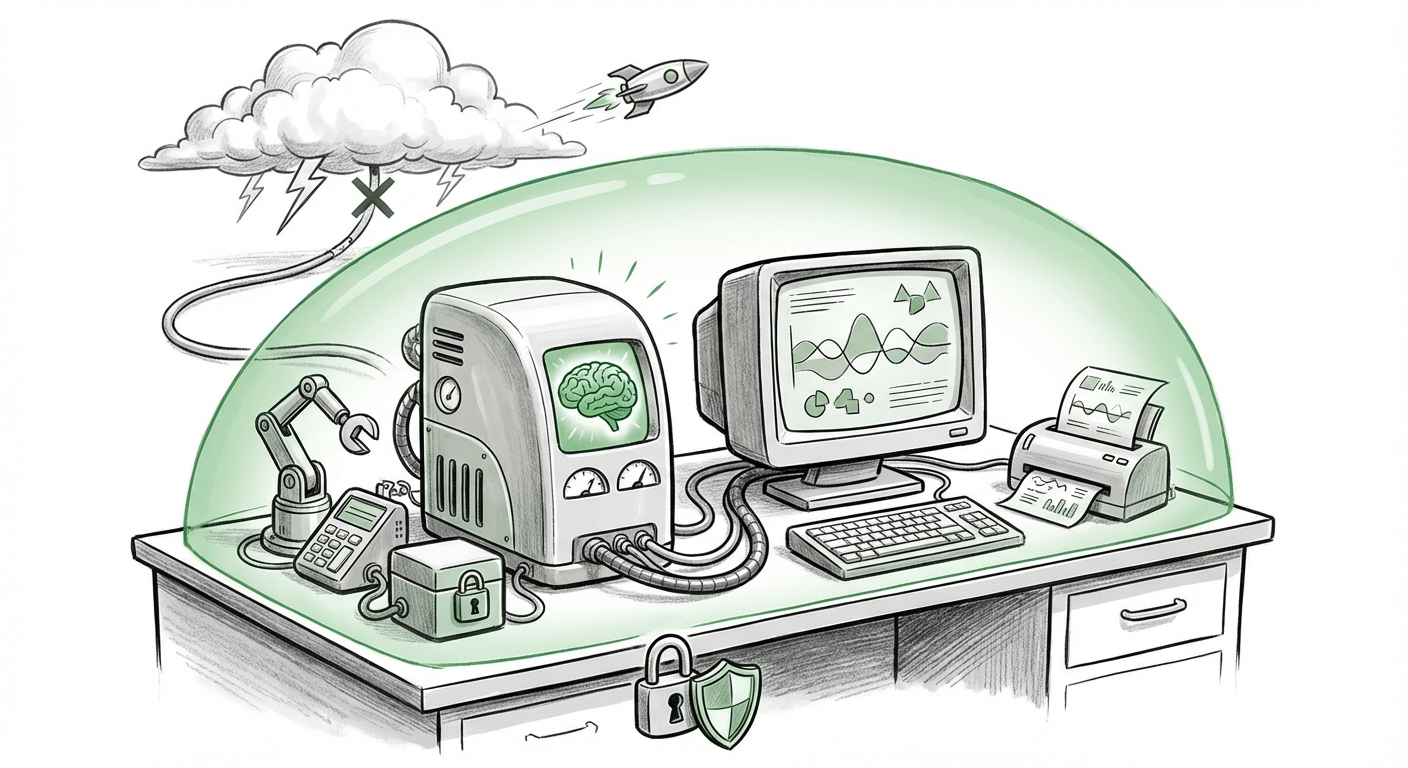
The new story is simpler and much more brutal: the company that owns the whole stack wins. Not the one with the single best model. Not the one with the cleverest app. The one that controls compute, models, serving, tooling, and the path to the customer, all at once.
That shift matters for everyone. It changes which AI companies survive, what prices businesses will pay, and how the rest of us will actually use these tools day to day. Here is what is happening, why it is happening, and what to do about it.
Why the Single-Layer AI Company Is Getting Squeezed
Think of the AI industry as a stack of layers. At the bottom sits compute, chips and the data centers that run them. Above that sits the model layer, where large models get trained. Above that sits the serving layer, where models turn into fast, cheap, reliable software. On top sits the product layer, the apps, agents, and workflows people actually touch. And wrapped around all of it is distribution: the developer ecosystem, the enterprise contracts, the consumer habit.
For a while, each layer could stand alone and make money. That is getting harder for three reasons.
First, model quality is converging. The gap between the best model and the second-best is shrinking fast. Buyers rarely need the absolute best anymore. They need good enough, cheap enough, and fast enough. When quality stops being a moat, price and reliability become the moat, and those come from owning the stack.
Second, the middle of the stack gets crushed. A company that only rents compute from someone else, builds a thin wrapper on a model, and resells it has no pricing power. Its supplier can undercut it tomorrow. Its customer can switch in an afternoon. Margins slide toward whoever controls the scarce thing.
Third, integration compounds. When one team owns the chips, the training run, the inference server, and the app, they can tune every layer together. They can cut latency, drop cost per task, and ship features that a disconnected competitor simply cannot copy. That advantage grows every month, not every quarter.
What "The Whole Stack" Actually Means Now
This is not just a slogan. A full stack in AI today usually includes several moving parts:
- Compute and custom silicon, owning or deeply controlling the hardware means controlling cost and supply.
- Data and training pipeline, the ability to collect, clean, and use data at scale, including feedback from real users.
- A model family, not one model, but a spread of sizes and specialties you can route between.
- The serving layer, inference infrastructure that makes models fast, cheap, and dependable under load.
- Tools and platforms, the APIs, agent frameworks, and developer tools that make others build on you.
- Distribution, the app, the marketplace, the enterprise deal, the habit. The last mile.
- Power and physical footprint, increasingly, energy and data center capacity are part of the stack too.
You do not need all seven to be a good company. But the companies that win big will have most of them, and will be able to move value between layers as the market shifts.
The Feedback Loop That Makes Full-Stack Players So Hard to Beat
Here is the engine underneath it all. More usage creates more data. More data sharpens the models. Sharper models attract more usage. Meanwhile, more usage spreads fixed costs across more requests, which makes inference cheaper. Cheaper inference lets you lower prices. Lower prices pull in more usage.
It is a loop. And loops beat linear businesses every time.
A single-layer company is stuck on one rung of that ladder. It can be excellent, but it cannot spin the whole wheel. It has to pay someone else's margin on compute, someone else's margin on models, and someone else's margin on distribution. In a fast-growing market, that is survivable. In a market where everyone is competing on cost per task, it is fatal.
This is the deeper meaning of the whole stack wins. It is not about size. It is about control over the variables that decide price, speed, and reliability.
What This Means for Businesses Buying AI
If you run a business, this trend changes your buying strategy. The biggest risk is no longer picking a model that is slightly behind. The biggest risk is lock-in to a stack you do not control.
Practical moves that make sense right now:
- Build a thin internal AI layer. Put an abstraction between your apps and any single provider. It should let you swap models without rewriting your product.
- Measure cost per finished task, not cost per token. A cheap model that needs three tries can cost more than an expensive one that works the first time.
- Negotiate data portability up front. Ask what leaves with you if you switch. Get it in writing.
- Run two vendors where it matters. Redundancy is not paranoia when a single provider outage stops your business.
- Buy outcomes, not model names. Your board cares about faster claims processing, not which version number you used.
- Track integration depth as a feature. A vendor that controls its own stack can often offer steadier pricing and faster fixes. Ask how much of what you depend on they actually own.
None of this means avoiding big platforms. It means using them with your eyes open, and keeping the exit door unlocked.
What It Means for Startups and Builders
Here is the hard truth for founders: if your product is a thin wrapper on someone else's model, the stack will eat you. But that is not the whole story. There are still real paths to winning.
Go deep, not wide. Own a workflow that is messy, regulated, and full of hidden detail. The kind of thing a general model cannot handle alone. Depth in one industry is a moat the stack cannot easily copy.
Own data nobody else can get. Proprietary, permissioned, continuously refreshed data, especially outcomes data, is still the strongest defense. Usage data from a real customer base is part of the stack too.
Own the last mile. Whoever holds the customer relationship holds leverage. If you are the system of record, you can route to models rather than being routed by them.
Be stack-aware, not stack-dependent. Use the best available infrastructure. Just do not let your entire architecture, pricing, and roadmap be dictated by one supplier.
The Risks of Stack Concentration
A world where a handful of full-stack players dominate is efficient, but it is not automatically healthy. Several risks deserve attention.
Pricing power. Once switching costs are high, prices can rise. Businesses that locked in early may find their leverage gone.
Single points of failure. When many products quietly run on the same stack, one outage or one policy change ripples across the economy.
Slower frontier progress. Concentrated markets can still innovate fast, but they can also narrow the range of approaches being tried. Open-weight models and public research are the counterweight here.
Regulatory attention. Bundling compute, models, and distribution into one offering is exactly the pattern that draws scrutiny in other industries. Expect more questions about interoperability, fair access, and data rights.
A squeezed long tail. Smaller vendors that cannot afford their own stack may be pushed into niche roles or forced to sell. That reduces choice over time.
Signals to Watch
You do not need a crystal ball to track this shift. A few signals will tell you which way it is going:
- Inference price moves. Steep, sustained cuts usually come from someone who owns their own compute.
- Vertical deals. Mergers and partnerships that pair a model maker with a chipmaker, a cloud, or a distribution channel.
- Custom silicon announcements. More companies designing their own hardware is a clear stack-power move.
- Open-weight releases. Strong free alternatives are the main brake on stack concentration.
- Bundling. When models, tools, storage, and apps get sold as one package, the stack thesis is playing out in the open.
- Energy and data center bets. Power contracts are becoming an AI strategy document.
The Bottom Line
The AI industry is maturing from a contest of demos into a contest of systems. The winners will not just have the smartest model. They will have the machinery around it: the silicon, the serving layer, the tools, and the road to the customer.
For businesses, that means buying with more care and more leverage. For builders, it means finding a corner of the world where depth beats breadth. And for everyone else, it means understanding that the AI tools you use every day are shaped less by breakthroughs and more by who controls the pipes.
The whole stack wins. The smart move is to know where you sit on it, and to make sure you are not standing on rented ground.