An ADA-Winning Team Just Shipped a Title That "Defies Description", Here's What That Tells Us About AI and the Future of Discovery
There is a moment in every maturing industry when the best work stops fitting into the boxes built to describe it. Hollywood hit it when television outgrew the sitcom. Publishing hit it when the novel stopped fitting magazine serials. Software is hitting it right now, and the clearest sign yet comes from a small, award-winning team whose latest release has been described, by the people closest to it, as a title that defies description.
The framing around the project, "rooms at the top", captures the ambition without giving the thing a category. That is unusual. It is also instructive. Because a team with a serious track record of design recognition has deliberately shipped something that search engines, app store categories, and even the people writing about it struggle to label. In a world where artificial intelligence is becoming the primary lens through which people find, rank, and recommend software, that decision is either brilliant or dangerous. Possibly both.
This article looks at what a hard-to-categorize release from a decorated team reveals about the coming decade of AI, and what businesses building anything in that decade should do about it.
The Story: When the Best Work Won't Fit in a Bucket
The team in question has already earned ADA recognition for its craft. That matters, because it changes the meaning of what follows. When an unknown studio ships something strange, the market assumes inexperience. When a proven one does it, the market has to assume intent.
What the team built is being talked about in terms of rooms, of elevation, of reaching the top, language that describes an experience or a structure rather than a product category. It is a title that resists a one-line pitch. That is a deliberate creative position, and it is the opposite of how software has been marketed for the last fifteen years.
For most of the app era, the playbook was brutally simple: pick a keyword-rich name, pick a single category, pick a screenshot that explains the product in under a second, and hope an algorithm rewarded you. The new release throws almost all of that out. It assumes the work itself, its feel, its craft, the sense of place it creates, will travel where the label cannot.
Why this is a bigger deal than it sounds
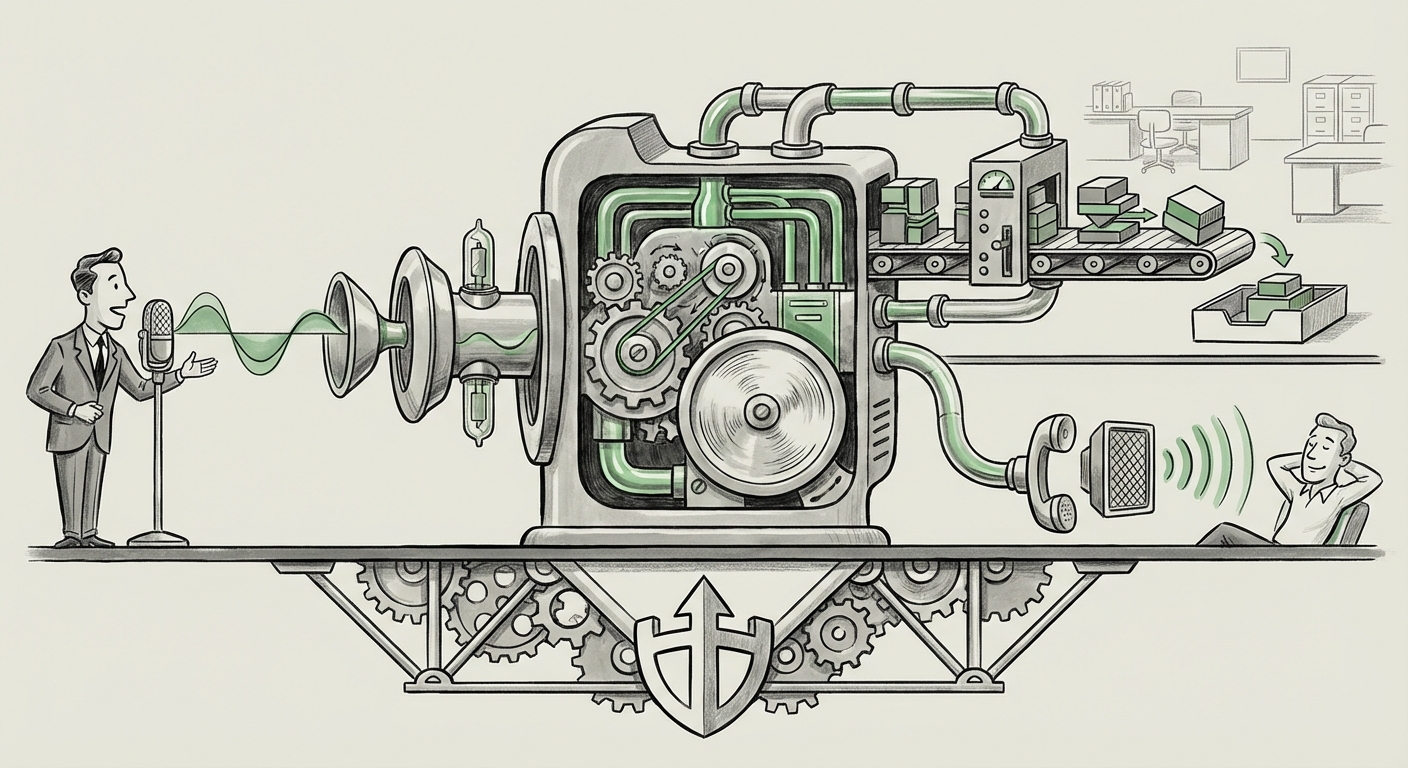
Because the discovery layer is changing underneath everyone's feet. The old system, human-curated lists, keyword search, star ratings, is being quietly replaced by systems that read, watch, listen to, and summarize what you made. Those systems do not need a category label to understand a product. They need signal.
A team that builds something with strong, distinctive signal and a weak category label is, in effect, betting that the machines will figure it out. And increasingly, they do.
The Discoverability Crisis Is Now an AI Problem
Anyone who has shipped software recently knows the pain. The number of applications competing for attention continues to grow, while the shelf space for human attention keeps shrinking. Category pages have become walled gardens. Search results are crowded with lookalikes. The average user's patience is measured in seconds.
Generative and agentic AI systems are arriving as the answer to that mess, and as a new layer of risk. When a person asks an assistant "find me something calm, clever, and a little strange to play tonight," the assistant does not scan category tags. It reasons about descriptions, reviews, visual style, and the emotional language around a product. It then returns one or two candidates.
That shift creates two very different futures:
- A semantic future. Work described richly and authentically, the mood, the mechanics, the feel, gets surfaced by AI to exactly the right audience. Small teams win because they no longer need to outspend anyone on keywords.
- An invisible future. Work that is genuinely great but says nothing about itself gets skipped, because no model has a reason to recommend it. Talent without description becomes talent without distribution.
The team behind the new release sits deliberately in the first camp. Their work defies a short description, but it likely rewards a long one. That distinction is going to matter enormously.
Accessibility-First Design Is Turning Into a Competitive Moat
ADA recognition is not a marketing badge. It signals that a team has done the hard, unglamorous work of making something usable by people with many abilities, readable contrast, clear focus states, adaptable controls, thoughtful sound and motion handling. Historically, small teams treated this as a checkbox. The best teams treat it as design DNA.
Here is the part most businesses still miss: accessibility work is also data work. Every accommodation you make, a text label for a visual, a structured description of a screen, a clear alternative to an input method, produces exactly the kind of clean, machine-readable signal that AI systems need to understand and recommend your product.
Accessible products are, almost by accident, legible to machines. Semantically structured products get discovered. This is one of the quietest and most reliable cause-and-effect relationships in modern software, and it is about to become common knowledge.
What AI Actually Changes for Small, Craft-Focused Teams
The romantic version of this story is that AI levels the playing field. The real version is more specific. Here is where the leverage actually lands:
1. Description becomes a design deliverable
If your product resists a category, you owe the world a rich description anyway, not a pitch, but a map. What does it feel like? What does the user do in the first sixty seconds? What is it *not*? Teams that write this down give AI models something to hold onto. Teams that don't get guessed at, and the guess is usually wrong.
2. Creative risk gets cheaper to test
Unusual ideas used to die in the pitch meeting because validating them was expensive. Prototype generation, placeholder art, synthetic voice and sound exploration, automated playtesting, these now compress weeks into days. A team can afford to build something strange, feel it, and decide. That matters for a studio whose entire identity rests on making things that don't obviously exist yet.
3. Localization stops being a luxury
Machine translation plus human review has collapsed the cost of reaching new languages. For a title whose appeal is experiential rather than verbal, a very small studio can now be present in dozens of markets without hiring a localization agency.
4. Support and community scale without a team
Retrieval-based assistants that answer from your own documentation absorb a huge share of repetitive player or user questions. For a small team, this is the difference between shipping the next thing and drowning in the inbox.
5. Quality assurance gets a second pair of eyes
Automated exploration of edge cases, accessibility checks, and localization inconsistencies catch what a five-person team cannot manually test. Accessibility in particular, where the number of combinations explodes, is where automation pays off fastest.
The Counterargument: Craft Still Has to Survive Contact With Reality
It would be dishonest to pretend the "defies description" approach carries no risk. Ambiguity is a luxury that must be paid for. A team with award recognition and an existing audience can afford to be mysterious. A team without either usually cannot.
There is also a real hazard in leaning too hard on AI-mediated discovery: you are renting space on someone else's algorithm. Recommendation systems change. Model behavior shifts. A product that depends entirely on being understood by a third-party system has handed its distribution to a landlord it does not control.
The healthy posture is both: build an owned audience, a mailing list, a community, a recognizable studio identity, and make your work as machine-legible as it is human-crafted. Mystery in the product. Clarity in the metadata.
Practical Implications for Businesses Outside Gaming
This is not just a story about interactive entertainment. The same forces are reshaping every software category:
- Category pages are losing power to conversational search. If a buyer asks an AI assistant for a recommendation and your product's description is a keyword list, you are invisible.
- Structured self-description is becoming infrastructure. Clear feature documentation, honest comparisons, and plain-language explanations of who a product is *not* for are now what gets retrieved and summarized.
- Accessibility is a distribution strategy, not a compliance cost. The same work that opens your product to disabled users opens it to machine comprehension.
- Small teams can now compete on distinctiveness instead of budget. The cost of building something unusual has fallen faster than the cost of marketing something ordinary.
- Reputation travels further than naming conventions. A proven track record is the one signal that AI systems and humans both weight heavily.
Actionable Insights: What to Do in the Next Quarter
- Write the description only you could write. Draft a 300-word account of what your product feels like to use, in plain language. Not the marketing version, the true one. Publish it somewhere machines can read it.
- Audit your machine legibility. Ask three different AI assistants what your product does and who it's for. If the answers are wrong or vague, your public writing is the problem, not the model.
- Treat accessibility as an AI-readiness program. Every alt text, label, transcript, and structured heading you add is a signal that both assistive technology and recommendation models can use.
- Do not let a category define your ceiling. Categories help you get found once. Distinctiveness is what makes people come back. Use the label as a doorway, never as a definition.
- Keep one channel you own. Build a direct relationship with your audience so algorithm changes remain an inconvenience rather than an extinction event.
- Spend your AI savings on craft, not headcount reduction. The teams that win will be the ones that redirect freed-up hours into the parts of the work no model can do.
The Road Ahead: A World Where Taste Beats Taxonomy
The deeper story here is not about one release or one studio. It is about a shift from sorting to sensing. For twenty years, software was organized into boxes, and success went to whoever picked the best box. Now, systems are being built to perceive what a thing actually is, its tone, its craft, its texture, and to route it accordingly.
In that world, the winners will not be the ones with the most precise category label. They will be the ones whose work is unmistakably itself, and who took the trouble to make that selfhood readable to both people and machines.
An award-winning team shipping something that defies description is not an act of marketing chaos. It is a bet, placed early, and with real evidence behind it, that distinctiveness is the last durable advantage, and that the machine layer will learn to recognize it. The teams paying attention now will be the ones an AI recommends in three years. The rest will be wondering why nobody could find them.