Daggr Wants to Make AI App Chains Visible: Why Programmatic Workflows You Can Actually See Are the Next Big Shift
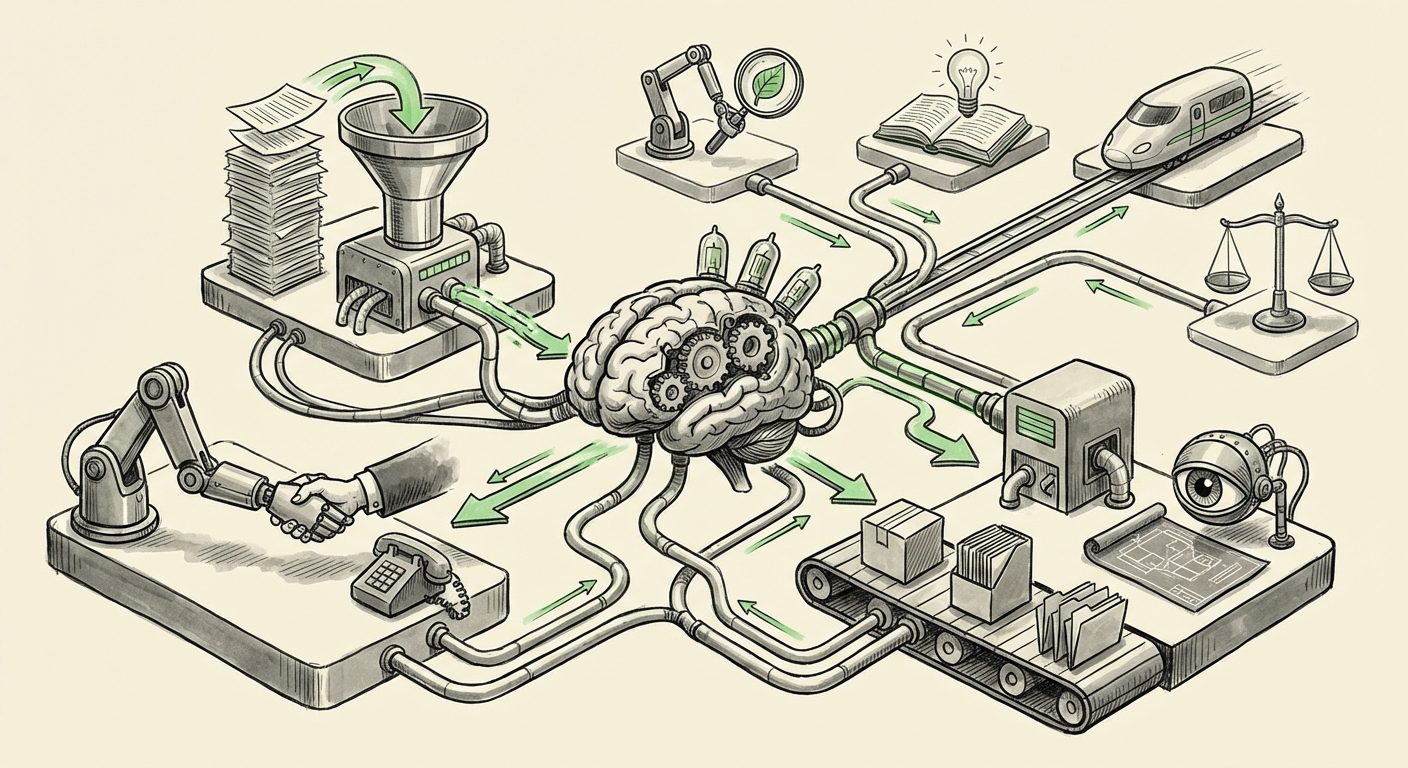
On January 29, 2026, a new tool called Daggr was introduced with a promise that sounds almost too simple: chain apps programmatically, inspect visually. That's it. That's the whole pitch. But buried inside those seven words is one of the most important arguments in AI right now, that building with AI should be fast like code, but understandable like a picture.
For anyone who has tried to wire together a modern software stack, the frustration is familiar. You can glue services together with scripts, but the moment something breaks, you're reading logs at midnight trying to figure out which step failed and why. Or you can drag boxes around on a canvas, which is easy to see but painful to version, test, or share with a team. Daggr is betting that the future belongs to neither approach alone, but to a blend of both.
That bet matters far beyond one tool. It points to where AI-powered work is heading: toward pipelines you can write like software and read like a diagram. Here's what that means, why it's happening now, and how businesses should prepare.
The Core Idea: Code on the Inside, Clarity on the Outside
Let's break down the two halves of Daggr's pitch.
Chain apps programmatically. In plain terms, this means you connect different applications, data sources, AI models, tools, services, using code rather than manual clicks. You write out the steps in order. Do this, then that, then the other thing. Because it's code, it can be saved, copied, changed, tested, and run again and again the same way every time.
Inspect visually. This means you can look at the same chain as a picture. Boxes and arrows. A map of what happens, in what order, and where it hands off from one app to the next. Instead of imagining the flow in your head, you see it.
Put those together and you get something that has been surprisingly rare in the AI world: a system that is both buildable and checkable. Most tools force you to pick a side. Daggr's framing suggests you shouldn't have to.
Why a Name Like "Daggr" Gives the Game Away
The name itself is a clue. It points to a "DAG", a directed acyclic graph, which is a fancy way of describing a chain of steps that flows in one direction and never loops back on itself. Think of a recipe, not a traffic roundabout. Step one leads to step two, step two splits into two parallel steps, and both of those feed into a final step. Nothing circles forever.
This structure is already the backbone of how modern data systems and AI pipelines are designed. It's how teams describe a sequence of transformations: pull data, clean it, send it to a model, check the answer, store the result. What Daggr appears to add is a way to see that backbone while you build it, rather than reverse-engineering it from a diagram someone drew on a whiteboard six months ago.
Why This Is Happening Right Now
Chaining apps is not new. What's new is the pressure to do it well.
AI systems have quietly become multi-step. A single request now often triggers a whole relay race: one service fetches information, another summarizes it, a model generates a response, a checker validates it, and a final app delivers it. Every hand-off is a chance for something to break, or for a wrong answer to slip through unnoticed.
At the same time, the number of apps involved in any given workflow has exploded. Teams no longer build one monolith. They assemble. That makes speed a competitive advantage, but it also makes fragility a competitive risk. When five moving parts become fifteen, "it worked yesterday" stops being an acceptable answer.
So the market is pushing in two directions at once: make it faster to build and make it easier to trust. Daggr's design is a direct response to that squeeze.
The Visibility Problem Nobody Talks About Enough
Here's the uncomfortable truth about a lot of AI work today: much of it is invisible.
A model takes in a request and produces an answer. Something happened in between, but unless you built the whole thing yourself, you probably can't say exactly what. Add three more apps to the chain and the fog thickens. When the output is wrong, teams spend more time finding the problem than fixing it.
Visual inspection attacks that fog directly. If you can see the chain as a set of connected steps, you can point at the exact step where things went sideways. That sounds small. It isn't. Debugging time is often the single biggest hidden cost in AI projects, and visibility is the cheapest fix available.
There's a second benefit that gets overlooked: communication. A picture of a workflow can be shown to a manager, a client, an auditor, or a new hire without a code review. That turns a technical artifact into a shared one. In companies where AI projects stall because nobody outside the engineering team understands what was built, that's not a nice-to-have. It's the difference between a project that ships and one that quietly dies.
Programmatic vs. Visual: Ending a False Choice
The industry has spent years arguing about this. Code-first people say visual tools are toys that don't scale. Visual-tool people say code-first workflows are opaque and exclude everyone who doesn't write code.
Both camps are half right, which is why the combination matters.
- Code brings repeatability. The same chain runs the same way every time. It can be reviewed, tested, and changed on purpose rather than by accident.
- Visuals bring comprehension. You can grasp the shape of a process in seconds, spot a missing step, and explain it to someone else.
- Together they bring trust. You can move fast and know what you built.
That last point is where AI adoption actually gets stuck. Most organizations aren't blocked by a lack of tools. They're blocked by a lack of confidence, a nagging feeling that the system does something nobody fully understands. Tools that make that understanding visual, without giving up the discipline of code, go after the real bottleneck.
What This Means for Businesses
If the "chain apps programmatically, inspect visually" model becomes standard, several practical things change.
1. Faster handoffs between teams
Engineers can build in code. Analysts, product managers, and compliance staff can review the same chain visually. Fewer translation layers means fewer misunderstandings, and fewer misunderstandings means faster approvals.
2. Cheaper maintenance
Most software cost isn't building, it's maintaining. When a chain is visible, new team members can learn it quickly, and outages get diagnosed faster. That's a steady, compounding saving across every workflow a company runs.
3. Better governance and audit trails
Regulated industries need to explain how a decision was made. A visible chain is a natural starting point for that explanation. It shows the sequence of steps in a way that a wall of logs never will. That doesn't solve compliance on its own, but it makes the conversation far easier.
4. More people can participate
When the result of your work is a diagram, non-technical colleagues can suggest improvements. That widens the pool of people who can contribute to automation projects, which matters in a world where skilled builders are in short supply.
Actionable Insights: How to Prepare
You don't need to adopt any single tool to benefit from this shift. You need to adopt the mindset.
- Map your most important workflows before you automate them. If you can't draw the chain on one page, you're not ready to build it. Drawing it first reveals gaps, duplicates, and steps nobody actually needs.
- Demand visibility from every AI tool you buy. Ask vendors a blunt question: when the output is wrong, how do I see where it went wrong? If the answer is vague, that's a red flag.
- Treat chains as assets, not scripts. Anything you build that runs regularly should be documented, versioned, and owned by a named person. This is what separates a hobby from infrastructure.
- Start small and inspectable. Pick one workflow with a clear beginning and end. Build it. Watch it run. Fix what breaks. Then expand. Complexity is much easier to add than to remove.
- Build a shared vocabulary. Teach your team to talk in steps, hand-offs, and checkpoints. It's the same language developers, auditors, and executives can all use.
The Bigger Picture: Visibility as a Competitive Advantage
Step back and the pattern is clear. The first wave of AI tools competed on raw capability, what the model could do. The next wave is competing on control, whether a human can see, steer, and trust what's happening.
That's a healthier competition. Capability without control creates systems nobody wants to depend on. Control without capability creates tools nobody wants to use. Daggr's framing sits squarely in the middle: keep the power of code, add the clarity of a picture.
There's also a broader social angle. As AI systems make more decisions that affect people, approving requests, flagging risks, routing information, the ability to trace a decision back through its steps becomes a public interest question, not just an engineering one. Tools that make chains visible by default nudge the whole industry toward accountability. That's a quiet but meaningful shift.
The Limits Worth Naming
A visible diagram is not the same as a correct system. A chain can look tidy and still produce bad results if a step is wrong or a model is unreliable. Visibility makes problems findable; it doesn't make them disappear. Teams should treat inspection as a starting point for testing and monitoring, not a substitute for either. The honest promise of a tool like Daggr is not "nothing will break." It's "when something breaks, you'll know where to look."
Conclusion: The Future Is Wired, and It's Visible
The introduction of Daggr is a small announcement with a big signal. It says that the next stage of AI isn't just about smarter models, it's about better plumbing. The winners won't be the teams with the most impressive demos. They'll be the teams whose workflows can be built quickly, checked easily, and explained to anyone who asks.
Chain apps programmatically, inspect visually. Seven words that quietly argue against the false choice between speed and understanding. For builders, that means cleaner pipelines. For businesses, that means lower risk and faster adoption. For everyone else, it means AI systems that can be pointed at and questioned, which is exactly what trust requires.
The tools will keep changing. The principle won't: if you can't see it, you can't trust it, and if you can't trust it, you won't scale it.