SpaceX’s Boost Mobile Talks: Why Satellite-to-Phone Access Is the Next Battleground for AI
SpaceX is in talks with EchoStar to acquire Boost Mobile or gain access to its network. The move comes after Verizon, T-Mobile, and AT&T rebuffed SpaceX’s requests for network access. On the surface, this is a telecom story about spectrum, subscribers, and rivalry. Underneath, it is a signal of something much bigger: the race to connect every device, everywhere, is becoming the foundation for the next wave of artificial intelligence.
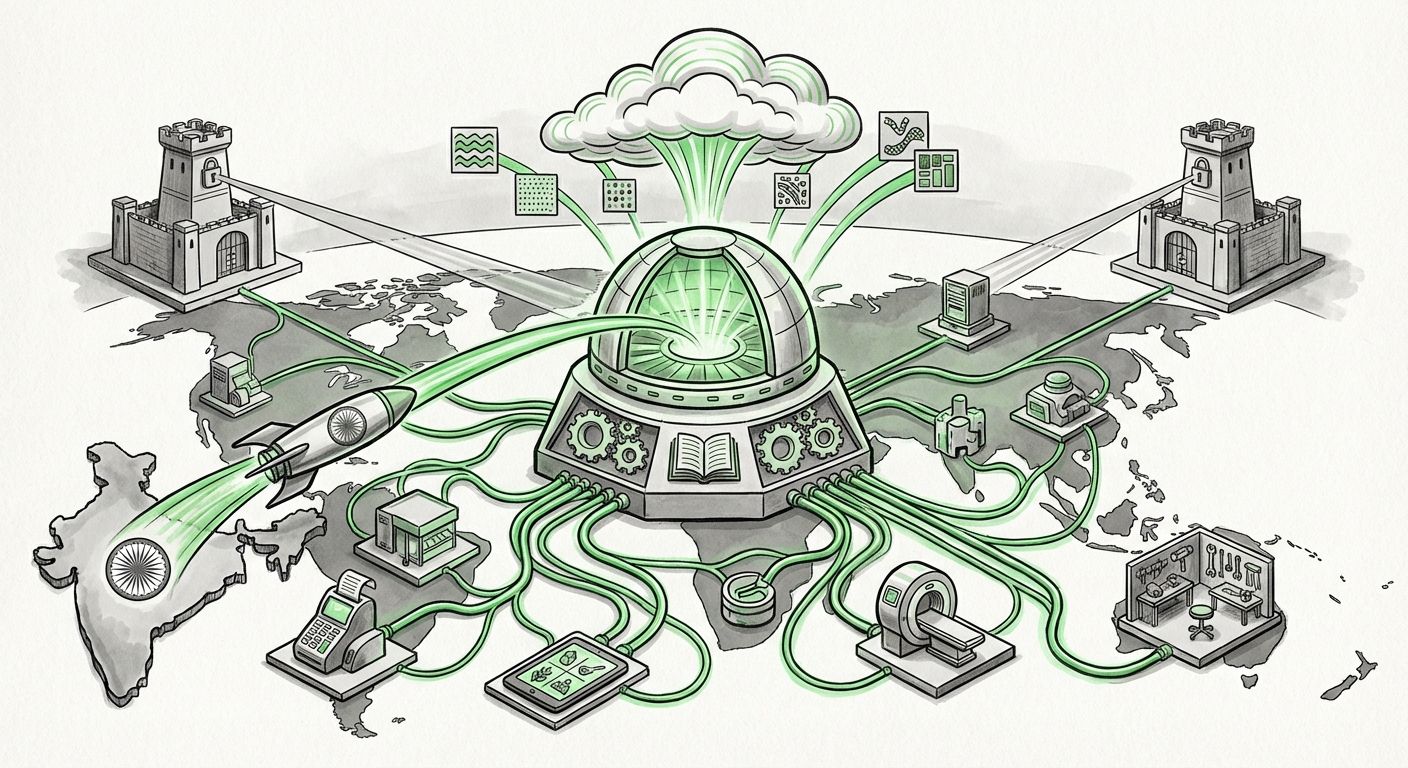
AI is often described as software that learns. But AI systems also need a nervous system. They need live data from phones, sensors, vehicles, farms, factories, and emergency crews. They need the ability to send decisions back to the edge. The company that controls the network path can shape which AI services work, where they work, and how fast they improve. That is why SpaceX’s talks with EchoStar matter far beyond one deal.
The Deal That Could Redraw Mobile Connectivity
SpaceX has built a business on reaching places that traditional networks struggle to serve. Mobile carriers have built businesses on owning the customer relationship and the airwaves. Those two worlds are now colliding. SpaceX wants network access. Verizon, T-Mobile, and AT&T have said no. EchoStar, through Boost Mobile, may offer another route.
Why would the big three carriers refuse? The simple answer is competition. SpaceX could become a powerful rival, not just a partner. If SpaceX can connect phones directly through its own infrastructure, it could bypass the carriers that spent decades building towers and buying spectrum. The carriers may also worry about giving a competitor a foothold in their networks, their customers, and their pricing power.
EchoStar and Boost Mobile give SpaceX something different: an existing mobile business with spectrum, customers, and regulatory experience. Acquiring Boost Mobile would be a bold move. Accessing EchoStar’s network would be a lighter step. Either path would help SpaceX move from being a wholesale connectivity provider to a direct player in the mobile market.
The larger trend is clear: space-based connectivity and ground-based mobile networks are converging. The winners will not be just the companies with the most satellites or the most towers. They will be the companies that can blend both into one seamless service. That service will be the delivery system for AI.
Why AI Needs Ubiquitous Connectivity
Most AI today lives in data centers. You type a question, and a server somewhere does the heavy lifting. But the next phase of AI is moving closer to the user. Phones will run smaller models on-device. Cars will make split-second decisions without waiting for the cloud. Sensors in remote areas will analyze images and sounds locally. This is called edge AI, and it depends on reliable connectivity.
Think about a farmer using AI to spot crop disease. The phone or drone needs to send images to a model and get answers back. If the farm is outside reliable cellular coverage, the AI is useless. Think about a rescue team using AI translation or damage assessment in a disaster zone. If the network is down, the AI cannot help. Think about a delivery company tracking thousands of packages with AI. If connectivity is patchy, the system loses visibility.
Satellite-to-phone connectivity could fill those gaps. It could bring basic AI services to places that towers do not reach. It could also provide backup coverage when ground networks fail. For AI developers, that means a much larger addressable market. For businesses, it means AI tools can work in more places. For society, it means the benefits of AI are not limited to dense cities.
AI at the Edge: Phones, Sensors, and Machines That Think Anywhere
The SpaceX-EchoStar talks point to a future where connectivity is not a luxury but a baseline. That future will change how AI is built and sold.
First, AI models will need to be smaller and more efficient. If a phone or sensor must run AI locally, the model cannot rely on massive cloud compute. Developers will optimize for low power, low bandwidth, and intermittent connectivity. This is already happening, but ubiquitous coverage will accelerate it.
Second, AI services will be priced by reach. A company that can offer AI-powered monitoring across an entire country, including remote areas, has a different value proposition than one that only works in cities. Insurance, agriculture, logistics, energy, and healthcare are just a few sectors that could benefit.
Third, devices will become smarter. A phone with direct satellite access could run AI translation, emergency alerts, or health checks without a tower. A sensor in a remote pipeline could detect leaks and send an AI summary. A vehicle could use AI to navigate where cellular maps are incomplete. The device becomes less dependent on the cloud and more capable on its own.
This does not mean the cloud disappears. It means the cloud and the edge will work together. AI will decide what to process locally and what to send to a data center. The network will decide how to route the data. The companies that control both the AI and the network will have a strong advantage.
Smarter Networks: AI Managing the Airwaves
There is another AI angle here: the network itself. Modern mobile networks are incredibly complex. They must manage spectrum, towers, satellites, users, and interference in real time. AI is already used to optimize this. With satellite and ground networks combined, the complexity grows. AI will be essential to keep it all working.
Imagine an AI system that routes a call through a satellite when a tower is congested, or switches a sensor to a lower-power mode when coverage is weak. Imagine AI that predicts demand before a storm and moves capacity to where it is needed. Imagine AI that detects a failing satellite link and reroutes traffic without human intervention. These are not science fiction. They are natural extensions of what network operators already do with AI.
SpaceX’s move into mobile access would give it more data to train these systems. More data means better AI. Better AI means more efficient networks. More efficient networks mean lower costs and better service. That is the flywheel. The company that owns the network can improve the AI, and the AI can improve the network.
Emergency Response and Public Safety
One of the most important use cases is public safety. When hurricanes, wildfires, or earthquakes knock out cell towers, satellite connectivity can keep people connected. AI can then help process the surge of information: texts for help, images of damage, sensor alerts, and supply needs.
If SpaceX gains access to a mobile network, it could offer direct-to-phone emergency services. That could be a lifeline for rural communities and disaster zones. It could also be a selling point for governments and aid organizations. AI-powered triage systems could analyze incoming messages and route responders faster. The network becomes a platform for saving lives.
This is not just a feel-good story. It is a market. Governments pay for resilient communications. Insurers care about risk. Aid groups need reliable tools. Companies that can combine satellite reach, mobile access, and AI coordination will find willing buyers.
Business Implications: New Products, New Risks
For business leaders, the SpaceX-EchoStar talks are a reminder that connectivity is becoming a strategic input, not just a utility. Here is what to watch.
- New coverage maps: AI services that were once limited to urban areas could become national or global. Companies should reassess where they can sell and operate.
- New partnerships: Telecom, satellite, and AI companies will form alliances. Businesses should map which providers can offer blended coverage.
- New costs: Ubiquitous connectivity may be cheaper in some ways and more expensive in others. Pricing models will change. Budgets should stay flexible.
- New risks: More connectivity means more data in motion. Privacy, security, and data sovereignty become harder. AI systems that rely on cross-border data flows need careful governance.
There is also a competitive risk. If one company controls both the AI platform and the network, it can favor its own services. Regulators may step in. Businesses should avoid depending on a single provider for both connectivity and AI. A multi-provider strategy is safer.
The Roadblocks: Cost, Capacity, and Control
The deal is not guaranteed. SpaceX may not acquire Boost Mobile. EchoStar may choose a different path. Regulators may block or reshape any deal. The big three carriers may change their minds. Even if the deal happens, satellite-to-phone service has limits. Capacity is shared. Latency may be higher than ground networks. Costs may be high in the early years.
There is also a governance question. Who controls the network that powers AI? If a private company owns the pipes and the intelligence, it has enormous power. Governments will want a say. Privacy advocates will raise alarms. Competition authorities will look closely. The outcome will shape how AI is deployed for decades.
For now, the signal is clear: SpaceX is not content to be a niche connectivity provider. It wants to be part of the mainstream mobile market. The carriers that said no may soon face a new competitor. The AI industry should pay attention.
Actionable Insights for Leaders
1. Audit your connectivity assumptions. If your AI strategy assumes reliable cellular coverage, test that assumption in the field. Identify gaps and plan for satellite or hybrid backup.
2. Invest in edge AI readiness. Train teams to build models that work with low bandwidth and intermittent connectivity. Test them in real conditions, not just labs.
3. Diversify providers. Do not rely on one network or one AI vendor. Build redundancy into your architecture and contracts.
4. Engage on policy. Regulation of satellite-to-phone service and AI-powered networks is coming. Make your voice heard before the rules are set.
5. Look for new markets. Ubiquitous connectivity could open rural, maritime, and disaster-response markets. Assess whether your AI products can serve them.
Conclusion: The Network Is the AI Strategy
SpaceX’s talks with EchoStar are about spectrum and subscribers, but they are also about the future of AI. The next generation of AI will not live only in data centers. It will live in phones, sensors, vehicles, and machines. It will need to work everywhere, not just where towers are dense. The companies that control connectivity will have a powerful say in how AI is used.
The big three carriers said no to SpaceX. EchoStar may say yes. Whatever happens, the trend is unstoppable: space and mobile networks are merging, and AI is the reason. Businesses that plan for ubiquitous, resilient, AI-ready connectivity will be ahead. Those that do not may find their AI stuck in the city.