AI Voice Agents + CRM and Help Desk: The Integration Guide That Decides Whether They Actually Work
Voice is back. After a decade of companies pushing every customer toward a web form, a chat bubble, or an app, the phone call never actually went away. It just went quiet. People still pick up the phone when a problem is urgent, when money is on the line, or when they are frustrated enough that typing feels like too much work. What changed is who, and what, is on the other end of the line.
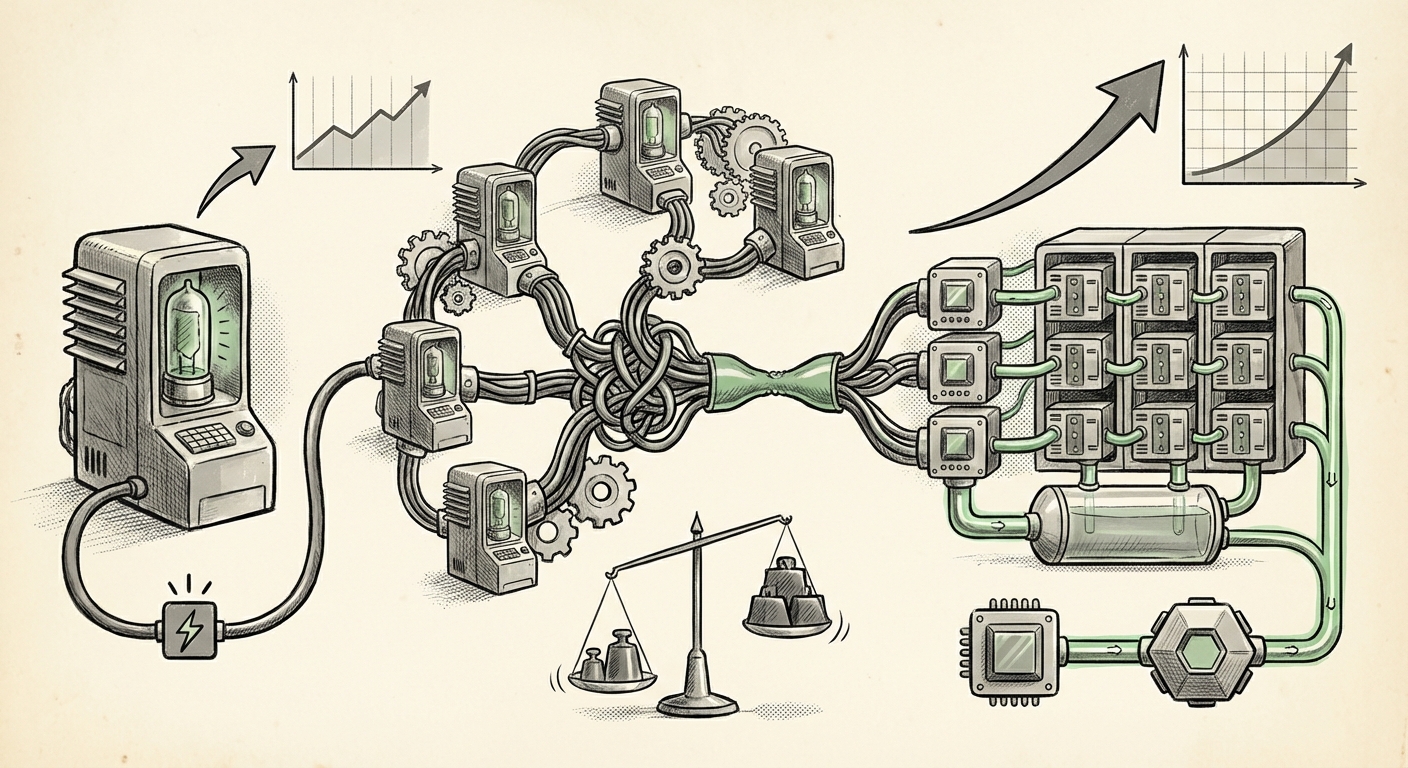
AI voice agents have moved from demo videos to real call queues. They answer, they listen, they look things up, and they take action. But here is the part most companies learn the hard way: the intelligence of the voice model is almost never the reason these systems succeed or fail. The integration is. An AI voice agent that cannot see your customer data, cannot write back to your system of record, and cannot trigger a real workflow is just an expensive way to say "I understand your frustration" over and over again.
This guide breaks down how AI voice agents connect to CRM and help desk platforms, what separates a working deployment from a science project, and what this shift means for how businesses will handle customer conversations for the next decade.
Why the Phone Line Became the Hardest AI Problem
Text-based AI had it easy in one important way: time. A chatbot can think for three seconds before answering and nobody notices. A voice agent cannot. Human conversation runs on a tight rhythm of turn-taking, interruptions, and tiny pauses. If the agent hesitates too long, the caller says "hello? are you there?", and the illusion of a competent assistant collapses.
So voice agents have to do several jobs at once, and do them fast:
- Hear accurately, turning messy, accented, background-noisy speech into text.
- Understand intent, figuring out what the person actually wants, even when they ramble.
- Fetch context, pulling up the account, the order, the ticket history, the open issue.
- Decide and act, taking a real action in a real system, not just describing one.
- Speak naturally, responding in a voice that sounds human enough to keep trust.
Every one of those steps is solvable today. The challenge is stitching them together into one loop that finishes in about the time it takes a person to breathe. That stitching is what "integration" means. And it is where the real engineering lives.
What "Integration" Actually Means for a Voice Agent
When people say an AI voice agent is "integrated" with a CRM or help desk, they usually mean something much shallower than what is needed. Plugging the agent into a phone system and pointing it at a knowledge base is the easy part. The hard part is making the agent a genuine participant in the business system.
1. Identity: Know Who Is Calling
The single biggest upgrade to any voice agent is knowing who is on the line before they finish their first sentence. A phone number lookup against the CRM can instantly surface the customer's name, account tier, recent purchases, and open tickets. That changes the entire conversation. Instead of "Can I get your order number?" the agent can say, "Hi, is this about the delivery that's running late?"
Identity resolution is also where privacy work begins. Not every caller matches a record. Not every matched record should be fully visible to the agent. Households share phone numbers. People call from new devices. The integration has to handle the ambiguous cases gracefully rather than confidently guessing wrong.
2. Context: Read Before You Speak
Reading from the CRM is table stakes, but the quality of what gets read matters enormously. Dumping an entire customer record into a prompt is both slow and counterproductive. Good integrations pull a focused slice: the last few interactions, the status of anything open, the fields that matter for the likely intent, and any flags, like a VIP tier or an active dispute, that should change how the agent behaves.
This is also where help desk integrations earn their keep. A ticket history tells the agent what has already been tried. Nothing erodes customer patience faster than explaining the same problem to a machine that has no idea it is the third call about it.
3. Write-Back: Leave a Trail
Read-only integrations create a new problem: the voice agent becomes a shadow channel. Calls happen, things get resolved, and the CRM has no record of any of it. The next human agent is flying blind, and the customer has to start over.
A proper integration writes back, logging the call, summarizing the conversation, attaching a transcript, tagging the outcome, updating ticket status, and creating a follow-up task when the agent could not finish the job. This is unglamorous work, but it is the difference between a voice agent that strengthens your customer record and one that quietly hollows it out.
4. Action: Close the Loop
The most valuable voice agents do not just talk, they transact. They reschedule the delivery. They issue the return label. They update the address. They escalate to a human with full context attached. Every one of those actions is an API call into a system that was never designed with a conversational agent in mind.
This is where permissions and guardrails become critical. An agent that can change a shipping address can also change the wrong one. The right pattern is a narrow, explicit set of allowed actions, with confirmation steps for anything irreversible and a hard handoff to a human for anything that smells like money, legal risk, or account security.
5. Handoff: Fail Gracefully, Every Time
Every voice agent will meet a caller it cannot help. The measure of a good deployment is not how rarely that happens, it is how well it is handled. A strong handoff passes the human agent a warm transfer, a summary of what was already discussed, the identified customer record, and the reason for escalation. A weak handoff drops the caller into a fresh queue with no context, which is worse than having no AI at all.
The Metrics That Actually Matter
Teams often launch voice agents and immediately track the wrong numbers. Call volume handled and average call duration feel impressive but say little about whether the system is working. The metrics that predict long-term success look different:
- Containment with resolution, not just "the call ended without a human," but "the customer's issue was actually solved."
- Repeat contact rate, how many callers come back within days with the same problem. This is the single best signal of failure.
- Handoff quality, how often escalations arrive with usable context attached.
- Data completeness, the percentage of AI-handled calls that produced a clean, useful record in the CRM or help desk.
- Customer sentiment on the call, measured honestly, not just at the end when people are being polite.
A voice agent that closes lots of calls but sends customers back two days later is not saving money. It is deferring cost and adding frustration.
Where This Is Heading
Three shifts are worth watching closely, because they change the strategic math for every business.
Voice Agents Become the Front Door, Not the Overflow
Early deployments were framed as overflow handling, picking up calls when the human team was slammed. That framing is already fading. As integrations mature, voice agents are being positioned as the first line of contact for routine, high-volume, well-understood requests, with humans focused on complex and emotional cases. This is a rethinking of the contact center org chart, not just a tool purchase.
The CRM Becomes a Conversation Record
When every call is transcribed, summarized, tagged, and linked to a customer record, the CRM stops being a database of manual notes and becomes a living record of what customers actually said. That is a huge unlock for personalization, for product feedback, and for training both AI and human teams. It also raises the bar on data hygiene, because messy records now produce messy AI behavior at scale.
Integration Becomes the Moat
Voice models are becoming commoditized. Anyone can access a natural-sounding voice. What is not commoditized is the deep, reliable, permission-aware wiring into the systems where a business actually runs. Companies that invest in that wiring, clean data models, well-documented APIs, clear action boundaries, will get dramatically more value from whatever voice technology arrives next. Those that do not will keep rebuilding the same broken bridge.
A Practical Playbook
For teams starting or fixing a voice agent deployment, a few habits separate the winners:
- Start with one high-volume, low-risk intent. Order status. Appointment rescheduling. Password reset. Get one flow genuinely excellent before expanding.
- Fix your data before you fix your prompts. Most "AI failures" are data failures wearing a costume.
- Design the handoff first. Build the escape hatch before you build the happy path.
- Log everything, review transcripts weekly. Real calls are the best product roadmap you will ever get.
- Treat permissions as a product feature. Least-privilege access, confirmation steps, and clear audit trails are not bureaucracy, they are what makes autonomy safe enough to ship.
- Measure repeat contact, not just containment. If the problem comes back, the call was not a success.
The Bigger Picture
The arrival of capable voice agents is not really a story about better phone trees. It is a story about what happens when AI stops being a destination, a chatbot you visit, and becomes a layer that operates inside the systems where work already happens. The companies that understand this will treat the CRM and help desk connection as the core product, not an afterthought. They will invest in clean data, careful permissions, honest metrics, and graceful failures.
The ones that do not will discover the same lesson every automation wave teaches: the demo is easy, the integration is the work, and the customer experience is the verdict.