Apple Intelligence Is Finally Coming to China, Here's Why the Alibaba Deal Changes Everything
Apple Intelligence is heading to China in December, and it is not going alone. The company has teamed up with Alibaba to bring its AI features to the world's largest smartphone market. That single decision, pairing the world's most valuable hardware brand with China's biggest cloud and AI player, tells us more about where artificial intelligence is going than a dozen product launches.
This is not just a software update. It is a signal that the AI race has entered a new phase. The winners will not be the companies with the smartest model. They will be the companies that can deliver AI inside the rules of each market, on hardware people already own, in a way that feels invisible.
Here is what the move means, why it matters, and what businesses should do about it right now.
What Just Happened
The headline is simple: Apple Intelligence will arrive in China in December, powered in part through a partnership with Alibaba. After months in which Apple's AI features rolled out in other parts of the world, the China launch finally has a date and a local partner.
That is the whole announcement. And yet it is enormous, because of what it implies.
Apple Intelligence is Apple's umbrella name for the AI features built into its devices, things like smarter writing tools, smarter assistants, and AI that runs partly on the phone itself rather than shipping every request to a distant data center. Bringing that stack to China required something Apple could not build alone: a local AI partner with the infrastructure, the language expertise, and the regulatory standing to operate there.
Alibaba fits that description better than almost anyone. It runs one of China's largest cloud platforms and has built its own family of AI models. For Apple, that means a partner who can handle the heavy computing and local language work while Apple keeps its famous grip on privacy and user experience.
Why Apple Needed a Local Partner
Apple is a company that likes to control every layer of its products. So why hand a piece of its most important new feature to an outside firm?
Three reasons stand out.
- Rules, not just technology. China has rules about how AI services are offered to the public, and about where data lives and who can process it. A foreign company cannot simply switch on a cloud AI service there. You need a local partner that already meets those requirements.
- Language and culture. English-language AI is a solved-ish problem. Chinese is not just a translation layer, it is different grammar, different slang, different search habits, and a very different internet. A model built for the West will feel clunky to a user in Shanghai.
- Scale and speed. Serving AI to hundreds of millions of phones takes serious computing power. Building that from scratch in a new market would take years. Renting it from a partner who already has it takes months.
This is the pattern that will repeat across the industry. AI is not one global product. It is a set of local products wearing the same logo.
Why Alibaba Comes Out a Winner
The deal is great for Apple because it unlocks a market. It may be even better for Alibaba.
Think about what Alibaba gets. It gets its AI infrastructure embedded in one of the most premium devices on earth. It gets a global brand vouching for its technology in front of Chinese consumers. And it gets volume, real, sustained, everyday usage, not a benchmark score.
For Alibaba, this is a showcase. Every company in China considering an AI provider will now see Alibaba's name attached to Apple. That is worth more than most advertising campaigns, and it positions Alibaba as the default "safe" choice for enterprises that want AI that already works at national scale.
It also cements a bigger idea: cloud providers are becoming the gatekeepers of AI. The model matters, but the pipes, the compliance, and the data centers matter just as much. Alibaba just proved it can be the pipe for the most demanding customer in the world.
What This Means for the Future of AI
1. AI Is Splitting Into Regional Blocs
For the last few years, AI has felt borderless. One model, available everywhere, speaking every language. That era is ending.
What we are watching is the rise of regional AI stacks: a US-centric stack, a China-centric stack, and a growing set of local stacks in Europe, India, and the Middle East. Each has its own models, its own cloud providers, and its own rulebook.
Apple's move is the clearest proof yet. The same feature, on the same phone, will be powered by different partners depending on where you buy it. Companies that plan for one global AI vendor are planning for a world that no longer exists.
2. On-Device AI Gets Its Biggest Test
One of the most important things about Apple Intelligence is that a lot of it runs on the phone itself. That is a privacy choice and a performance choice, but it is also a strategy.
When AI runs on the device, it works without a strong connection, responds instantly, and keeps your data in your pocket. Inside China, on-device processing also sidesteps some of the thorniest questions about where personal data goes.
If this launch goes well, expect it to become the template. The next wave of AI features will be split: the personal, private stuff handled locally; the heavy lifting sent to the cloud. That hybrid design is the future of consumer AI.
3. "Has AI" Stops Being a Selling Point
A year ago, a phone with AI features was special. By December, in the biggest market on earth, it will be expected.
That shift matters more than it sounds. When AI is everywhere, it stops being a feature and becomes a baseline, like a camera or a touchscreen. The competition then moves to who uses it best, not who has it at all.
For every company watching, the lesson is blunt: if your product roadmap still lists "add AI" as the goal, you are already behind. The goal is to make AI so useful that customers stop noticing it.
4. Partnerships Beat Solo Builds
Apple is one of the few companies on the planet with the money to build anything it wants. It still chose a partner.
That should reset expectations. The era of every company building its own model from scratch is fading. The winners are assembling: a foundation model here, a cloud partner there, a compliance specialist somewhere else. Speed comes from assembling, not from reinventing.
Practical Implications for Businesses
This is not just a consumer story. Here is what leaders in other industries should take from it.
- Audit your AI supply chain. If your AI features rely on a single vendor, ask what happens when your product crosses a border. Regional partners are no longer a nice-to-have; they are a risk control.
- Plan for hybrid architecture. Decide now which AI tasks belong on the device and which belong in the cloud. This affects cost, speed, privacy, and even which regulations apply to you.
- Localize the models, not just the words. Translation is the easy part. The hard part is tone, context, and local behavior. Budget for it.
- Treat compliance as a product feature. The companies that can say "our AI meets the rules here" will win deals faster than the ones with the best benchmark scores.
- Watch usage, not demos. When hundreds of millions of people get AI on their phones by default, real usage patterns will finally show what people actually want. That data will be more valuable than any survey.
What to Watch Next
A few things will tell us whether this is a turning point or a footnote.
First, adoption speed. If Chinese users take to Apple Intelligence quickly, it becomes a blueprint for how global brands enter regulated AI markets. If it feels bolted on, the lesson will be that local partners are hard to integrate well.
Second, whether this spreads to services and enterprise. A phone feature is the front door. The real money is in AI inside payments, shopping, workplace tools, and cloud services. Watch whether the Apple–Alibaba tie-up widens beyond the device.
Third, how competitors respond. Every other phone maker and every other cloud provider in the region now has a benchmark to beat. Expect a wave of similar announcements, and expect the word "local partner" to show up in a lot of press releases.
Actionable Insights
If you take nothing else from this moment, take these four moves.
- Build a two-track AI plan. One track for markets you serve directly, one for markets that require local partners. Different rules, different partners, same brand promise.
- Design for privacy by default. Favor on-device processing for anything personal. It is better for trust, better for speed, and better for the regulator conversation.
- Pick partners on operations, not buzz. Ask about data centers, uptime, local language quality, and compliance history. The model is the easy part to compare.
- Measure quiet value. The best AI features do not get applauded. They get used. Track time saved and tasks finished, not mentions in a launch event.
The Bigger Picture
The Apple–Alibaba deal is easy to read as a business headline: a big phone company solves a big market problem. But the deeper story is about maturity.
AI is growing up. It is moving from demos and benchmarks into shipping products that must obey laws, speak local languages, and work on hardware that people already own. That transition is less glamorous than a model launch, but it is the one that decides which companies survive the decade.
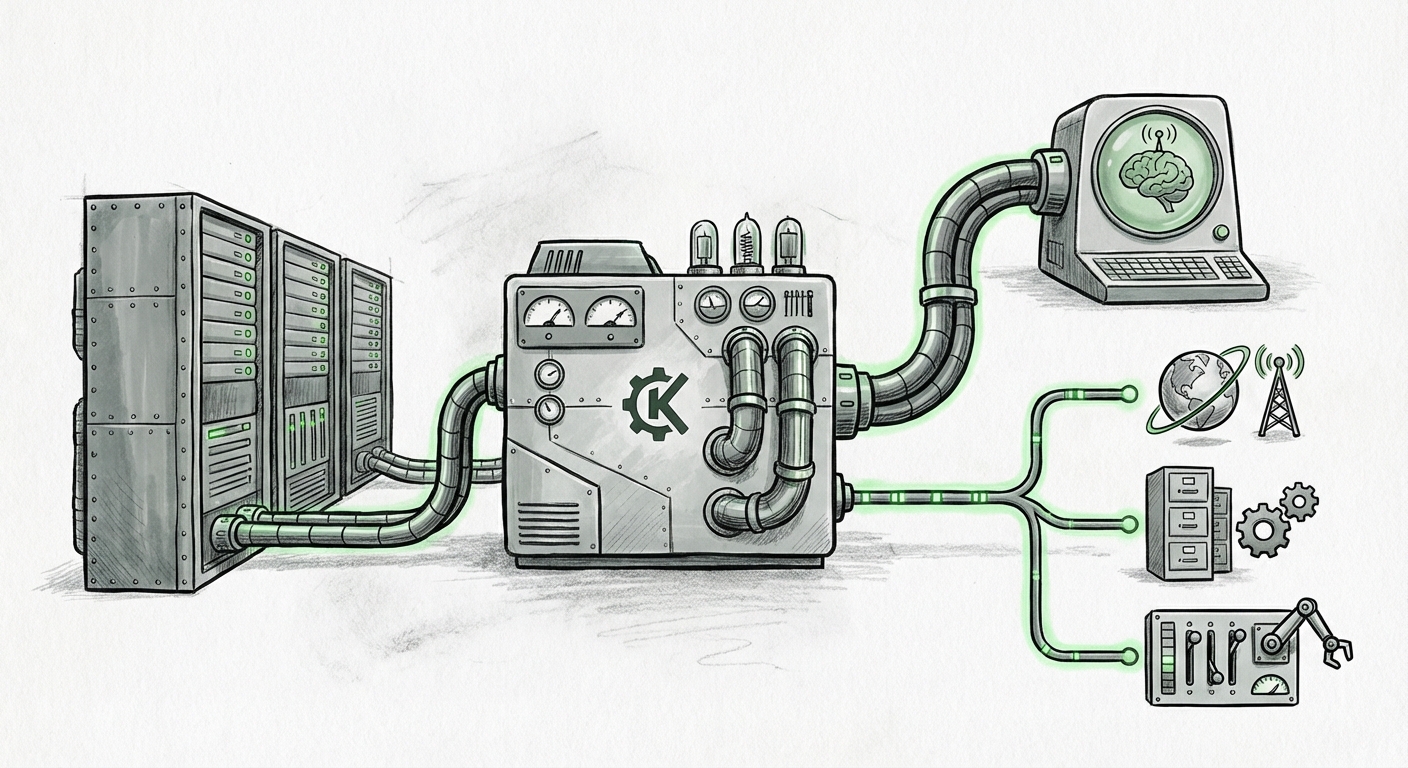
Apple needed a partner to do it right. Alibaba needed a showcase to prove it can carry the load. Both got what they wanted. The rest of us got a preview of the next phase of AI: not one giant brain in the cloud, but many local brains, wired into the devices in our pockets, quietly doing the work.
December is the test. Watch closely, because whatever happens in China will shape what your AI looks like everywhere else.