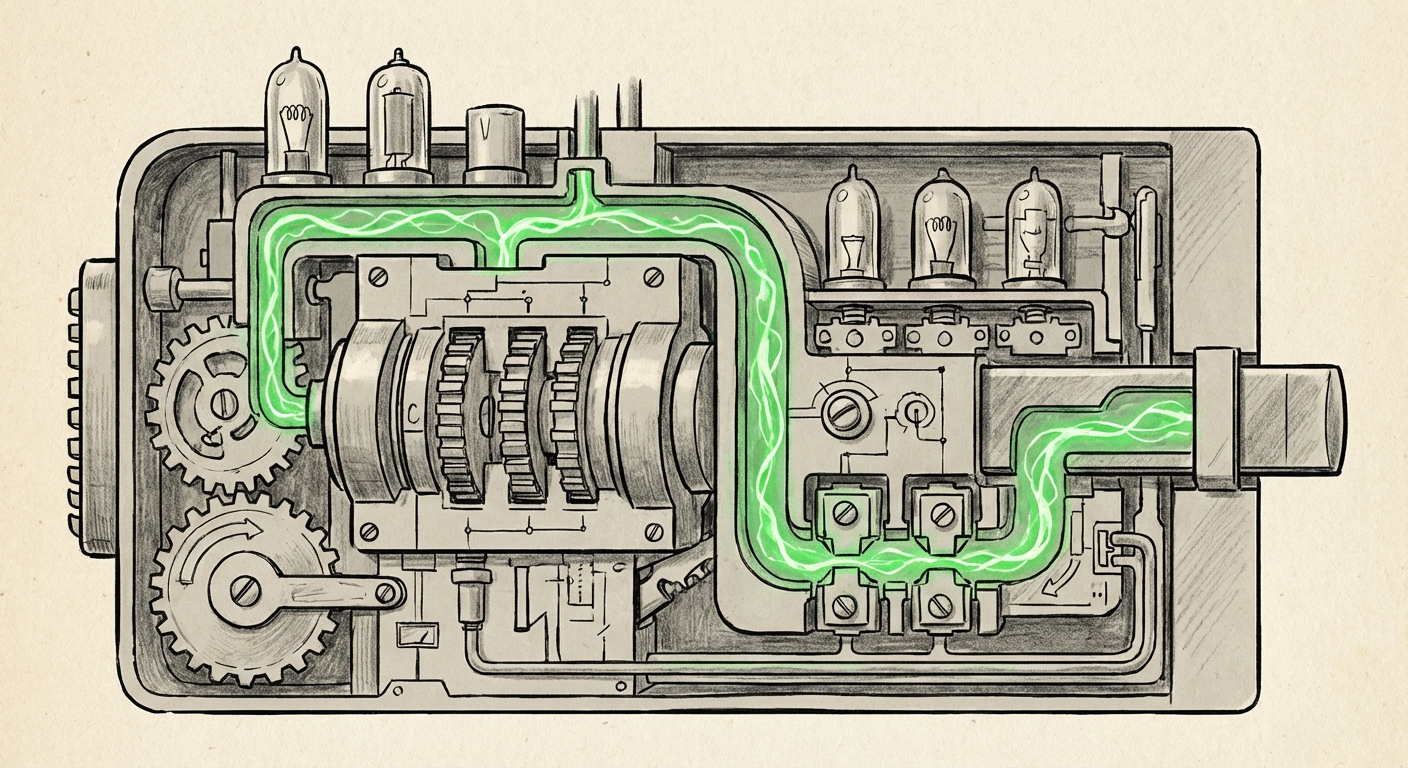
Beyond the Harness: Why AI Agents Are Moving to a Canvas, and What It Means for the Future of Work
For the past few years, AI agents have lived inside a “harness.” Think of a harness as a set of straps and rails that keeps an agent safe and useful. It gives the agent tools, limits what it can do, and watches its every move. Harnesses made agents reliable enough for real work. But a new presentation published on November 3, 2026, titled Beyond the Harness: Canvas for AI Agents, argues that the harness is now holding agents back. The next step is a canvas, a wide, open workspace where agents and humans can build, rearrange, and collaborate in real time.
That shift sounds simple. It is not. Moving from a harness to a canvas changes how we design AI, how businesses use it, and how society shares control with machines. This article breaks down what the presentation implies, why it matters, and what you should do about it.
The Harness Era: What It Is and Why It Worked
A harness for AI agents is the orchestration layer around a language model. It includes the tools an agent can call, the memory it can access, the rules it must follow, and the logs that record its behavior. If you have used an AI agent to book a meeting, summarize a document, or answer a customer question, you have used a harness.
Harnesses solved a real problem. Early agents were unpredictable. They would hallucinate, loop endlessly, or wander off task. The harness gave them a narrow path: here are your tools, here are your limits, here is how we check your work. That made agents safe enough for pilots and early production. It also made them easy to debug. You could trace every step and see exactly where things went wrong.
But the harness has a cost. It is brittle. It struggles with open-ended tasks. It forces every workflow into a rigid script. And it makes it hard for multiple agents to work together, because each one lives in its own silo. The presentation’s title suggests we have hit the limits of that model.
The Canvas Concept: What Changes
A canvas is not a better harness. It is a different metaphor. A canvas is a shared space. On a canvas, you can place an agent here, a tool there, a data source over there. You can draw connections. You can drag, drop, and rearrange. You can invite another agent or a human to work in the same space.
This is more than a user interface change. It changes the underlying architecture. Instead of forcing every agent through a fixed pipeline, a canvas lets agents discover and compose capabilities on the fly. Instead of one agent doing one job, a canvas supports many agents working in parallel, sharing context, and handing off tasks. Instead of hiding the agent’s reasoning behind a log file, a canvas makes the work visible and manipulable.
The canvas model turns AI agents from tools you call into colleagues you work beside. That is a big shift. It means the value moves from the model itself to the orchestration layer, the canvas, where agents are assembled, monitored, and improved.
Key Trends Driving the Shift
Several trends make the canvas idea inevitable.
1. Multi-agent systems need coordination
Single agents are giving way to teams of agents. One agent researches, another writes, a third checks facts. Coordination is messy. A canvas gives those agents a shared map. They can see what others are doing and avoid stepping on each other’s work.
2. Creative and unstructured tasks demand flexibility
Harnesses work well for well-defined tasks like “schedule a meeting.” They struggle with messy tasks like “design a marketing campaign” or “debug this codebase.” A canvas lets humans and agents sketch, iterate, and rearrange without rewriting the whole script.
3. Human oversight becomes supervisory, not micro
In a harness, a human often approves each step. That does not scale. On a canvas, a human sets the goal, watches the whole workspace, and steps in only when needed. The human becomes a manager, not a micromanager.
4. Transparency and debugging become visual
Logs are hard to read. A canvas shows the work. You can see which agent did what, where data flowed, and where a mistake happened. That visual transparency builds trust and speeds up fixes.
5. The model is commoditizing; the experience is not
Large language models are becoming interchangeable. The differentiator is how you use them. A canvas is a proprietary, sticky experience. It captures how your business works. That is where competitive advantage will live.
What This Means for the Future of AI
If the canvas becomes the standard, AI agents will feel less like software and more like a team. You will not “prompt” an agent. You will arrange a workspace. You will not write a rigid workflow. You will design an environment where agents can self-organize.
That changes the skills we need. Prompt engineering will fade. The new skill is agent experience design, the art of arranging agents, tools, and data so that work flows naturally. Designers, operations people, and domain experts will become agent orchestrators.
It also changes what agents can do. On a canvas, agents can tackle open-ended problems. They can try different approaches in parallel. They can learn from each other. That could unlock breakthroughs in research, logistics, and customer service, areas where rigid harnesses have stalled.
But there is a risk. A canvas is less controlled than a harness. Agents might wander. They might collide. They might do things no one intended. The presentation’s title is a warning as much as a promise: going beyond the harness means taking on new responsibility for safety, governance, and accountability.
Practical Implications for Businesses
Business leaders should not wait for a finished canvas product. They should start preparing now.
- Pilot visual orchestration tools. Look for platforms that let you drag and drop agents, tools, and data sources. Even early versions will teach you how your workflows need to change.
- Invest in observability. A canvas without good logging is chaos. Make sure you can trace every action and replay any session.
- Redesign workflows, not just tasks. The canvas model rewards end-to-end thinking. Map your business processes and ask: where could a team of agents plus a human supervisor do this better?
- Upskill your people. Train operations staff to think like orchestrators. Teach them how to set goals, monitor agent teams, and intervene safely.
- Evaluate vendors on composability. Ask: Can I move an agent from one canvas to another? Can I mix and match tools? Avoid lock-in.
Start small. Pick one messy, high-value process, like onboarding a new client or resolving a complex support ticket. Build a canvas for it. Learn what breaks. Then scale.
Societal Implications
The canvas shift will change how we work, but not in the way headlines often predict. It will not eliminate most jobs. It will change what people do. More time will go to supervision, design, and exception handling. Less time will go to repetitive execution.
That is good news for many workers. It makes jobs more interesting. But it also raises the bar. Workers will need to understand how agents behave, how to read a canvas, and how to step in when things go wrong. Digital literacy will expand to include agent literacy.
There is also a risk of over-automation. A canvas makes it easy to add more agents. It might also make it easy to lose track of who is responsible when something fails. Society will need new norms and rules for accountability. If an agent team makes a mistake, who is at fault? The person who arranged the canvas? The vendor who built the agents? The model provider? These questions are not resolved yet.
Accessibility is another concern. A visual canvas could be empowering for some and confusing for others. We need designs that work for people with different abilities and backgrounds. Otherwise the canvas becomes a new gatekeeper.
Actionable Insights
Here is what to do next, depending on your role.
For business leaders
- Run a canvas experiment. Give a small team a visual agent orchestration tool and a real problem. Measure speed, quality, and trust.
- Define your governance early. Write down who can add agents, what they can access, and how you audit decisions.
- Watch for the “supervisor” role. Create a new job family for people who manage agent teams. Train them well.
For developers and designers
- Build composable agent components. Think of agents as LEGO bricks, not monoliths. Make them easy to snap together.
- Design for visual debugging. Show the state of every agent at a glance. Make it easy to pause, inspect, and rewind.
- Study how people arrange physical workspaces. The best canvas interfaces will borrow from whiteboards, control rooms, and workshops.
For policymakers and educators
- Focus on outcomes, not mechanisms. Regulate the safety of agent teams, not the specific way they are orchestrated.
- Fund agent literacy programs. Teach people how to supervise, not just prompt.
- Encourage transparency standards. Require that agent canvases can be audited by third parties.
The Road Ahead
The presentation Beyond the Harness: Canvas for AI Agents is a signpost, not a finished map. It tells us that the harness era is ending. The canvas era is beginning. That shift will be messy. Some agents will fail. Some businesses will over-invest. Some workers will feel left behind.
But the direction is clear. AI agents are becoming too capable to be strapped into rigid harnesses. They need room to work. They need to collaborate with each other and with us. The canvas gives them that room. The challenge is to build canvases that are open enough for creativity and safe enough for trust.
The companies that learn to design and govern canvases will have a massive advantage. They will ship faster, serve customers better, and unlock new kinds of work. The companies that cling to the harness will find themselves with brittle systems and frustrated teams.
The future of AI is not a better model. It is a better workspace. The canvas is that workspace. And the time to start building it is now.