Brookfield’s $27 Billion AI Data Center at a UK Power Station: The Future of AI Is Electric
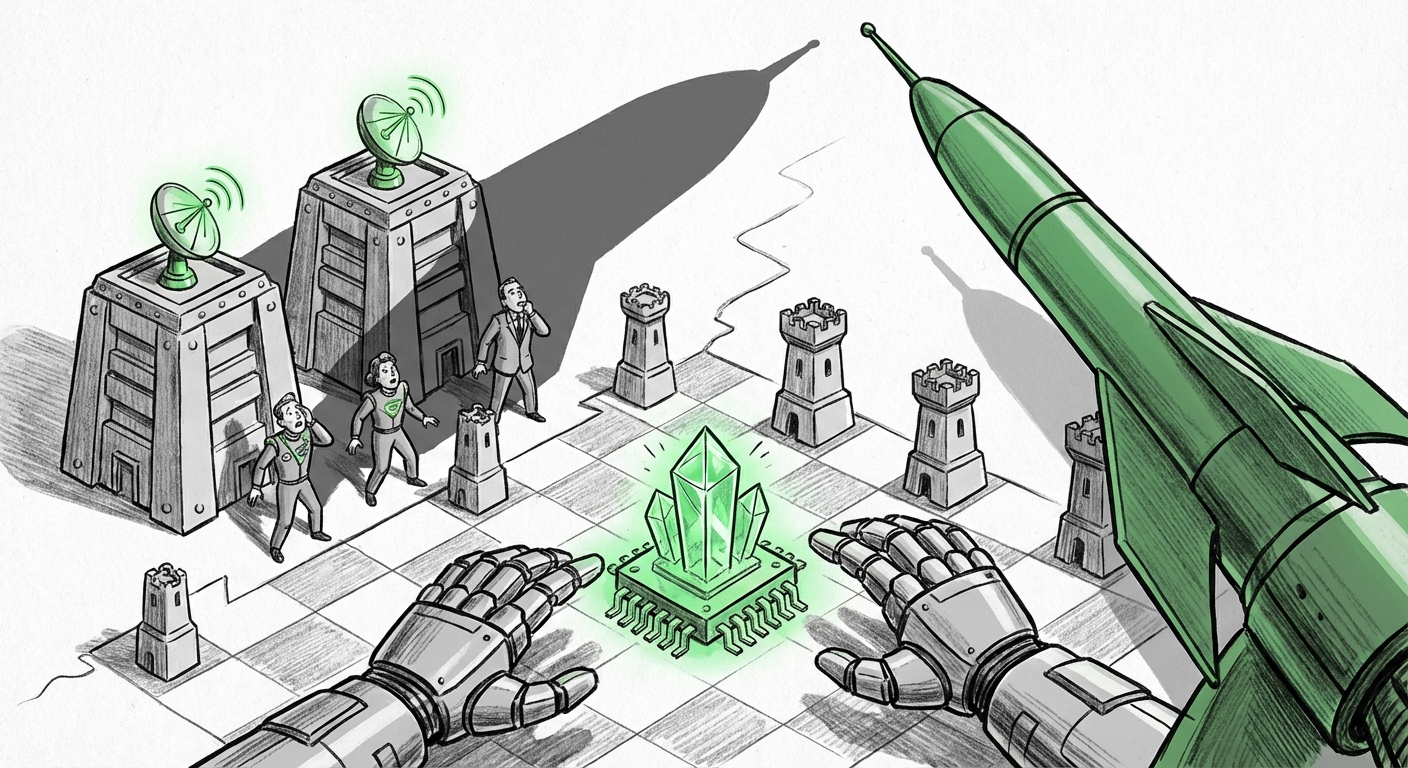
The next big AI breakthrough may not come from a new model. It may come from a power station. Brookfield plans to build a $27 billion AI data center at a UK power station, a move that turns a simple idea into a massive statement: AI’s future depends as much on electricity and land as it does on chips and code.
That number, $27 billion, is hard to ignore. It is the kind of money that usually goes to national infrastructure, not a single computing site. But AI has become an infrastructure story. The models that write, code, design, and answer questions need enormous amounts of computing power. That computing power needs enormous amounts of electricity. And electricity is exactly what a power station site can offer.
This plan is not just about one project in the UK. It is a signal about where AI is heading, who will control it, and what businesses and governments need to do next. The age of AI as a pure software industry is ending. The age of AI as an energy and infrastructure industry has begun.
Why a Power Station Is Suddenly Prime AI Real Estate
For decades, power stations were built far from city centers, often on large industrial sites with strong connections to the electricity grid. Many are now retiring or changing how they operate. That makes them attractive for a new kind of tenant: the AI data center.
AI data centers are not like the server rooms of the past. They are factories for computation. They run thousands of processors at once, often at very high density. They produce heat. They need cooling. They need huge, reliable, uninterrupted power. A site that already has grid connections and industrial infrastructure can save years of planning and construction time.
That is the practical logic behind Brookfield’s plan. A power station site can offer land, grid access, and an industrial setting. In a world where new grid connections can take a long time, reusing an existing energy site could be a major advantage. The plan shows that AI companies and their investors are now thinking like energy companies.
The Real Bottleneck for AI Is No Longer Just Chips
For the past few years, the AI conversation has focused on chips. Who can get the fastest processors? Who can train the largest model? Who can buy enough hardware? Those questions still matter. But they are no longer the only bottleneck.
The new bottlenecks are physical: power, land, permits, cooling, and grid connections. You can buy chips if you have money. You cannot instantly build a power line, a substation, or a data center campus. Those take time, planning approval, and community support. They also take capital, and $27 billion is a clear example of the scale required.
This is why Brookfield’s plan matters. It shows that the AI race is moving from the software layer into the physical layer. The winners will not only be the companies with the best models. They will be the companies and countries that can deliver reliable, affordable, and clean power at scale.
What This Means for the Future of AI
AI Becomes an Energy Business
AI companies have already become major buyers of cloud computing. Now they are becoming major buyers of electricity. As AI use grows, the energy demand will grow with it. Training a large model can take huge amounts of power. Running millions of AI queries every day also takes power, and that demand lasts for years.
This changes how AI companies plan. They cannot just think about model quality. They must think about energy contracts, data center locations, cooling systems, and grid reliability. The CFO and the energy team become as important as the research team. AI strategy becomes infrastructure strategy.
Compute Will Follow Power
In the future, AI work may be placed where power is available and affordable. That does not mean all AI will move away from cities. Some AI, especially real-time services, will need to be close to users. But large training runs and heavy workloads can be located wherever power, land, and cooling are best.
This could create a new map of AI. Regions with strong grids, supportive planning rules, and available industrial land may attract major AI investment. Regions without those advantages may find themselves relying on outside providers. The geography of AI will be shaped by electrons, not just fiber-optic cables.
The UK Makes a Big Bet
The UK has been trying to position itself as a leader in AI. A $27 billion AI data center at a power station would be a major vote of confidence in that ambition. It would also put pressure on the UK’s planning system, grid operators, and local communities to deliver at speed.
If the plan succeeds, it could become a template. Old power stations could be reborn as AI campuses. That would reuse industrial land, support energy infrastructure, and create high-skill jobs. If it fails or stalls, it will show how hard it is to turn AI ambition into real-world construction.
Practical Implications for Businesses
For Tech Companies
Tech companies should stop treating energy as someone else’s problem. AI product roadmaps need to include power costs, latency needs, and location strategy. A model that is cheap to train but expensive to run may not be a good business. A service that cannot get enough power may not scale.
Companies should also build relationships with energy providers and infrastructure investors. The ability to secure long-term power contracts may become a competitive advantage. In some cases, owning or co-investing in data center capacity may be the only way to guarantee access.
For Traditional Businesses
Most businesses will not build a $27 billion AI data center. But they will buy AI services that depend on them. That means AI prices may be affected by energy costs, data center availability, and regional power constraints. Companies should model these risks when they plan their AI budgets.
Businesses should also ask their AI vendors hard questions. Where is the compute hosted? What is the energy strategy? How resilient is the service? These questions may sound technical, but they affect cost, reliability, and reputation. A vendor with a weak power plan is a vendor with a hidden risk.
For Investors
Brookfield’s plan shows that AI exposure is not only about software stocks. It is also about infrastructure: power, data centers, cooling, grid equipment, and construction. Investors who want to understand AI should look at the physical supply chain that makes AI possible.
The $27 billion figure also shows how much capital is needed. That creates opportunities for large infrastructure investors and risks for companies that cannot keep up. The AI boom may favor players with long-term capital and energy expertise, not just fast product teams.
For Governments and Regulators
Governments face a difficult balance. They want AI investment, jobs, and technological leadership. But they also need to protect energy consumers, local communities, and the environment. A project of this size will require clear planning rules, fast grid connections, and transparent community engagement.
Policymakers should treat AI data centers as part of national infrastructure planning, not as ordinary commercial buildings. That means coordinating energy, digital, and planning policy. It also means setting rules for efficiency and transparency so that AI growth does not create hidden costs for the public.
Actionable Insights
- Treat power as part of your AI strategy. Include energy costs, availability, and location in every major AI decision.
- Ask vendors about infrastructure. Find out where AI workloads run and how power risks are managed.
- Plan for higher variability. AI demand can grow quickly, so build flexibility into contracts and capacity plans.
- Watch the planning process. Large AI projects can be delayed by grid connections, permits, and community concerns.
- Invest in efficiency. Better cooling, smarter scheduling, and efficient models can reduce power needs and costs.
- Engage early with communities. Local support can make or break a large infrastructure project.
- Look beyond the model layer. Some of the biggest AI opportunities will be in power, cooling, construction, and grid technology.
Risks and Open Questions
A $27 billion plan is a plan, not a finished building. Many things can change. Financing may shift. Planning approval may take time. Grid connections may face delays. Construction may cost more than expected. The technology may change, making some data center designs less useful. And demand for AI may not grow in a straight line.
There is also a risk of stranded assets. If AI models become much more efficient, or if demand grows more slowly than expected, some large data centers could be underused. That is a real concern for investors and for the communities that host these projects.
Environmental and community questions will also matter. Large data centers use significant amounts of power and land. Even when the power is clean, the local impacts need to be managed carefully. Transparency and good planning will be essential.
Conclusion: The AI Future Will Be Built, Not Just Coded
Brookfield’s plan for a $27 billion AI data center at a UK power station is a wake-up call. It shows that AI is no longer just a software story. It is an energy story, an infrastructure story, and a land-use story. The companies that win the next phase of AI will not only have great models. They will have access to power, the ability to build at scale, and the trust of the communities where they operate.
For businesses, the lesson is simple: treat AI as a physical system, not just a digital tool. For governments, the lesson is that AI policy is energy policy. For society, the lesson is that the AI future will be built in the real world, with real power lines, real buildings, and real trade-offs.
The $27 billion bet is bold. But it points to a future that is already arriving: AI that is electric, industrial, and deeply connected to the energy systems that power modern life. The next AI race will be won not only by the best algorithms, but by the best infrastructure.