AI Inference Startup Fal Raises Capital at a $16 Billion Valuation, And It Changes How We Should Think About AI
For the last few years, the AI story has been told in one direction: bigger models, bigger budgets, bigger training runs. The headline number everyone watched was how much computing power it took to build a model. That story is now getting a sequel, and the sequel is about what happens after the model is built.
Fal, a startup focused on AI inference, has raised capital at a $16 billion valuation. That single data point says a lot about where money, talent, and strategic attention are heading. Inference, the act of running a trained model to actually produce an answer, an image, or a video, used to be an afterthought. Now it is worth billions.
Here is what that shift means, why it matters to anyone who uses AI at work, and how businesses should prepare.
What "Inference" Actually Means, and Why It's Suddenly Worth Billions
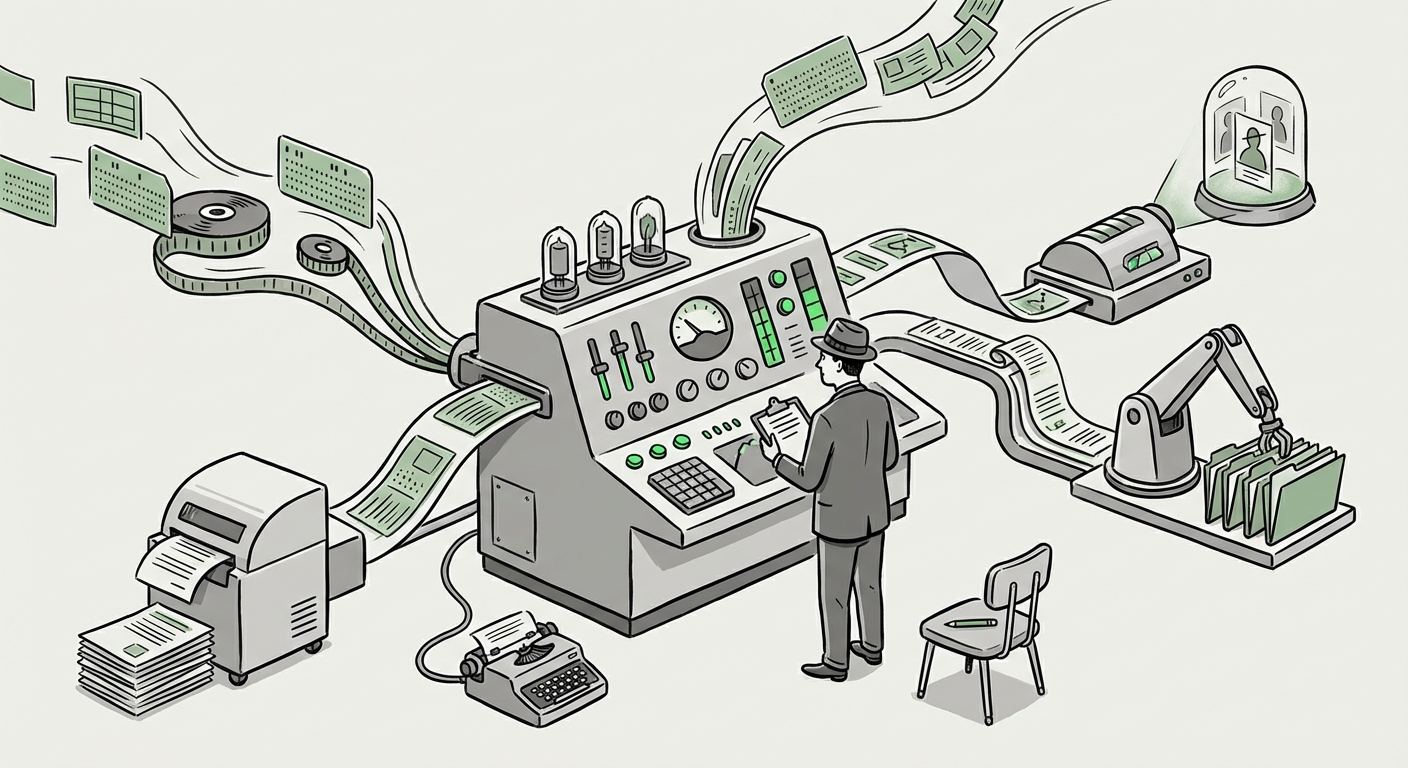
Think of a trained AI model like a very expensive, very complicated kitchen. Training is building the kitchen: buying the appliances, hiring the chefs, testing recipes for months. Inference is dinner service, every single order, every night, at speed, without mistakes.
Most people only ever interact with the dinner service. Every time you ask a chatbot a question, generate an image, caption a video, or let a recommendation engine pick your next show, you are triggering inference. It is the part of AI that customers actually touch, and it is the part that costs money every single time it runs.
That has a big consequence. Training is a one-time (if enormous) cost. Inference is a forever cost. The more successful an AI product becomes, the more inference it needs, and the more money it burns serving users. Growth and cost rise together. Whoever can make inference faster and cheaper controls the economics of the entire AI industry.
The $16 Billion Signal: Capital Is Moving From Training to Serving
A $16 billion valuation for an inference specialist tells us three things at once.
1. Investors believe AI usage will keep compounding
A valuation like that is not a bet on one product. It is a bet on volume, on the idea that AI-generated content and AI-powered features will become so routine that demand for fast, reliable serving keeps climbing for years. Investors are effectively saying: the models are good enough now, so the bottleneck has moved to delivery.
2. Speed has become a product feature
In consumer and creative software, latency is not a technical detail, it is the difference between a tool people love and a tool they abandon. Wait ten seconds for a result and the flow breaks. Get it in under a second and you can iterate, experiment, and stay in the creative zone. Startups built specifically around serving models quickly are, in effect, selling momentum. That is a durable advantage worthy of a large valuation.
3. The infrastructure layer is being repriced
For years, the "picks and shovels" winners of the AI boom were chipmakers and cloud providers. The rise of a company like Fal suggests a third category is forming: the specialists who sit between raw computing power and the apps people use. They manage model routing, queueing, hardware utilization, and reliability. In a world where every company wants AI but few want to run GPU clusters themselves, that middle layer becomes enormously valuable.
Why Inference Is Genuinely Hard, and Where the Margins Hide
It would be easy to assume inference is a solved problem. You just run the model, right? In practice, serving AI at scale is a nest of trade-offs.
- Utilization: Expensive hardware sitting idle is money on fire. The best inference providers keep chips busy nearly all the time.
- Cold starts: Loading a model on demand can take far longer than the request itself. Hiding that delay is a real engineering achievement.
- Bursty demand: AI traffic does not arrive in a neat line. A viral feature can multiply load overnight, and the provider must absorb it without crashing.
- Cost per output: Every fraction of a cent saved per request becomes a fortune at a billion requests.
- Reliability: When a model is embedded in a product, downtime is not an inconvenience, it is a broken business.
Those trade-offs are where the margin lives. A provider that can serve output noticeably faster and cheaper than the default option becomes the default option. And once developers build on a platform, they tend to stay, because switching costs are real and migration is painful.
What This Means for Businesses
AI budgets will shift toward running, not building
Most companies were never going to train a frontier model. But nearly every company will run one, many times, every day, forever. As inference becomes a named, priced, negotiable line item, finance teams should expect AI operational costs to grow and to need real ownership. The question changes from "which model do we use?" to "what does it cost us per customer, per action, per month?"
Build versus buy becomes a sharper question
Self-hosting models gives control. Specialized inference platforms give speed and lower overhead. The right answer depends on how much unique value your AI workload creates. If AI is your product, owning more of the stack may pay off. If AI is a feature inside a bigger product, buying best-in-class serving is usually the faster path.
Latency becomes a competitive weapon
Companies that can offer instant AI responses will win users from those that make them wait. That is not a small edge, it changes what products are even possible. Real-time creative tools, live assistants, interactive video, and agentic workflows all depend on responses arriving fast enough that humans stop noticing the wait.
Vendor concentration is a risk worth managing
A high valuation raises expectations, and high expectations raise pressure. Businesses should avoid deep dependence on any single serving provider without an exit plan. Practical safeguards include keeping model interfaces portable, tracking performance and price benchmarks, and testing a backup provider before you need one.
The Bigger Picture: Inference Is Where AI Meets Reality
Training is a research problem. Inference is an operations problem, and operations is where most of the world's value gets created. The moment capital flows toward inference specialists, the industry is admitting something important: the era of "can AI do this?" is giving way to "can we deliver this reliably, cheaply, and instantly to millions of people?"
That shift has social consequences too. Cheaper inference means AI features spread into smaller businesses, schools, clinics, and solo creators who could never afford a data center. It also means AI-generated media becomes even more abundant, which raises the stakes for labeling, verification, and trust. When generating a realistic video costs almost nothing, the scarce resource becomes proof, proof of what is real, and proof of who made it.
It also reshapes the jobs conversation. The growing need is not only for researchers who can train models, but for engineers who can make them run efficiently, and for operators who can keep costs and quality balanced at scale. That is a more ordinary, more durable kind of work, and there will be far more of it.
Actionable Insights: How to Prepare Now
- Measure your inference bill separately. Break AI costs out of general cloud spend so you can see cost per request and per user. You cannot optimize what you cannot see.
- Set a latency target and treat it as a product requirement. Decide how fast a response must be for your use case, then hold vendors to it.
- Benchmark at least two providers. Run the same real workloads on more than one platform. Published benchmarks rarely match your traffic patterns.
- Design for portability. Keep prompts, model choices, and routing logic in a layer you control, so switching providers is a config change, not a rebuild.
- Plan for success. Model your costs at ten times current usage. If the unit economics break at scale, fix them before you scale.
- Watch the infrastructure layer, not just the models. The winners of the next phase may be the companies that make AI fast and affordable, not the ones that make it smartest.
The Road Ahead
A $16 billion valuation for an inference company is a milestone, not an ending. It marks the moment the AI industry stopped treating delivery as plumbing and started treating it as the main event. The companies that win the next few years will not simply have access to powerful models, nearly everyone will. They will be the ones that can serve those models instantly, affordably, and without breaking, at a scale nobody has operated before.
For businesses, the takeaway is straightforward and urgent: start treating inference as a core part of your AI strategy today. Understand your costs, demand speed, avoid lock-in, and assume usage will grow far beyond your current forecasts. The model-building race got the headlines. The serving race will decide who actually gets paid.