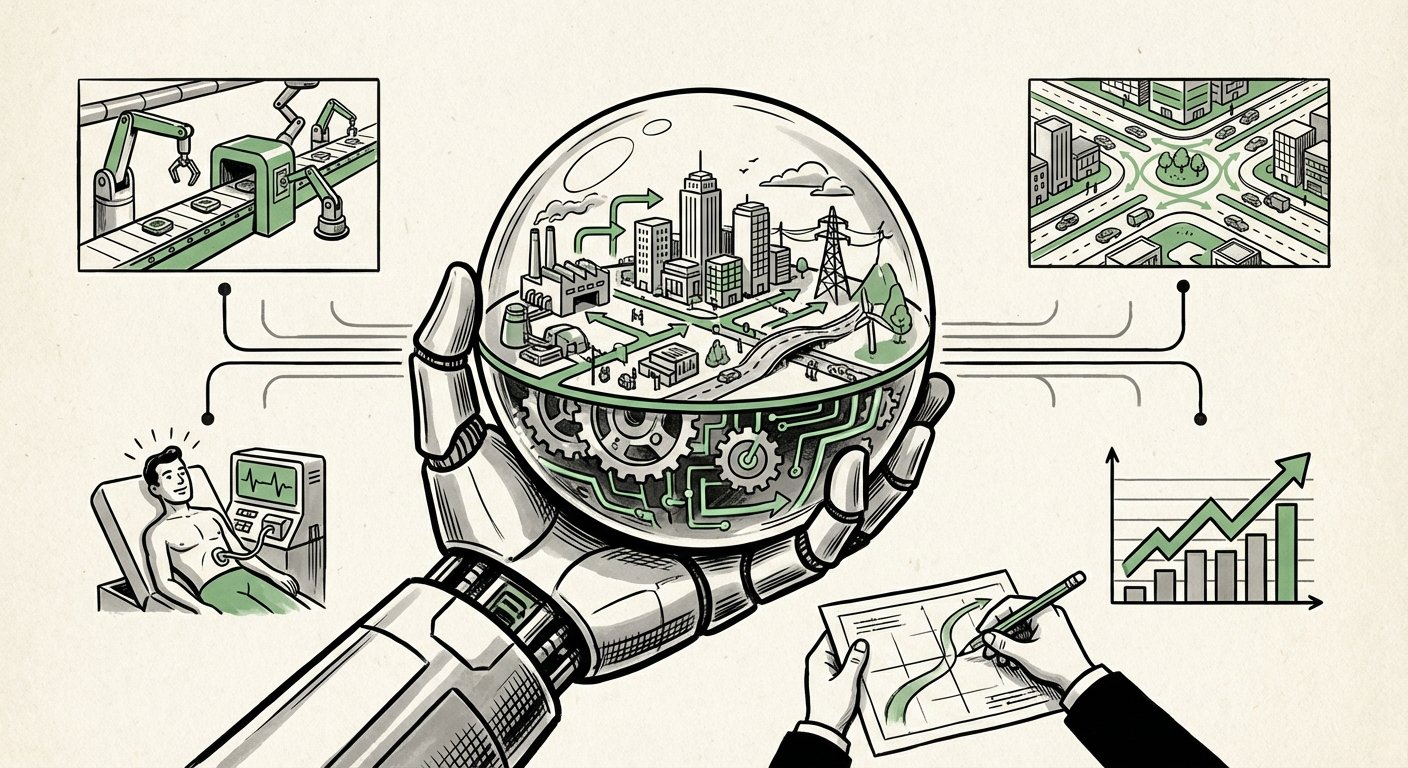
AI for Smarter R&D Bets: How Deeptech Companies Can Pick Winners Faster
Deeptech companies face a hard truth: research is expensive, slow, and full of uncertainty. A single bet can take years to pay off. Many good ideas fail. Some great ideas get ignored because they look too risky at the wrong moment. The companies that win are not always the ones with the biggest labs. They are often the ones that make better choices about what to research, when to stop, and where to double down.
That is where artificial intelligence is starting to change the game. AI is not a crystal ball. It cannot tell a deeptech team which experiment will work. But it can help teams make smarter R&D bets by turning scattered evidence into clearer options. It can stress-test assumptions, compare projects, and show where uncertainty is highest. Used well, AI becomes a decision partner for research leaders, not a replacement for scientific judgment.
The Real Problem: R&D Is a Betting Game
Most deeptech R&D decisions are made with incomplete information. Leaders must choose between projects that may not pay off for years. They must decide whether to fund a new material, a new device, a new process, or a new software platform. Each choice uses money, talent, and time that cannot be spent elsewhere.
Humans are not naturally good at this kind of portfolio thinking. We fall in love with our own ideas. We remember recent wins and recent failures too strongly. We prefer clear stories over messy probabilities. And we often judge a project by how good its best-case story sounds, not by how likely that story is to happen.
AI can help fix some of these weaknesses. It can hold many variables at once. It can compare projects on a consistent basis. It can show the range of possible outcomes instead of a single forecast. That does not remove risk. It makes risk easier to see and discuss.
Where AI Fits in the R&D Decision Loop
The best use of AI in deeptech R&D is not to automate science. It is to improve the quality of decisions around science. That happens across a loop: finding options, gathering evidence, testing assumptions, choosing a portfolio, and learning from results.
From More Data to Better Questions
Deeptech teams generate a lot of information. There are experiment notes, technical papers, test results, supplier details, patent landscapes, and market signals. The problem is not always a lack of data. The problem is that the data is spread out and hard to compare.
AI can help teams ask better questions. Instead of “Which project sounds best?” the team can ask “Which projects have the strongest evidence behind their key assumptions?” Instead of “What is the expected return?” the team can ask “What would have to be true for this bet to pay off?” That shift matters. It moves the conversation from storytelling to evidence.
Modeling Uncertainty, Not Just Averages
Traditional project plans often use single numbers. A team might say a project will take three years and cost a certain amount. But deeptech R&D rarely works that way. Timelines slip. Tests fail. New findings change the plan.
AI can help model ranges and probabilities. It can run many scenarios. It can show which assumptions matter most. It can flag when a small change in one input makes a big difference in the outcome. This gives leaders a clearer view of what they are really betting on.
The goal is not false precision. A model that says “this project has a 62.4 percent chance of success” can be misleading if the underlying data is weak. The goal is better calibration. Leaders should learn to say “we are more uncertain than we thought” or “this project is more fragile than it looks.” That is progress.
A Practical Playbook for Smarter R&D Bets
Deeptech companies do not need a giant AI program to get value. They need a focused way to use AI on the decisions that matter most. Here is a practical playbook.
1. Start With the Decision, Not the Model
Do not begin with “we need an AI strategy.” Begin with a real decision. Which two projects should we fund this quarter? Should we continue a program after a failed test? Which technical path has the best risk-adjusted chance? A clear decision gives the AI work a target. It also makes it easier to measure whether the AI helped.
2. Build a Shared Evidence Base
AI is only as good as the information it can use. Teams should create a shared place for experiment results, assumptions, cost estimates, and market notes. The goal is not to collect everything. The goal is to make the key evidence easy to find and compare. Clean, consistent inputs lead to better outputs.
3. Use AI to Stress-Test Assumptions
Every R&D bet rests on assumptions. A material will behave in a certain way. A process will scale. A customer will pay. A supplier will deliver. AI can help teams list those assumptions and test them against available evidence. It can ask: What if this assumption is wrong? How much would that change the outcome? Which assumption is the weakest link?
4. Score Projects on Risk-Adjusted Value
Not every project should be judged by its best-case return. A smarter approach is to compare projects by risk-adjusted value. That means looking at potential upside, probability of success, cost to learn, and time to evidence. AI can help apply the same scoring logic across projects. This reduces the chance that the loudest voice or the most exciting story wins.
5. Keep Humans in the Loop
AI should inform judgment, not replace it. Scientists and engineers understand the physics, the chemistry, and the real-world constraints. They can spot when a model is missing something important. The best setup is a conversation: AI offers options and evidence, humans challenge it, and the team makes the call.
6. Track Outcomes and Improve
Every R&D bet is a chance to learn. Teams should record what they expected, what happened, and why. Over time, this creates a feedback loop. The AI can be adjusted. The team’s judgment can be calibrated. The company gets better at making bets, not just better at running experiments.
The Cultural Shift: From Gut Feel to Calibrated Judgment
AI will not fix a culture that rewards confident stories over honest evidence. Deeptech leaders need to make it safe to say “we were wrong” and “we are less sure than we thought.” That is not a weakness. It is how good R&D portfolios improve.
Leaders should reward learning, not only wins. A failed experiment that rules out a path can be valuable. A project that is stopped early can save years of spending. AI can help make those decisions clearer, but the culture must support acting on them.
There is also a people side. Researchers may worry that AI is there to judge them. Leaders should frame it as a tool for better decisions, not a scorecard for individuals. The aim is to improve the portfolio, not to point fingers.
Risks and Guardrails
AI in R&D decisions comes with real risks. Models can be wrong. They can reflect bias in the data. They can sound more certain than they should. They can miss a key physical constraint that an experienced engineer would catch.
Deeptech companies also handle sensitive information. Research plans, intellectual property, and supplier details need protection. Teams should be clear about what data can be used, where it can go, and who can see the outputs.
Guardrails help. Keep humans in the loop for high-stakes calls. Use AI to show uncertainty, not hide it. Test the model against past decisions. Be careful with false precision. And always ask: what evidence would change our mind?
What This Means for the Future of AI
This shift matters beyond deeptech. It shows where AI is heading. The next wave of value will not come only from chatbots or content tools. It will come from AI used as decision infrastructure. That means AI that helps organizations compare options, manage risk, and learn from outcomes.
For deeptech, this could change how R&D portfolios are run. Instead of static annual plans, teams could use AI to update their bets as new evidence arrives. Instead of one big bet, they could manage a portfolio of smaller learning steps. Instead of relying on a few senior voices, they could combine expert judgment with consistent analysis.
This also lowers the barrier for smaller teams. A lean deeptech startup may not have a large strategy group. But it can use AI to bring more discipline to its R&D choices. That could help more good ideas survive the early, uncertain years.
The future of AI in R&D will be judged by one question: does it lead to better decisions? Not more dashboards. Not more models. Better bets. That is the real test.
Actionable Insights for Leaders
- Pick one high-stakes R&D decision and use it as a pilot. Do not start with a company-wide AI program.
- Create a shared evidence base for projects so AI can compare them on the same terms.
- Ask AI to show uncertainty and stress-test assumptions, not just produce a single answer.
- Score projects on risk-adjusted value so upside and probability are discussed together.
- Keep scientists and engineers in the loop for judgment, challenge, and real-world constraints.
- Track expected versus actual outcomes to improve both the model and the team.
- Set clear data and IP guardrails before sensitive R&D information is used.
Deeptech companies do not need to bet blindly. They need better ways to see the odds. AI can help them do that, one decision at a time. The winners will be the teams that use it to ask sharper questions, face uncertainty honestly, and learn faster than everyone else.