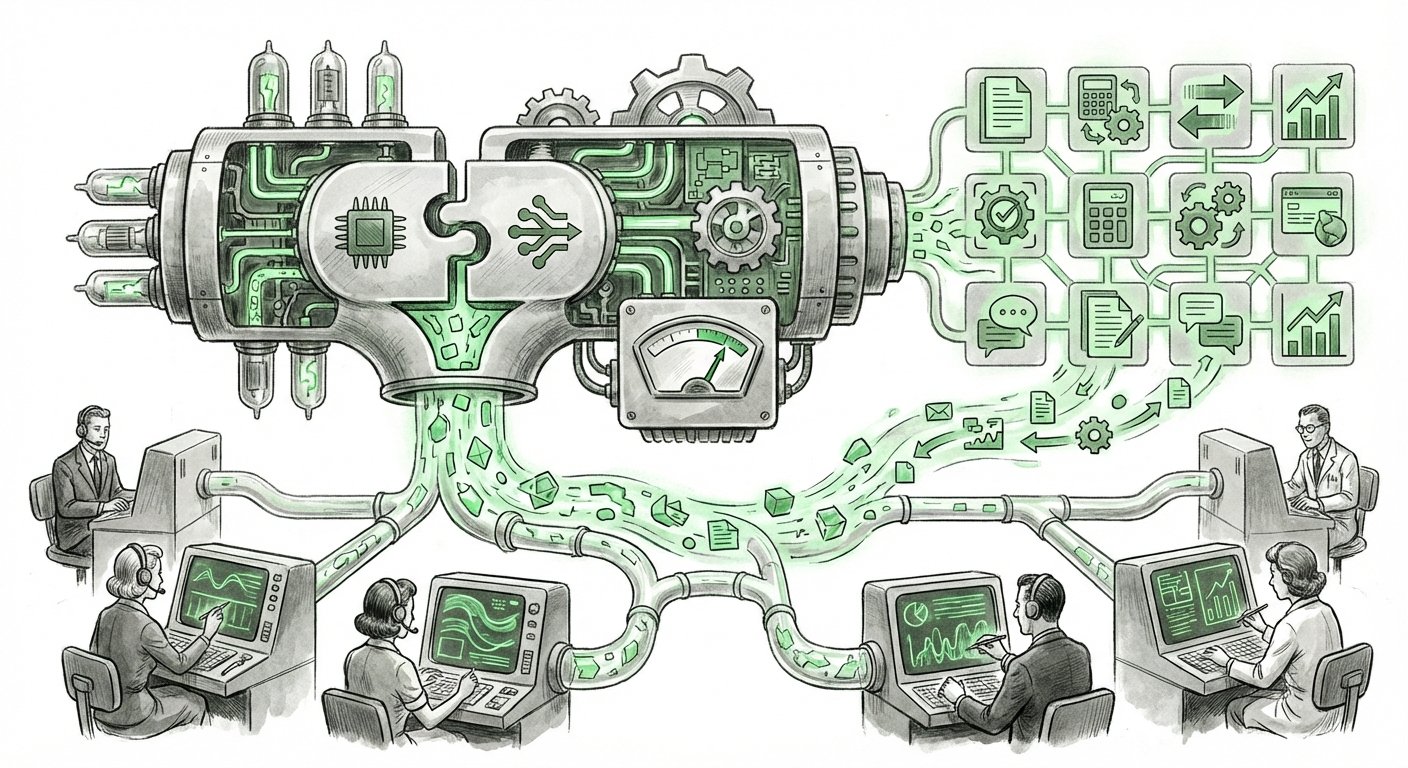
Local Coding Agents: Why the Next Big Shift in AI Coding Happens on Your Own Machine
AI coding tools have mostly lived in the cloud. You type a prompt, the request goes to a remote server, and a model sends back code. That model is powerful, but it also means your code, your data, and your workflow depend on someone else’s infrastructure. A new idea is changing that picture: local coding agents.
The shift is simple to describe but big in impact. Instead of a cloud-only helper, a local coding agent runs on hardware you control. It can read your project, make changes, run tests, and work through multi-step tasks. For developers, that means more control. For businesses, it means a new set of decisions about privacy, cost, speed, and trust. The real question is not whether local coding agents will be used. It is how they will fit into the way software gets built.
What Is a Local Coding Agent?
A local coding agent is a software helper that uses an AI model to plan and carry out coding work on a computer you control. It is more than a code completion tool. It can look at files, suggest edits, run commands, and check its own work. It acts more like a junior developer that follows instructions than a simple autocomplete box.
The word local is the key. In a fully local setup, the AI model runs on your laptop, workstation, or a server in your own network. Your code does not leave your machine just to get a suggestion. In a hybrid setup, the agent runs locally but still calls a cloud model for some tasks. That difference matters. A tool can be “local” in how it works and still send data to the cloud. Teams need to know which kind they are using.
Local coding agents are part of a larger move toward AI that sits closer to the work. Cloud AI is easy to start and often very strong. Local AI is harder to set up but gives teams more control. The best choice depends on the job.
Why Local Coding Agents Are Gaining Attention
The appeal of local coding agents comes down to a few practical needs. These are not abstract ideas. They show up in everyday engineering work.
Privacy and Intellectual Property
Source code is one of the most sensitive assets a company has. It can contain trade secrets, customer data, security logic, and future product plans. Sending code to a cloud service may be fine for some teams. For others, it is a hard stop. Local coding agents reduce that concern because the model can run inside the company’s own environment. That does not remove all risk, but it changes who holds the data.
Control and Permissions
A coding agent that can edit files and run commands needs clear limits. Local agents can be tied to the user’s own machine and file system. Teams can decide which folders an agent can touch, which commands it can run, and what it can do without approval. That level of control is harder to get when the agent lives in a vendor’s cloud.
Speed and Offline Work
Cloud tools depend on network speed and service availability. Local tools can respond faster once they are set up. They can also work offline, which matters for developers on planes, in secure facilities, or on weak connections. For quick edits and repeated tasks, low latency can make the tool feel less like a chatbot and more like part of the editor.
Cost Predictability
Cloud AI is often priced by use. That can be fine at small scale, but costs can grow in ways that are hard to predict. Local AI shifts spending toward hardware and setup. The total cost may be higher at the start, but it can be more stable over time. Teams should compare both models carefully instead of assuming one is cheaper.
Customization
Local agents can be tuned to a team’s own tools, coding standards, and workflows. A company can connect the agent to its internal docs, test systems, and review rules. That kind of fit is possible with cloud tools too, but local setups can offer more room to shape the system around the company’s needs.
The Trade-Offs Teams Must Face
Local coding agents are not a free win. They come with real costs and risks. A clear-eyed view is important.
Hardware and Setup
Running a useful AI model locally takes strong hardware, especially for larger models. Teams may need powerful machines, more memory, and careful setup. Smaller models can run on lighter hardware, but they may not handle complex tasks as well. The right balance depends on the work.
Model Quality
Cloud models are often larger and updated more often. Local models can be strong, but they may lag in raw capability. A local agent may be excellent for routine refactoring, test writing, and code search. It may struggle with very complex design work. Teams should match the tool to the task instead of expecting one model to do everything.
Maintenance
Cloud services are maintained by the vendor. Local systems are maintained by the team. That means updates, security patches, model management, and troubleshooting become internal work. This is easy to underestimate. A local agent is a small platform, and platforms need care.
Security Is Not Automatic
Local does not mean safe. An agent with file access and command rights can cause damage if it is poorly controlled. It could delete files, expose secrets, or run unsafe commands. Teams need sandboxes, permissions, logs, and human review. The same rules that apply to cloud agents apply here, sometimes more so because the agent is closer to the system.
Fragmented Tooling
The local AI tool market is still young. Tools may not work well together. Setup steps can be rough. Standards are still forming. Early adopters should expect some friction and plan for it.
What This Means for Businesses
For business leaders, local coding agents are less about a single tool and more about a new set of choices. The central question is: where should AI coding work happen, and under what rules?
Regulated industries have the clearest reason to look at local options. Banks, health companies, defense contractors, and others often face strict rules about data location and access. A local agent can make it easier to keep code inside approved systems. That does not solve every compliance issue, but it can reduce the number of outside parties involved.
Smaller teams may see a different benefit. A local agent can act like extra help without a large cloud bill. It can handle repetitive work, draft tests, and help with code review. For a small team, that can free up time for harder problems. But the setup and maintenance cost must be part of the math.
Vendor lock-in is another concern. Cloud AI tools can become deeply tied to a company’s workflow. Moving away can be hard. Local tools can offer more exit options because the model and data sit closer to the company. Still, local tools can create their own lock-in through custom setups and skills. Teams should keep that in mind.
The most likely future is not “all local” or “all cloud.” It is a mix. A team may use cloud models for hard design work and local agents for private code, quick edits, and offline tasks. The winning setup will route each job to the right place.
What This Means for the Future of AI
Local coding agents point to a broader change in how AI will be used. The first wave of AI tools was mostly centralized. A few large models served many users. The next wave is likely to be more distributed. Smaller models, local hardware, and private data will matter more.
This does not mean large cloud models go away. They will still be the best choice for many tasks. But the balance will shift. Companies will ask for AI that can run in different places: in the cloud, on a laptop, on a private server, or at the edge. The model will become one part of a larger system, not the whole product.
We are also likely to see more focus on the trust layer around AI. That includes permissions, audit logs, sandboxing, and clear rules for what an agent can do. Local coding agents make this urgent because they sit close to real files and real commands. The teams that win with AI will not just have smart models. They will have safe, observable systems that people can trust.
Another shift is in software economics. If AI can run locally, the cost of using it becomes more tied to hardware and less tied to API calls. That could make AI help available to more people and more small teams. It could also change how software is priced and sold. Tools may be judged on how well they fit a company’s environment, not just on raw model scores.
A Practical Playbook for Adopting Local Coding Agents
Teams that want to explore local coding agents should start with clear rules and small steps. Here is a practical path.
- Start with a small, low-risk project. Pick a test repo or an internal tool. Do not begin with your most sensitive code.
- Classify your data. Know which code can leave your network and which cannot. This decides whether you need a fully local setup or a hybrid one.
- Use a sandbox. Run the agent in a contained environment. Limit what it can reach and what it can change.
- Set permissions by default. The agent should need approval for risky actions like deleting files, changing system settings, or running deployment commands.
- Keep logs. Record what the agent did, what it changed, and why. Logs help with debugging, audits, and trust.
- Require human review. Treat agent output like code from a new teammate. Review it before it ships.
- Measure real value. Track time saved, bugs caught, review effort, and setup cost. Do not rely on demos alone.
- Plan for a hybrid model. Use local agents where control matters and cloud models where raw capability matters.
The Road Ahead
Local coding agents are still early, but they point to something important. AI is moving from a remote service you visit to a tool that sits inside your own environment. That shift gives teams more control, but it also gives them more responsibility. The tools are only as good as the rules around them.
For developers, the promise is a faster, more private, more flexible way to work. For businesses, the promise is AI that fits strict data rules and real budgets. For the wider field of AI, the promise is a more diverse set of systems: some big and central, some small and local, all connected by clear trust controls.
The future of AI coding will not be decided by one model or one vendor. It will be decided by how well teams combine speed, safety, cost, and control. Local coding agents are a strong sign that the next phase of AI will be more distributed, more practical, and closer to the work.