Marvell and Lumentum’s $115 Billion Merger: What the AI Boom’s Biggest Deal Means for the Future of Computing
In a move that signals just how massive the artificial intelligence boom has become, Marvell and Lumentum have announced a $115 billion merger. The deal, driven by the AI boom, is one of the largest technology mergers in recent history. It shows that the race to build the infrastructure behind AI is no longer just about software, it’s about hardware, networking, and the physical systems that make AI work.
This article breaks down what the merger means for the future of AI, why it’s happening now, and how businesses and society should prepare for the changes ahead.
Why the AI Boom Is Driving Mega-Mergers
AI is hungry. Every new AI model, whether it’s a chatbot, an image generator, or a self-driving system, needs enormous computing power. That power comes from specialized chips, fast data connections, and reliable hardware. As AI models get bigger and more complex, the demand for these components is exploding.
Marvell and Lumentum are both part of the AI supply chain. By joining forces, they can offer a broader set of solutions to data centers and AI companies. The $115 billion price tag is a huge bet that AI infrastructure will keep growing for years. It’s also a sign that companies want to control more of the stack, from the chip to the network, so they can move faster and win big contracts.
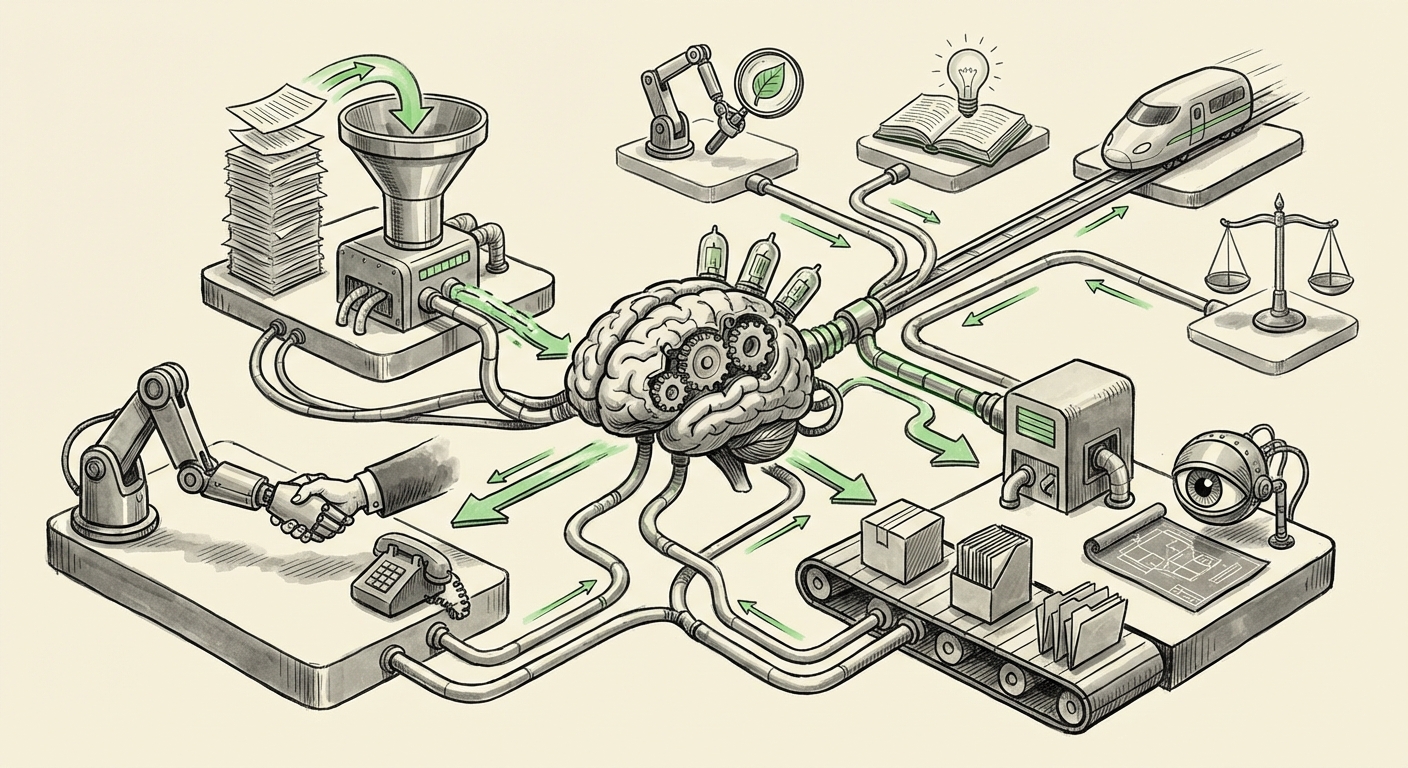
Think of it like this: AI is the brain, but the brain needs a body. The body is made of chips, fiber optics, switches, and cooling systems. Mergers like this one are about building a stronger, faster body for AI.
The AI boom has already created trillion-dollar companies and reshaped entire industries. But the next phase of growth will depend on infrastructure. Without faster hardware, AI models will hit a wall. That’s why investors and executives are pouring money into the companies that build the physical foundation of AI.
What the Combined Company Could Do
While the details of the merger are still unfolding, the strategic logic is clear. Marvell and Lumentum together can likely serve AI customers better than either could alone. They can combine research and development, reduce costs, and offer bundles of products that work together seamlessly.
For example, AI data centers need to move huge amounts of data between chips. That requires both advanced semiconductors and high-speed optical connections. A company that makes both can design them to work perfectly together. That’s a big advantage in a market where speed and efficiency matter.
The merger also gives the combined company more bargaining power with suppliers and customers. In the AI boom, scale matters. Bigger companies can invest more in next-generation technology and take on bigger risks. They can also attract top engineering talent and negotiate better deals for raw materials.
But size isn’t everything. The combined company will need to integrate different teams, cultures, and product lines. That’s never easy. History is full of mergers that looked great on paper but failed in practice. The success of this deal will depend on how well the two companies can work as one.
The Bigger Trend: Vertical Integration in AI Infrastructure
This merger is part of a larger trend: vertical integration. Instead of relying on many separate suppliers, AI companies want to work with fewer partners who can provide end-to-end solutions. This reduces complexity and speeds up innovation.
We’ve seen this before in tech. Companies that control both hardware and software often win. Apple is a classic example. Now the same idea is coming to AI infrastructure. The Marvell-Lumentum deal is a clear signal that the AI industry is maturing. It’s moving from a wild frontier to a more organized, consolidated market.
But consolidation has a downside. Fewer players can mean less competition. If a few big companies control the key parts of AI infrastructure, prices could go up, and innovation could slow. Regulators will likely look closely at this deal for that reason. They may ask whether the merger will harm competition or give the combined company too much power over pricing and product development.
For the AI industry, the trend toward vertical integration could lead to faster progress. When one company controls the whole stack, it can optimize every layer for AI workloads. That could result in more efficient data centers and lower energy use, both critical as AI’s power demands grow.
How AI Will Be Used in the Coming Years
To understand why this merger matters, it helps to look at how AI will be used. In the next few years, AI will move far beyond chatbots and image generators. It will power autonomous vehicles, medical diagnostics, smart cities, personalized education, and scientific research.
Each of these applications has different hardware needs. Autonomous vehicles need low-latency, high-reliability computing at the edge. Medical diagnostics need massive data processing and secure storage. Smart cities need networks that can handle millions of sensors. All of these use cases will demand faster, more efficient AI infrastructure.
The merger between Marvell and Lumentum is a bet that the companies can serve these diverse needs with a unified platform. By combining their expertise, they hope to offer solutions that are greater than the sum of their parts. If they succeed, they could become a key supplier for the next wave of AI applications.
Practical Implications for Businesses
If you run a business, this merger could affect you in several ways. Here’s what to watch for.
1. New Product Bundles and Pricing
The combined company will likely offer integrated solutions. That could be good news if you want a one-stop shop for AI infrastructure. But it could also mean higher prices if competition decreases. Watch for changes in pricing and contract terms. Negotiate carefully and compare offers from other vendors.
2. Vendor Lock-In Risk
When one company provides more of your AI stack, it becomes harder to switch to another vendor. That’s called vendor lock-in. To avoid it, keep your options open. Consider working with multiple suppliers or using open standards where possible. Make sure your contracts include exit clauses and data portability guarantees.
3. Supply Chain Shifts
The merger could change the supply chain for AI components. Some suppliers might be cut out, while others become more important. If your business relies on AI hardware, review your supply chain to make sure you’re not overly dependent on any single company. Build redundancy where you can.
4. Investment and Partnership Opportunities
For investors, the AI infrastructure space is heating up. The Marvell-Lumentum deal could trigger more mergers and acquisitions. Keep an eye on smaller companies with unique AI hardware technology, they might be the next targets. For businesses, look for partnership opportunities with the combined company. It may be open to collaborations that help it reach new markets.
5. Talent and Skills
As AI infrastructure becomes more complex, you’ll need people who understand both hardware and software. The merger could lead to a talent war in the industry. Train your team or hire experts in AI systems engineering, optics, and data center design. Investing in skills today will pay off tomorrow.
Actionable Insights
Here’s what you can do right now to prepare for the changes ahead:
- Assess your AI infrastructure needs. Understand which components are critical to your business. Are you buying chips, optics, or complete systems? Map out your dependencies.
- Diversify your suppliers. Don’t rely on one company for everything. Build relationships with multiple vendors to reduce risk. Even if you choose the combined company, have a backup plan.
- Stay informed about regulatory reviews. Big mergers often face government scrutiny. The outcome could affect when and how the deal happens. Follow the news and adjust your plans accordingly.
- Invest in AI skills. As AI infrastructure becomes more complex, you’ll need people who understand both hardware and software. Train your team or hire experts. Consider partnerships with universities or training programs.
- Look for partnership opportunities. The combined company might be open to partnerships with businesses that can help it reach new markets. Explore ways to collaborate, especially if you have unique data or applications.
- Monitor pricing and performance. After the merger, compare offerings from the new company with alternatives. Use competition to your advantage. Don’t be afraid to renegotiate contracts.
- Plan for energy efficiency. AI infrastructure uses a lot of power. As the industry consolidates, look for vendors that prioritize energy efficiency. That can lower your costs and reduce your environmental impact.
The Road Ahead
The Marvell-Lumentum merger is a landmark moment. It shows that the AI boom is not a bubble, it’s a fundamental shift in how computing works. The companies that build the infrastructure for AI will play a huge role in shaping the future.
For the AI industry, the deal could lead to faster innovation and more powerful AI systems. For businesses, it means new opportunities and new risks. The key is to stay flexible and informed. The AI boom is just getting started, and the hardware layer is where the action is moving.
As AI continues to change how we work and live, the companies that control the underlying technology will have enormous influence. The $115 billion bet by Marvell and Lumentum is a clear sign that the future of AI will be built on a foundation of consolidated, integrated hardware. Whether that’s good or bad depends on how the market and regulators respond.
One thing is certain: the AI boom is reshaping the tech industry in ways we can only begin to imagine. This merger is just the latest chapter. For anyone who uses AI, whether you’re a developer, a business leader, or a consumer, the changes will be profound. The infrastructure being built today will determine what AI can do tomorrow.
So keep watching. The AI boom is not slowing down, and the biggest deals may still be ahead.