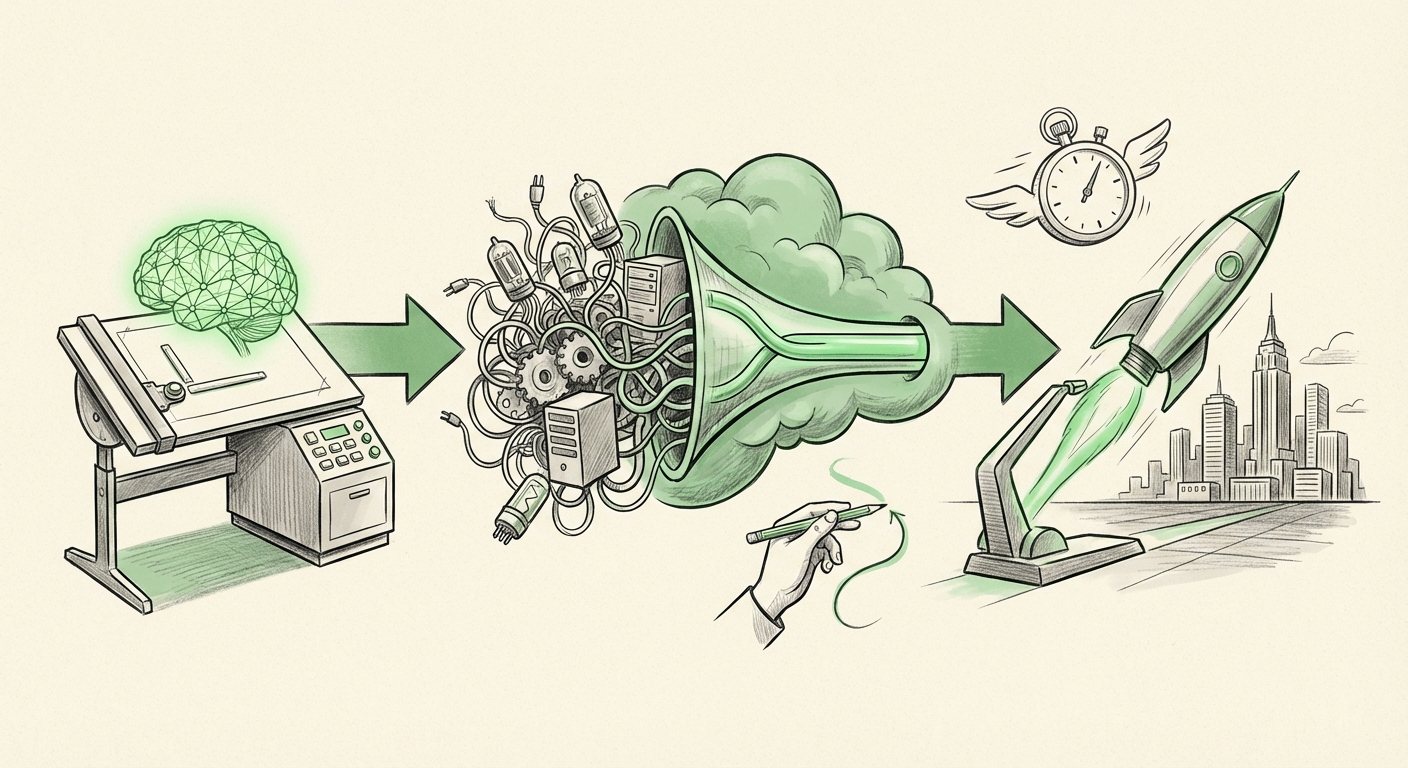
How Open OCR Models Are Supercharging Document Pipelines
Optical character recognition (OCR) has quietly become the backbone of modern business. Every invoice, receipt, contract, and scanned form that gets turned into searchable text relies on OCR. But for years, the best OCR engines were locked behind expensive licenses or cloud APIs that charged by the page. That is changing fast. A new wave of open models for OCR is giving developers and businesses powerful, flexible, and cost-effective tools to build their own document pipelines. This shift is not just a technical curiosity, it is a fundamental change in how we extract value from paper and images.
The Rise of Open OCR Models
Open models are AI systems whose code and trained weights are publicly available. You can download them, run them on your own hardware, and even fine-tune them for your specific needs. For OCR, this means you are no longer tied to a vendor's pricing or feature roadmap. You can build a pipeline that fits your exact documents, whether they are handwritten notes, noisy scans, or multi-language contracts.
Why now? Several trends are converging. First, the underlying AI architectures have matured. Transformer-based models that once required massive compute are now optimized enough to run on modest servers or even edge devices. Second, the open-source community has created high-quality datasets and training recipes. Third, businesses are demanding more control over their data. Sending sensitive documents to a third-party API raises privacy and compliance concerns. Running an open model on your own infrastructure solves that problem.
The result is a thriving ecosystem. Developers can choose from a range of open OCR models, each with different strengths. Some excel at printed text, others at handwriting. Some are tiny and fast, perfect for mobile apps. Others are large and accurate, suited for batch processing. And because they are open, you can combine them, customize them, and integrate them into any workflow.
What This Means for the Future of AI
This shift toward open models in OCR is a microcosm of a larger trend in AI. The future is not just about bigger, closed models from a few tech giants. It is about a diverse ecosystem where open models power specialized tasks. OCR is a perfect example because it is a well-defined problem with clear metrics and a huge market. When open models can match or beat proprietary ones on accuracy, the economics of the entire industry change.
First, costs plummet. Instead of paying per page, you pay for compute. For high-volume document processing, the savings can be enormous. A small business scanning a few hundred pages a month might stick with a cheap API, but a large enterprise processing millions of pages will find open models far cheaper over time. This democratizes access, startups and nonprofits can now afford high-quality OCR that was once out of reach.
Second, innovation accelerates. When models are open, researchers and developers can inspect them, find weaknesses, and improve them. They can share fine-tuned versions for specific domains like medical records or legal contracts. This collaborative dynamic leads to faster progress than any single company could achieve alone. We are already seeing open OCR models that handle low-resource languages and complex layouts better than many commercial offerings.
Third, data sovereignty becomes a reality. Organizations that handle sensitive information, hospitals, banks, government agencies, can keep everything in-house. They can run OCR on their own servers, ensuring that no document ever leaves their control. This is a big shift for compliance-heavy industries that have been hesitant to adopt cloud OCR.
Practical Implications for Businesses
So how can your business take advantage of this trend? Here are the key areas where open OCR models are making a difference.
1. Building Custom Document Pipelines
Every business has unique documents. A standard OCR model might struggle with your specific fonts, stamps, or table layouts. With open models, you can fine-tune on a small set of your own data. This means you can train the model to recognize your invoice format, your handwriting style, or your industry-specific terminology. The result is higher accuracy and less manual correction.
2. Reducing Vendor Lock-In
When you rely on a proprietary API, you are at the mercy of the vendor. They can raise prices, change terms, or discontinue the service. Open models give you freedom. You can switch between models, modify them, or deploy them anywhere. This flexibility is especially important for long-term projects where the document processing needs may evolve.
3. Scaling Without Breaking the Bank
Cloud OCR APIs often charge per page. For a business that processes millions of documents, this adds up quickly. Open models let you process documents on your own hardware, whether that is a local server or a cloud instance you control. You pay for compute, which is often far less expensive per page. Plus, you can optimize the model for speed or accuracy based on your needs.
4. Enhancing Privacy and Security
Data breaches are a constant threat. Sending documents to an external API means your data travels over the internet and is processed on someone else's servers. Open models run entirely within your infrastructure. You can keep sensitive information like personal IDs, medical records, or financial statements completely private. This is a major advantage for industries like healthcare and finance.
5. Integrating with Modern AI Workflows
Open OCR models do not exist in a vacuum. They can be combined with other open models, say, for translation or summarization, to create powerful end-to-end pipelines. Imagine scanning a contract, extracting the text, summarizing it, and flagging key clauses, all without sending data to a third party. This composability is a key benefit of the open ecosystem.
Actionable Insights for Getting Started
Ready to explore open OCR models? Here is a practical roadmap.
- Assess your document types. Are they printed, handwritten, or a mix? What languages? What layouts? This will help you choose the right model.
- Start with a pre-trained model. Many open OCR models are ready to use out of the box. Test a few on your documents to see which performs best.
- Fine-tune on your data. If accuracy is not where you need it, collect a small labeled dataset and fine-tune the model. This often yields big improvements.
- Consider your infrastructure. Do you need real-time processing on a mobile device, or batch processing on a server? Choose a model size that fits your compute budget.
- Build a feedback loop. Continuously collect errors and correct them. Use this data to keep improving your model over time.
- Join the community. Open-source OCR projects have active forums and repositories. You can learn from others and contribute your own improvements.
The Road Ahead
Open OCR models are still evolving. We can expect to see even more accurate models, better support for tricky scripts, and more efficient architectures that run on smaller devices. As these models improve, the barrier to entry for high-quality document processing will continue to drop. This will unlock new applications, from automated expense reporting to real-time translation of signs, that we can barely imagine today.
For businesses, the message is clear: the era of closed, expensive OCR is ending. Open models offer a path to greater control, lower costs, and faster innovation. Those who embrace this shift will be well-positioned to handle the growing flood of documents in the digital world. The future of AI is open, and OCR is leading the way.