W&B Weave Adds Observability for Production AI Agents: The Missing Layer for Reliable AI
AI agents are moving from cool demos to real work. They are booking appointments, updating records, answering customers, and making decisions inside business software. But once an agent leaves the lab and starts working in production, a new problem appears: it is hard to see what the agent is doing, why it made a choice, and where it failed. The new W&B Weave focus on observability and continuous improvement for production agents is a signal that the AI industry is growing up. It shows that the future of AI will depend not only on smarter models, but also on better tools for watching, measuring, and improving AI systems after they are deployed.
This is a big shift. For years, most AI attention went to model training and benchmarks. Now, the harder and more valuable work is happening in operations. Companies do not just need an agent that can answer a question. They need an agent that can be trusted, audited, fixed, and improved every day. The W&B Weave update points to that future.
From Prototypes to Production: Why Agents Need a New Kind of Visibility
A production AI agent is different from a simple chatbot. A chatbot usually answers one message at a time. An agent often takes a goal and then plans steps, calls tools, reads data, and takes actions. It may use several model calls, search a knowledge base, update a system, and send a message. Each step can affect the next. A small error early on can grow into a bad final result.
This makes agent failures hard to spot. A normal application log may show that a request succeeded or failed. It may not show why the agent chose a certain tool, why it ignored a document, or why it produced a strange answer. Teams need traces that follow the full journey of a request. They need to see the model calls, tool calls, inputs, outputs, timing, cost, and errors in one place. That is what observability means in this context. It is not just monitoring. It is a detailed view of the agent's behavior.
The W&B Weave focus on production agents fits a clear market need. Many teams can build a working prototype in days. Making that prototype reliable in the real world takes much longer. Without visibility, teams are stuck guessing. They cannot tell whether a problem comes from the prompt, the model, the data, the tool, or the user. Observability turns guesswork into evidence.
What Observability Means for AI Agents
Observability for agents usually covers several layers. First, there is trace-level visibility. A trace records each step in a request, from the user's input to the final answer. It shows how the agent moved from one step to the next. Second, there are tool calls. Agents often use search, databases, APIs, and other software. Teams need to know which tools were called, what was sent, what came back, and how long it took. Third, there are model interactions. Teams need to see prompts, model responses, token use, and cost.
Good observability also includes performance and cost signals. Agents can be slow or expensive if they make too many model calls or use large contexts. Teams need to spot high-latency steps and runaway costs. They also need error tracking. An agent may fail because a tool times out, a model returns invalid data, or a step hits a limit. These failures need to be easy to find and reproduce.
For business leaders, the value is simple. Observability gives teams a way to answer basic questions: What happened? Why did it happen? How often does it happen? Who is affected? What should we fix first? Without these answers, AI agents become a black box. With them, agents become manageable software systems.
Continuous Improvement: The Flywheel That Makes Agents Better Over Time
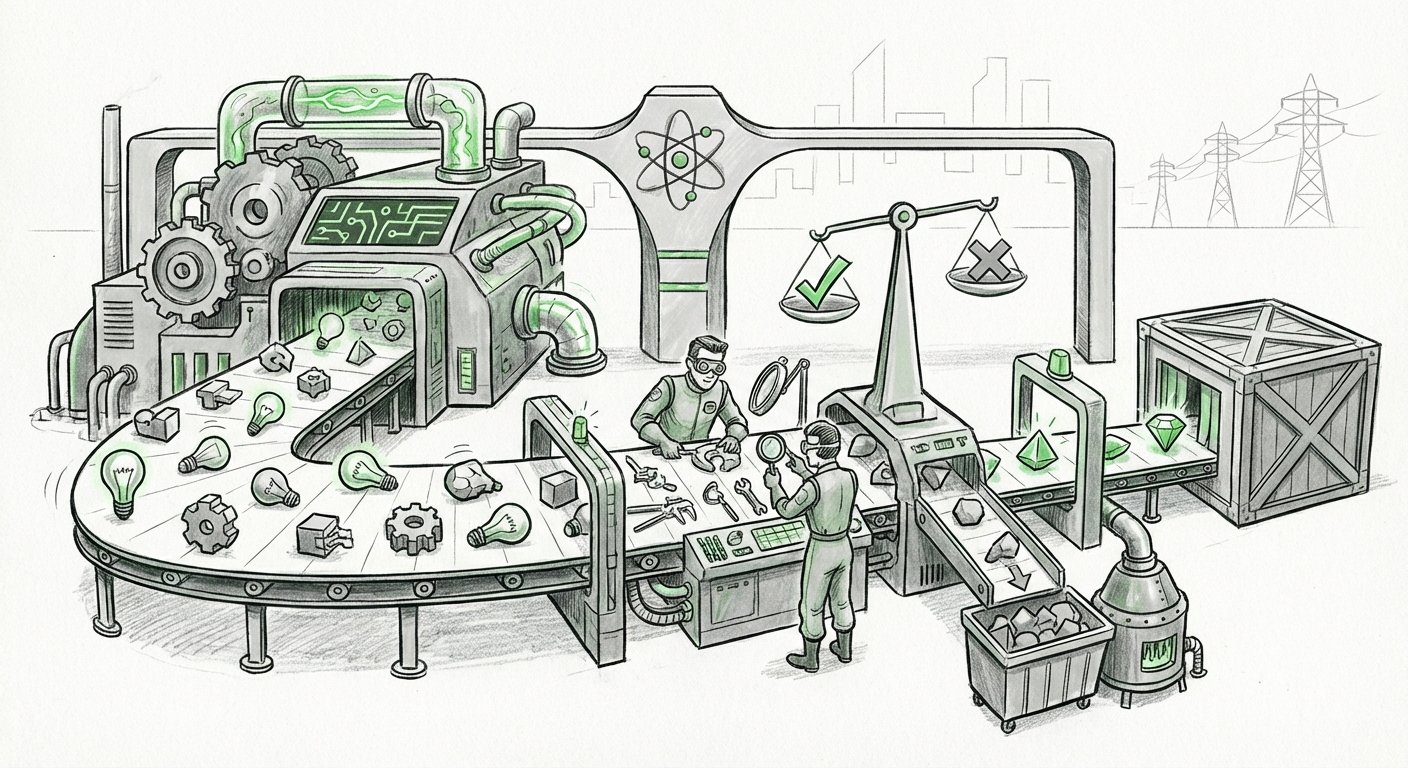
The second part of the W&B Weave update is continuous improvement. This is where observability becomes more than a dashboard. The idea is to create a loop: collect production data, find failures and weak spots, turn them into test cases, make changes, test again, and deploy with confidence. Then repeat.
This loop is important because AI agents are not fixed products. They change when models change, when data changes, when tools change, and when user behavior changes. An agent that works well in January may fail in June because a tool changed its output format or because users started asking new questions. Continuous improvement helps teams catch drift before customers do.
A strong improvement loop usually has four parts. First, capture real examples from production. Second, evaluate those examples with clear success criteria. Third, debug and improve the prompt, tool use, data, or model choice. Fourth, test and release the change with less risk. This turns production from a place where things break into a place where teams learn.
This is similar to what software teams learned with DevOps. Years ago, many teams released software rarely and feared production. Then observability, testing, and continuous delivery changed that. AI agents are now on a similar path. The teams that build strong improvement loops will ship agents faster and with less risk.
Why This Matters for the Future of AI
The AI market is moving toward agents that take action. That raises the stakes. A bad product recommendation is annoying. A bad agent action can cancel an order, send the wrong email, or update the wrong record. Trust becomes the bottleneck. If businesses cannot see and control what agents do, they will limit what agents are allowed to do. Observability and continuous improvement are what make higher trust possible.
This also changes how AI teams work. Instead of only building models, teams will need AI operations skills. They will need people who can instrument agents, design evaluations, review traces, and manage production quality. The best AI teams will look more like modern software teams: they will care about reliability, observability, and fast feedback.
For society, the implications are broad. AI agents will increasingly act on behalf of people. That means there must be records of what happened. Observability can support accountability. It can help companies detect harmful behavior, data leaks, or misuse. It can also help regulators and auditors understand how an AI system behaved. Continuous improvement can reduce repeated mistakes. These are not just technical features. They are building blocks for public trust.
The W&B Weave direction also shows that the AI stack is maturing. The market is moving from "Can we build an agent?" to "Can we run thousands of agent tasks safely every day?" That second question is where real business value lives.
Practical Implications for Businesses
For business leaders, the message is clear: do not treat observability as an afterthought. Put it into the plan from day one. Start with the most important agent journeys. Define what success looks like in plain language. Then make sure every step of those journeys can be traced.
Teams should also connect observability to business metrics. It is not enough to know that an agent failed. Leaders need to know how much revenue, time, or customer trust was affected. A good observability setup helps teams prioritize fixes by impact, not by noise.
There is also a vendor question. As more AI platforms add observability and improvement tools, buyers should ask hard questions. Can we see every step of an agent's work? Can we track cost and latency by step? Can we turn a production failure into a test case? Can we control who sees sensitive data? Does it fit our existing monitoring and security systems? These questions will separate useful platforms from shallow dashboards.
Challenges and What to Watch
Observability is not a cure-all. Agent traces can create large amounts of data. Teams must manage storage costs and privacy. Some traces may contain personal or sensitive information, so redaction and access control matter. More data does not always mean more insight. Teams need good sampling and clear dashboards, or they will drown in noise.
Evaluation is another challenge. It is hard to judge whether an agent's answer is good. Different use cases need different measures. A support agent needs accuracy and tone. A research agent needs source quality. A workflow agent needs correct actions. Continuous improvement only works when the success criteria are clear.
Finally, human oversight still matters. Observability helps people see what happened, but people must decide what to change. The future of AI will not be fully automated. It will be a partnership between AI agents and the teams that run them.
Actionable Insights for Teams
- Start with high-impact journeys. Pick the agent workflows that matter most to customers or revenue. Instrument those first.
- Trace every step. Record model calls, tool calls, inputs, outputs, timing, cost, and errors. Use clear trace IDs so teams can follow a single request.
- Turn failures into tests. Every production bug should become a test case. This is how continuous improvement becomes real.
- Measure cost and latency. Agents can fail quietly by becoming too slow or too expensive. Track both from day one.
- Protect sensitive data. Redact private information and control access to traces. Observability should not create new security risks.
- Review traces together. Product, engineering, and business teams should look at real examples. This builds shared understanding of agent behavior.
- Release with guardrails. Use canary releases, rollbacks, and clear limits on what agents can do.
Conclusion: The Operations Layer Will Define the Next AI Winners
The W&B Weave focus on observability and continuous improvement for production agents points to the next phase of AI. The winners will not just be the companies with the smartest models. They will be the companies that can run AI agents reliably, learn from real-world use, and improve them quickly. Observability gives teams the eyes to see. Continuous improvement gives them the hands to fix. Together, they turn AI agents from fragile experiments into dependable business tools.
For businesses, the time to act is now. Build the operations layer while you build the agent. For society, this is how AI earns trust: through transparency, accountability, and steady improvement. The future of AI will be shaped as much by what happens after deployment as by what happens in the lab.