Agentic Analytics: Why "Better Insights" Is the Real AI Race in Business Intelligence
For the past few years, the promise of AI in business analytics has been loud and simple: ask a question in plain English, get a chart back. That promise has largely been kept. The problem is that a chart is not an insight. A number is not a decision. And an answer that looks confident is not the same thing as an answer that is correct.
The next phase of this technology is not about making AI analytics more conversational. It is about raising the quality of what these systems actually produce. That is the shift now underway in agentic analytics, where AI agents don't just answer a question, but plan an investigation, pull data, run the numbers, check their own work, and explain what they found. It is a much bigger step than it sounds, and it changes what businesses should be buying, building, and trusting.
From Chatbots to Agents: What Actually Changed
An AI chatbot answers a question in one pass. You ask, it responds. If it gets something wrong, the whole thing collapses into a polite apology and you start over.
An agent works differently. It breaks a big question into smaller steps. It decides which data sources it needs. It runs a query, looks at the result, and decides whether that result makes sense. If something looks off, it goes back and tries a different path. Then it writes up what it found, along with how it got there.
That difference matters enormously for analytics, because real analytical work has never been a single question. It is a chain of them. A question like "why did regional sales dip last quarter?" is really a dozen smaller questions stacked on top of each other, each one depending on the answer before it.
Agents can finally do that kind of multi-step work. But they also introduce a new problem that simple chatbots never had: an agent can go wrong at any one of a dozen steps, and still produce a tidy, readable summary at the end.
The New Bottleneck: Quality, Not Capability
This is the core tension in agentic analytics today. The capability is no longer the hard part. Modern systems can generate SQL, build charts, summarize trends, and write narrative explanations with real fluency. The hard part is making sure the output is right, relevant, and defensible.
Insight quality breaks down into a few things that businesses need to be able to measure separately, because they fail in different ways:
- Accuracy. Does the number match the source of truth? This is where silent errors live, a wrong join, a duplicated row, a filter that quietly dropped a region.
- Relevance. Does the insight actually address the question that was asked, or does it answer a nearby question that was easier to compute?
- Traceability. Can a human follow the agent's path and see exactly which tables, filters, and assumptions produced the result?
- Actionability. Does the output tell someone what to do next, or does it just restate the data in sentence form?
- Calibration. Does the system know when it doesn't know? An agent that flags uncertainty is far more valuable than one that is always confident.
Most of the market conversation has focused on the first item. But in practice, the other four are what determine whether an analytics agent gets used a second time.
Why "Plausible but Wrong" Is the Real Risk
The most dangerous failure mode in agentic analytics is not a crash or an error message. It's a clean, well-written, entirely plausible answer that happens to be false.
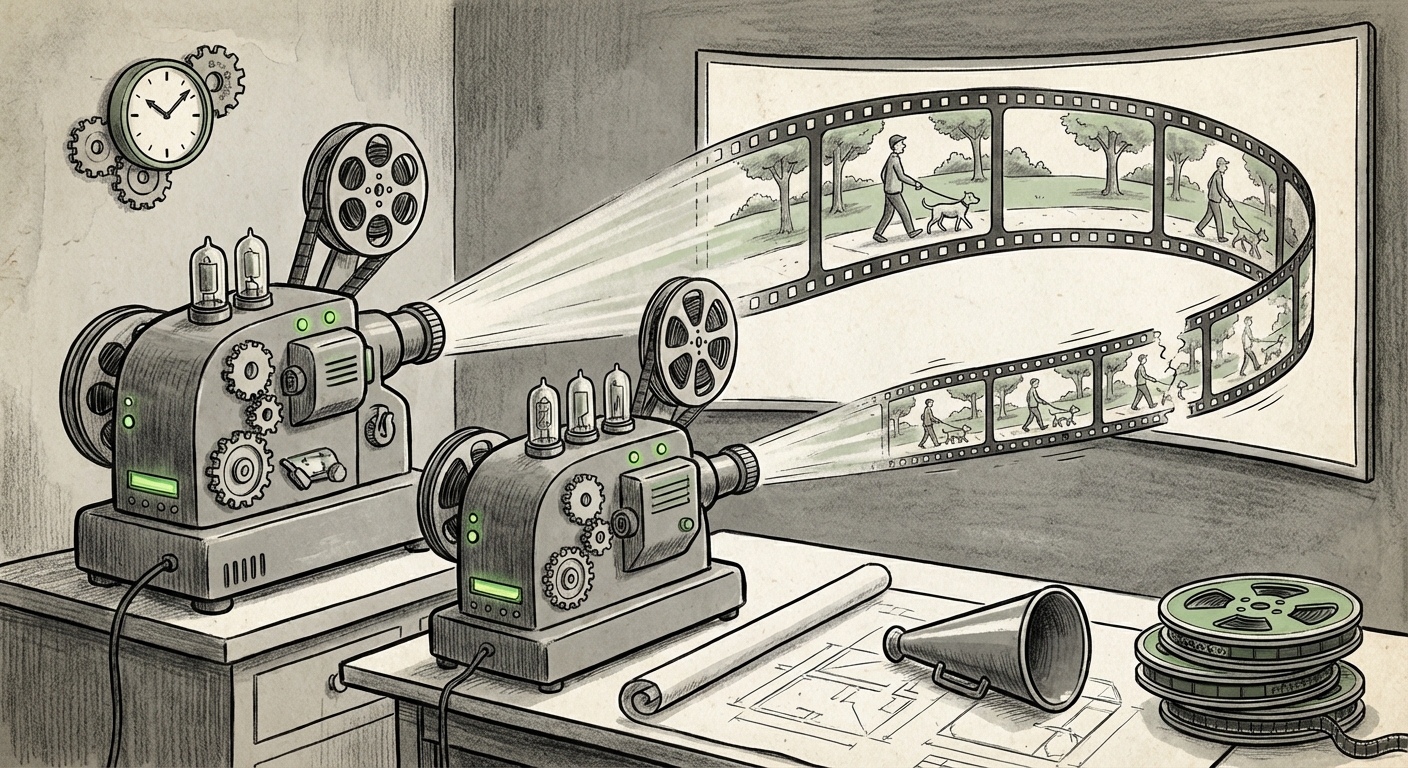
Traditional dashboards fail loudly. A broken dashboard shows a blank chart or an error. Everyone notices, someone files a ticket, and it gets fixed. An AI agent fails quietly. It produces a paragraph that reads exactly like a competent analyst wrote it, complete with a confident explanation of a trend that doesn't exist.
This is why the work of raising insight quality has to happen inside the agent's workflow, not after it. The checks need to be built in: validate the data before analyzing it, reconcile totals against known figures, sanity-check the direction of a trend against history, and surface assumptions rather than hiding them.
The systems that get this right share a common trait: they treat verification as part of the analysis, not as a separate quality-assurance step bolted on afterward.
What This Means for Data Teams
There's a widespread assumption that agentic analytics will make data teams less necessary. The opposite is closer to the truth, at least in the near term.
Agents are only as good as the ground they stand on. Give an agent a messy warehouse with five competing definitions of "active customer" and it will confidently produce five different answers. Give it a clean, well-documented semantic layer and it becomes genuinely useful.
So the practical priority for data teams shifts. Instead of spending most of their time building dashboards, they spend more of it building the definitions, documentation, and guardrails that agents need to operate correctly. In effect, data teams move from being report factories to being the referees of what is true inside the company.
Three investments matter most:
- A governed semantic layer. One agreed definition for every core metric, available to both humans and agents.
- Evaluation sets. A standing library of real business questions with known-correct answers, used to test agents before and after every change.
- Lineage and logging. A full record of what each agent asked, what it ran, and what it returned, so any insight can be audited later.
What This Means for Business Leaders
For executives, the takeaway is about how to evaluate these tools. Do not evaluate an analytics agent on how impressive its demo is. Evaluate it on how it behaves when it is wrong.
Ask specific questions during evaluation:
- When the agent can't find the data it needs, does it say so, or does it improvise?
- Can I see the exact query and filters behind any number it reports?
- Does it tell me when its confidence is low?
- What happens when two data sources disagree?
- Can I test it against questions where I already know the answer?
The organizations that ask these questions early will avoid a painful cycle: rollout, a handful of embarrassing wrong numbers, loss of trust, and a quiet retreat back to spreadsheets. Trust in analytics is asymmetric, it takes months to build and one bad board meeting to lose.
The Bigger Picture: Who Gets to Ask Questions
The most significant long-term effect of agentic analytics isn't speed. It's who gets access to analysis.
For decades, the ability to interrogate data was gated by technical skill. If you couldn't write SQL or build a model, you waited in a queue for someone who could. That gate is coming down. A regional manager, a nurse administrator, a supply chain planner, all of them can now ask a real question of their own data and get a real answer back in minutes.
That is a genuine democratization of insight, and it will change how organizations make decisions. More people will bring evidence to meetings instead of opinions. Smaller decisions, which never justified an analyst's time, will start being made on data.
But democratization has a flip side. When everyone can generate an insight, the volume of claims floating around an organization explodes. Without quality controls, you get a new kind of noise: a hundred plausible, unreconciled answers competing for attention. The companies that win won't be the ones that generate the most insights. They'll be the ones whose insights can be trusted without a second opinion.
The Analyst Role Doesn't Disappear, It Moves Up
The task that agents automate best is the mechanical middle of analytics: pulling data, joining tables, building first-pass charts, drafting summaries. What they automate poorly is judgment, knowing which question is worth asking, spotting that a result is technically correct but business-nonsense, and deciding what to actually do about it.
That pushes human analysts up the stack. Their job becomes framing problems, interrogating the agent's reasoning, and turning findings into decisions. It's a more senior, more strategic role, and it requires a new skill that barely existed a few years ago: the ability to audit machine reasoning.
Hiring and training should reflect that. The analyst who can look at an agent's output and say "that's wrong, and here's why" will be worth more than the analyst who can build the dashboard the agent now builds itself.
Where This Is Heading
The trajectory is fairly clear. Agentic analytics will keep getting more capable, and the differentiator will keep shifting toward quality, verification, and trust. A few things to expect:
- Evaluation becomes a product category. Benchmarks built on a company's own data and own questions, run continuously, will matter more than any general-purpose capability claim.
- Explanation becomes table stakes. Users will demand to see the reasoning path, not just the conclusion. Opaque answers will be rejected in high-stakes settings.
- Agents start checking each other. Multi-agent setups where one agent analyzes and another reviews are a natural next step for high-stakes decisions.
- Governance moves from policy documents to runtime controls. Rules will be enforced while the agent works, not written in a binder afterward.
Actionable Steps You Can Take Now
If you're evaluating or deploying agentic analytics in the next year, start here:
- Pick one high-value, well-bounded use case. A recurring question with a known correct answer is the right place to start building trust.
- Build a test set before you build the deployment. Twenty questions with verified answers will tell you more than any vendor demo.
- Fix your metric definitions first. No agent can rescue an organization that disagrees with itself about what a number means.
- Require traceability in any tool you buy. If you can't see the query, you can't trust the answer.
- Design a human review step. Start with a person checking outputs, and reduce that oversight only as the system earns it.
- Track error rates publicly inside the company. Making accuracy visible signals that quality matters more than looking impressive.
The agentic analytics era is not really about smarter software. It's about whether organizations can build the discipline to trust what that software says. The companies that invest in quality now, in clean definitions, real evaluations, and visible reasoning, will be the ones whose AI actually changes how they work. Everyone else will get a very impressive demo and a very messy spreadsheet two quarters later.