Tech Layoffs in 2026: What the Year's Timeline Tells Us About AI and the Future of Work
Every year since the pandemic hiring boom ended, the tech industry has promised that the job cuts were mostly behind it. Every year, they kept coming. But 2026 looked different in one important way: for the first time, the cuts were not just about saving money. They were about rebuilding companies around artificial intelligence, and the timeline of announcements across the year shows exactly how that shift moved from slide decks into org charts.
This is not a story about robots replacing everyone overnight. It is a far more interesting story about how companies are quietly reshaping themselves: fewer layers of management, different kinds of new hires, and a harder climb for people trying to break into the industry. Here is what the 2026 layoff timeline actually reveals, and what it means for anyone building, buying, or working with AI.
The Shape of the 2026 Timeline
Looking at the layoffs of 2026 as a single continuous timeline, rather than as isolated headlines, a pattern emerges. The year did not produce one giant wave. It produced a steady drumbeat, smaller, more targeted cuts, announced alongside earnings reports, strategy resets, and reorganizations.
That rhythm matters. Big single-day layoffs tend to be about cost emergencies. A steady drumbeat of smaller cuts usually signals something else: a company slowly changing what work it needs done. When cuts come in small batches across many months, it is rarely a budget panic. It is a redesign.
Three broad categories ran through the year:
- Restructuring rounds, companies flattening management layers and merging teams that used to be separate.
- Pivot rounds, cuts in legacy product lines paired with a fresh wave of hiring in AI-related roles.
- Efficiency rounds, companies using AI tooling to justify doing the same work with fewer people, especially in support, operations, and routine engineering.
The key insight is that most of these cuts were reallocations, not disappearances. Companies trimmed one side of the business while quietly staffing up another. The net headline number often hid the churn underneath.
It Wasn't Replacement, It Was Restructuring
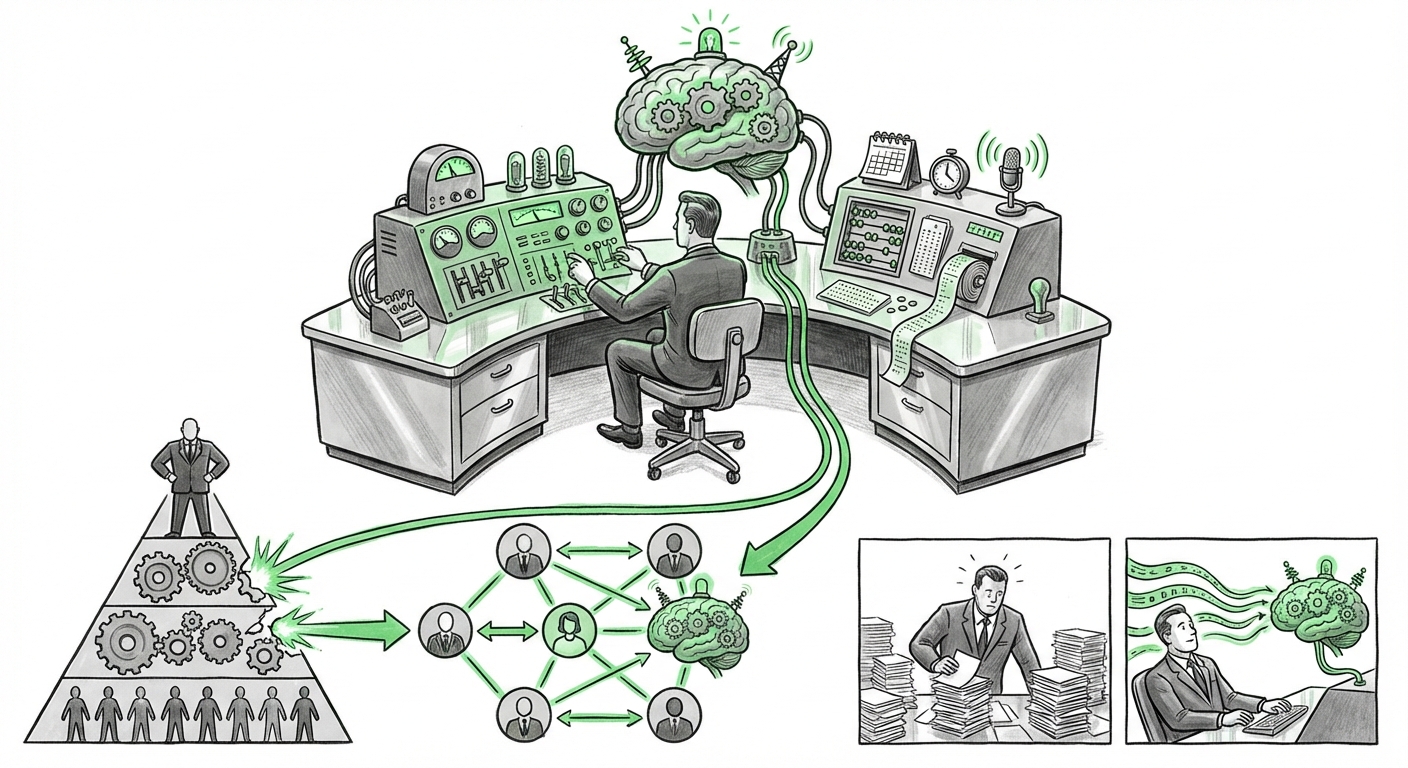
The popular narrative says AI took the jobs. The more accurate version is that AI gave leaders a reason, a tool, and a cover story to do the reorganization they had been putting off for years.
Tech companies grew complicated during the boom years. Teams multiplied, layers stacked up, and coordination costs ballooned. AI tools arrived at the perfect moment to argue that fewer people could manage more work. Whether or not that argument is fully true, it became the dominant logic of the year.
What this means for the future of AI is important: the technology's biggest early impact on employment is not automation of whole jobs, but compression of whole layers. A single tool that summarizes meetings, drafts documents, and answers questions can make three coordination roles look redundant without ever doing any one of those jobs completely on its own.
That is a subtler risk than the "robot takeover" story, and it is harder to spot in the data. It shows up as fewer job postings in categories nobody was worried about.
The Middle Layer Gets Thin
Across the 2026 timeline, the roles trimmed most consistently were mid-level ones: project coordinators, program managers, junior analysts, quality reviewers, and the people whose job was mostly moving information between teams.
That is exactly the work AI assistants are best at today. Not because they are brilliant, but because the work is structured, repeatable, and text-based. When a tool can draft the status update, summarize the ticket, and surface the decision, the human whose job was to shuttle that information looks less necessary.
The result is a barbell-shaped workforce. Companies are keeping senior people who make judgment calls and make them accountable. They are keeping, and in some cases adding, hands-on builders who ship things. What thins out is the middle: the coordination class.
For businesses, this is a efficiency win in the short term and a risk in the long term. Middle managers are where future leaders learn to lead. Cut too deep and you create a succession gap that shows up three to five years later.
The Broken On-Ramp
Perhaps the most consequential trend in the 2026 timeline is what happened to entry-level hiring. The roles traditionally given to new graduates, the first rung on the ladder, are the same roles most exposed to AI tooling.
Junior developers, first-year support agents, junior researchers, and entry-level marketers all saw fewer openings. Companies still say they want young talent. But when a senior engineer with an AI assistant can do what a small team used to do, the economic case for training beginners weakens.
This is the sleeper issue of the entire AI transition. If nobody hires juniors, nobody becomes senior. The industry is trading short-term productivity for a long-term skills shortage, and very few companies are acting like they know it.
The firms handling this well are doing something specific: they are restructuring junior roles rather than deleting them. Instead of "do this task," the job becomes "supervise, check, and improve what the AI produced." It is a different job with a different skill set, and it requires actual investment in training, not just a tool license.
What Companies Are Actually Buying
While the cuts grabbed attention, the hiring side of the 2026 timeline tells the more hopeful story. The roles that grew share a common thread: they are about making AI work reliably inside a real business.
- AI platform and infrastructure engineers, people who make models run cheaply, safely, and at scale.
- Data and evaluation specialists, people whose job is proving that an AI system actually works, not just that it demos well.
- AI product managers, people who can tell the difference between a cool demo and a product customers will pay for.
- Security, privacy, and governance leads, roles that barely existed as full-time jobs a few years ago.
Notice what these have in common: none of them are about building a better model. They are about deploying models inside messy organizations. That is the real bottleneck, and it is where the durable jobs are being created.
The lesson for anyone planning a career: the scarce skill is no longer "knows AI exists." It is "can make AI trustworthy in a specific business context."
A Practical Playbook for Businesses
If the 2026 timeline teaches anything, it is that layoff-driven AI adoption tends to produce disappointing results. Companies that cut first and figured out the technology second often ended up rehiring for the same skills months later, or quietly paying contractors to do the work.
Here is what the pattern suggests works better:
1. Map the work before you map the org chart
Break roles into tasks. Some tasks are highly automatable, some are not, and most are somewhere in between. Cutting by job title instead of by task is how companies lose the people they actually need.
2. Invest in the human side of the tool
The difference between a team that gets value from AI and one that does not is rarely the model. It is training, workflow redesign, and clear rules about when a human must check the output.
3. Protect your pipeline of future talent
Keep some junior roles, but change them. Make the first year about reviewing, correcting, and improving AI output instead of producing first drafts. You get productivity now and experienced people later.
4. Be honest about the communication
Workforces that hear "AI will not replace you" one week and watch cuts the next stop trusting anything. The companies that handled 2026 best were specific about which roles were changing, why, and what support was available.
5. Measure what you actually saved
Many AI-driven efficiency claims are never audited. Track time saved, error rates, and rework. Otherwise you are making structural decisions based on a feeling.
What This Means for Society
Zoom out and the 2026 layoff timeline is really a story about how quickly a general-purpose technology can reshape the shape of a workforce, not by eliminating work, but by changing where the work sits and who gets to learn it.
The societal implications are mostly about mobility. When the bottom rung of a career ladder narrows, the people hurt most are those without networks, savings, or credentials. Tech has always been a field where a smart self-taught person could break in. That path gets harder when the entry-level job is the first thing automated.
Expect this to become a policy conversation, not just a corporate one. Apprenticeships, retraining programs, and portable skill credentials will move from nice-to-have to necessary. The companies that treat reskilling as a core operating expense rather than a PR line will have a real advantage in the hiring market of the late 2020s.
The Road Ahead: How AI Will Actually Be Used
The most useful prediction from the 2026 picture is that AI's role will keep shifting from tool people use to system people work inside. The next phase is not about individual productivity. It is about agents that execute multi-step processes, and organizations designed around the assumption that those agents exist.
That means the winners over the next few years will not be the companies with the most aggressive headcount cuts. They will be the ones that got the sequencing right: redesign work, retrain people, deploy carefully, then scale. The ones that cut first and thought later are already discovering the cost of rebuilding institutional knowledge they threw away.
The layoffs of 2026 are not proof that AI is replacing workers. They are proof that AI is rewiring how companies decide what work is worth paying for. That is a harder and more important shift, and understanding it is the difference between reacting to the next headline and being ready for it.