Fiber Is the New AI Bottleneck: Why the Hidden Network Decides the Future of AI
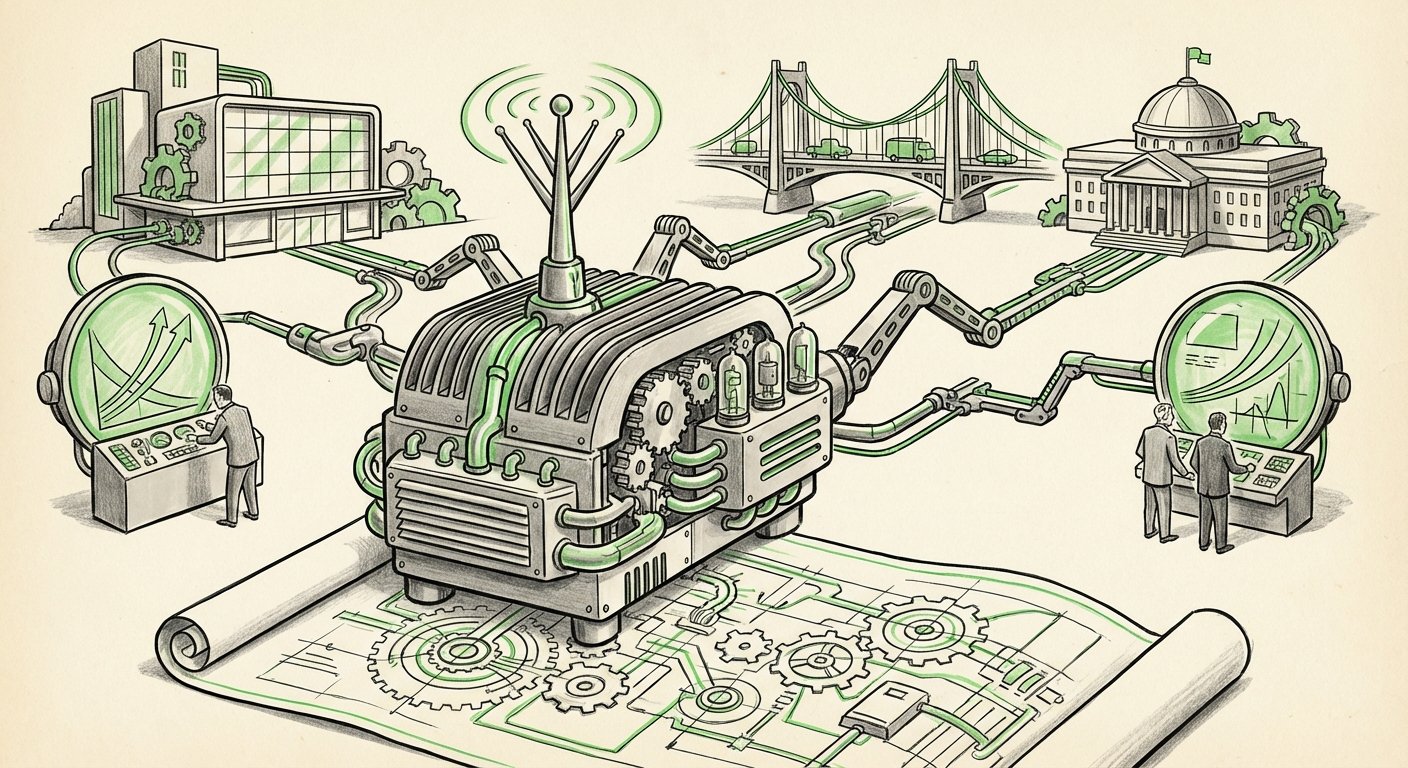
When people talk about artificial intelligence, they usually point to the flashy parts: the chips, the models, the apps that write and draw and answer questions. But there is a quieter layer that may decide how fast AI grows, and who gets to use it. That layer is fiber. The glass cables that carry data as pulses of light are becoming the hidden bottleneck for AI. If you want to understand the future of AI, you need to understand the network underneath it.
The Invisible Highway Behind AI
AI systems are hungry for data. They learn from huge piles of text, images, video, and sensor readings. They send updates between many machines during training. They answer questions by moving information from data centers to phones and back. All of that movement happens on networks. And the fastest, highest-capacity networks run on fiber optic cable.
For years, fiber seemed like it had plenty of room. Internet traffic grew, and network builders kept adding more fiber and better equipment. But AI changes the shape of the demand. It is not just more traffic. It is different traffic: massive data sets moving between locations, many machines working together in tight coordination, and users expecting instant answers from models that live far away. That kind of demand pushes fiber in ways ordinary web traffic does not.
The result is a new kind of bottleneck. It is not always a single cable that is full. It is the whole chain: the fiber itself, the optical equipment at each end, the physical paths between buildings, the permits to dig, the power to run it all, and the time it takes to build. Fiber is the new bottleneck because AI cannot scale without moving more data faster, and moving data faster depends on glass, light, and construction crews.
Why AI Strains Fiber Networks
Training Is a Team Sport
Modern AI training often spreads work across many machines. Those machines must talk to each other constantly. They share model updates, gradients, and data shards. If the network between them is slow, the expensive chips sit idle. That means the network is not a background utility, it is part of the computer. When fiber links are congested or too few, training slows down and costs go up.
Inference Moves Data Both Ways
Using an AI model also depends on fiber. A user asks a question, and the request travels to a data center. The model processes it, and the answer travels back. For text, that is small. For images, video, audio, or large documents, it is much bigger. As AI moves into everyday tools, assistants, search, design, coding, customer service, the number of requests grows. Each request adds to the load on the network between users and data centers. Fiber capacity and latency become part of the user experience.
Data Gravity Pulls Hard
Large data sets are heavy in a practical sense: moving them takes time and money. Companies often keep data close to where it is used. But AI training may need data from many places. That creates a pull to move data to central clusters, or to move compute to where the data lives. Either way, fiber links between locations become critical. If those links are thin or slow, they limit how much AI work can be done.
The Bottleneck Is Not Just Bandwidth
It is tempting to think the fix is simply “more fiber.” More capacity helps, but the bottleneck has several layers.
- Physical construction: Laying fiber takes time. It requires permits, right-of-way access, trenching, and coordination with local authorities. In crowded areas, it can be slow and expensive.
- Optical equipment: Fiber needs transmitters, receivers, amplifiers, and switches. These parts must keep up with demand. If they lag, the fiber is underused.
- Routes and redundancy: A single fiber path is fragile. AI services need multiple routes so a cut cable does not take everything down. Building diverse routes is harder than adding capacity to one path.
- Latency: Light travels fast, but not instantly. For some AI uses, like real-time control, robotics, or augmented reality, distance matters. Fiber routes that are short and direct become valuable.
- Power and cooling: Network gear and data centers need electricity. In some places, power constraints can limit network expansion as much as fiber supply.
This is why fiber is a systems bottleneck. You cannot solve it with one upgrade. You need planning across construction, equipment, power, and policy.
What This Means for the Future of AI
AI Growth May Become Uneven
If fiber is a constraint, AI growth will not happen evenly everywhere. Places with strong fiber networks, fast permitting, and abundant power will attract AI infrastructure. Places without those advantages may lag. That could shape which cities and regions become AI hubs, and which ones are left waiting for better connectivity.
Edge AI Gets More Important
When the network is a bottleneck, it makes sense to move some AI closer to users. That is the idea behind edge AI: run smaller models on devices or local servers instead of sending everything to a distant data center. Edge AI reduces network load and latency. It will not replace large centralized models, but it can handle many everyday tasks. The fiber bottleneck will push more innovation toward edge computing.
Network Design Becomes an AI Skill
AI teams have focused on chips, software, and data. In the future, they will need to think about network topology, how data centers, users, and data sources are connected. Choosing where to put training clusters, how to route traffic, and how to use fiber efficiently will become part of AI engineering. The network is no longer someone else’s problem.
New Business Models Appear
Bottlenecks create markets. Expect more companies to offer fiber capacity, managed network services, and “AI-ready” data center campuses. Expect deals between AI companies and network operators. Expect tools that help route AI traffic around congested paths. The hidden network will become a visible business layer.
Practical Implications for Businesses
For business leaders, the fiber bottleneck is a planning issue. It is easy to assume the cloud will handle everything. But cloud services still run on physical fiber. If your AI plans depend on moving large data sets, serving many users, or connecting multiple sites, you need to understand your network dependencies.
- Map your fiber dependencies: Know which AI workloads depend on which network paths. Identify single points of failure.
- Diversify routes: Do not rely on one fiber path for critical AI services. Ask providers about route diversity and redundancy.
- Plan for latency: If your AI use case is time-sensitive, test real-world latency. Consider placing compute closer to users or data.
- Include network costs in AI budgets: Data movement is not free. Fiber capacity, cross-connections, and egress fees can add up.
- Engage early with providers and local authorities: If you need new fiber routes, start early. Permits and construction take time.
What It Means for Society
The fiber bottleneck is not just a corporate concern. It affects who benefits from AI. Communities with weak broadband and fiber links may see fewer AI services, slower performance, and less local innovation. Schools, hospitals, and small businesses in those areas could be left behind.
There is also a physical footprint. More fiber means more construction, more land use, and more energy for network equipment. Policymakers will face choices about how to speed up fiber buildout while protecting local interests. Streamlining permits, supporting open-access fiber, and funding underserved areas could help spread the benefits of AI. Without that, the hidden network could widen existing digital divides.
Actionable Insights
Here is what different groups can do now.
For Business Leaders
- Treat network capacity as a core part of your AI strategy, not an IT afterthought.
- Audit your fiber routes and contracts before scaling AI workloads.
- Build relationships with network providers and understand their expansion plans.
- Use edge computing where latency and bandwidth are tight.
For Technologists
- Design AI systems that can tolerate network delays and failures.
- Measure network performance in real deployments, not just in the lab.
- Consider data locality when choosing where to train and serve models.
- Explore compression and smarter data movement to reduce fiber load.
For Policymakers
- Speed up permitting for fiber construction where appropriate.
- Support open-access fiber networks to increase competition.
- Fund fiber in underserved areas so AI benefits are widely shared.
- Coordinate power and network planning, since both constrain AI growth.
The Bottom Line
AI’s future will not be written only in code and chips. It will also be written in glass. Fiber is the hidden network powering AI, and it is becoming the bottleneck that shapes where AI grows, how fast it improves, and who gets to use it. The companies and countries that treat fiber as strategic infrastructure will be better positioned for the next wave of AI. Those that ignore it may find that the smartest models in the world are stuck waiting on a cable.