Google Says Schools That Ban AI Won't Have Access to Search, And That Changes Everything
For most of the internet's history, a search box was neutral plumbing. You typed a question, you got links, and nobody asked what you believed about technology. That era just ended. Google has now made a very direct statement: students in schools that ban AI will not have access to Search.
Read that again. Not "will get a limited version." Not "will see a warning screen." No access. The world's most-used research tool is now tied directly to whether a school district says yes to artificial intelligence.
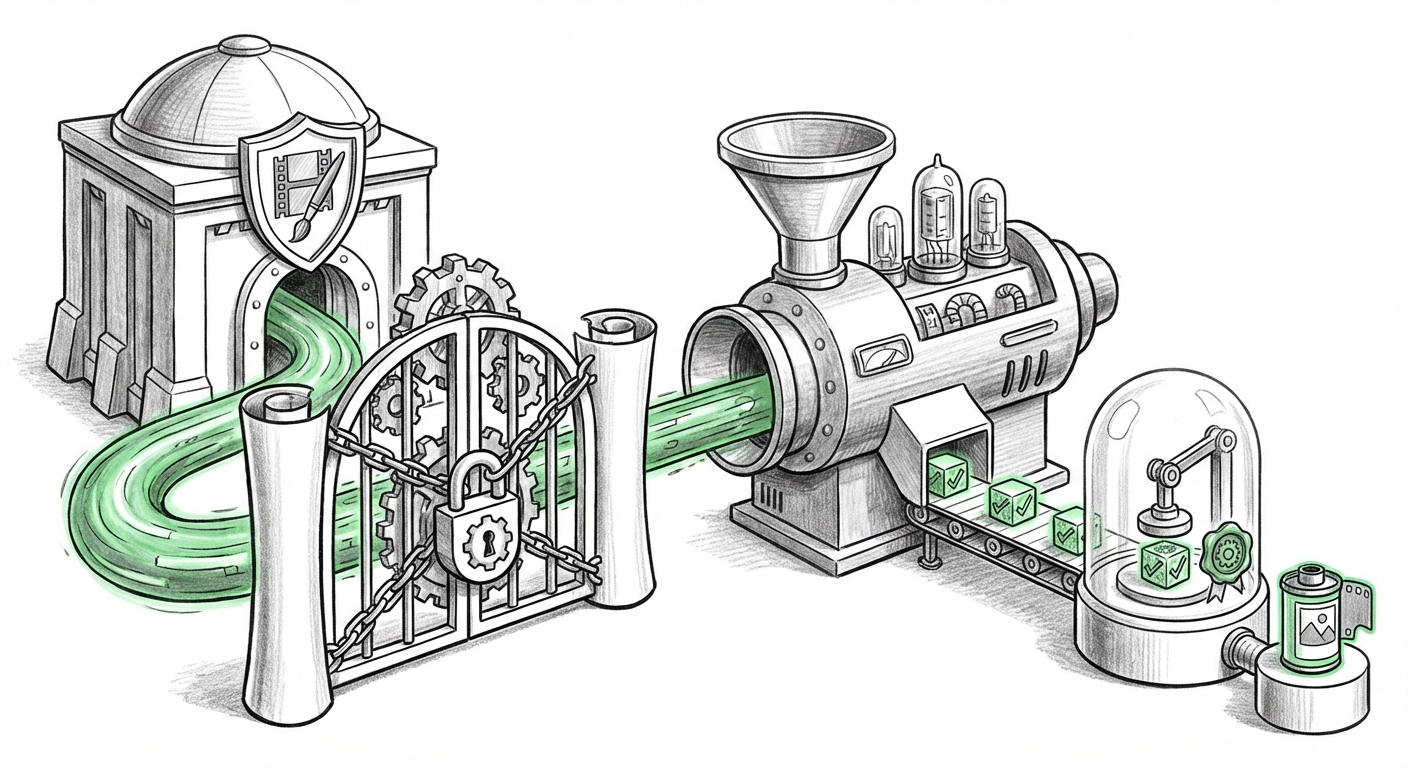
That single sentence is short, but it carries a lot of weight. It tells us how AI companies plan to grow. It tells us how much power schools actually have. And it tells us what the next phase of AI adoption will look like, less like buying a product, and more like passing through a gate.
What Google Actually Announced
The policy is straightforward. If a school bans AI tools, students at that school lose access to Search as well. The two things are now treated as one package. There is no clean line between "the old search engine" and "the new AI layer," because in Google's view, there no longer is one.
That matters because schools have been one of the loudest groups pushing back on AI. Districts have worried about cheating, about accuracy, about data privacy, and about what it means to hand students a machine that can write their essays. Many responded the way institutions usually do when they are nervous: they blocked it.
Google's answer is essentially, you can't block the AI and keep the rest. The bundle is the product. Take it or leave it.
Why Search and AI Are Now the Same Thing
To understand the logic, and it is a logic, even if you dislike it, you have to look at what search has become. Search results are no longer just a list of links. They are increasingly generated answers, summaries, and follow-up prompts. The AI is not an add-on bolted to the side of Search. It is becoming the way Search works.
From Google's point of view, a school that bans AI is asking for a version of Search that the company no longer builds. Turning off AI would mean turning off the thing that now makes the product work. So the company is drawing a line it can defend internally: if you don't want the AI, you don't want Search.
Whether that is honest engineering or convenient framing is a fair question. But either way, the effect on schools is the same. Their AI policy is now an internet-access policy.
The Bundling Playbook Moves Into the Classroom
This is a pattern the tech industry has run for decades. Give the product away or make it free to schools. Let students and teachers build habits. Make the tool so woven into daily work that removing it feels impossible. Then let the rest follow.
What is new here is the direction of the pressure. In the past, bundling meant you get our extra tool when you buy our main tool. Here it is reversed: you get our main tool only if you accept our AI tool. The AI isn't the freebie anymore. It's the entry fee.
Education is an unusually high-stakes place to try this. Schools are not optional customers. Students cannot simply choose another provider if their district says no. When access to Search is conditional, the condition lands on children who had no vote in the decision.
What This Means for Schools and Districts
The immediate effect is that blanket bans just got much more expensive. A district that blocked AI as a cautious first move now has to weigh that choice against losing a basic research tool for every student.
That is a real trade-off, and it will push many districts toward more careful policies instead of flat bans. Expect to see three shifts:
- From bans to tiers. Instead of blocking everything, districts will approve some tools for some ages, some subjects, and some grade levels, with teachers in control.
- From policy to contracts. The fight moves from the school board meeting to the vendor agreement. Districts will start demanding that access terms not be tied to feature decisions.
- From fear to literacy. If AI is unavoidable, the smarter move is teaching students how to use it well and how to check its answers, rather than pretending it isn't there.
There is a hard question buried in all this, too. If a school decides its students are better off without generative AI for now, has Google made that decision impossible? That is not a small thing. Local control over curriculum was supposed to be one of the most protected ideas in education.
The Bigger Signal: AI Becomes a Condition, Not a Product
Step back from schools for a moment, because the real story here is bigger than education.
For the last few years, AI has been sold as a thing you add. A chatbot here, an assistant there, a subscription on top of your existing software. That phase is ending. The next phase looks like this: AI gets built into the core product, and access to the core product depends on accepting the AI.
We should expect this pattern to spread. Workplace software, productivity suites, design tools, and communication platforms all have the same incentive. Once AI is inside the product, the vendor has every reason to stop offering a version without it. It cuts support costs, simplifies development, and, most importantly, raises the cost of switching away. You can't leave for a competitor if your whole workflow depends on features that only exist in one place.
That is how lock-in works. It rarely arrives as a dramatic announcement. It arrives as a quiet line in a policy page: this feature is required for access.
Risks Worth Naming Out Loud
1. Lock-in and lost leverage
When access to a basic tool is conditional, the buyer loses bargaining power. Schools, already stretched thin, have less room to negotiate on price, privacy, or terms. The same will be true for businesses if this pattern spreads to enterprise contracts.
2. An uneven playing field
Well-resourced districts will pay for legal review, negotiate custom terms, and build thoughtful AI policies. Under-resourced districts will take the default option because they have no one to fight the fight. Students on the wrong side of that gap lose the most.
3. Unanswered privacy questions
When a tool is required rather than chosen, questions about data handling get harder to ask. What is stored, for how long, and who reviews it? These are questions every school should be able to answer before students are required to use anything.
4. The precedent
Today it is Search in schools. Tomorrow it could be a productivity suite, a learning platform, or a public service portal. Each time, the logic sounds reasonable in isolation. Added together, it becomes a system where a small number of companies decide what counts as a normal tool.
What This Means for Businesses
If you buy software for a living, this is a preview of a negotiation you will be having soon. Vendors will increasingly present AI as inseparable from the product, and the pressure to accept will be strong because the alternative is losing access to tools your team already relies on.
Three practical moves:
- Put AI terms in writing. Your contract should say clearly what happens to your access if you limit or disable AI features for a team, a region, or a compliance reason.
- Price the exit, not just the entry. Ask what it would cost to leave in three years if AI becomes mandatory. That number matters more than this year's discount.
- Keep one workflow portable. Maintain at least one critical process that can run without a single vendor's AI layer. It is cheap insurance.
For builders and startups, the lesson runs the other way. If the big platforms make AI mandatory, there is real demand for tools that give people control, clear on/off switches, transparent data handling, and the ability to choose what gets automated. "You decide what the AI touches" is turning into a selling point, not a feature list item.
Actionable Insights by Role
For school leaders
Stop treating AI policy as a yes-or-no question. Build a tiered policy with clear rules for age, subject, and teacher approval. Then review your vendor agreements to see what other access is tied to those decisions.
For IT and procurement teams
Add one question to every renewal: if we restrict AI features, does anything else change? The answer should be in the contract, not in a help article.
For parents and policymakers
Ask who decided that a research tool is conditional. If access to information depends on accepting a product, that is a public question, not just a vendor question.
For anyone building with AI
Design for reversal. Assume some users will need to turn your AI off for a term, a semester, or a compliance audit. Products that survive that test will win trust faster than products that don't.
The Bottom Line
Google's move is small on paper and large in meaning. It marks the moment AI stopped being a feature you could decline and started being a condition you have to meet. That is a profound change in how technology gets adopted, not through persuasion, but through dependency.
It might work. It might push schools into smarter, more granular AI policies instead of blanket bans, which would honestly be a better outcome for students. But it also sets a template that other companies will copy, in education and far beyond it.
The question is no longer whether AI will be everywhere. It will. The question is whether the people using it, students, teachers, workers, buyers, get a real say in how it shows up. A search box used to be neutral plumbing. Now it's a vote. Everyone should know they're casting one.