Humanoids vs. Specialized Robots: What the Future of Embodied AI Really Looks Like
The question at the center of a recent industry discussion is simple but powerful: are humanoids the future of embodied AI? It sounds like a debate about robot shapes. In reality, it is a debate about how artificial intelligence will move from screens into the physical world, and who will benefit first.
For business leaders, engineers, and policymakers, the answer matters. It shapes where money goes, which skills matter, and how quickly AI can help with real work in factories, warehouses, hospitals, and homes. The honest answer is not a simple yes or no. The future of embodied AI is likely to be a mix of bodies and brains, with humanoids playing a major role in some settings and specialized machines winning in others.
What Embodied AI Actually Means
Embodied AI is artificial intelligence that can sense, reason, and act in the physical world. A chatbot can write a message. An embodied AI system can pick up a box, open a door, or move through a crowded room. That jump from digital output to physical action is much harder than it looks.
The body matters because the physical world has rules. Objects have weight. Floors are uneven. People move unpredictably. A robot must handle all of this in real time, with limited power and limited computing. The “brain”, the AI software, and the “body”, the hardware, must work as one system.
This is why the humanoid question is so important. A humanoid robot is designed to work in spaces built for people. It can, in theory, use the same tools, climb the same stairs, and fit into the same workflows. That promise is attractive. But it also creates very high expectations.
Why Humanoids Capture the Imagination
Humanoids get attention for good reasons. The world is already designed around human bodies. Stairs, door handles, shelves, vehicles, and tools all assume a human-like reach and grip. A robot that shares that shape could, in principle, be dropped into many environments without rebuilding them.
There is also a data advantage. People can demonstrate tasks to a humanoid in a natural way. A worker can show a robot how to move a cart or stack a box. That kind of demonstration is harder with a completely different body shape. Humanoids may also be easier for people to accept in customer-facing roles because they look familiar and can use gestures and speech in human-like ways.
Finally, humanoids promise general-purpose labor. A specialized robot might do one task extremely well. A humanoid is meant to do many tasks, today in a warehouse, tomorrow in a lab, next year in a home. That flexibility is the dream. It is also the hardest engineering challenge.
The Case for Specialized Robots
The case against a humanoid-first future is just as strong. In many settings, a specialized robot is cheaper, safer, and more reliable. A robot arm that welds a car frame does not need legs, a head, or balance. A warehouse robot that moves shelves does not need hands. By focusing on one job, specialized machines can be simpler to build, easier to maintain, and less likely to fail in dangerous ways.
Humanoids face a difficult set of physical problems. Walking on two legs is hard. Picking up fragile objects is hard. Carrying enough power for a full shift is hard. Working safely near people is hard. Each of these problems is solvable in a lab, but solving all of them at once, at a reasonable cost, is a different level of challenge.
There is also the “last 10%” problem. A humanoid might handle 90% of a task well. The final 10%, the odd-shaped box, the slippery floor, the child who runs into the room, can be the most expensive and dangerous part. Specialized robots often avoid that problem by controlling the environment. Humanoids are designed for uncontrolled environments, which makes safety and reliability much harder.
The Real Future: A Spectrum, Not a Winner
The most likely future is not “all humanoids” or “no humanoids.” It is a spectrum of embodiments. In structured spaces, factory lines, agriculture, cleaning, inspection, specialized robots will often win on cost and performance. In unstructured human spaces, homes, hospitals, hotels, small shops, humanoids may have a real advantage because they can use existing infrastructure.
This suggests a more useful way to think about the debate. The key question is not “which body is best?” The key question is “which body fits the task, the environment, and the risk?” A company should not fall in love with a form factor. It should fall in love with a result.
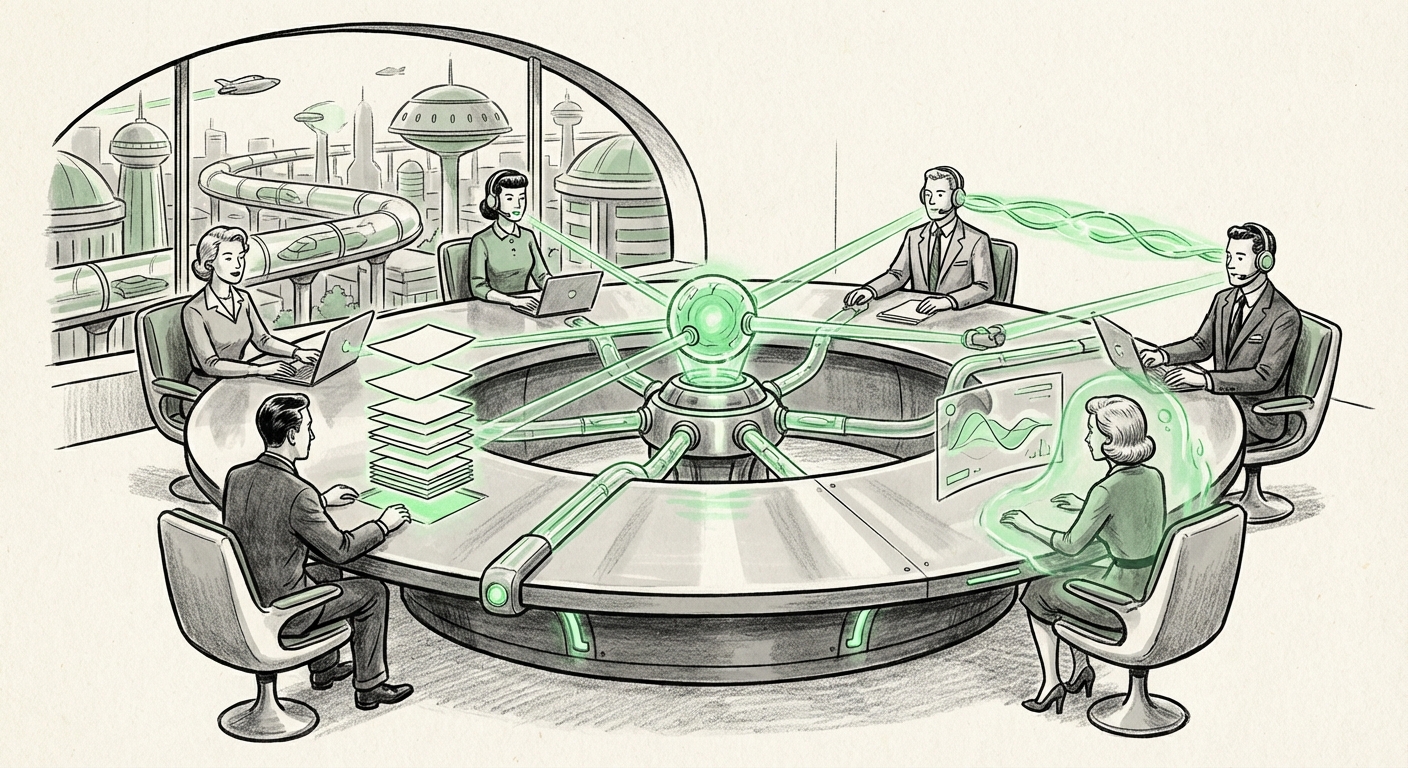
Another likely trend is software that moves across bodies. If embodied AI is built as a layer, perception, planning, control, it can be adapted to different machines. A warehouse might use a humanoid for flexible tasks and fixed robots for repetitive ones, all coordinated by the same AI platform. That kind of interoperability could matter more than any single robot design.
Technical Hurdles That Will Decide the Debate
Several technical bottlenecks will shape how fast embodied AI spreads. The first is data. AI systems need examples to learn from. In the digital world, data is plentiful. In the physical world, data is slow and expensive to collect. Simulation helps, but simulated physics is never a perfect copy of reality. The “sim-to-real” gap remains a major challenge.
The second is manipulation. Seeing a cup is one problem. Grasping it without crushing it, while moving, is another. Human hands are remarkably complex. Building a robot hand that is strong, gentle, cheap, and reliable is still a major engineering effort.
The third is power and endurance. A humanoid that can work for only a short time between charges may not be useful for many jobs. Batteries, actuators, and heat management all matter. These are hardware problems, not just software problems.
The fourth is safety validation. A robot that shares space with people must be trusted. That requires clear standards, testing, and liability rules. Without them, deployment will be slow, especially in public spaces and homes.
What This Means for Businesses
For business leaders, the humanoid debate offers a clear lesson: do not wait for a single winner. Start by mapping tasks, not robots. Which jobs are repetitive, dangerous, or hard to staff? Which environments are structured enough for a specialized machine? Which require human-like flexibility? The answers will point to different form factors.
Second, invest in the integration layer. The value of embodied AI will come from orchestration, software that connects robots, sensors, workers, and workflows. A company that can manage a mixed fleet will be more flexible than one that bets on a single vendor or body type.
Third, treat safety and trust as product features. A robot that injures a worker or damages goods can destroy a pilot program. Leaders should demand clear safety cases, insurance options, and maintenance plans. They should also involve frontline workers in design and testing. Adoption depends on trust as much as performance.
Fourth, think about return on investment in narrow terms. A humanoid that can do many tasks is exciting, but the business case may start with one task in one area. Pilot projects should have clear metrics: cost per hour, error rate, uptime, and safety incidents. Without those numbers, the debate stays abstract.
What This Means for Society
The societal stakes are just as high. Embodied AI could help with labor shortages, dangerous work, and care for aging populations. It could also displace workers and widen inequality if the benefits are concentrated. The form factor matters here too. A humanoid that looks and acts like a person may raise different emotional and ethical questions than a machine that looks like a tool.
Regulation will need to catch up. Rules for physical safety, data privacy, and liability must be clear before robots become common in public spaces. Cities and workplaces will need standards for sidewalks, elevators, and shared areas. Without them, deployment could stall or become uneven.
There is also a design question. If humanoids are built to fit human spaces, they may reinforce those spaces rather than rethink them. That is not always bad. But it means the technology will inherit both the strengths and the flaws of the world we have built.
Actionable Insights for the Next Five Years
- Start with tasks, not robots. List the jobs you want to automate or support. Then ask which body shape, humanoid, arm, mobile base, or fixed machine, fits best.
- Pilot in controlled environments. Test embodied AI where the risks are low and the metrics are clear. Expand only after safety and reliability are proven.
- Build a mixed-fleet strategy. Assume you will use more than one kind of robot. Invest in software that can coordinate different machines and data sources.
- Demand interoperability. Ask vendors how their systems connect to others. Avoid lock-in at the hardware and software layers.
- Prepare your workforce. Train workers to supervise, maintain, and collaborate with robots. The human role will shift from doing every task to managing systems.
- Track the safety and liability rules. Engage early with standards bodies and insurers. Clear rules will speed up adoption, not slow it down.
Conclusion: The Body Is Not the Whole Story
Are humanoids the future of embodied AI? They are a future, a big, visible, and important one. But the deeper future is about embodied intelligence that can adapt. Humanoids will matter most in spaces built for people, where flexibility and human-like interaction are worth the cost. Specialized robots will matter most where speed, precision, and safety can be engineered into a narrow task.
The companies and countries that succeed will not be the ones that pick the winning shape. They will be the ones that match the body to the job, build trust, and connect it all with smart software. The humanoid debate is a useful wake-up call. The real work is just beginning.