The Observable Robotics Data Flywheel: How Robots Get Smarter From Real-World Experience
Robots are moving out of labs and into warehouses, farms, hospitals, and streets. The hard part is no longer building one robot that works in a demo. The hard part is building a fleet that keeps getting better after it is deployed. That is where the observable robotics data flywheel comes in.
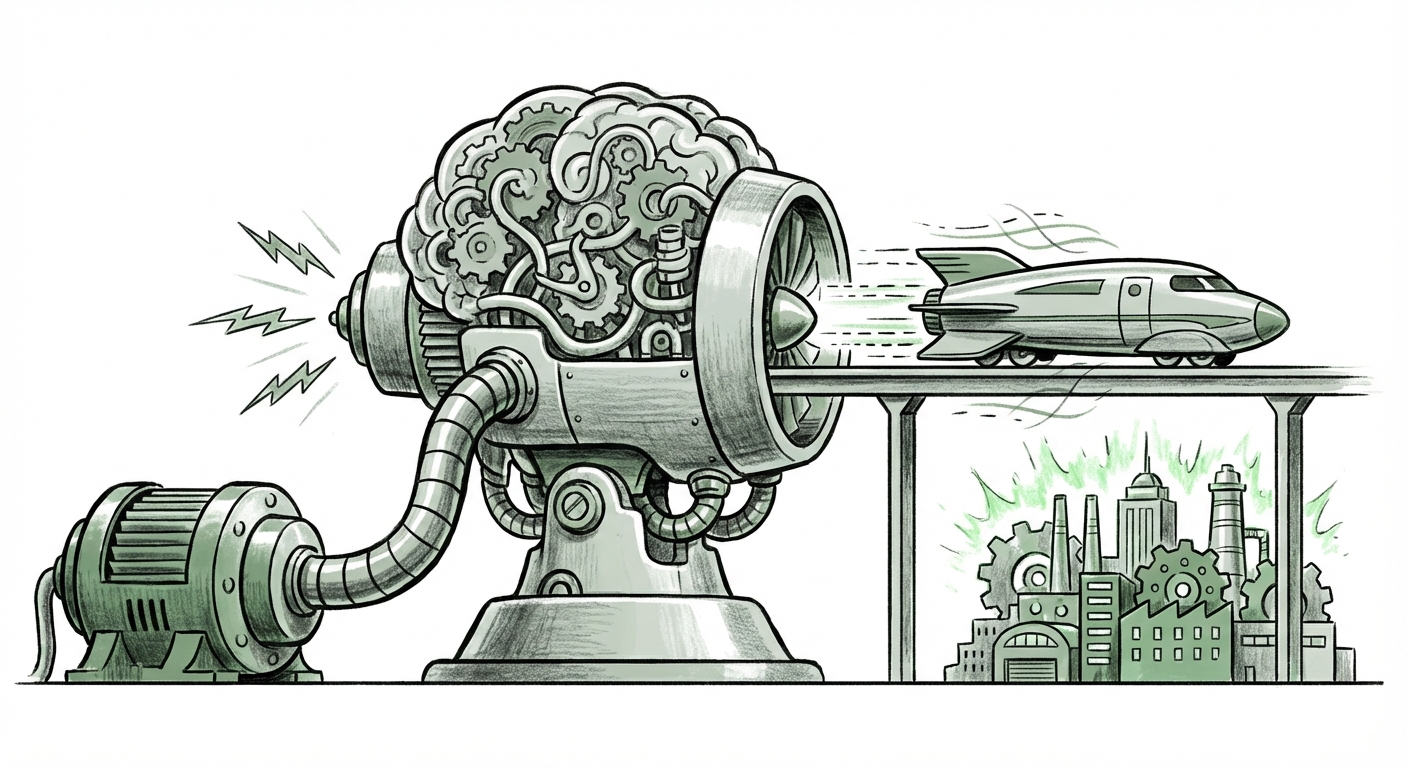
A data flywheel is a loop. Robots collect data. Teams use that data to train better models. Better models make robots more useful. More useful robots get deployed more. More deployment creates more data. The loop repeats. When the flywheel works well, each turn makes the system smarter, safer, and cheaper to run.
But a flywheel only works if you can see what is happening. That is the “observable” part. A robot that cannot show you why it failed, or why it succeeded, cannot help you improve. It just creates noise. An observable robotics data flywheel turns real-world experience into a steady stream of learning.
Why Robotics Needs a Data Flywheel
Software teams have used data flywheels for years. Search engines learn from clicks. Social apps learn from usage. Robotics is different because the physical world is messy. Every warehouse floor, hospital hallway, and farm field is a little different. Lighting changes. Floors get wet. People move in unpredictable ways. A robot that works in one place may struggle in another.
This is why robotics needs a continuous learning loop. A one-time training dataset is not enough. The world changes, and robots must change with it. The data flywheel gives teams a way to capture those changes and respond. It turns deployment into a source of improvement instead of a final step.
The flywheel also helps with cost. Collecting real-world robot data is expensive. Every hour of operation costs money. If teams cannot learn from that data, they waste it. An observable flywheel makes sure the most valuable data, edge cases, failures, and surprising events, gets found and used.
What Makes a Robotics Data Flywheel Observable?
Observability means the system can show what happened and why. In software, observability often means logs, metrics, and traces. In robotics, it means much more. Teams need to see sensor data, robot actions, model outputs, environmental conditions, and human interventions. They need to connect all of it to a moment in time.
An observable robotics data flywheel has three key traits:
- It captures context. Data is not just a video clip or a sensor reading. It includes the robot’s state, the task, the environment, the model version, and the outcome.
- It finds the important moments. Teams can search for near-misses, failures, slow responses, and unusual sensor patterns. They can replay events and compare what the robot did with what it should have done.
- It closes the loop. The data flows back into training, simulation, and evaluation. Teams can prove that a change made the robot better, or discover that it made things worse.
Without observability, the flywheel is blind. Teams may collect terabytes of data but never find the moments that matter. They may retrain models but not know why performance changed. They may deploy updates but not catch regressions until a customer complains. Observability is the difference between a data lake and a learning system.
The Parts of an Observable Flywheel
1. Instrumentation From Day One
You cannot add observability later without losing history. Robots should be instrumented from the first deployment. That means capturing the right signals at the right rate. It also means tagging data with enough context to make it useful later. Teams should ask: if a robot fails next month, what data would we need to understand why?
2. Data Pipelines Built for the Physical World
Robot data is big, diverse, and messy. It comes from cameras, lidar, radar, force sensors, joint encoders, and more. It arrives in different formats and at different speeds. A strong flywheel needs pipelines that can ingest, store, and process this data without losing fidelity. It also needs ways to handle privacy, security, and data retention.
3. Human Review and Labeling
Not all data is equally useful. Humans still play a key role in reviewing edge cases, labeling difficult examples, and judging whether a robot’s behavior was safe or appropriate. The flywheel should make human review efficient. It should surface the most valuable clips and let reviewers add context quickly.
4. Simulation and Replay
Simulation is a powerful partner to real-world data. Teams can replay real events in simulation, change conditions, and test fixes before deploying them. This reduces risk. It also helps teams get more value from rare events. A single failure on a real robot can become hundreds of test cases in simulation.
5. Evaluation That Matches Reality
A flywheel needs a clear definition of success. That means task-level metrics, safety metrics, and business metrics. It also means evaluating models in conditions that reflect the real world. A model that scores well on a benchmark but fails in a warehouse is not an improvement. Observable evaluation keeps the loop honest.
Where the Flywheel Breaks
Building an observable robotics data flywheel is hard. Several problems can slow it down or stop it.
- Data overload. Robots can produce more data than teams can store or review. The flywheel must prioritize signal over noise.
- Labeling cost. Human review is expensive. Teams need smart sampling and active learning to focus on the most useful examples.
- Sim-to-real gap. Simulation helps, but it is not the real world. Teams must keep testing in reality and feeding real-world surprises back into the loop.
- Safety and regulation. Robots that operate near people must meet high safety standards. Observability helps with audits, but it also creates new data governance duties.
- Organizational silos. Data teams, robotics teams, and business teams often work separately. A flywheel needs shared metrics and shared ownership.
These challenges are real, but they are not reasons to wait. They are design requirements. The teams that solve them will build robots that improve faster than the competition.
What This Means for the Future of AI
The observable robotics data flywheel points to a bigger shift in AI. For years, many AI systems learned mostly from static datasets. The future will be about systems that learn from their own experience. Robots are at the center of that shift because they act in the physical world.
This has three big implications for AI:
1. Physical AI Will Need Continuous Learning
Robots cannot rely only on pre-training. They need to adapt to new tasks, new environments, and new edge cases. The flywheel makes continuous learning practical. It gives teams a way to capture real-world experience and turn it into better models without starting from scratch.
2. Observability Will Become a Standard Layer
Just as software teams rely on application performance monitoring, robotics teams will rely on robot observability. This layer will track performance, detect drift, surface failures, and connect data to model updates. It will become as normal as logging is today.
3. Data Flywheels Will Be a Competitive Moat
In many AI markets, models are becoming easier to build. Data and feedback loops are becoming harder to copy. A company with an observable robotics flywheel can learn faster than a company without one. That speed becomes a durable advantage. It is not just about having more data. It is about having the right data, with context, and a way to act on it.
Practical Implications for Businesses
For business leaders, the robotics data flywheel is not just a technical idea. It changes how robots are bought, deployed, and managed.
Manufacturing and logistics teams can use the flywheel to improve picking, packing, and material handling. Every missed grasp or slow cycle becomes a learning opportunity. Over time, robots handle more variety and need less human help.
Healthcare and service robots can use observability to improve safety and trust. When a robot interacts with people, teams need to understand near-misses and unusual events. The flywheel helps them find those moments and fix them before they become problems.
Agriculture and field robotics face changing conditions every day. Weather, crops, and terrain vary. An observable flywheel helps teams adapt models to local conditions and seasonal changes.
Robotics vendors can use the flywheel as a product advantage. Customers want robots that get better over time. A vendor that can show measurable improvement from real-world data will win more deals.
Actionable Insights
Here is how teams can start building an observable robotics data flywheel:
- Start with observability, not just data collection. Define the questions you need to answer. Then instrument robots to answer them.
- Capture context with every data point. Record the task, environment, model version, and outcome. Data without context is hard to learn from.
- Build a feedback loop with clear ownership. Assign a team to run the flywheel. Give them the authority to retrain, test, and deploy improvements.
- Use smart sampling. Do not review every second of data. Focus on failures, near-misses, and low-confidence moments.
- Combine simulation and reality. Use simulation to test fixes quickly, but keep validating in the real world.
- Make safety and privacy part of the design. Build governance into the flywheel from the start. It will save time and protect trust.
- Measure the flywheel itself. Track how long it takes to go from data capture to deployed improvement. That cycle time is a key business metric.
The Road Ahead
The observable robotics data flywheel is still early. Many teams are just starting to connect their robots to real learning loops. But the direction is clear. Robots will become less like fixed machines and more like learning systems. They will improve with experience, just as software systems do.
The winners in this next wave will not be the teams with the most robots. They will be the teams with the best learning loops. They will know how to capture the right data, find the important moments, and turn those moments into safer, smarter behavior. The observable robotics data flywheel is how that happens.