StateBench Explained: Can AI Keep Up When Long Documents Change?
Language models are getting better at reading long documents. That is the easy headline. The harder question is whether they can keep track of what changes inside those documents. A new benchmark called StateBench is built to test exactly that: how well language models track state changes over long documents.
That sounds narrow. It is not. Many of the most valuable AI use cases depend on a model knowing the current status of something. A contract gets amended. A customer changes plans. A project deadline moves. A medical note is updated. A policy exception is approved. If an AI system cannot follow those changes, it can sound confident and still be wrong.
StateBench puts a spotlight on a blind spot in modern AI. The future of AI will not be won only by models that can read more text. It will be won by systems that can maintain a reliable picture of what is true now, what was true before, and why it changed.
What StateBench Actually Tests
The name is direct. State means the current condition of something. A state change is any event that makes that condition different. In a long document, state changes can look like small edits, later clauses, new dates, updated totals, or comments that override earlier text.
StateBench tests whether a language model can follow those changes across long documents. That is different from finding one fact in a large pile of text. It is also different from summarizing a document. A summary can be smooth and still miss the latest update. A model can retrieve an old paragraph and present it as the current answer.
The benchmark matters because it asks a more realistic question. Real work is not a static quiz. It is a stream of revisions. The model has to understand that a later statement may replace an earlier one. It has to notice when two parts of a document conflict. It has to keep the timeline straight.
This is the difference between reading and tracking. Many AI systems are good at reading. Fewer are reliable at tracking.
Why Long Context Alone Is Not Enough
The AI industry has spent years pushing models to handle longer inputs. Larger context windows are useful. They let a model see more of a document at once. But more context does not automatically create better state tracking.
A model can have the whole document in view and still blend old and new facts. It can pay more attention to the beginning or the end. It can treat a superseded clause as if it still applies. It can miss a quiet update buried in the middle. In long documents, the most important state change is often not the loudest sentence.
This is why StateBench is a useful signal. It moves the test away from simple recall and toward something closer to real work: maintaining a working model of a changing situation. That requires attention, memory, reasoning, and structure. A bigger context window can help, but it is not a complete answer.
For businesses, this is a critical distinction. A vendor may say its model can read hundreds of pages. The better question is: can it tell me which page is current, which clause wins, and which fact has changed?
The Business Stakes: Where State Tracking Breaks
State tracking failures are expensive because they often look like normal answers. A model does not need to crash to cause harm. It only needs to give an outdated answer with confidence.
Consider legal work. A contract may have a main agreement, amendments, side letters, and waivers. The current rule may not be in the main body. An AI system that tracks state can point to the controlling language and explain why. An AI system that does not may quote a clause that was replaced months ago.
Consider finance. A forecast may be revised. A payment term may change. A customer may move from one pricing tier to another. The answer depends on which update counts. This is not just a search problem. It is a state problem.
Consider healthcare operations. A patient's medication list, care plan, or insurance status may change across documents. A model that cannot track the change can produce a summary that is clinically or administratively wrong. Human review helps, but the model's job is to make review easier, not to hide the change.
Consider customer support. A customer may have changed plans, opened a dispute, received a credit, or been promised an exception. The current state may be spread across emails, notes, and tickets. An AI agent that cannot follow the thread will frustrate the customer and create rework.
Consider supply chains and project management. A delivery date moves. A supplier is approved. A spec is revised. A task is blocked. Teams need the current state, not a pile of historical snapshots. AI that tracks state can become a real operations assistant. AI that does not becomes another source of confusion.
What StateBench Means for AI Development
Benchmarks shape what AI builders optimize. When a benchmark rewards static question answering, teams build better static question answering. When a benchmark rewards state tracking over long documents, teams have to think differently.
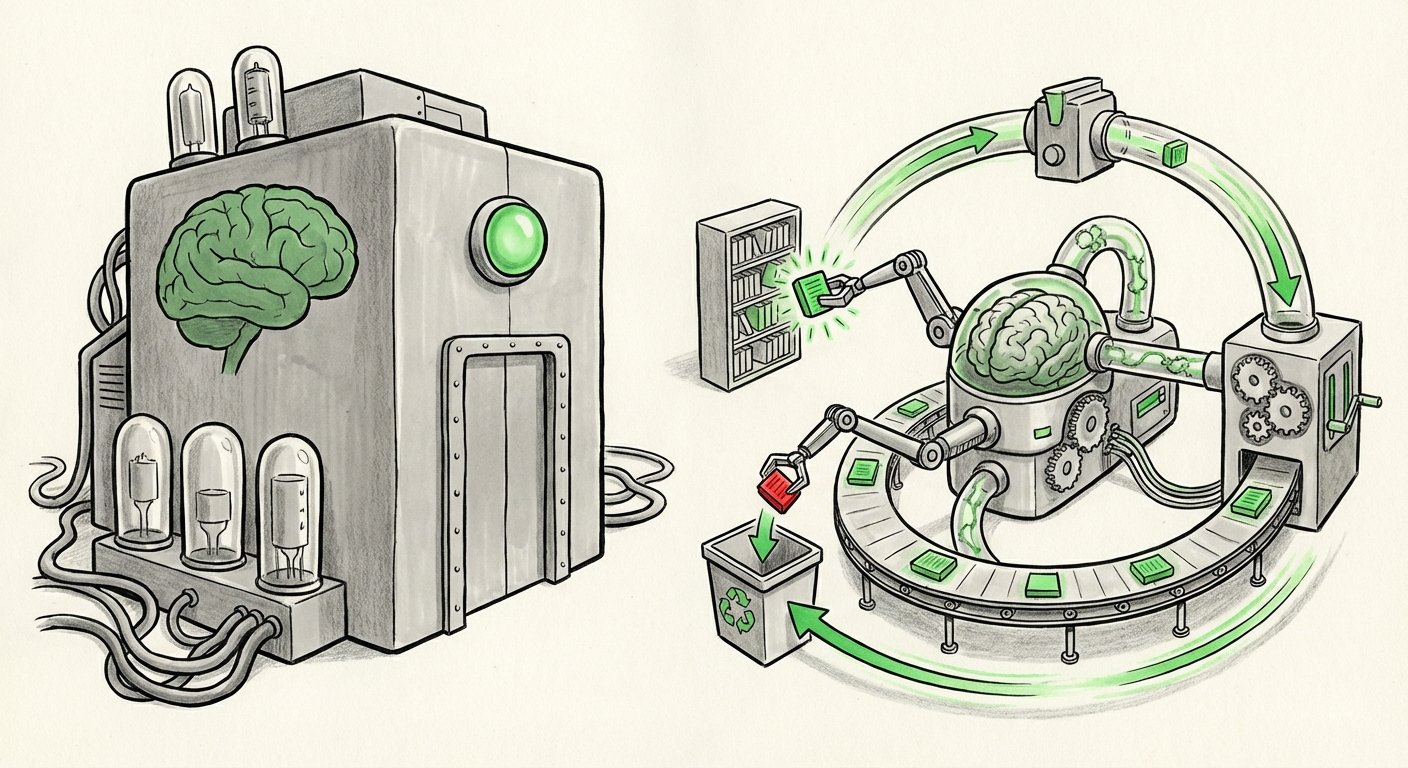
That means more focus on state-aware architectures. A model should not be asked to hold every change in its head without help. Good systems can separate the document from the state. They can maintain a structured ledger of entities, fields, values, timestamps, and sources. They can retrieve the latest relevant evidence and then reason over it.
This is where retrieval, memory, and reasoning meet. Retrieval finds relevant text. Memory keeps track of what has already been established. Reasoning decides which update should win. A reliable system needs all three, plus a way to show its work.
StateBench also puts pressure on evaluation. A single score will never prove that a model is safe for a regulated workflow. Teams need tests that use their own documents, their own change patterns, and their own failure costs. A model that performs well on a public benchmark can still fail on a messy contract set or a long customer history.
The benchmark also points toward better agent design. Future AI agents will not just answer one question. They will work across steps, tools, and time. They will need to remember what changed and why. State tracking is a bridge between a chatbot and a dependable digital worker.
A Practical Playbook for Teams
Leaders should not wait for a perfect benchmark to act. They can start building state-aware AI workflows now. The goal is not to trust a model with the final answer. The goal is to make the model's view of the state visible, testable, and easy to correct.
- Test with change-heavy documents. Do not evaluate only on clean, static text. Use contracts with amendments, policies with exceptions, and tickets with updates. Ask the model what changed, what is current, and what is no longer true.
- Build a state ledger. Keep a structured record of important fields, values, dates, and sources. Let the model read from that ledger instead of forcing it to infer everything from raw text.
- Separate retrieval from reasoning. First find the relevant passages. Then decide which one controls. This makes errors easier to spot and audit.
- Require provenance. Every state claim should point to the passage or record that supports it. If the model cannot show its evidence, treat the answer as a draft.
- Use timestamps and version rules. Define how your business decides which update wins. Is it the latest date? The most specific clause? The approved amendment? Make that rule explicit.
- Keep humans in the loop for high-stakes changes. State tracking can reduce review time, but it should not remove accountability in legal, medical, financial, or safety-critical work.
- Monitor drift. A model that works in testing can fail when document formats change. Track errors over time and retest after process changes.
These steps are not exotic. They are good information hygiene. StateBench makes the need urgent because it shows that reading long text and tracking changing facts are different skills.
The Future: From Reading Machines to State-Aware Systems
The next wave of AI will be judged less by how much text it can consume and more by how well it can maintain a trustworthy picture of the world. That shift will affect products, jobs, and regulation.
For product teams, state tracking will become a feature. Users will expect AI to know which version is current. They will expect it to flag conflicts instead of hiding them. They will expect a clear answer to “what changed?” not just “what does this document say?”
For businesses, state-aware AI can unlock real automation. Document-heavy work often stalls because no one trusts the system to keep the details straight. If AI can show its state and its sources, teams can automate more while keeping control.
For society, the stakes are about trust. AI systems are increasingly used to summarize records, support decisions, and guide customers. If they cannot track changes, they can spread old information at scale. Benchmarks like StateBench are a step toward measuring that risk before it becomes a normal part of work.
The future of AI is not just about bigger models. It is about models that can follow a changing world. StateBench is a useful reminder that the most important question is often not “what does the document say?” but “what is true now?”
Conclusion
StateBench tests a skill that sounds simple and is not: tracking state changes over long documents. That skill sits at the heart of contracts, customer records, healthcare operations, finance, and project work. It is also a key test for the next generation of AI agents.
The lesson is clear. Long context is not the same as reliable memory. A good summary is not the same as an accurate current state. Businesses should ask harder questions about how AI handles updates, conflicts, and versions. They should build systems that make state visible and auditable.
AI that can read is useful. AI that can track what changed is far more valuable. StateBench points the industry toward that harder, more important goal.