TypeSafe's JEV System One Skips the Chatbot: What a Non-Conversational AI Model Means for the Future of AI
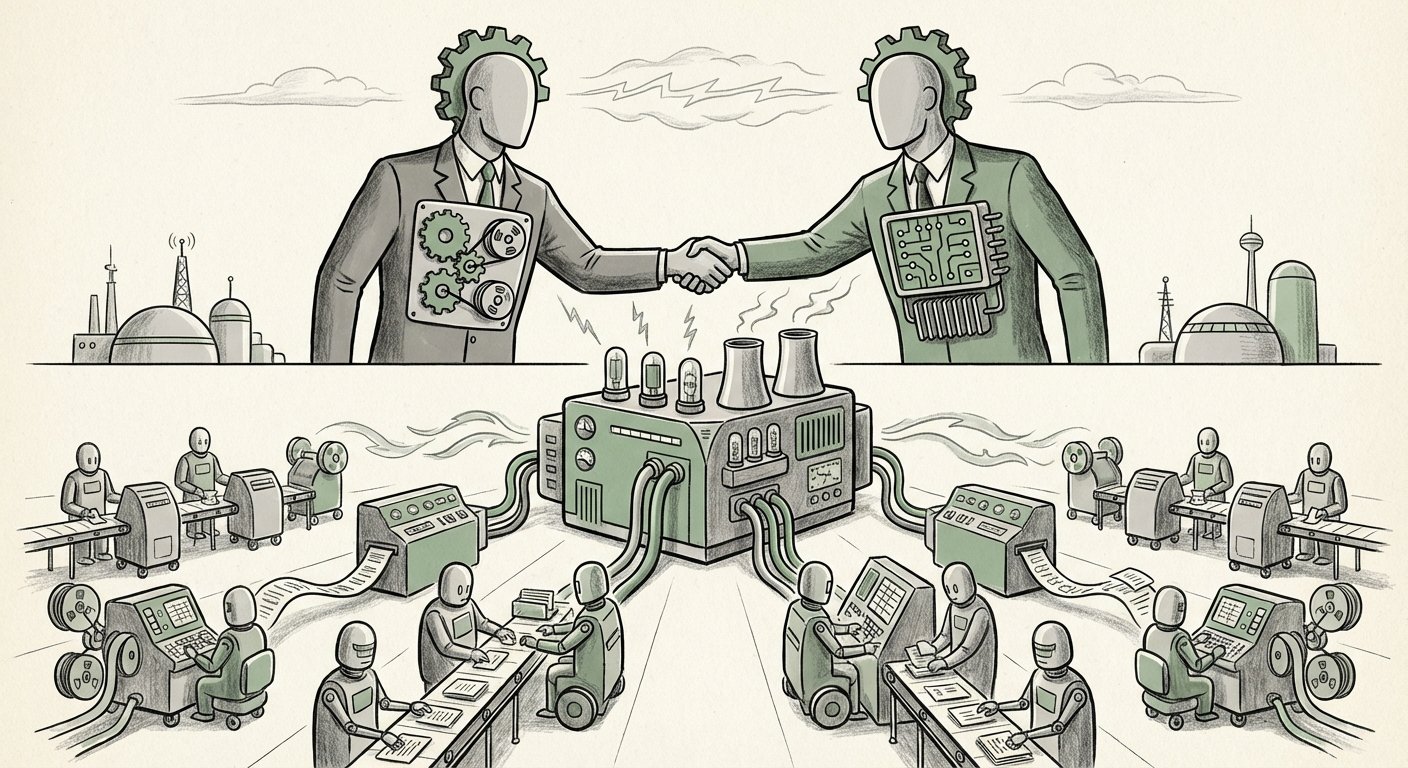
For the last few years, almost every new AI model has arrived the same way: you type a message into a box, the model types back, and you go back and forth until you get what you want. That chat window has become the default face of artificial intelligence. TypeSafe's new JEV System One model, announced on September 16, 2026, takes a different path. It skips the chatbot part entirely.
That sounds like a small design choice. It is not. It points to a much bigger shift in how AI will actually be used, not as a conversational partner you talk to, but as a quiet, fast engine that sits inside software and produces answers directly. For businesses, that change matters more than any single benchmark score. It changes what you buy, how you test AI, and where the risk sits.
What "Skipping the Chatbot" Actually Means
A chatbot model is built around conversation. It remembers what you said, writes a friendly reply, and waits for you to respond. A lot of its design effort goes into being a good talker: tone, follow-up questions, formatting, helpfulness.
A model that skips the chatbot part throws out that layer. You give it a task, and it returns a finished result. There is no back-and-forth, no "let me know if you'd like me to adjust that," and no personality. Think of the difference between asking a colleague to explain a report and asking a calculator to divide two numbers. Both are useful. Only one needs a conversation.
The name TypeSafe is a strong hint about where the value sits. In software, "type safe" means the system checks that the data going in and the data coming out actually match what they are supposed to be. A function that expects a number should not quietly receive a word. Applied to AI, that idea suggests a model designed to produce structured, checkable output rather than free-flowing prose, output that software can trust enough to act on without a human reading every line.
The core idea: chat is a demo interface. Typed, task-specific output is an infrastructure layer. One is built to impress people. The other is built to plug into systems.
Why "System One" Is More Than a Clever Name
"System One" is a well-known idea in psychology. It describes fast, automatic, intuitive thinking, the kind that lets you catch a ball or read a familiar word without effort. It is contrasted with "System Two," the slow, deliberate thinking you use to do your taxes or check a contract.
Most large AI models today behave like System Two. They reason step by step, consider options, and "think out loud." That is powerful, but it is slow and expensive. It is also overkill for a huge number of real jobs, like routing a support ticket, tagging a document, checking an address, or pulling a value out of a form.
A System One-style model aims at that gap: fast, low-cost responses for tasks where the right answer is well defined. The trade-off is real. Fast models are usually less flexible and less able to handle strange edge cases. They do one thing well, and they may fail badly when pushed outside their lane. That is not a flaw so much as a design decision, but it puts the burden on the people deploying it to know exactly where the lane ends.
The Type-Safety Angle: AI That Produces Checkable Work
The biggest practical problem with AI in business today is not that it is wrong. It is that it is wrong in ways that are hard to catch. A chatbot can write a confident paragraph containing a made-up number, and nothing in the system flags it. A human has to read it and notice.
A type-safe approach attacks that problem at the output layer. Instead of returning text, the model returns data in a defined shape. That shape can then be checked automatically by ordinary software, before anything downstream happens.
- Shape checks: Does the output have the right fields? Is this field a date and not a paragraph?
- Range checks: Is the quantity within allowed limits? Is the category one of the permitted options?
- Contract checks: Does the output obey the rules the rest of the system expects?
None of these checks prove that the answer is true. A perfectly formatted wrong answer is still wrong. But they do something valuable: they stop sloppy output from spreading through a system and corrupting records, invoices, or customer accounts. In engineering terms, they move failure from "silent and expensive" to "loud and cheap."
The Bigger Trend: AI Is Leaving the Chat Window
JEV System One is one signal of a wider shift. The chat interface was never the end state of AI. It was the easiest way to show people what large models could do in 2022 and 2023. Now that the novelty has worn off, the real work is happening behind the screens.
Four moves define this next phase:
- From conversation to contract. AI systems are increasingly asked to produce output that meets a specification, not output that sounds good.
- From assistant to component. Instead of a standalone app you open, AI becomes a step inside an existing workflow, a service that other software calls.
- From general to narrow. Specialised models that do one job reliably are often more useful, and far cheaper, than a general-purpose chatbot doing everything adequately.
- From talking to doing. The value moves from explaining an action to taking it, which makes correctness and permissions the central design problems.
How the two approaches compare
| Question | Chatbot-first model | Non-conversational model (JEV System One style) |
|---|---|---|
| Main output | Free text, written for a human | Structured result, written for software |
| Speed and cost | Higher, because of reasoning and chat overhead | Lower, because the task is tightly defined |
| How you test it | Human reads samples and judges quality | Automated checks on output shape and values |
| Where it breaks | Confident but wrong prose | Out-of-scope inputs handled badly |
| Best fit | Exploration, drafting, support conversations | High-volume, well-defined tasks inside software |
What This Means for Businesses
The most immediate implication is a change in what you should be shopping for. For three years, companies have evaluated AI vendors with a mix of demo awe and vibes. A non-conversational model forces a much healthier question: does the system complete the task correctly, at acceptable cost, at the volume we need?
Here is what that looks like in practice.
- Buy outcomes, not conversation. Ask vendors for task success rates on your own data, not for a polished demo. A model that cannot talk is easier to judge honestly, because there is nothing to be charmed by.
- Insist on typed interfaces. If a model's output can be validated by a schema, you can build automated guardrails instead of relying on reviewer attention. That is the difference between AI that scales and AI that needs a person watching every call.
- Plan for the edge cases. Fast, narrow models need a clear exit path. Build a fallback: send uncertain inputs to a slower reasoning model, to a human queue, or back to the customer. Design the failure route before launch, not after.
- Measure the boring numbers. Latency per call, cost per thousand tasks, false positive rate, and the share of inputs the model refuses. These will decide whether a project survives its first budget review.
- Keep a human on the high-stakes doors. Anything that moves money, changes a legal record, or affects a person's access to a service should keep a human check, at least until the system has a long track record.
Where the real savings come from
Chatbots mostly save time on writing and answering. Fast, structured models save money on volume. A task that costs a few cents in chat tokens may cost a fraction of that when the model skips the conversation and answers in one shot. When you run millions of those tasks a month, order matching, document triage, data cleanup, compliance checks, the difference in unit cost is the entire business case.
Risks and Open Questions
Skipping the chatbot also removes something people underrate: the conversation is a chance to catch mistakes. When a model explains its reasoning, a user can spot the wrong turn. When it simply returns a result, the reasoning is gone.
Three risks stand out:
- False confidence in correctness. A schema-valid answer looks official. Teams may start trusting typed output more than they should, forgetting that structure checks form, not truth.
- Silent drift. Fast models trained for a narrow task can degrade when the world shifts, new product names, new form layouts, new regulations. Without a chat log to review, problems can hide.
- Lost context. Some problems genuinely need clarification. A model with no room to ask a question must guess, and guessing quietly is worse than asking out loud.
The answer to all three is the same: logging, sampling, and monitoring. Treat a non-conversational model like any other production service. Track its inputs and outputs, sample them regularly, and set alerts for drift. The fact that it does not talk does not mean it does not need watching.
What It Means for Society and Work
The chat window made AI visible. Every user knew when they were talking to a machine. Removing the chat removes that signal. Soon, most AI interactions will be invisible, a model deciding which form to route, which paragraph to flag, which record to merge. Nobody will see the moment the decision happens.
That is efficient, and it is also a governance problem. When AI lives in a chat box, people can ask "why did you say that?" When it lives inside a workflow, that question has to be answered by design: clear records, plain-language explanations on request, and a real person accountable for the system's behaviour.
For workers, the shift moves value away from prompt-writing and toward process design. The people who will matter most are not the best at chatting with a model. They are the ones who can define a task precisely, describe the input and output, and say what should happen when the system is unsure.
The Road Ahead: Fast Paths and Slow Paths
The most likely future is not "chatbots disappear." It is a split. Fast, narrow, structured models will handle the high-volume, well-defined work. Slower reasoning models will handle the hard cases, the open questions, and the tasks where a wrong answer is expensive. Good systems will route between the two, using cheap checks to decide when to spend more.
TypeSafe's JEV System One is a useful marker of that split. It says, plainly, that not every AI needs to be a conversational partner. Some of the most valuable AI will never say a word. It will simply take the input, return the answer, and let the software around it decide what to do next.
For anyone building with AI today, the lesson is straightforward. Stop judging models by how well they talk. Start judging them by whether their output can be checked, trusted, and safely acted on. That is where the next wave of value is being built, quietly, and without a chat window in sight.
TLDR: TypeSafe's JEV System One model, announced September 16, 2026, skips the chatbot interface and returns structured results directly, drawing on the "System One" idea of fast, automatic thinking. This reflects a broader shift: AI is moving out of chat windows and into software, where typed, checkable output matters more than friendly conversation. For businesses, that means evaluating models on task success, cost per call, and automated validation rather than demo polish, and building clear fallbacks for edge cases. The open risks are false confidence in well-formatted wrong answers and lost visibility without a conversation to review. The future is likely a split: fast narrow models for high-volume work, slower reasoning models for hard cases, with routing between them.