The AI Energy Crunch: Why BP and Baker Hughes See a "Demand Decade" Ahead
For the last few years, the story of artificial intelligence has been told in software. Bigger models. More data. Faster chips. But a quieter, harder truth is now pushing its way to the front of the conversation: AI runs on electricity, and the world may not have enough of it where it is needed.
That reality came into sharp focus as the chief executives of BP and Baker Hughes weighed in on the global investment outlook, framing the years ahead as a "demand decade" for energy. The message was not about oil prices or quarterly earnings. It was about a structural shift, a long stretch in which the world's appetite for power keeps climbing, driven in large part by the buildout of computing infrastructure that did not exist at scale just a few years ago.
For anyone building, buying, or governing AI, this is the single most underrated development in the field. The future of AI will not be decided only by who has the best model. It will be decided by who can get power, reliable, affordable, and fast.
Why Energy Suddenly Became an AI Story
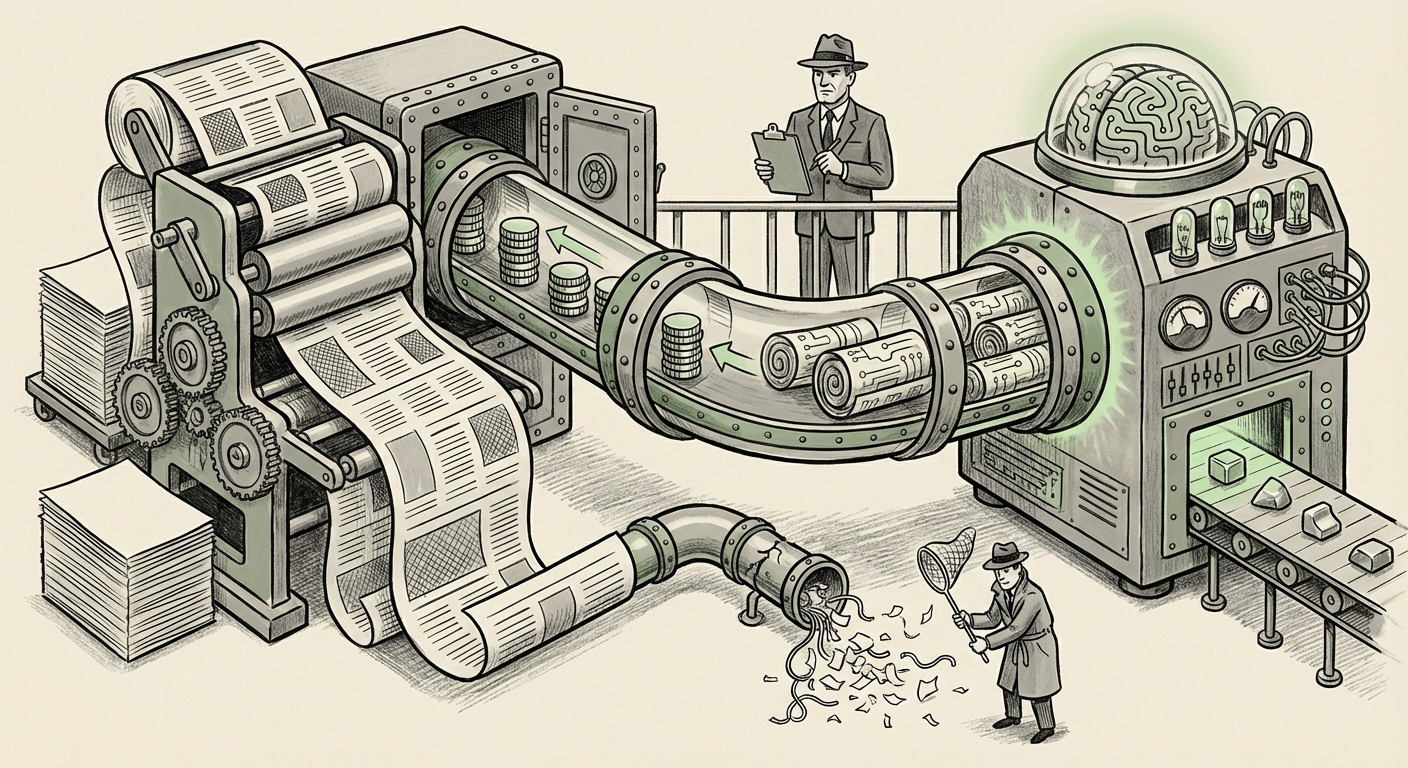
Every AI request you send travels to a data center. That data center is a warehouse of servers that draw electricity around the clock and throw off enormous heat. Training a large model means running thousands of chips at full tilt for weeks. Serving that model to millions of users means keeping racks humming every second of every day.
Multiply that by an entire industry racing to deploy AI, and you get a step-change in electricity demand, not the slow, predictable growth that utilities plan for over decades, but something steeper and lumpier, arriving in clusters wherever new data centers get built.
The result is a collision between two worlds that rarely talked to each other. The AI industry thinks in product cycles measured in months. The energy industry thinks in projects measured in years, sometimes a decade or more. A gas-fired plant, a transmission line, a grid upgrade, these are not things you spin up between model releases.
When the CEOs of BP and Baker Hughes describe a "demand decade," they are describing that collision. And they are signaling where capital is likely to flow.
What the Two CEOs Are Really Telling Investors, and the Rest of Us
BP sits on the upstream and downstream side of the energy system, finding, producing, and delivering energy. Baker Hughes sits on the equipment and services side, the hardware, turbines, and technology that make energy projects work. Both are looking at the same curve and drawing the same conclusion: demand is not flattening. It is broadening.
Three signals stand out from that outlook.
1. The demand conversation has changed shape
For years, the energy debate was framed almost entirely as a supply-side and climate question: how fast can we replace one source with another? That framing assumed demand was roughly fixed. The new framing assumes demand is growing, and that the job is to build enough of everything, cleaner and faster, while keeping the lights on.
That is a meaningfully different investment thesis. It favors companies that can build, deliver, and maintain physical infrastructure, not just those that promise a transition on a slide.
2. Firm power is back in fashion
AI data centers cannot run on sunshine alone. They need power that is available every hour of every day, in all weather, at a predictable cost. That pushes natural gas, nuclear, hydro, storage, and grid-scale transmission back toward the center of the conversation, alongside renewables, not instead of them.
The practical consequence is that the "energy mix" argument is becoming less ideological and more engineering-driven. What matters is what can be delivered, permitted, and connected in time.
3. The bottleneck is delivery, not desire
Almost everyone now wants to build more power and more grid. The constraint is not ambition. It is permitting timelines, skilled labor, supply chains for transformers and turbines, and the simple physics of interconnection queues. That is exactly the kind of constraint an equipment and services company like Baker Hughes is positioned around, and exactly the kind of constraint that BP's project pipeline runs into.
What This Means for the Future of AI
If the next ten years are a demand decade for energy, then several things about AI become predictable, and several current assumptions become shaky.
Power is the new performance ceiling
We have spent years assuming compute is the limiting factor for AI progress. Chips are scarce; then they are not. But power is much harder to conjure. A utility connection can take years. A new substation can take longer. In that world, the ceiling on how much AI a company can run is set less by how many accelerators it can buy and more by how many megawatts it can secure.
This has a leveling effect in one direction and a concentrating effect in another. Well-capitalized firms that can sign long-term power deals and build behind-the-meter generation will pull ahead. Smaller players will increasingly rent capacity from whoever owns the megawatts, or from the cloud providers that do.
Location matters again
For a decade, the geography of software was almost irrelevant. The cloud abstracted it away. AI is dragging geography back into strategy. Where a data center sits now determines its power cost, its cooling cost, its latency, its regulatory risk, and how long it takes to switch on.
Expect more building near abundant energy, more direct deals between technology companies and power producers, and more interest in regions with fast permitting and available land. Expect the phrase "power-adjacent" to enter the vocabulary of corporate real estate.
Efficiency becomes a competitive weapon
When energy is cheap and abundant, efficiency is a nice-to-have. When it is constrained and expensive, efficiency is survival. Every watt saved per inference is a watt available for the next customer. This tilts the entire industry toward smaller, more specialized models, smarter routing of queries, better cooling, and chips designed around performance-per-watt rather than raw peak throughput.
The era of "just make it bigger" is not over, but it is being forced to share the stage with "make it leaner."
New business models appear
Watch for structures that blur the line between tech and energy: long-term power purchase agreements signed by AI companies, on-site generation built specifically for data centers, nuclear agreements with timelines measured in years, and joint ventures where the power producer takes an equity stake in the compute it enables. Energy is becoming a product feature of AI infrastructure, priced and negotiated like one.
Where AI Fits Into the Energy Problem It Created
Here is the twist that makes this a genuinely interesting moment: AI is not only the source of the demand problem. It is also one of the most powerful tools for solving it.
- Grid optimization. Machine learning can forecast demand, balance load, and coordinate distributed resources far better than manual scheduling. As grids get more complex and more variable, this stops being optional.
- Predictive maintenance. Sensors on turbines, transformers, and pipelines generate enormous data. AI that predicts failures before they happen keeps firm power online and reduces costly downtime.
- Project and permitting acceleration. Design, simulation, environmental review, and supply chain planning are all places where AI can compress timelines, and timelines are the real bottleneck.
- Energy trading and risk. Volatile prices reward fast, quantitative decision-making. AI-driven forecasting helps producers and large buyers manage exposure.
- Data center efficiency. Cooling, workload scheduling, and chip utilization can all be tuned dynamically to cut power draw without cutting output.
In other words, the same industry that is straining the grid is also building the tools that make the grid smarter. That feedback loop is likely to define the decade.
Practical Implications for Businesses
This is not just a boardroom topic for energy giants. It has direct consequences for almost every organization deploying AI.
- Model your energy exposure. If a meaningful share of your AI workload runs in third-party clouds, ask how they are sourcing power and whether capacity constraints could affect your access or pricing.
- Treat power as a supply chain item. Procurement teams that negotiate compute contracts should understand the underlying energy assumptions. Long-term contracts are becoming both a cost hedge and a capacity reservation.
- Prioritize efficiency in your AI design. Smaller models, caching, batching, and right-sized infrastructure reduce both cost and exposure to price shocks.
- Plan for longer infrastructure timelines. If your AI roadmap depends on new data center capacity, build in more lead time than your software teams are used to.
- Look for AI use cases that pay back in energy terms. Efficiency, forecasting, and maintenance projects often justify themselves on operating cost alone, with the AI benefit as upside.
- Watch policy closely. Grid rules, permitting reform, and utility rate design will shape who gets power first. This is now a business risk factor, not a background issue.
Risks Worth Taking Seriously
No forecast of a "demand decade" is a guarantee. Demand projections have been wrong before, in both directions. If AI capability growth slows, if efficiency gains outrun expectations, or if the economics of large-scale model deployment disappoint, some of the projected power need may not materialize. Building too much firm capacity too fast carries its own financial risk.
There is also a social dimension. When energy demand rises, household and industrial power bills typically follow. The political pressure to make data centers pay their share, through special tariffs, siting rules, or requirements to fund new generation, will grow. Companies that get ahead of this by funding grid upgrades and being transparent about local impact will fare better than those that do not.
Finally, there is a talent and supply chain constraint that no amount of capital can instantly fix. Transformers, turbines, skilled linemen, and permitting staff are all in short supply. The demand decade may be defined as much by what cannot be built in time as by what can.
What to Watch Next
Three indicators will tell you quickly whether the "demand decade" thesis is holding:
- Power purchase announcements by AI companies. Long-term deals with producers signal that compute firms now view energy as core infrastructure.
- Interconnection queue times. If they shorten, the bottleneck is easing. If they lengthen, the squeeze is real.
- Equipment order books. Turbine and grid hardware backlogs from energy services firms are a leading indicator of how fast the buildout is actually happening.
The Bottom Line
The AI industry spent its first act proving what intelligence could do. Its second act will be constrained, in very physical ways, by whether the world can power it. The CEOs of BP and Baker Hughes are not making a niche bet on commodity prices, they are describing a decade in which energy stops being a background utility and becomes the defining input of the digital economy.
For businesses, the implication is straightforward and urgent: treat electricity as a first-class part of your AI strategy. The organizations that win the next several years will be the ones that can pair smart models with enough megawatts to run them, and that use AI itself to make every one of those megawatts go further.