Beyond Standard LLMs: What the Next Era of AI Means for Business and Society
For years, the standard playbook for artificial intelligence was simple. Take one large language model, give it a prompt, and hope for the best. That playbook is now changing. The next phase of AI is not about a single bigger model. It is about systems that combine many models, tools, data, and controls. The phrase “beyond standard LLMs” captures this shift. It marks the move from general-purpose text engines to purpose-built AI systems that can reason, act, and fit into real work.
This change matters for everyone. For technical teams, it means new architecture choices. For business leaders, it means new ways to measure value and risk. For society, it means new questions about trust, access, and accountability. The future of AI will be judged less by how well a model chats and more by how reliably it helps people get things done.
What “Beyond Standard LLMs” Really Means
A standard large language model is a general tool. It is trained on broad text, driven by prompts, and limited to what it has learned. It can write, summarize, and answer questions. But it often lacks fresh data, real-world access, and strong controls. It can sound confident and still be wrong. It can be costly at scale. It can struggle with long tasks that need planning and follow-through.
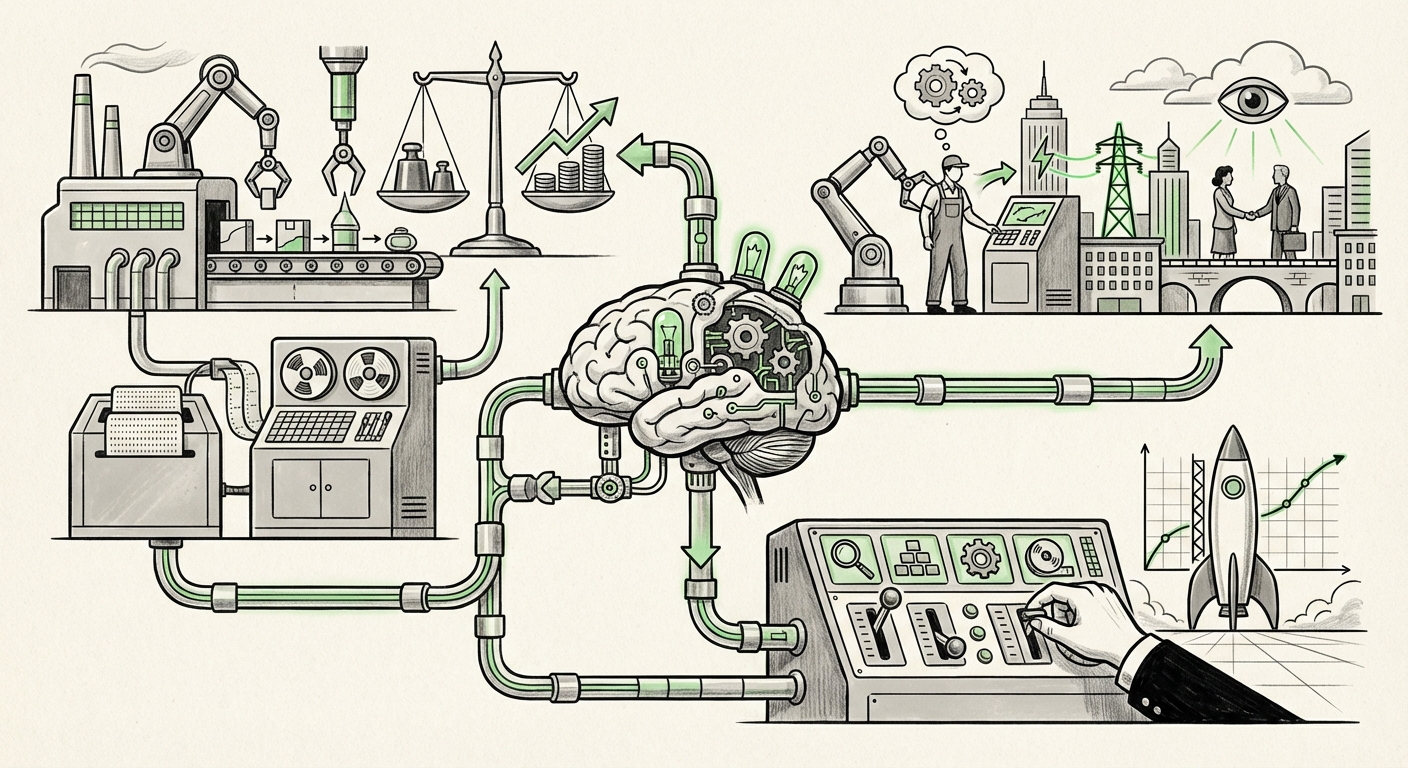
Going beyond standard LLMs means treating the model as one part of a larger machine. That machine may include smaller models trained for specific jobs. It may include search and retrieval over private data. It may include tools that let the system take actions, such as updating a record, sending a message, or running a calculation. It may include memory, planning, and checkpoints. It may include guardrails that watch for risky behavior and humans who approve important steps.
In short, the future is less about a model and more about a system. The system is designed for a task, a domain, and a level of risk. That is a big shift from the one-model-fits-all era.
Why the Standard LLM Era Is Maturing
Standard LLMs are not going away. They remain powerful engines for language. But organizations are learning that general models alone are not enough for production work. Real work has real constraints. It needs accuracy. It needs speed. It needs clear costs. It needs audit trails. It needs to respect privacy and security rules. It needs to fit into existing software and workflows.
A general model can be a strong starting point, but it may be too broad for narrow tasks. It may be too expensive to run for every simple request. It may not know the latest company policy or the latest customer record. It may not be able to complete a multi-step process without help. These gaps are pushing teams to build beyond the standard model.
There is also a shift in how people judge AI. Early excitement focused on clever demos. Now the focus is on reliability. Can the system do the same task well many times? Can it show its work? Can it hand off to a human when unsure? Can it be tested and improved? These are system-level questions, not just model-level questions.
The Building Blocks of Post-LLM Systems
What does a beyond-standard-LLM system look like? It is rarely one thing. It is a stack of parts that work together.
Specialized and smaller models
Not every task needs a giant general model. A smaller model tuned for one job can be faster, cheaper, and easier to control. It can be trained on domain language, such as legal, medical, or customer support terms. It can be tested against a narrow set of cases. In many systems, several specialized models may work side by side, each doing what it does best.
Retrieval and real-time data
Standard models rely on training data. Post-LLM systems often connect to live sources. They retrieve documents, records, and policies before they answer. This helps ground responses in facts that are current and company-specific. It also makes it easier to show where an answer came from, which is vital for trust.
Tools and action layers
A model that can only talk is limited. A system that can use tools can do more. It can query a database, run a calculation, check a calendar, or trigger a workflow. This is where AI moves from advice to action. But action brings risk, so tool access must be limited and monitored.
Planning, memory, and orchestration
Complex work needs more than a single response. It needs a plan. It needs to remember what happened earlier. It needs to break a big job into steps and check each step. Orchestration layers coordinate models, tools, and data. They decide what happens next and when a human should step in.
Guardrails and observability
Systems that act in the real world need safety controls. Guardrails can block harmful requests, filter sensitive data, and enforce policy. Observability means logging what the system did, why it did it, and how well it worked. Without these, teams cannot find failures or prove compliance.
From Chatbots to Workflows
The most visible change is the move from chatbots to workflows. A chatbot waits for a question and gives an answer. A workflow system takes a goal and works through steps. It may gather information, draft a response, check a rule, ask for approval, and update a system of record. This is often called agentic AI, because the system acts with a degree of autonomy.
Agentic systems can be powerful, but they are not magic. They work best when the task is well-defined and the environment is controlled. They need clear boundaries. They need fallback plans. They need humans in the loop for high-stakes decisions. The winning approach is not full autonomy everywhere. It is the right level of autonomy for the right task.
This is a practical lesson for businesses. Do not start by asking, “How do we replace a whole team?” Start by asking, “Which step in this process is slow, repetitive, and easy to check?” Then build a system that helps with that step. Over time, you can connect more steps. That is how AI moves from a demo to a dependable part of operations.
What This Means for Businesses
For business leaders, the shift beyond standard LLMs has several clear implications.
Architecture matters more than model choice
Many teams focus on which model to use. That matters, but the bigger question is how the whole system is designed. A strong architecture can combine models, data, tools, and controls in a way that fits the business. A weak architecture can fail even with a powerful model. Leaders should ask about the full stack, not just the model name.
Value comes from workflows, not wow demos
The return on AI comes from improving real processes. That means less time spent on manual review, faster customer response, fewer errors, and better use of expert time. These gains are measured in workflow outcomes. Teams should tie every AI project to a process metric before they start.
Data readiness is a competitive edge
Systems that retrieve and act on data are only as good as the data they can reach. Clean, well-organized, permission-aware data is a major advantage. Companies that invest in data quality and access controls will get more from AI than those that do not.
Governance must be built in, not bolted on
As AI systems take actions, governance becomes part of the product. Teams need policies for what the system can do, who can approve it, and how to audit it. They need clear ownership. They need ways to pause or roll back. Governance is not a brake on innovation. It is what makes innovation safe enough to scale.
Workforce roles will change
Beyond standard LLMs, people will work with systems rather than just tools. They will review outputs, set rules, handle exceptions, and improve the system over time. This means new skills in oversight, data judgment, and process design. It also means training and change management are not optional.
What This Means for Society
The societal effects are just as important. AI systems that can act raise the stakes. When a model only writes text, a mistake may be easy to catch. When a system can send a message, move money, or change a record, a mistake can spread fast. That is why trust and accountability must grow alongside capability.
There is also the question of access. Powerful AI systems can concentrate advantage in organizations that can afford to build and run them. But smaller, specialized models and open tools can lower the barrier. The outcome depends on how the technology is packaged and governed. If it is only available to a few, the benefits will be narrow. If it is designed for broad use with clear safeguards, it can help more people.
Jobs will change, but the pattern is not simple. Some tasks will be automated. Others will be augmented. New roles will appear around oversight, evaluation, and system design. The hardest part is not predicting the exact job mix. It is helping people adapt with training and support. That is a shared responsibility for companies, educators, and policymakers.
Actionable Insights for the Road Ahead
- Start with a process, not a model. Pick a workflow with clear steps, measurable pain, and a human check. Build a system around that process.
- Use a portfolio approach. Combine general models for open-ended language tasks with smaller models for narrow, high-volume jobs.
- Ground answers in your data. Connect systems to trusted sources and show citations or evidence whenever possible.
- Design for human handoff. Make it easy for people to review, correct, and approve. Track where handoffs happen.
- Build evaluation early. Define what “good” looks like before launch. Test for accuracy, safety, cost, and speed.
- Limit tool access. Give systems only the permissions they need. Log every action. Make rollback possible.
- Model the full cost. Include model calls, data storage, human review, and maintenance. Cheap demos can hide expensive operations.
- Invest in data and governance together. Good data without rules is risky. Rules without good data are weak.
The Future Is Systems, Not Just Models
The move beyond standard LLMs is not a rejection of large language models. It is a maturing of how we use them. The most valuable AI in the coming years will not be a single model that can do everything. It will be a set of systems that do specific things well, with the right data, tools, and controls.
For businesses, that means thinking like system designers. For technologists, it means focusing on reliability and integration. For society, it means demanding accountability as AI takes on more action. The standard LLM was a breakthrough. What comes next is the work of turning that breakthrough into dependable infrastructure.
The winners will not be the teams with the biggest model. They will be the teams with the best systems, the clearest guardrails, and the deepest understanding of the work they are trying to improve. That is the real meaning of going beyond standard LLMs.