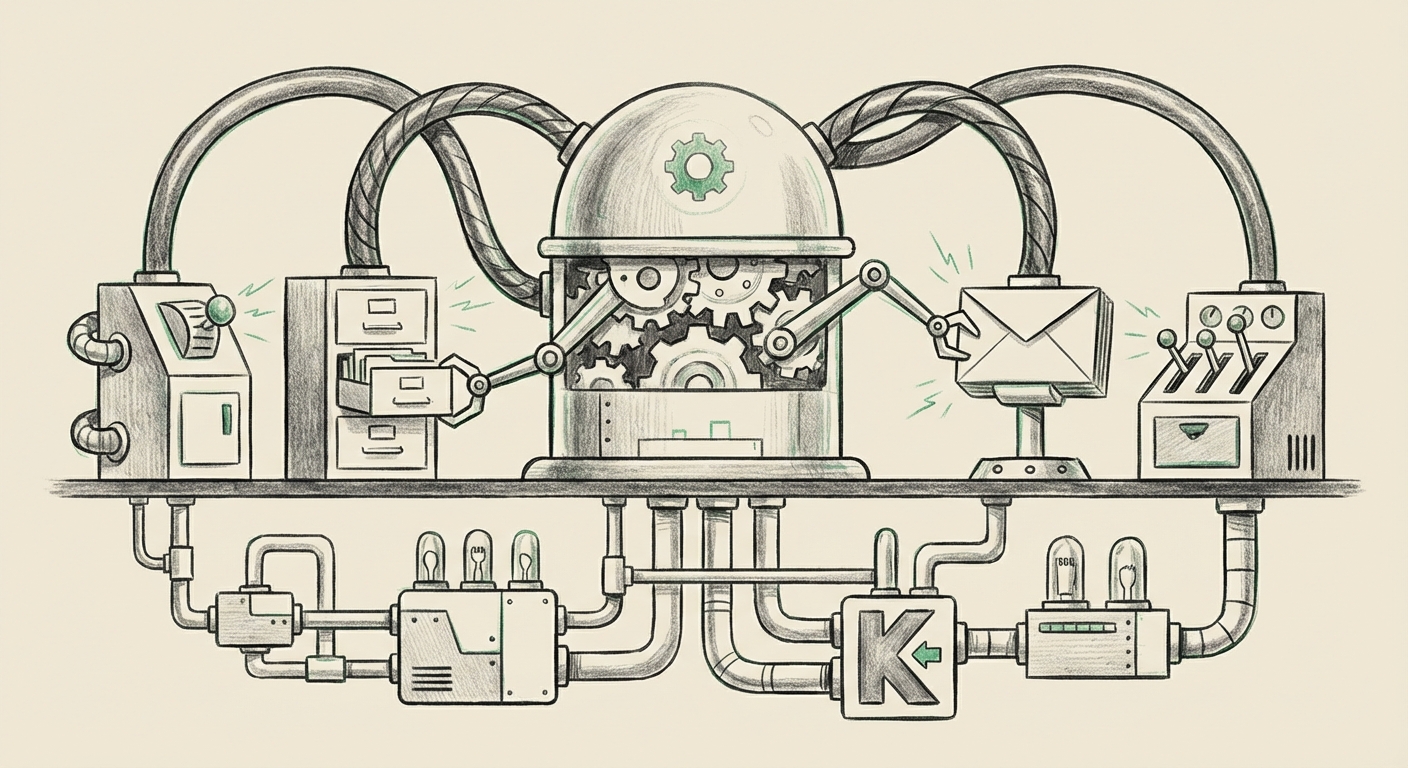
DreamHost Breach: What a Months-Long Hosting Hack Means for AI Security
When hackers broke into DreamHost and walked away with customer files and inboxes, the story looked like one more entry in an endless run of data breaches. But the details matter far more than the headline. This was not a smash-and-grab. The attackers stayed inside for months, quietly pulling files and reading email before anyone caught on. That single fact, the long, silent dwell time, tells us almost everything about where cyberattacks are heading, and why artificial intelligence is about to become the most important tool on both sides of the fight.
Hosting companies sit at the center of the internet's plumbing. They hold websites, databases, backups, and, critically, email. Every one of those inboxes is a master key. Email is where password resets arrive, where invoices are confirmed, where business deals are agreed. If an attacker controls or reads an inbox, they do not need to break into your bank. They can simply ask it to let them in.
This article breaks down what the DreamHost incident reveals, why long attacks are getting harder to stop, and how AI will reshape the way we defend, and attack, hosting infrastructure in the years ahead.
What Happened: A Breach Measured in Months, Not Minutes
The core facts are straightforward and troubling. Hackers gained access to DreamHost systems and stole customer files and inboxes. The intrusion unfolded over a period of months, meaning the attackers had time to move carefully, choose what to take, and cover their tracks. This was not an automated spray of attacks that succeeded in an hour. It was a patient campaign.
Months of access changes the nature of the damage. A quick breach might grab a database and vanish. A long one lets attackers learn the shape of a business: who talks to whom, which customers are worth the most, which accounts have weak protections, and when the quietest hours are. It also lets them wait for the perfect moment to strike, a holiday weekend, a major product launch, a financial close.
For customers of any hosting provider, the lesson is uncomfortable but simple: your data is only as safe as your provider's weakest internal habit. You can run the best security tools in the world on your own laptop and still lose everything if the company holding your backups gets quietly compromised for a quarter of a year.
Why Hosting Providers Are the Perfect Target
Think of a hosting provider like a landlord who keeps copies of every tenant's keys, plus their mail, plus their filing cabinets. That is an enormous amount of trust concentrated in one place. Attackers love concentrated trust because one successful break-in can pay off hundreds of times over.
There are three reasons hosting companies keep ending up in the crosshairs:
- Scale. A single provider may serve thousands of businesses. Compromise one, and you potentially touch all of them.
- Email. Inboxes hold password reset links, private conversations, contracts, and personal details. They are the single richest source of leverage in modern fraud.
- Shared infrastructure. When systems are interconnected for convenience, support tools, billing platforms, backup storage, an attacker who gets into one corner can often slide into another.
None of this is a knock on one company. It is a structural reality of how the web is built. The internet runs on a small number of very important middlemen, and those middlemen are now prime real estate for criminal groups and state-backed actors alike.
The AI Angle: Why "Months" Is the Number That Should Worry You
Here is where artificial intelligence enters the story, and it enters from two directions at once.
1. Attackers Are Using AI to Stay Quiet Longer
Long intrusions require patience and careful behavior. Attackers must blend in with normal activity, avoid tripping alarms, and sift through enormous volumes of junk to find the valuable files. Those are exactly the tasks AI is good at.
Modern AI tools can help an attacker write convincing phishing emails at scale, in perfect language, tailored to a specific employee. They can help sort through thousands of documents in minutes to find the ones mentioning passwords, contracts, or payment details. They can help draft messages that sound exactly like a colleague. And they can help spot patterns in a company's schedule, when people are offline, when IT is slow to respond.
The result is an attack that looks less like a break-in and more like a very patient, very well-prepared burglar who has studied the building for weeks. Months-long campaigns are becoming cheaper to run, which means we should expect more of them.
2. Defenders Are Using AI to Shrink Detection Time
The good news is that the same technology is being pushed hard in the other direction. Security teams increasingly rely on AI systems that watch for unusual behavior rather than just known bad software. Instead of asking "is this file a known virus?" these systems ask "does this account normally download ten thousand files at 3 a.m.?"
That shift matters enormously for hosting providers. When an attacker hides inside normal-looking traffic for months, signature-based tools are nearly blind. Behavior-based AI has a real chance of catching the anomaly, the login from a strange place, the sudden mass download, the inbox rule silently forwarding mail to an outside address.
The catch is that these systems need good data, careful tuning, and human judgment. They also produce false alarms. A well-run security operation uses AI to narrow the haystack, not to replace the people holding the pitchfork.
Email Is the Real Prize, and AI Makes It More Dangerous
The theft of inboxes deserves its own section, because it is the part of this story most likely to cause downstream harm.
An email account is a skeleton key. It can reset passwords on other services. It contains years of context about a person's job, contacts, and habits. And it is the trust channel through which money moves.
Combine stolen inbox context with generative AI and you get a genuinely new threat. An attacker reading months of a finance director's emails can produce a follow-up message that matches tone, references real projects, and quotes real numbers. The classic "urgent wire transfer" scam suddenly becomes far more persuasive, because it is written by something that has read the entire conversation history.
Businesses should treat this as a near-term risk, not a future one. If your provider's inboxes were exposed, assume that anyone who emails you could be impersonated convincingly.
Practical Implications for Businesses
Most organizations cannot control what happens inside their hosting provider. But they can absolutely control how much damage a breach causes. Here is what smart teams are doing right now.
Assume Your Provider Will Be Breached
Plan for it the way you plan for a fire drill. Ask your hosting provider hard questions: Do you encrypt customer files at rest? Are inboxes encrypted? How long do you keep logs, and can you tell me if my account was accessed unusually? If the answers are vague, that is a signal.
Stop Treating Email as Your Only Lock
Email-based password resets are convenient and dangerous. Where possible, add a second factor that does not depend on the same inbox, an authenticator app, a hardware key, or a push approval. Rotate credentials for any account that used the affected provider's email for recovery.
Verify Money Movements Out of Band
Any request to change bank details or send a payment should be confirmed through a second channel, a phone call to a known number, not a reply to the email. This one habit blocks a huge share of AI-assisted fraud.
Segment What You Store
Do not keep every sensitive document in the same place as your public website files. If archives, customer records, and backups all live in one account, a single compromise becomes a full loss. Spread the risk.
Watch for Quiet Signals
Long attacks leave fingerprints: new inbox forwarding rules, unfamiliar login locations, odd support tickets, sudden data downloads. Give your team a simple way to report weirdness, and review account activity on a schedule rather than only after something breaks.
What This Means for the Future of AI
Incidents like this one are shaping how AI will actually be deployed over the next several years. Three trends stand out.
AI Becomes the Default Watchdog
Human analysts cannot read millions of log entries. As breaches grow longer and quieter, AI monitoring stops being a luxury and becomes table stakes, especially for infrastructure companies that hold other people's data.
Trust Gets Rebuilt Around Verification, Not Reputation
For years, security relied on recognizing who was talking to you. AI can now perfectly imitate anyone. The future belongs to systems that verify identity through cryptography and behavior, not through how convincing a message sounds.
Regulation Follows the Breach
Every major incident tightens expectations. Providers will face growing pressure to disclose intrusions quickly, protect customer inboxes by default, and prove their defenses work. AI tools will be part of both the compliance burden and the solution.
The Talent Gap Widens
AI helps small security teams punch above their weight, but it also raises the bar. Companies that cannot afford sophisticated tooling will increasingly depend on their vendors, which makes vendor choice a security decision, not just a price decision.
The Bigger Picture
The DreamHost breach is a warning about concentration. The modern internet depends on a relatively small number of companies to store our files and hold our mail. When one of them is compromised for months, the ripple effects reach far beyond its own customers.
It is also a warning about speed. Attackers no longer need to be fast; they need to be patient, and AI is making patience cheap. Defenders must respond by shortening the time between intrusion and detection, which means better monitoring, better identity checks, and a healthy suspicion of anything that arrives through email.
Most of all, it is a reminder that AI is not automatically a hero or a villain in this story. It is an amplifier. Used well, it shrinks the months-long blind spot that let this attack succeed. Used carelessly, or left in the hands of criminals, it makes the next long campaign even harder to spot.
The organizations that come out ahead will be the ones that treat security as a continuous habit rather than a one-time purchase, and that assume, correctly, that the quiet months are exactly when the damage is being done.