MercadoLibre Shares Drop as AI Investments Weigh on Profit: What It Means for the Future of AI
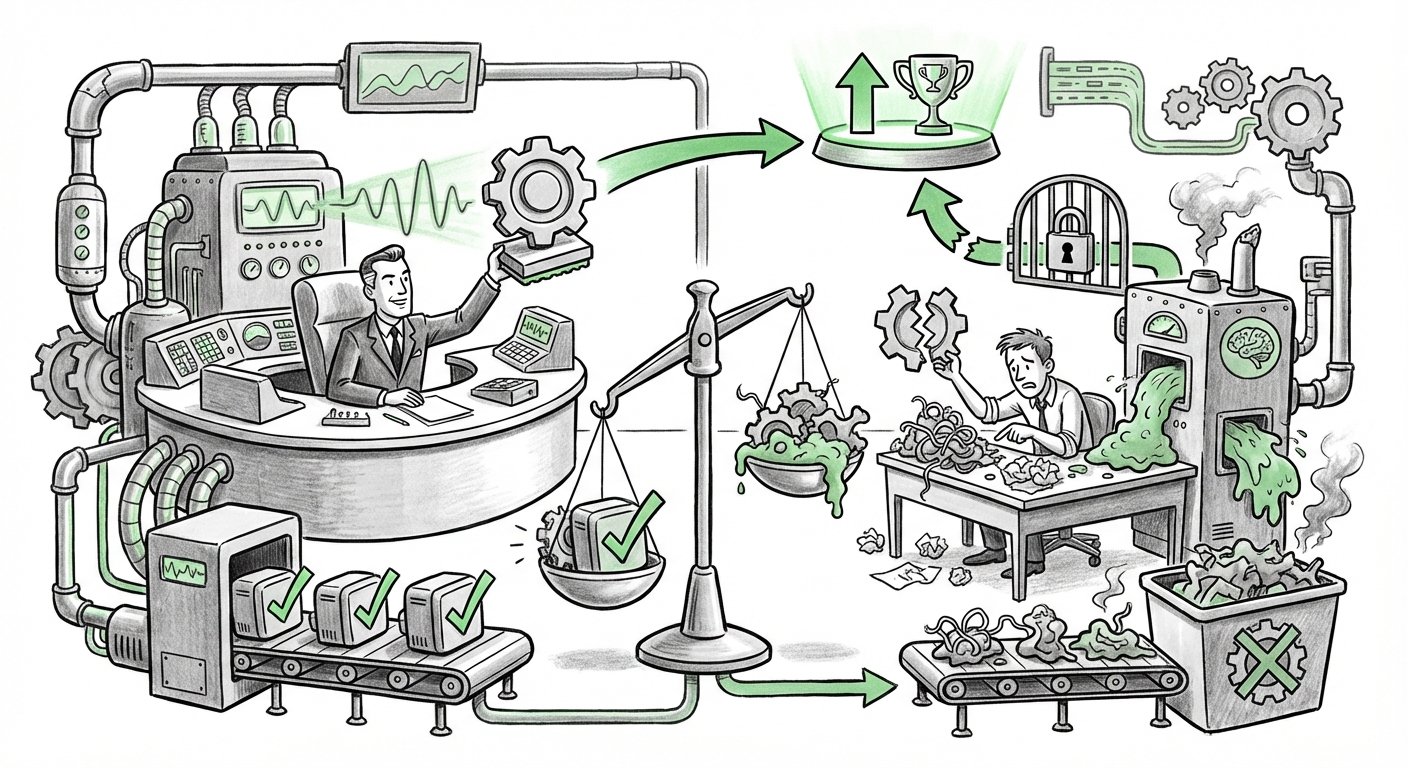
MercadoLibre just gave investors a live demonstration of the most important tension in technology today. The Latin American e-commerce and fintech company reported results that showed heavy spending on investments pressing down on profit, and the market reacted by pushing its shares lower. On the surface, this is a familiar story: a growth company spends money to grow faster, and Wall Street gets nervous about the near-term bottom line.
But look closer, and something bigger is happening. The investments that hurt profit are, in large part, the kind of investments that make modern AI work: computing power, data infrastructure, automation, smarter credit and risk systems, and the engineering talent to tie it all together. MercadoLibre's share drop is not really a story about one quarter's numbers. It is a story about what happens when a major platform decides that the future is worth paying for now, and what that decision signals for every business planning its own AI roadmap.
Why the Market Flinched
When a company's profits shrink because it is spending more, investors have to make a judgment call. Is this spending a smart bet on future growth, or is it money disappearing into a hole? The immediate reaction, shares moving down, tells us the market is not yet convinced it can see the payoff.
This is a pattern that repeats across the tech world. During any big platform shift, the companies that move first look worse on paper for a while. They carry higher costs, thinner margins, and a lot of explaining to do. Later, if the bet works, those same costs become the moat that competitors cannot cross.
The twist in this cycle is that AI spending behaves differently from past investment waves. A new warehouse or a new delivery fleet has a clear, countable return: more capacity, more packages moved, more revenue per square foot. AI spending is fuzzier at first. A better recommendation model, a sharper fraud detector, or an automated customer service agent does not show up as a shiny new building. It shows up as slightly better conversion, slightly lower losses, slightly faster handling times. Those gains are real, but they compound quietly, which is exactly why markets often misprice them in the short run.
The Hidden AI Stack Behind E-Commerce and Fintech
To understand why MercadoLibre's investment bill matters for the future of AI, it helps to see where the money actually goes inside a business like this one. E-commerce and digital payments are two of the most AI-hungry industries on earth, for a simple reason: they run on millions of small decisions every single day.
Logistics and Delivery Routing
Moving physical goods is expensive, and every inefficiency is multiplied across a giant network. AI systems decide which warehouse holds which item, which truck takes which route, and which delivery window is realistic. Small improvements in routing or demand forecasting can free up enormous amounts of money, but only after a company has invested in the data pipelines, sensors, and computing power to run those systems well.
Fraud Detection and Risk
Digital payments attract bad actors the way a marketplace attracts shoppers. Machine learning models score transactions in milliseconds, flagging suspicious patterns before money leaves the building. These models need constant retraining, which means ongoing spending on data infrastructure and engineering, a cost that never really stops.
Credit Scoring for the Underbanked
Fintech's biggest promise is lending to people and small businesses that traditional banks overlook. AI makes this possible by reading signals that older scoring systems ignore. But credit models carry real risk, and building them responsibly requires investment in data quality, monitoring, and compliance, the unglamorous work that shows up as cost long before it shows up as profit.
Search, Recommendations, and Pricing
Every product listing, search query, and price point is a chance to use AI to match supply with demand. Recommendation systems drive what shoppers see first. Pricing models balance competitiveness against margin. These systems are the engine of conversion, and they get better with scale, but scale requires infrastructure.
Customer Service Automation
Language models have transformed what is possible in customer support. A single AI agent can handle routine questions in multiple languages around the clock, escalating the hard cases to humans. For a company serving millions of buyers and sellers, this is one of the clearest cost-to-value paths in the entire AI toolbox, and one of the most visible places where investment turns directly into savings.
Short-Term Pain, Long-Term Platform
Here is the key insight for anyone watching this story: the companies that win with AI will almost always look inefficient right before they look unstoppable.
Building AI capability is not like buying a tool. It is more like building a nervous system for the whole company. You need clean data flowing from every part of the business, computing power that can handle spikes, engineers who understand both the models and the business, and a culture that trusts automated decisions enough to let them run. None of that is cheap, and none of it pays off in a single quarter.
What makes the current moment unusual is that this build-out is happening everywhere at once. E-commerce platforms, banks, logistics firms, and retailers are all making the same bet at the same time. That means the cost of computing and talent is rising for everyone, and the pressure on margins is not a MercadoLibre problem, it is an industry-wide phase of the cycle.
The companies that come out ahead will be the ones that treat AI investment as a disciplined portfolio rather than a spending spree. Not every experiment pays off. The winners will be ruthless about killing projects that do not show measurable returns, while doubling down on the few that do.
What This Means for the Future of AI
Three things stand out.
First, AI adoption is moving from experiments to infrastructure. The early phase of generative AI was about pilots and proof-of-concepts. The next phase is about wiring AI into core operations, payments, logistics, credit, and service, where the spending is large but the payoff is structural. A profit hit from investment spending is one of the clearest signals that a company has crossed that line.
Second, the market is learning to read AI spending, slowly. Investors are getting better at separating vague "AI strategy" talk from real capital commitments. Companies that can show a clear line from spending to measurable outcomes will be rewarded. Companies that cannot will be punished. This pressure is healthy: it forces discipline into a field that has attracted plenty of hype.
Third, emerging markets are becoming serious AI battlegrounds. The biggest gains from AI in commerce and finance may not come from markets that are already highly digitized. They may come from markets where AI leapfrogs older systems entirely, where a smart credit model reaches customers who never had a credit file, and where automated logistics solves problems that legacy infrastructure never addressed.
Practical Implications for Businesses
If you run a company and you are watching a major platform take a profit hit for AI investment, the lesson is not "spend more." The lesson is "measure better."
- Tie every AI project to a number. Conversion rate, fraud loss, handling time, cost per ticket, forecast error. If you cannot name the metric, you cannot defend the spending.
- Budget for the boring parts. Data quality, monitoring, and retraining are where most AI budgets quietly die. Plan for them from day one.
- Expect a lag. Communicate to your board and your investors that AI returns show up late. Set expectations before the costs land, not after.
- Start where the pain is. Customer service, fraud, and demand forecasting usually deliver faster than moonshot projects.
- Keep a kill list. Review experiments on a fixed schedule and shut down the ones that are not working without sentimentality.
Risks Worth Watching
The optimistic case is that investment spending today becomes durable advantage tomorrow. The risk is that spending outruns returns, that companies build capability faster than they can monetize it, and margins stay compressed longer than anyone planned.
There is also a competitive risk. If every major player invests in the same AI capabilities, the advantage cancels out and the industry is left with higher costs and the same relative standing. That is the trap of any technology that becomes table stakes: it is necessary, but not differentiating.
And there is an execution risk. AI systems that touch money, credit, and customer trust have a low tolerance for error. A model that goes wrong at scale can cost far more than it saves. Responsible deployment, testing, monitoring, human oversight, is not a luxury; it is part of the price of admission.
The Bottom Line
MercadoLibre's share drop is a snapshot of a much larger transition. The companies building the AI-powered version of commerce and finance are paying real money for it right now, and the market is still deciding how to price that bet. For anyone planning their own AI strategy, the message is clear: the era of cheap experimentation is over, and the era of disciplined, measurable, infrastructure-level AI investment has begun. The winners will not be the biggest spenders. They will be the ones who can prove, quarter after quarter, that the spending is working.