Microsoft's Patent for AI That Edits Live Speech: What It Means for the Future of AI
Imagine watching a live interview, a press briefing, a sports stream, a town hall, and knowing that the words coming out of the speaker's mouth may not be the words they actually said. Not because of a delay, and not because of a bad connection. Because an AI changed them in real time, on purpose.
Microsoft has filed a patent for exactly that: an AI system that can alter what people say during live broadcasts. It is a filing, not a product launch. No consumer feature has been announced, and no timeline exists for one. But the idea alone is worth paying attention to, because it marks a real shift in what AI is being built to do.
For years, AI has mostly worked after the fact. It wrote the summary after the meeting. It cleaned up the audio after the recording. It flagged the bad sentence after the post was published. This filing points at something different: AI that sits inside the live moment and changes what the audience hears as it happens. That is a much harder engineering problem, and a much bigger ethical one.
What the Filing Actually Describes
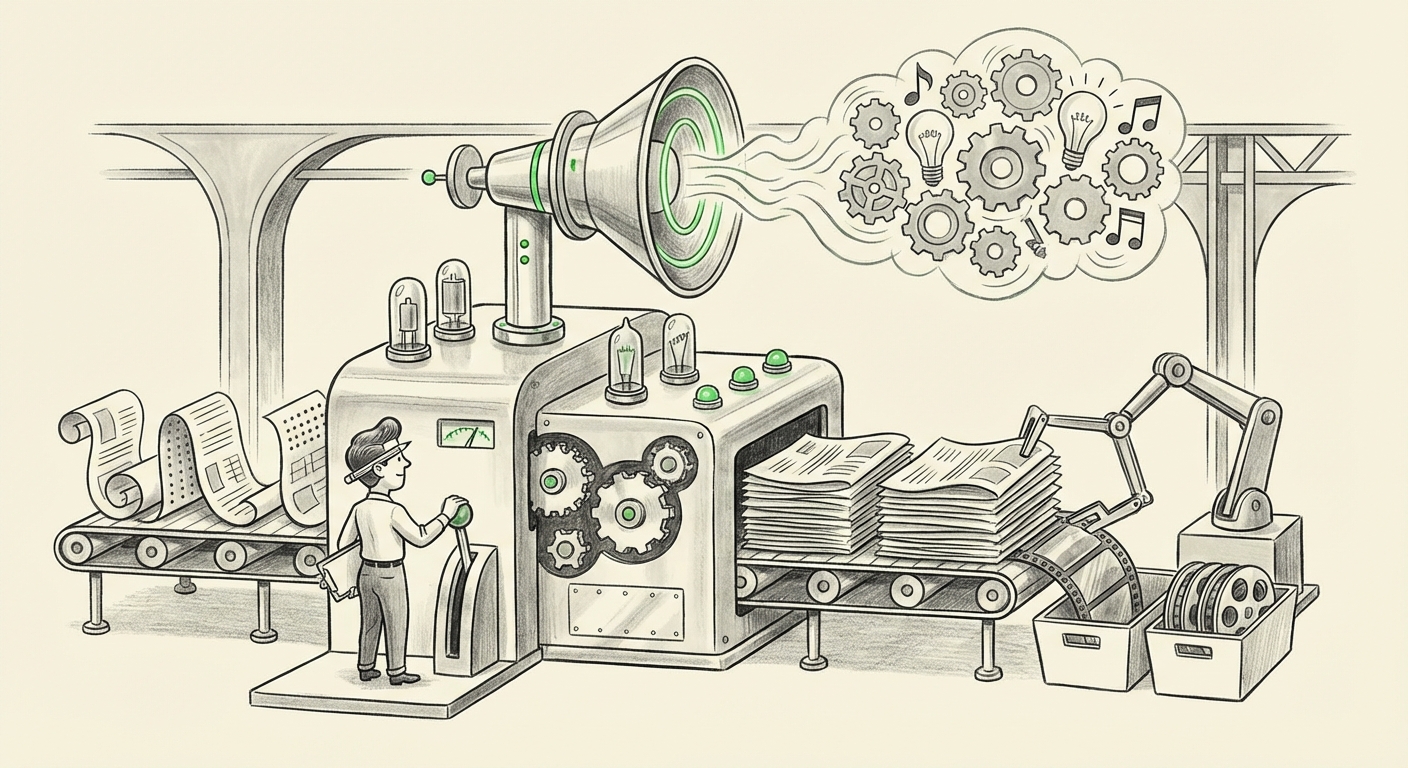
At its core, the concept is straightforward. A live broadcast produces a stream of speech. An AI system listens to that stream, understands it, and can rewrite or replace portions of it before the audience receives it. The change happens fast enough that viewers experience a smooth, continuous broadcast rather than a noticeable edit.
That sounds simple. It is not. Doing this live means the system has to solve several hard problems at once:
- Speed. Live audio cannot wait. The system has to understand speech and produce a replacement in a window measured in fractions of a second.
- Accuracy. It has to catch the words it is meant to change without mangling everything around them.
- Natural sound. The replacement has to match the speaker's voice, rhythm, and tone closely enough that the audience does not hear a seam.
- Stability. Live broadcasts run for hours. The system cannot drift, glitch, or fall behind halfway through.
Each of those pieces already exists in some form. Speech recognition is mature. Voice synthesis is strikingly good. What is new is the idea of wiring them together into a single live pipeline, and then pointing that pipeline at the most sensitive kind of content there is: a real person speaking to the public in real time.
Why Live Is the Hardest Place to Put AI
Most AI tools get a safety net. A chatbot output can be reviewed. A translated document can be checked. A generated image can be regenerated. Live broadcast has no undo button.
That changes the engineering culture around the product. Systems built for live use need to fail safely. If the AI is unsure whether a speaker said a word that should be changed, what should it do? Stay silent and let it through? Flag it for a human? Insert a delay? Those are design decisions, and they matter more than the model's accuracy score.
They also explain why broadcast professionals already work with delay systems and dump buttons. Live television has always had a layer of protection between the speaker and the audience. This patent points toward a future where that layer becomes intelligent, able to listen, understand, and intervene rather than just cut away.
Where This Kind of Tool Could Genuinely Help
It is easy to jump straight to the scary version. But there are legitimate uses that would make live media better for almost everyone.
Accessibility in real time
Live captions today are fast but imperfect. A system that can understand and restate speech cleanly could produce better captions, clearer transcripts, and smoother real-time translation for international audiences. Instead of reading a messy word-for-word feed, viewers could get speech that is accurate and readable as it happens.
Language barriers
Live events are increasingly global. A system that can re-voice a speaker into another language, in something close to their own voice, would open up conferences, classrooms, and public briefings to far more people. This is one of the most commercially obvious uses of the technology.
Safety and legal compliance
Broadcasters carry real legal risk. Someone on air might say something defamatory, reveal private information, or break a court order. A live system that could catch and soften those moments before they reach millions of viewers would be valuable to any broadcaster. It is the digital version of the seven-second delay, made smarter.
Corrections without embarrassment
Small slips, a wrong name, a misstated number, an accidental word, could be fixed as they happen rather than followed by an awkward on-air correction. For live sports, live commerce, and live news, that has clear appeal.
The Risks Are Just as Real as the Benefits
Here is the uncomfortable part. The same technology that can soften a slip can also change what a public figure appears to have said. And the audience would have no way to know.
Trust is the first casualty. Live broadcast has always carried a special authority. "You heard it live" means something. If viewers learn that live speech can be edited invisibly, that authority weakens, not just for the broadcasts that use the tool, but for all of them. The doubt spreads to everything.
Consent is the second problem. Who agrees to have their words changed? A broadcaster might own the microphone, but the speaker owns the sentence. Politicians, witnesses, athletes, and ordinary people caught on camera would all have very different views on being edited in real time.
Accountability is the third. If an AI changes what someone said and that change causes harm, who is responsible? The person who spoke? The broadcaster? The company that built the model? The person who set the system's rules? Right now, none of those answers are clear, and the technology is moving faster than the paperwork.
Disclosure becomes the dividing line. Much of the risk shrinks if edits are visible. A small on-screen notice, a marker in the recording, an audit log of every change, these turn a hidden tool into a transparent one. The danger is not the editing itself. It is the editing that nobody can see.
What This Signals About Where AI Is Heading
Step back from the specific filing and a larger pattern appears. AI is moving from the back office into the live moment.
The first wave of AI tools worked on finished material, documents, images, code, recordings. The next wave works on material that is still happening. Live speech, live video, live customer conversations, live trading, live medical monitoring. The value goes up because the timing matters, and so does the risk, for the same reason.
That shift has three consequences worth planning for.
First, latency becomes a product feature. The winners will be the systems that can think and act inside a human conversation without the human noticing a pause.
Second, human-in-the-loop becomes a design requirement, not a nice-to-have. Any live system that can change what a person says needs a fast way for a human to see, approve, or reverse it.
Third, provenance becomes a market. Tools that can prove what was said, when, and whether it was altered will be as important as the tools that do the altering. Expect demand for signed recordings, tamper-evident streams, and clear disclosure standards.
Practical Steps for Businesses
If you run a company that produces live content, webinars, earnings calls, livestreams, customer support, virtual events, this is a good moment to get ahead of the question rather than react to it later.
- Write a policy before you need one. Decide now whether you would ever alter live speech, and under what narrow conditions.
- Default to disclosure. If edits happen, say so. A visible notice protects trust far more than silence does.
- Keep a record. Log original and altered audio so you can answer questions later.
- Separate the use cases. Accessibility and translation are low-risk. Changing the meaning of what a person said is a different category entirely.
- Test the failure modes. Ask what happens when the system is wrong, slow, or uncertain. That answer matters more than the demo.
For technology teams, the message is simpler: the hard part of live AI is not the model. It is the guardrails around it.
The Bigger Picture
A patent filing is not a promise. Many filings never become products, and this one may sit quietly for years. But filings do reveal direction. They show what a major technology company believes is worth protecting, and in this case, what it believes is worth building.
The most likely near-term reality is not a world where every broadcast is quietly rewritten. It is a world where live speech becomes editable, and society has to decide where the line sits. Some uses will be welcomed: better captions, smoother translation, fewer harmful slips. Others will be resisted hard, and rightly so.
The companies that get this right will not be the ones with the best voice model. They will be the ones that made the editing visible, the consent explicit, and the record auditable. In live media, trust is the product. AI can either protect it or spend it, and that choice is being made now, in filings like this one.