Claude + Hugging Face: How to Generate Images with AI and What It Means for the Future
Imagine describing a picture in plain English and watching it appear on your screen. That is the promise of AI image generation. But until recently, you needed expert skills to get good results. You had to learn how to write special prompts, or you had to set up complex code. Now, a new approach is changing that. By combining Claude, a powerful AI language model, with Hugging Face, a popular platform for AI models, anyone can generate images with surprising ease. This article explores how this works, what it means for the future of AI, and how businesses and society can take advantage of it. We will look at the trends, the practical implications, and the actionable steps you can take today.
What Is This New Approach?
At its core, this approach uses Claude to do the thinking while Hugging Face does the drawing. Claude is an AI that understands language. It can read your idea, ask clarifying questions, and then write a detailed description of the image you want. That description is called a prompt. Claude can also write the computer code that sends this prompt to Hugging Face. Hugging Face then uses a text-to-image model to create the picture. In other words, Claude is the smart assistant that prepares everything, and Hugging Face is the art studio that produces the final image.
Crucially, Claude does not generate images by itself. It does not have that ability. Instead, it acts as a bridge. This separation of roles is what makes the combination so powerful. Claude is very good at understanding context, refining ideas, and writing clear instructions. Hugging Face is very good at hosting many different image generation models. By linking the two, you get the best of both worlds: the creative reasoning of a language model and the visual output of specialized image models.
How It Works in Practice
The workflow is simple enough for a beginner to try. You start by telling Claude what kind of image you want. For example, you might say, "I want a picture of a cat wearing a space helmet, floating in a colorful nebula." Claude will then expand that idea into a rich, detailed prompt. It might add words like "digital art," "vibrant colors," "soft lighting," or "high detail." Claude can even ask you follow-up questions to make the image better. Once the prompt is ready, Claude can write a short Python script that calls Hugging Face's image generation service. You run the script, and the image appears. No deep knowledge of machine learning is required.
This is a big deal because it lowers the barrier to entry. In the past, you had to be a prompt engineer or a developer to use AI image generators effectively. Now, you just need to be able to describe your idea. Claude handles the technical translation. This makes AI creativity accessible to artists, small business owners, teachers, and anyone with an idea.
The Big Trend: Composable AI Systems
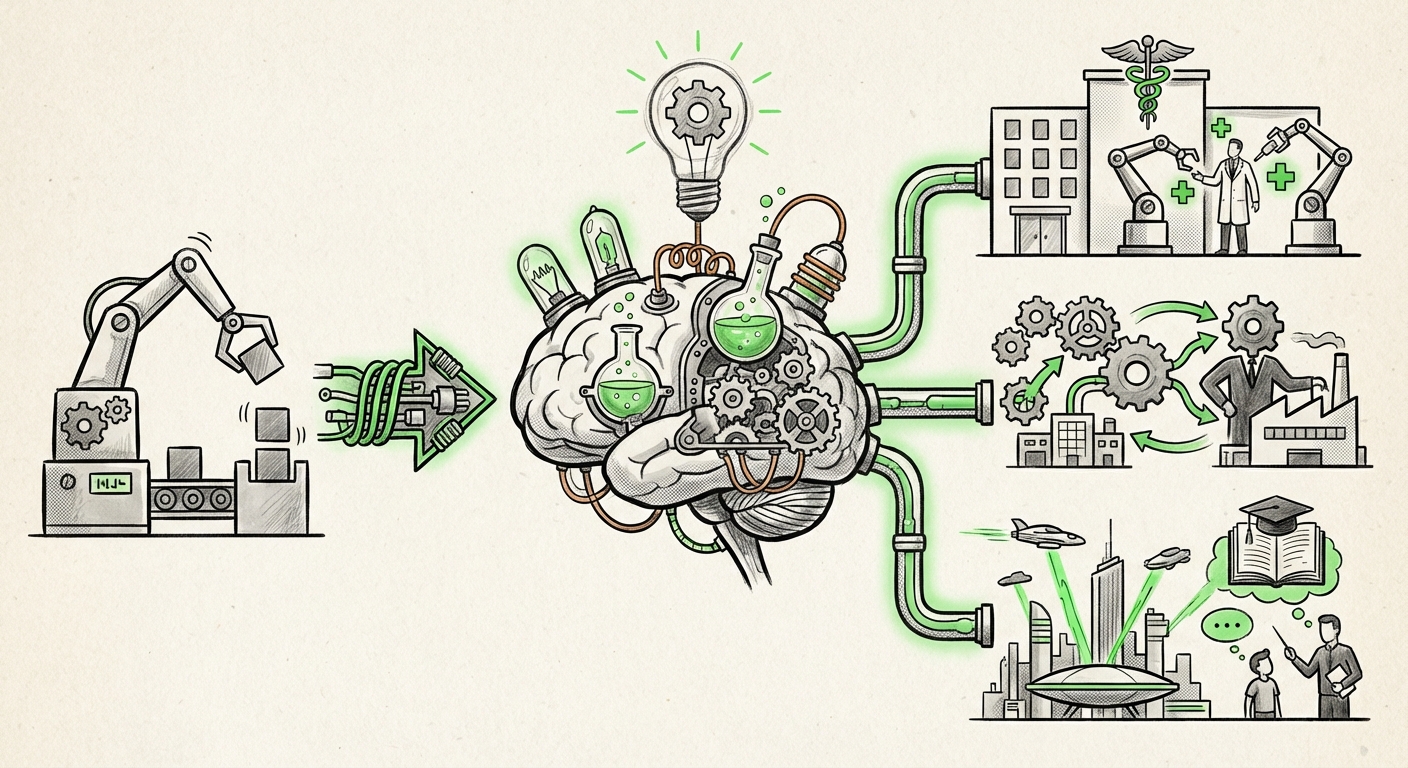
This combination is part of a larger trend in AI: the move toward modular, composable systems. Instead of building one giant AI that does everything, developers are linking smaller, specialized models together. Each model does what it does best. Claude excels at language and reasoning. Hugging Face hosts models that excel at image generation. By connecting them, you get a system that is greater than the sum of its parts.
This trend is important because it makes AI more flexible and more affordable. You do not need to train a new image model from scratch. You can use an existing one on Hugging Face. And you do not need to build a complex user interface. You can just ask Claude. This composability is driving innovation across the industry. It is also making AI more democratic. Open-source models on Hugging Face mean that anyone can experiment without huge costs.
Another trend is the rise of AI agents. These are AI systems that can take actions on your behalf. Claude writing code to call Hugging Face is a simple example of an agent. In the future, we will see more advanced agents that can plan, execute, and refine tasks automatically. This will change how work gets done in many fields, from marketing to product design.
What This Means for Businesses
For companies, this approach offers several practical benefits. First, it speeds up prototyping. Need a mockup for a new ad campaign? You can generate dozens of image variations in minutes. Need concept art for a product? Claude and Hugging Face can help. This reduces the time and cost of creative work.
Second, it is cost-effective. Hugging Face offers many models, some of which are free or very cheap to use. You only pay for the compute you use. This is much cheaper than hiring a design team for every small task. Of course, quality varies, but for quick drafts and ideas, it is a great starting point.
Third, it enables customization. Businesses can fine-tune image models on Hugging Face to match their brand style. They can also use Claude to generate prompts that follow specific guidelines. This means you can create a pipeline that consistently produces on-brand images.
But there are challenges. You need to manage API costs, especially if you generate many images. You also need to check the quality of each output. AI-generated images can be unpredictable. And you must consider safety and copyright issues. For example, you should avoid generating images that look like real people or that copy existing artwork. Businesses need to set clear guidelines for responsible use.
Actionable Insights for Business Leaders
- Start small. Pick a low-risk project, like generating social media images or internal mood boards. Test the Claude + Hugging Face workflow.
- Build a prompt library. Use Claude to create a set of repeatable prompts that work well for your brand. Save them for future use.
- Monitor costs. Track how many images you generate and how much you spend. Set limits to avoid surprises.
- Review outputs. Always have a human check the images before they go public. Fix any weird artifacts or inappropriate content.
- Stay legal. Understand the license of the models you use on Hugging Face. Make sure you have the right to use the images commercially.
What This Means for Society
The ability to generate images so easily has big implications for society. On the positive side, it democratizes creativity. People who never had access to design tools can now bring their ideas to life. Teachers can create custom illustrations for lessons. Small nonprofits can make professional-looking posters. This can level the playing field.
But there are risks. Easy image generation can spread misinformation. It can be used to create fake photos or misleading content. As a society, we need to be more critical of what we see online. We also need to talk about copyright and ownership. Who owns an AI-generated image? The person who wrote the prompt? The platform? These are open questions that laws will need to address.
There is also the question of jobs. Some tasks in graphic design, illustration, and photography may be automated. But history shows that new tools often create new jobs. The key is to help people learn to work alongside AI. Education and retraining will be important. Rather than replacing human creativity, AI can amplify it, if we manage the transition well.
The Future: More Seamless, More Powerful
Looking ahead, the line between language models and image models will blur. We will see more direct integrations. Instead of writing code, you might just ask Claude to generate an image, and Claude will silently call an image model behind the scenes. This will make the experience even simpler. We will also see multimodal agents that can understand images, text, and audio all at once. They will be able to edit images, combine them, and create complex visual stories.
Hugging Face will likely continue to grow as a hub for open models. This will keep pressure on prices and drive innovation. Claude and similar models will get better at writing prompts and understanding what you want. The combination will become a standard tool in every creative toolkit, just like a word processor or a spreadsheet.
However, the future also depends on responsible development. We need strong safety filters, clear rules, and thoughtful design. The AI community is working on these challenges. As users, we can help by giving feedback, using the tools ethically, and demanding transparency.
Conclusion
Generating images with Claude and Hugging Face is more than a neat trick. It represents a fundamental shift in how we interact with AI. It shows that the most powerful AI solutions are not always a single, huge model. Sometimes, the best results come from connecting specialized tools in smart ways. This approach is making AI creativity accessible to everyone, speeding up business workflows, and opening new doors for innovation. At the same time, it reminds us to be thoughtful about safety, fairness, and the impact on jobs. The future of AI is not just about bigger models, it is about better connections. By understanding and using these connections, we can shape a future where AI amplifies human potential rather than replacing it.