Can Lightweight LLMs Turn Plain English Into Reliable SLOs?
Ask a software team what "fast" means and you will get five answers. Ask a customer what "reliable" means and you will get a sixth. The gap between what people want a system to do and what engineers can actually measure has always been one of the most expensive problems in technology. Now a new question is taking shape: can small, cheap AI models close that gap?
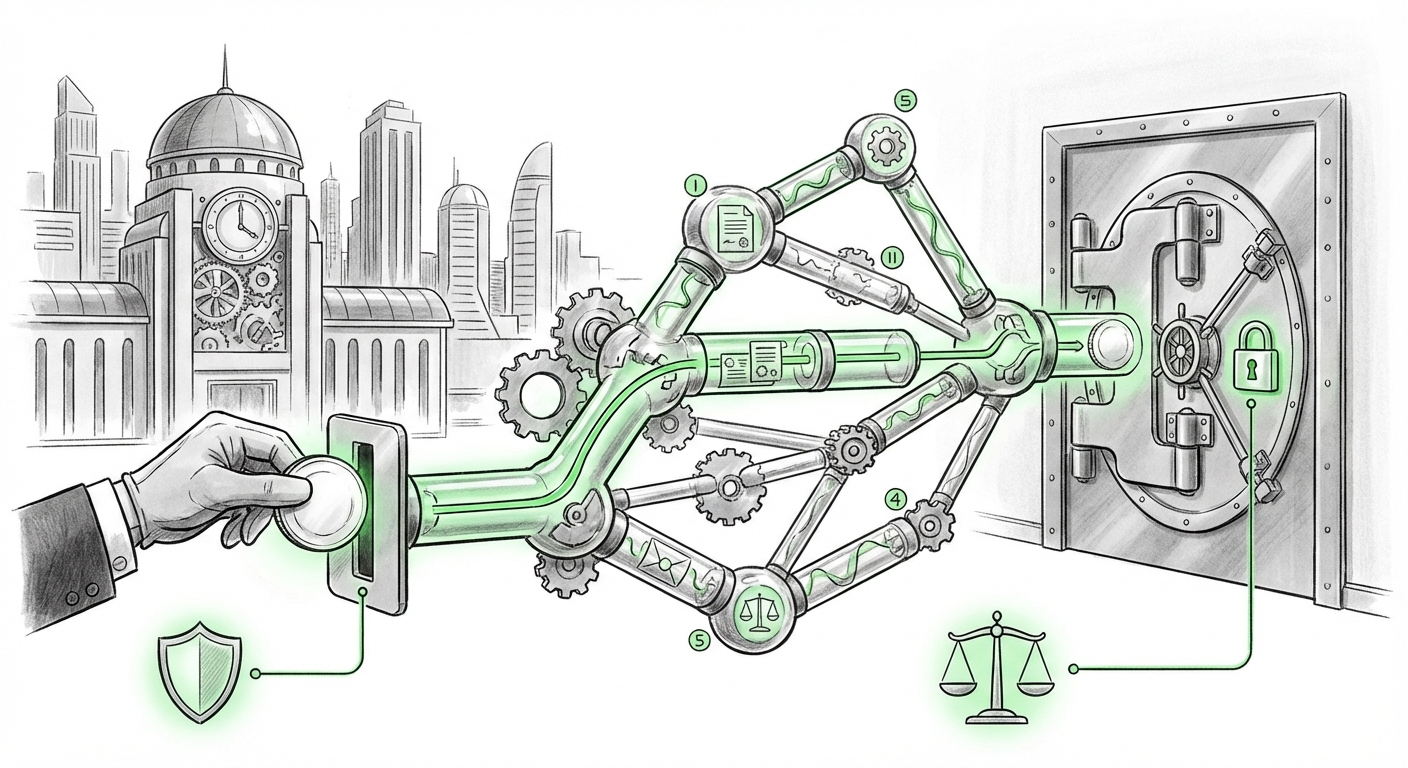
The idea is called intent-to-SLO translation. A person describes a goal in everyday language, "the checkout page should feel instant, even on busy days", and a language model turns that wish into a technical target, a service level objective (SLO), that engineers can monitor and enforce. The growing interest in doing this with lightweight models, rather than the largest ones available, says a lot about where AI is heading next.
What Intent-to-SLO Translation Actually Means
An SLO is a promise stated in numbers. Something like "99.9% of requests finish in under 300 milliseconds." It is the backbone of how modern digital services stay honest with users. Without clear SLOs, teams argue about whether a system is "slow" or "fine," and nobody can prove anything.
The trouble is that SLOs are usually written by people who already speak the language of infrastructure. Product managers, support leads, and business owners often have to hand their real goals to engineers, who then translate them into thresholds, error budgets, and alert rules. Every handoff leaks meaning.
Intent-to-SLO translation tries to remove the leak. Instead of a chain of meetings, a model reads the plain-language intent and proposes a structured target. It might suggest a latency threshold, a measurement window, and a list of edge cases to watch. A human then reviews, adjusts, and approves.
That is a modest-sounding workflow change. In practice, it touches reliability engineering, product management, and customer experience all at once, which is exactly why the choice of model matters so much.
Why Lightweight LLMs Are Suddenly Interesting
For the past few years, the default answer to any hard language task was "use the biggest model you can afford." That answer is getting harder to justify. Lightweight models have improved fast. They are smaller, cheaper to run, quicker to respond, and easier to host close to where the work happens.
For intent-to-SLO translation, those traits are not nice extras. They are the whole point.
Cost per decision
SLO translation is not a once-a-year task. Teams want it every time a feature ships, a service changes, or a customer complaint reveals a gap. That means thousands of small decisions, not one big one. A model that costs a fraction of a cent per call makes that possible. A premium model called thousands of times a week does not.
Speed inside the workflow
If a suggestion takes thirty seconds to appear, people stop using it. They go back to writing SLOs by hand. Lightweight models answer fast enough to feel like autocomplete, which is the difference between a tool that gets adopted and one that gets abandoned.
Privacy and control
Intent descriptions often contain sensitive details: customer complaints, internal product plans, revenue targets. Sending that text to a third-party API is a real governance question. Small models can often run inside a company's own environment, which keeps the data close and the compliance story simple.
Predictable behavior
Reliability work demands repeatability. A translation tool that phrases things differently every time is hard to audit. Smaller, more constrained models, especially when paired with strict output formats, are easier to test, version, and lock down.
The Trade-offs: Where Small Models Shine and Where They Struggle
None of this means lightweight models win everywhere. The honest picture is a split.
They tend to do well at:
- Turning a clear intent into a structured draft with the right fields filled in.
- Recognizing common patterns, like latency goals for web pages or uptime goals for APIs.
- Flagging missing information, "you did not say what counts as a failure."
- Rewriting technical thresholds into plain language a business owner can check.
They tend to struggle at:
- Ambiguous or contradictory intent, where two goals pull against each other.
- Novel architectures where no standard pattern applies.
- Knowing when the right answer is "this needs a human who understands the system."
- Multi-step reasoning that spans many services at once.
The practical lesson is that lightweight models are excellent drafters and poor final authorities. That is not a weakness to fix. It is a design constraint to build around.
What This Means for the Future of AI
The shift toward small models for narrow, high-volume tasks is one of the clearest signals in AI right now. The industry is moving from a world of one giant assistant that does everything to a world of many specialized models that each do one thing well, cheaply, and near the data.
Intent-to-SLO translation is a perfect example of that pattern. It is not a general-purpose chat problem. It is a translation problem with a known output shape. That makes it a natural fit for a small model wrapped in good guardrails.
Three broader trends follow from this.
1. AI becomes plumbing, not a product
When a model is cheap and fast enough, it stops being a feature you visit and becomes a layer you rely on. Like a database or a message queue, it disappears into the architecture. Users do not think "I am using AI." They think "the system asked me a good question."
2. Guardrails become the real product
If the model is a commodity, the value moves to everything around it: the schema it must fill, the validation rules it must pass, the review step a human must complete, and the audit trail that records what changed. The winning systems will be the ones that make a small model's output safe to act on.
3. Human review becomes a design feature, not a fallback
The most useful pattern is not full automation. It is a model that proposes and a person who approves. That keeps accountability where it belongs while still removing most of the manual work.
Practical Implications for Businesses
For engineering leaders, the message is that reliability targets should stop being a specialist-only artifact. If a lightweight model can turn a product goal into a first-draft SLO, then more people in the organization can take part in defining what "good" means. That widens ownership of reliability without lowering the bar.
For product and support teams, the gain is speed and clarity. A support complaint about slow checkout can become a proposed threshold in minutes. The conversation moves from "users say it is slow" to "here is the number we are committing to."
For finance and operations, the calculation is simple. A tool that costs almost nothing per use and saves a meeting per feature pays for itself quickly. The barrier to trying it is low, which means more teams will experiment, and more will discover where it breaks.
For risk and compliance teams, the caution is equally simple. A model that writes SLOs is writing commitments. Those commitments affect staffing, budgets, and customer contracts. Any automated suggestion needs a clear owner and a recorded approval.
Actionable Insights
- Start with structure, not scale. Define the exact output you want, thresholds, measurement windows, failure conditions, before choosing a model. A tight schema makes a small model look smart.
- Pilot on low-stakes services. Try intent translation on internal tools first. Learn where the model is confidently wrong before it touches customer-facing promises.
- Always keep a human approver. Treat model output as a draft. Log who accepted it, when, and what they changed.
- Measure the translator, not just the system. Track how often suggestions are accepted, edited, or thrown away. That tells you more than any benchmark.
- Build a feedback loop. Every rejected suggestion is training data for your rules, your prompts, and your guardrails.
- Compare against a bigger model on hard cases only. Route ambiguous intent to a stronger model and keep the cheap one for the routine majority.
- Watch the cost curve, not just the quality curve. The best model for this job is the cheapest one that clears your accuracy bar.
The Bottom Line
Lightweight models will not replace reliability engineers, and they should not try. What they can do is remove the friction between what people want and what systems promise. That is a smaller claim than "AI runs your infrastructure," and a far more useful one.
The teams that win here will not be the ones with the biggest model. They will be the ones with the clearest intent, the tightest guardrails, and the discipline to keep a human in the loop. Small models are ready to carry that weight, as long as we are honest about where the weight belongs.