Perplexity Teammates: Always-On AI Agents That Take On Multiple Roles at Once
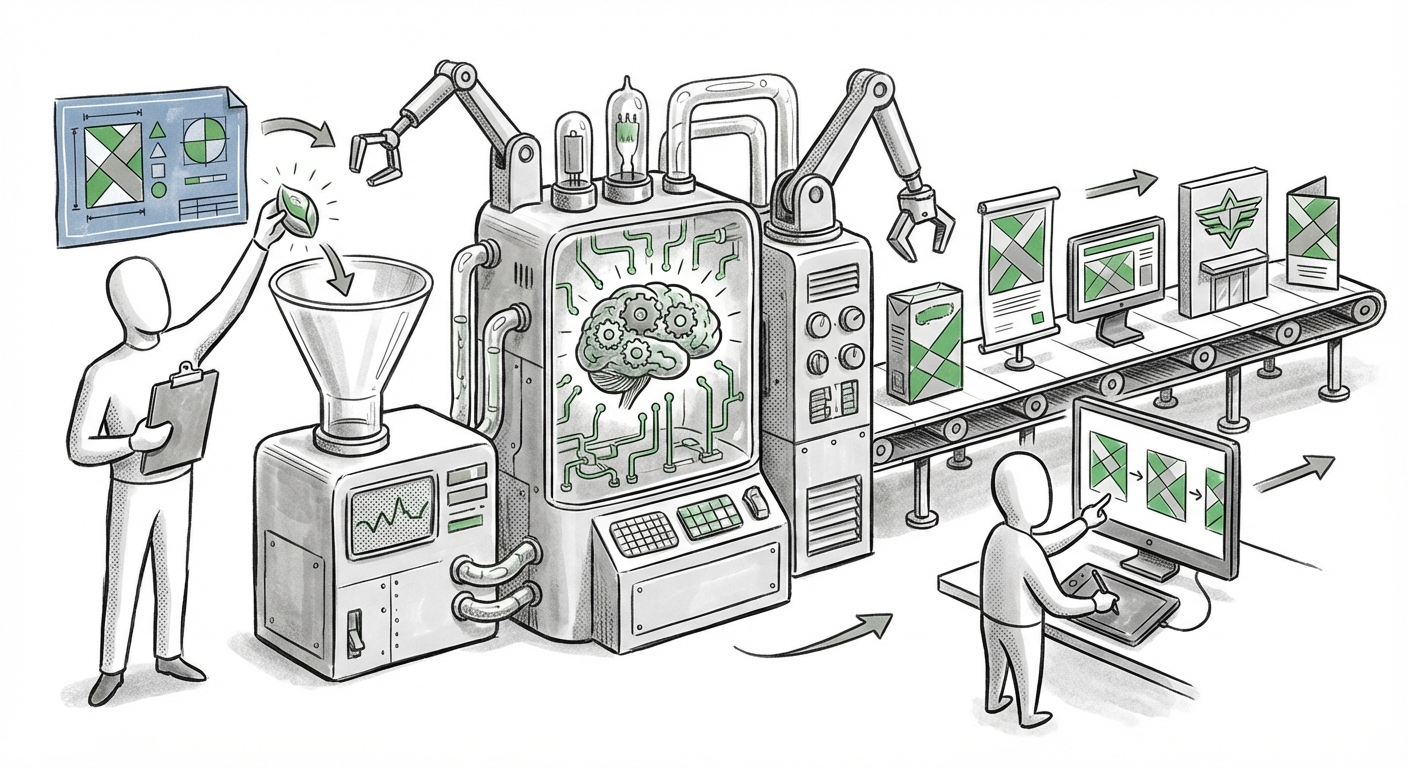
Perplexity has begun rolling out Teammates, an always-on AI agent system that connects to its Computer product. The pitch is simple but big: instead of one chatbot answering one question at a time, Teammates is built to carry several roles at once and run large-scale tasks side by side, all the time.
That one sentence hides a real shift. For the last few years, AI has mostly behaved like a very fast intern sitting at a desk, waiting for you to walk over and ask something. Teammates points to a different model: software that stays on, holds a job, and keeps working whether or not you are watching.
Here is what the rollout tells us about where AI is heading, what it means for how work gets done, and what companies should do about it now.
What Perplexity Is Actually Shipping
Teammates is not a new model or a chat upgrade. It is an orchestration layer, a system that sits above the underlying AI and manages several agents at once. Three words in the description matter most:
- Always-on. The system is designed to keep running in the background, not to start and stop with each prompt. That turns AI from a tool you pick up into a service that keeps working.
- Multiple roles. Teammates assigns agents different jobs, the way a real team splits work. One agent might be the researcher, another the writer, another the checker.
- Simultaneous, large-scale tasks. Instead of one thread of work moving forward step by step, many tasks move forward in parallel.
The integration with Computer is the piece that makes this more than a chat feature. Computer is where Perplexity's agents get an environment to act in, clicking, reading, assembling, producing. Plugging Teammates into it means the agents are not just talking about work. They are hooked into the place where work gets done.
The Shift From Answers to Employees That Never Clock Out
It helps to see this as the third stage of a short but fast history.
Stage one: answers
Early AI tools were question-and-answer machines. You typed, it replied. The output was text. The value was speed of thinking.
Stage two: actions
Then came agents, systems that could take steps, use tools, browse, and finish a task with less hand-holding. The output became a finished artifact, not just a paragraph.
Stage three: always-on teams
Teammates belongs to stage three. The unit is no longer a prompt or even a task. The unit is a standing team of workers that keeps a queue moving. You set direction and review results. The system holds the roles.
This matters because most real work is not a single question. It is a stream of small, repeating jobs that need different skills. That is exactly the shape an always-on, multi-role system is built for.
Why "Multiple Roles" Is the Most Important Detail
Anyone who has used an AI agent for a long task knows the failure mode. One general-purpose agent tries to do everything, plan, research, write, check its own work, and quality drifts. It forgets the instructions from twenty steps ago. It grades its own homework and passes itself.
Splitting work into roles helps with three problems at once:
- Focus. A narrow agent with a clear job stays on track better than a generalist juggling everything.
- Checking. When one agent produces and another reviews, errors get caught that a single agent would miss.
- Scale. Roles can be duplicated. If the research step is the bottleneck, you add more researchers, not a whole new person.
In other words, the org chart becomes the product. Expect the interface of these systems to look less like a search box and more like a roster: here are your agents, here is what each one owns, here is what they have finished, here is what needs your approval.
Parallel Execution Changes the Shape of a Project
Running tasks at the same time sounds like a speed feature. It is bigger than that. It changes what a "project" even looks like.
When work happens one step at a time, you plan in a straight line. When many agents can work at once, you plan in a map: twenty variations explored together, fifty accounts researched together, a hundred documents drafted together and then compared.
This is where a lot of business value sits. Much of the work companies want to automate is high-volume and repetitive but not identical, the kind of thing that is too varied for a rigid script and too big for a human to grind through. Parallel agent teams fit that gap well.
It also introduces a new cost curve. Running many agents at once burns far more compute than one chat session. The winners will be the teams that learn to spend heavy parallel effort only where it pays off, and keep everything else lean.
What This Means for the Future of AI
1. Orchestration becomes the product
Raw model quality still matters, but it is becoming table stakes. The differentiator is shifting to the layer that decides who does what, in what order, and how results get merged. Teammates is a clear bet on that layer being the thing customers pay for.
2. Persistence beats intelligence
An always-on agent accumulates context. It remembers what it did yesterday, what failed, and what the house style is. Over time, that memory may matter more to a business than a small gain in raw reasoning ability, because it is what makes the system feel like a colleague instead of a tool.
3. Evaluation moves from answers to outcomes
You cannot grade an always-on team with a multiple-choice test. The questions become: Did the work ship? Was it right? How often did a human have to step in? How much did each finished task cost? Expect a wave of new measurement tools built around those questions.
4. The agent becomes the interface
As these systems mature, people will interact less with a prompt box and more with something closer to a management dashboard, assigning goals, approving steps, reviewing output. The job starts to look like supervision.
5. Agent-to-agent work becomes normal
Once agents hold roles, they start handing work to each other. The next frontier is standards for how agents from different vendors pass tasks and check results. Without them, every company ends up with a locked-in island of agents.
Practical Implications for Businesses
Always-on, multi-role agents are not a small IT purchase. They touch how work is organized. A few honest implications:
Process clarity becomes the real bottleneck
An agent team can only follow a process you can describe. Most companies cannot describe their processes clearly, that knowledge lives in people's heads. The organizations that win with these systems will be the ones that write down how work actually gets done, step by step, including the exceptions.
Headcount planning gets more nuanced
This is not simply "replace people with agents." The realistic pattern is that agent teams absorb the high-volume, low-judgment middle of a workflow, while humans move to the edges: setting goals, handling exceptions, and owning the result. Teams that plan for that shift early will handle it far better than teams that get surprised.
Permissions and security move to the front
An agent that runs all the time and touches real systems is a standing security question. What can it access? What can it send? What can it spend? Who approves a step that cannot be undone? These questions need answers before rollout, not after an incident.
Verification debt is real
It is easy to produce far more AI output than a team can actually check. That gap is verification debt, and it compounds. Unchecked volume feels like speed until someone has to defend the work.
Risks Worth Watching
- Silent drift. An always-on agent that slowly loses the plot is harder to notice than one that fails loudly. Monitoring matters more than setup.
- Accountability gaps. When a team of agents produces a bad result, "the AI did it" is not an answer regulators or customers will accept. Clear human ownership is required.
- Runaway cost. Parallel agents can burn budget quickly. Hard limits and spend alerts are not optional.
- Vendor concentration. Putting an entire function inside one vendor's agent layer is a real strategic risk. Portability should be part of the plan.
- Homogenized output. Agent teams trained on the same patterns can produce work that reads the same as everyone else's. Human voice and judgment remain the differentiator.
An Actionable Playbook
For teams that want to be ready as always-on agent systems spread:
- Pick one workflow, not ten. Choose something high-volume, well-documented, and low-risk. Prove the pattern before scaling it.
- Define roles before tools. Write the job description for each agent, inputs, outputs, what "done" means, what it must never do.
- Build the review step in from day one. Decide who signs off and on what. Make the approval path visible, not implied.
- Set hard limits. Spend caps, access scopes, and rate limits protect you from a bad day turning into a bad quarter.
- Track outcomes, not activity. Measure cycle time, human correction rate, and cost per finished task. Vanity metrics hide problems.
- Keep a human on the exception path. The agents handle the routine; people handle the weird. That boundary is where quality lives.
The Bottom Line
Perplexity's Teammates is a signal more than a single product launch. It shows where the industry believes the value is moving: away from one clever answer and toward standing teams of AI agents that hold roles, work in parallel, and stay on.
That raises the bar for everyone. The question stops being "which AI is smartest" and becomes "whose AI team is best organized, best supervised, and best at finishing real work." Companies that treat agent teams as a management problem, not just a software purchase, will get the most out of this next wave. Those that treat it as a shiny upgrade will produce a lot of output and very little that they can stand behind.