Soft Token Alignment: The Next Big Leap in Cross-Lingual AI Reasoning
Most people assume that a modern AI model can speak many languages. That is partly true. It can translate a sentence, answer a simple question, and write a polite email in dozens of languages. But speaking a language is not the same as thinking well in it. A model can sound fluent while making weaker logical leaps, missing cultural context, or losing track of a math problem when the language changes. The next big challenge in AI is not more languages. It is better reasoning across languages. A research direction called soft token alignment for cross-lingual reasoning points to a powerful way to close that gap.
The core idea is simple to understand, even if the math behind it is complex. Instead of forcing AI to think in words and word pieces from one language, soft token alignment lets the model build a shared internal space for meaning. In that space, a math problem in Japanese, a legal question in Spanish, and a customer complaint in Swahili can be understood through the same reasoning process. If this works at scale, it could change how global companies build AI products, how schools teach with AI, and how governments serve people who speak many languages.
The Hidden Problem: AI That Speaks Many Languages but Thinks in One
Large language models break text into small chunks called tokens. A token can be a word, part of a word, or a character. The trouble is that tokenization is not equal across languages. English, with its huge amount of training data, gets a smooth and efficient token setup. Many other languages get chopped into smaller, stranger pieces. That makes the model work harder just to read the input. It also makes reasoning less stable.
This creates a hidden gap. A model may score well on English tests and still perform poorly on the same task in Hindi, Arabic, or Yoruba. The problem is not only vocabulary. It is the way the model connects ideas. When reasoning steps are learned mostly from English text, the model may quietly rely on English-like patterns. In another language, those patterns may not fit. The result is what researchers often call uneven reasoning: the model can translate the words but not always carry over the logic.
This matters because the world does not run on English alone. A global bank reviews contracts in many languages. A hospital serves patients who describe symptoms in their native tongue. A software team writes code comments and bug reports in mixed languages. If AI reasoning is strongest in English, then the benefits of AI are unevenly shared. Soft token alignment aims to fix that at the level of meaning, not just at the level of translation.
What Are Soft Tokens?
To understand soft tokens, start with normal tokens. A normal token is a hard unit. It is a specific word piece, like “un” or “happiness” or a punctuation mark. The model looks it up in a table and gets a vector, which is a list of numbers that represents the token’s meaning. Hard tokens are discrete. They are tied to a fixed vocabulary.
A soft token is different. It is a continuous vector that is learned by the model. It does not have to match a word in a dictionary. It can carry a blend of meaning, context, and task information. You can think of it as a flexible internal note that says, “This is the idea behind the sentence,” rather than “These are the exact words.” Because it is not tied to one language’s vocabulary, a soft token can act as a bridge.
Soft tokens are already used in some AI systems for tasks like prompting, compression, and multimodal learning. The new angle here is alignment. The goal is to make soft tokens from different languages line up in a shared space. If a soft token for “cause and effect” in English sits near the soft token for “cause and effect” in Korean, the model can reason about causality without being pulled back into English word patterns. That is the heart of cross-lingual reasoning.
How Soft Token Alignment Works, Without the Math
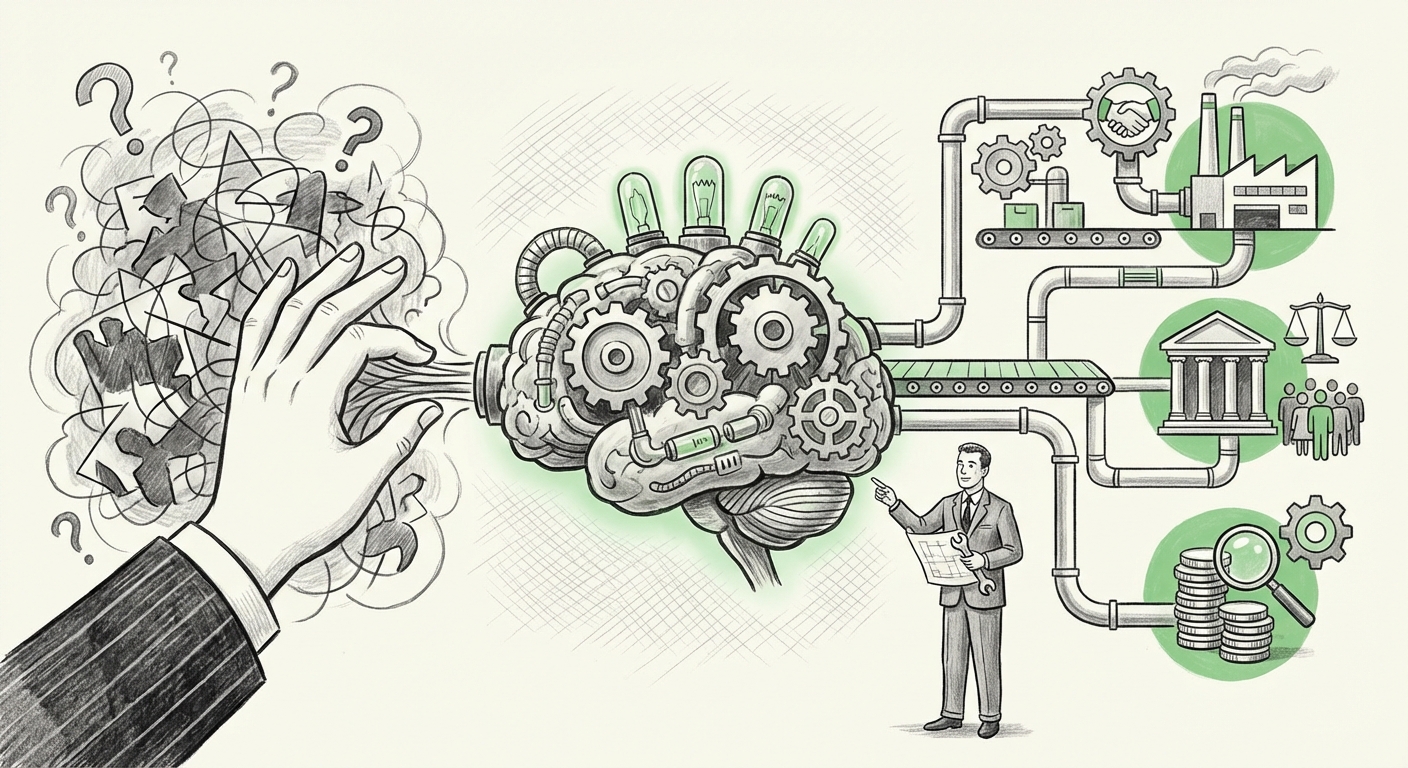
The name sounds technical, but the flow is easy to picture. First, the model reads a prompt in the source language. Instead of passing only hard word pieces forward, it creates a set of soft tokens that capture the meaning of the prompt. Second, those soft tokens are aligned to a shared multilingual space. This space is built during training so that similar ideas from different languages land near each other. Third, the model reasons inside that shared space. Finally, it produces an answer in the target language.
The important point is that this is not a translation layer bolted onto the side. A translation layer converts one language into another and then reasons in the second language. That can work, but it adds errors. Nuance gets lost. Wordplay disappears. Legal terms shift. Soft token alignment tries to skip that lossy step. It lets the model work with meaning directly, then express the result in the language the user needs.
This does not mean language disappears. Language still shapes how people frame problems, show respect, tell stories, and signal uncertainty. A good system must still learn those patterns. But soft token alignment could make the reasoning engine more language-neutral while keeping the output natural and culturally aware.
Why This Matters for Reasoning, Not Just Translation
Translation is about mapping words. Reasoning is about following steps. The difference shows up in tasks like math word problems, contract analysis, medical triage, and customer support. A translation can be grammatically perfect and still miss the point. For example, a question may use a double negative, a cultural reference, or a unit of measure that does not translate cleanly. A model that reasons in a shared space has a better chance of catching the logic before it writes the answer.
This could improve several real-world areas:
- Education: Students who learn in their first language could get explanations that are as strong as English-language explanations, not simplified versions.
- Healthcare: Symptom checks and patient instructions could keep their logic when moving between languages, reducing dangerous misunderstandings.
- Legal and compliance: Contracts and regulations could be compared across languages with fewer errors caused by translation drift.
- Customer support: A company could offer consistent answers in many markets without building a separate AI pipeline for each language.
- Software development: Teams that work in mixed languages could search, document, and debug code with better cross-language understanding.
The bigger shift is that AI systems could become multilingual by design rather than English-first with translation added later. That is a different product philosophy. It changes what companies can promise to users in emerging markets and what public services can offer to diverse populations.
The Business Case: Lower Costs, Wider Reach, Better Compliance
For business leaders, the appeal is practical. Today, many companies handle multilingual AI with a patchwork of translation tools, language-specific models, and human review. That is expensive and hard to maintain. It also creates inconsistent quality. A customer in one country may get a sharp answer while a customer in another gets a clumsy one. Soft token alignment suggests a future where one model can reason well across languages and then answer naturally in each one.
That could lower costs in several ways. It could reduce the need for separate language pipelines. It could cut latency because the system does not have to translate first and reason second. It could improve consistency because the same reasoning core serves every market. It could also help with compliance. Companies must often show that their AI treats customers fairly across regions. If reasoning quality varies by language, that is a fairness problem. A shared reasoning space could make audits simpler, though it does not remove the need for testing.
There is also a growth story. Many of the next billion internet users do not work primarily in English. A company that can offer high-quality AI in local languages can reach new customers. A government that can serve citizens in many languages can improve access. The economic value is not just in translation savings. It is in trust. People trust AI more when it understands them, not just when it repeats their words back.
Technical Hurdles and Open Questions
Soft token alignment is promising, but it is not a magic switch. Several hard problems remain. First, data quality. Low-resource languages often have less clean text. If the shared space is built mostly from high-resource languages, it may still carry hidden biases. Second, alignment stability. Making sure that soft tokens from different languages truly line up is difficult. Small errors can grow during long reasoning chains.
Third, interpretability. Soft tokens are harder to inspect than words. If a model makes a bad decision, engineers may struggle to explain why. That is a problem in medicine, law, and finance, where people need reasons, not just answers. Fourth, evaluation. Many benchmarks are English-heavy. A model can look strong on a leaderboard and still fail in a real multilingual setting. New tests are needed that measure reasoning, not just translation accuracy.
There is also a risk of false fluency. A model may sound confident in a language while its reasoning is weak. That is more dangerous than obvious failure because users may not notice. Companies will need to test for reasoning quality across languages, not just grammar. They will also need human review in high-stakes settings. Soft token alignment can improve the engine, but it does not replace accountability.
A Bigger Trend: From Language-Specific Models to Shared Reasoning Spaces
This work fits a larger shift in AI. For years, progress came from bigger models trained on more text. Now, more attention is going to representation and alignment. How do we make different kinds of meaning line up? That question shows up in multimodal AI, where text, images, and audio must share a space. It shows up in agent systems, where tools and memories must be coordinated. It shows up in multilingual AI, where languages must meet without one dominating.
Soft token alignment is one piece of that puzzle. It suggests a future where AI does not treat language as a set of separate silos. Instead, it builds a central reasoning layer that can be expressed through many languages. That could make AI more modular. A company could swap in a new language adapter without retraining the whole system. A model could share knowledge across markets more easily. A research team could improve reasoning once and see the benefit everywhere.
But shared spaces also raise governance questions. Who decides what “alignment” means? If the shared space is trained mostly on one culture’s data, it may quietly impose that culture’s assumptions. If soft tokens are opaque, regulators may find it hard to audit. The technical community will need to pair this work with transparency, inclusive data, and clear standards. Otherwise, a tool built to reduce language inequality could create new forms of hidden bias.
What Leaders Should Do Now
Business and technology leaders do not need to wait for a finished product to act. They can prepare today. Start by testing AI systems on reasoning tasks in every language you serve, not just translation tasks. Ask simple but revealing questions: Does the model follow the same logic in each language? Does it miss steps? Does it invent facts? Does it handle numbers, dates, and units correctly? Build a scorecard that separates fluency from reasoning.
Next, invest in local data and local review. Soft token alignment can only be as good as the data behind it. Teams should collect real examples from the languages and markets they care about. They should include edge cases, slang, and cultural context. Human reviewers should check high-stakes outputs. This is not just a technical task. It is a product quality task.
Third, demand explainability. Ask vendors how their models handle cross-lingual reasoning. Ask for evidence, not just demos. Ask whether the system uses translation steps or shared representations. Ask how it is evaluated in low-resource languages. These questions will separate serious tools from marketing claims.
Finally, prepare for change management. If AI reasoning improves across languages, workflows will shift. Support teams may handle more languages in-house. Localization teams may focus more on culture and less on literal translation. Compliance teams may need new tests. The organizations that plan for these changes will capture the value faster.
The Road Ahead
The most important AI breakthroughs of the next few years may not be about bigger models. They may be about better connections. Soft token alignment for cross-lingual reasoning is a sign of that shift. It points to a future where AI does not just speak many languages. It thinks well across them. That is a higher bar, and a more useful one.
There is still much work to do. The approach needs strong benchmarks, real-world testing, and careful governance. It must prove that it works for low-resource languages, not only for the languages with the most data. It must show that it is fair, safe, and understandable. But the direction is clear. The next wave of AI will be judged less by how many languages it can list and more by how well it can reason with each one.
For businesses, that means a chance to serve global customers with consistent quality. For society, it means a chance to widen access to good AI. For the technology itself, it means moving from surface fluency to deeper understanding. The real breakthrough is not an AI that can translate. It is an AI that can think across languages without losing the thread.