What Is Voice Activity Detection and Why It's the Quiet Backbone of the AI Voice Boom
Every time you talk to a smart speaker, join a video call, dictate a text message, or sit through an automated customer service line, a tiny piece of software is making a decision before anything else happens: is someone actually speaking right now, or is this just noise?
That decision is made by something called voice activity detection, or VAD. It is one of the least glamorous parts of the AI stack. Nobody demos it at a product launch. And yet, as voice becomes the front door to artificial intelligence, VAD has quietly turned into one of the most important pieces of plumbing in the entire industry.
This article breaks down what VAD is, how it works under the hood, and, most importantly, what it means for where AI is heading and how businesses will put it to work in the next few years.
What Is Voice Activity Detection, in Plain Terms?
Voice activity detection is a technique that listens to an audio stream and sorts it into two buckets: speech and not speech. That's it. That's the core job.
The "not speech" bucket is bigger and messier than most people realize. It includes:
- Background chatter in a coffee shop
- Traffic, wind, and air conditioning hum
- Keyboard clicks and mouse taps
- Music and television audio
- Silence between words and sentences
- Non-speech human sounds like coughs, laughter, and sighs
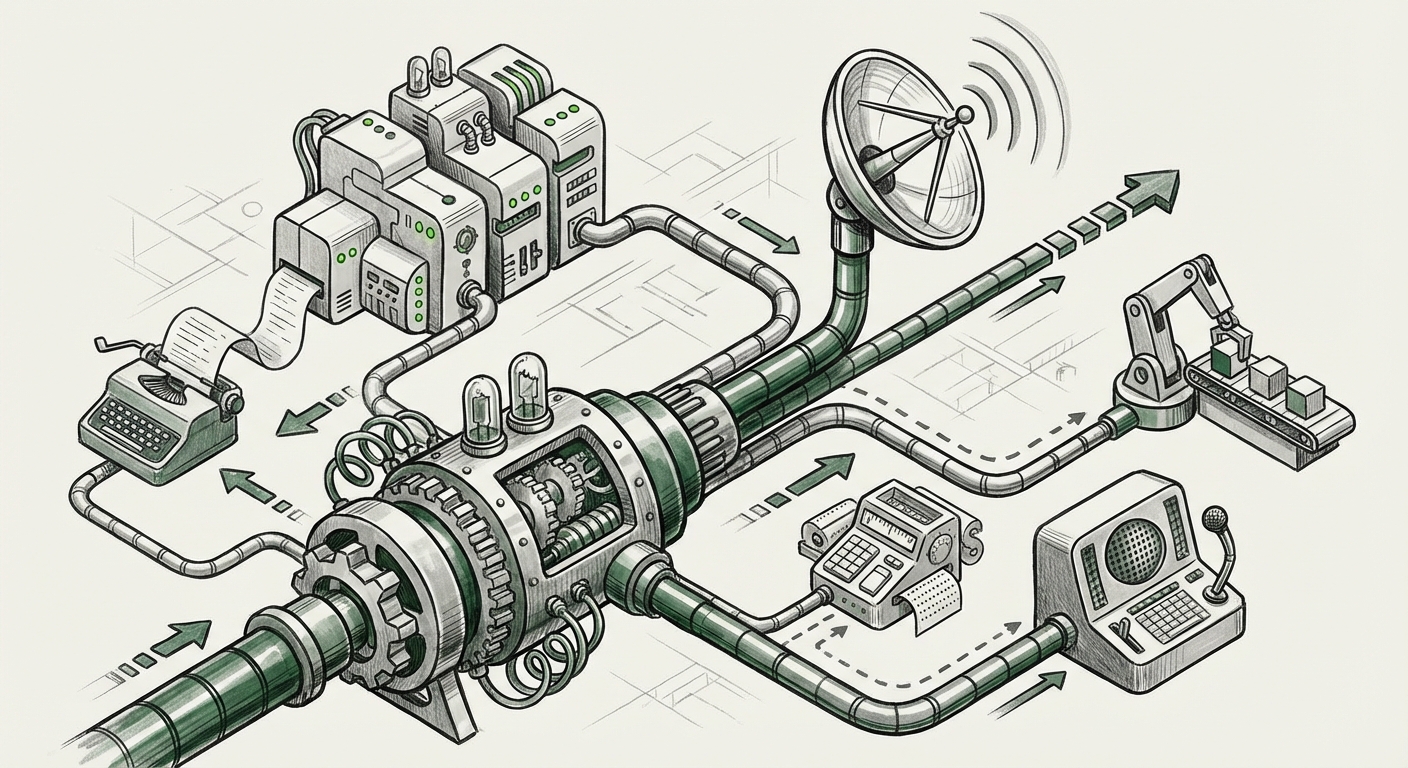
A good VAD system catches all of that and stops it from flowing downstream into the parts of an AI system that are expensive, slow, or easily confused. Think of it as a bouncer at the door of a voice pipeline. Only real speech gets in.
How Voice Activity Detection Actually Works
VAD is not a single algorithm. It is a pipeline, a chain of steps that turns raw sound waves into a simple yes-or-no decision, repeated many times per second.
Step 1: Capture and Chop
Audio arrives as a continuous stream of samples. The system slices that stream into tiny frames, typically just a few milliseconds long. Working frame by frame is what makes real-time decisions possible. A system doesn't wait for a whole sentence; it judges small windows of sound as they fly past.
Step 2: Pull Out Features
Raw audio samples are not very informative on their own. So the system extracts features that describe the character of the sound. A few classic ones:
- Energy (volume): Speech is usually louder than background noise. This is the simplest and fastest signal.
- Zero-crossing rate: How often the waveform flips above and below zero. Noisy, hissy sounds cross frequently; voiced speech tends to cross less often.
- Spectral shape: Speech concentrates energy in certain frequency bands and shifts over time as the mouth and vocal tract move. Noise tends to be flatter and steadier.
- Periodicity and pitch: Voiced sounds like vowels have a repeating structure. Fans and traffic generally don't.
Step 3: Decide
Those features feed into a decision rule. Early systems used simple thresholds: if energy is above X and the crossing rate is below Y, call it speech. Those rules are fast and cheap, but they fall apart in noisy places, a loud air conditioner can look a lot like a voice if all you're measuring is volume.
Modern systems increasingly use machine learning models trained on thousands of hours of labeled audio. These models learn the statistical fingerprints of speech versus everything else, and they hold up much better in real-world conditions, a car, a factory floor, a busy street. Neural network–based detectors can separate a human voice from background music or a nearby conversation in ways threshold rules never could.
Step 4: Smooth the Edges
Frame-by-frame decisions are jumpy. Speech has pauses; people breathe mid-sentence. So the system applies smoothing logic, often called hangover, that keeps the "speech" state active for a short window after the last detected speech frame. Without this, a system would chop words apart at every tiny gap and produce garbled results.
The output is a clean, continuous signal: speech started here, speech ended there.
Why VAD Suddenly Matters So Much
Voice activity detection has existed for decades in telecommunications. What's changed is the context around it. Voice is no longer just a phone-call technology, it is becoming a primary interface for AI assistants, meeting tools, transcription services, and autonomous agents that listen and respond in real time.
In that world, VAD does far more than filter noise. It controls three things that decide whether a voice product feels magical or maddening:
1. Latency, How Fast the AI Responds
If an AI assistant can't tell when you've finished speaking, it either interrupts you or sits in awkward silence. VAD is what tells the system the user is done, respond now. Getting that moment right is the difference between a conversation that flows and one that feels like talking to a walkie-talkie.
There's a related challenge called barge-in, letting a user interrupt the AI mid-sentence. Handling that gracefully requires VAD to run continuously while the system is talking and to distinguish the user's voice from the AI's own audio output. Fail at this and users feel trapped.
2. Cost, What You Pay For
Speech recognition and large language models are priced by the amount of audio and text processed. Silence and background noise cost money and produce nothing. By trimming non-speech before it reaches the expensive parts of the stack, VAD can meaningfully reduce compute and API spend. For a company running millions of minutes of audio, this is not a rounding error.
3. Accuracy, Whether the Output Is Any Good
Transcription models degrade when fed long stretches of noise and silence. They hallucinate words, drift, and lose punctuation. Clean input from a good VAD gives downstream models a much better chance of producing accurate, well-structured output.
Where Voice Activity Detection Shows Up
The technology is already woven through daily life:
- Contact centers: Routing calls, detecting when a caller stops speaking, suppressing hold-music and silence from recordings, and measuring talk-time ratios for coaching.
- Virtual meetings: Deciding which participant is speaking, driving automatic captions, and cutting silence out of recordings.
- Voice assistants and smart devices: Gatekeeping what gets sent to the cloud, and, in privacy-focused designs, keeping most audio on the device.
- Dictation and note-taking tools: Preventing stray sounds from becoming phantom words in your document.
- Hearing aids and audio devices: Enhancing speech and suppressing noise in real time.
- Robotics and vehicles: Recognizing when a human is addressing the machine rather than talking to a passenger.
- Healthcare and accessibility: Monitoring speech patterns and powering voice control for people with limited mobility.
The Hard Problems Nobody Talks About
VAD sounds simple until you deploy it. The failure modes are where products quietly break:
- Noise that resembles speech: Music with vocals, TV audio, or a nearby conversation can fool a detector into thinking it's the primary speaker.
- Accents, dialects, and quiet speakers: A detector tuned on one population can under-detect others, which creates a fairness problem, not just a technical one.
- Distance from the microphone: Far-field audio fades and reverberates, making speech look more like noise.
- Non-speech human sounds: Coughs, laughs, and "mm-hmm" acknowledgments sit in a gray zone.
- Trade-offs at the edges: Tuning for sensitivity catches every whisper but lets noise through. Tuning for strictness chops words and drops quiet users.
These trade-offs are business decisions disguised as technical settings. They determine which customers your product serves well.
What This Means for the Future of AI
Voice activity detection is a leading indicator. Its rising importance tells us several things about where AI is going.
The interface is becoming conversational, and turn-taking is the bottleneck
The biggest unsolved problem in voice AI isn't comprehension. Modern models understand speech remarkably well. The problem is rhythm: knowing when to speak, when to listen, and when to stop. VAD is the foundation of that rhythm. As voice agents move from novelty to infrastructure, the quality of turn-taking will separate good products from great ones.
Always-on AI makes cheap, local detection essential
Wearables, earbuds, home devices, and ambient assistants are designed to listen continuously. Streaming all that audio to a cloud is expensive, power-hungry, and a privacy minefield. The emerging pattern is a small, efficient VAD running on the device that acts as a gate, most audio never leaves the hardware, and only genuine speech triggers further processing. Detection quality becomes the first line of privacy defense.
Model efficiency is becoming a competitive advantage
In a world where agents run constantly, every millisecond of compute counts. Lightweight detection models trade a little accuracy for big savings in battery and cost. Expect more innovation focused on doing more with less, not just chasing benchmark scores.
Multimodal systems will need multimodal gating
As AI systems ingest voice, video, and sensor data together, deciding what's worth processing becomes a cross-signal problem. Is that a person speaking, or a television? Is the user addressing the device, or a colleague? The next generation of detection will combine audio with visual cues and context, and it will borrow heavily from the foundations being built today.
Actionable Guidance for Businesses
If your product touches voice, or might soon, here's where to start.
- Measure the gate, not just the model. Most voice teams benchmark speech recognition and skip detection. Track false positives and false negatives in real user conditions, those numbers explain a surprising share of complaints.
- Test in the environments your users actually inhabit. A car, a warehouse, and a home office are three different problems. Build a test set that reflects your worst realistic case.
- Run detection on the edge where possible. It cuts cost, improves responsiveness, and strengthens your privacy story.
- Audit for fairness. Check detection accuracy across accents, languages, age groups, and speaking styles. Under-detection is a hidden form of exclusion.
- Treat responsiveness as a product feature. Tune end-of-speech timing to your use case. Fast feels snappy but risks interrupting; slow feels polite but drags.
- Plan for barge-in from day one. It's much harder to add later than to design in.
The Bottom Line
Voice activity detection is the unglamorous, invisible work that makes voice AI feel human. It decides when the machine listens, when it thinks, and when it speaks. As AI systems shift from answering questions to holding conversations, from the cloud to the earbud, and from single-sense to multimodal, that quiet gatekeeping role only grows.
The companies that win the voice era may not be the ones with the biggest models. They may be the ones that mastered the smallest decisions, starting with the very first one: is anyone actually talking?