AI in October 2026: What a Friday Pause Reveals About Where Enterprise AI Is Heading
Friday, October 16, 2026. If you work anywhere near technology, Friday is the day the noise drops and the signal shows up. Demos are done for the week. Slack channels go quiet. The people who actually build and buy AI systems finally have a few hours to look at what they shipped and ask the only question that matters: is this thing working, and is it worth what we're paying for it?
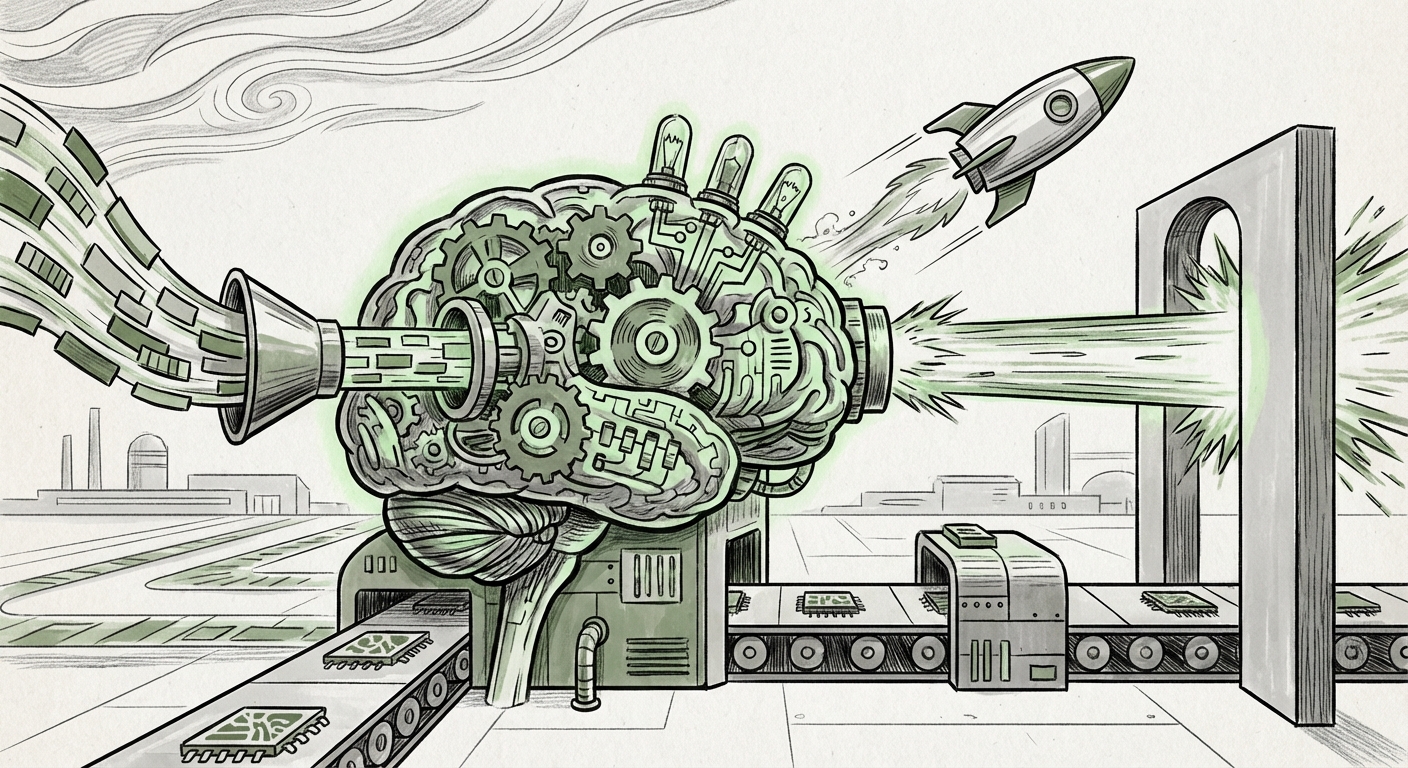
That question is the story right now. Not a single product launch, not a benchmark score, not a funding round. The story is that the AI conversation has quietly moved from "what can it do?" to "can we trust it, afford it, and run it every single day?" That shift sounds boring. It is also the most important thing happening in the field, because it is the moment a new technology stops being a spectacle and starts being infrastructure.
Here is what that transition looks like, what it means for the next twelve months, and what your team should do about it before Monday.
The Agent Hype Is Settling Into Agent Plumbing
For a couple of years now, the promise has been the same: AI that doesn't just answer questions but actually does things, books the meeting, files the ticket, updates the record, chases the invoice. Agents. Everyone built a slide about them.
The interesting development is what happens after the slide. Once you put an agent in front of a real business process, you discover the hard parts are not intelligence at all. They are plumbing problems:
- Permissions. The agent needs to touch systems that were never designed to be touched by something that isn't a human with a login.
- Failures. A human who breaks a process knows they broke it. An agent that breaks a process often does so confidently and silently.
- Handoffs. Real work bounces between people and software. Agents that can't hand off cleanly create more work than they remove.
- Auditability. When something goes wrong six weeks later, someone has to be able to reconstruct exactly what happened and why.
None of that is glamorous. All of it is the difference between a demo that makes a conference audience clap and a system that survives contact with a real quarter. The organizations pulling ahead right now are not the ones with the smartest agents. They are the ones who built the boring scaffolding, logging, guardrails, escalation paths, human checkpoints, before they turned anything loose.
The Cost Conversation Has Changed Shape
There was a phase where AI budgets were treated like research grants: spend it, see what happens, report back with something interesting. That phase is ending. AI is now a line item sitting next to payroll and cloud infrastructure, and it is being scrutinized the way those are scrutinized.
This is healthy, and it is forcing three changes in how teams operate.
1. Right-sizing the model to the task
The default instinct used to be "use the biggest, most capable model available." That instinct is being replaced by a more mature question: what is the cheapest, fastest system that reliably clears the bar for this specific job? A great many production tasks do not need frontier-level reasoning. They need consistency, low latency, and a predictable bill. Routing simple work to smaller systems and reserving heavyweight models for genuinely hard problems is becoming standard engineering practice rather than a cost-cutting afterthought.
2. Measuring value, not activity
Counting "AI-assisted actions" was always a vanity metric. The number that survives a budget review is different: hours returned to the team, tickets resolved without escalation, cycle time reduced. Teams that cannot draw a straight line from spend to a business outcome are the ones getting their pilots frozen. Teams that can are getting expansions approved.
3. Designing for graceful degradation
When a model call is expensive or slow, what does your product do? The mature answer is that it has a fallback, a cached response, a smaller model, a rule-based path, or simply a clear message to the user. Systems that assume infinite, instant, flawless AI are fragile systems. Systems that plan for the bad day are the ones that stay online.
Trust Is Becoming a Product Feature, Not a Compliance Checkbox
The most durable trend in the field right now is that trust has moved out of the legal department and into the product spec. Users have gotten good at spotting AI. They can feel when a system is guessing. And once they feel it, they stop using it, which is the only failure mode that ultimately matters.
That is pushing several practices into the mainstream:
- Showing the seams. Clear signals about when output is generated, what it was based on, and how confident it is. Not as a disclaimer buried in a footer, as a core part of the interface.
- Human-in-the-loop by default. Not for everything, but for anything irreversible: money moving, records being deleted, commitments being made to customers.
- Boring, testable evaluation. Real-world test sets drawn from actual usage, run on a schedule, with results that go to someone who can act on them. Evaluation has become the quality assurance of the AI era, and teams without it are flying blind.
- Documentation that a lawyer and an engineer can both read. What the system does, what it doesn't do, where it fails, and who is accountable when it does.
The practical implication is simple and slightly uncomfortable: the safest AI products will win, not just the smartest ones. A slightly less capable system that people trust enough to use every day beats a brilliant one they abandon after a week.
Jobs Are Being Rewritten, Not Simply Removed
The workforce story keeps getting told as a binary, replacement or no replacement. Reality is messier and more interesting. What is actually happening is that specific tasks inside jobs are being automated, and the jobs themselves are being redefined around whatever is left.
Drafting a first version of a document? Increasingly automated. Deciding which version is right, spotting the subtle error, and owning the consequences? Still human, and increasingly the whole point of the role. The people thriving in this shift are the ones who have learned to be excellent editors and reviewers of machine output, a skill that turns out to be harder and more valuable than it sounds.
For managers, this suggests a concrete move: stop asking "which roles can we cut?" and start asking "which tasks in each role are now cheap, and what should the person do with the time that frees up?" The second question produces better answers, better morale, and, not incidentally, better systems, because the humans closest to the work are the ones who know where the AI will get it wrong.
What to Do Before Monday
Analysis is cheap. Here is the actionable part, five things worth doing this week, regardless of where your organization sits on the adoption curve.
1. Pick one workflow and instrument it
Not five. One. Choose a process with a clear start, clear end, and a measurable outcome. Add logging. Establish a baseline before you add AI, otherwise you will never know whether it helped.
2. Write down the failure modes
Before deployment, list the ten worst things the system could plausibly do. For each one, name the guardrail and the person who owns the response. If you cannot fill in the second column, you are not ready.
3. Set a cost ceiling per task
Know what a successful completion is allowed to cost, and build alerting around it. Surprise bills are the fastest way to lose executive sponsorship.
4. Build an evaluation set from real usage
Fifty real examples from real users, with known-good answers, will teach you more than any published benchmark. Refresh it monthly. It is the single highest-leverage asset most teams are missing.
5. Train the reviewers, not just the users
The quality of your AI output is capped by the quality of your human review. Investing in review skills �� skepticism, domain judgment, clear correction, pays back faster than most model upgrades.
What This Means for the Future of AI
Zoom out, and the direction is clear. The next phase of AI is not going to be defined by dramatic capability leaps alone. It will be defined by absorption, how thoroughly, safely, and economically organizations can fold these systems into the work they already do.
That phase favors a different kind of winner. Fewer headline chasers, more operators. Teams that treat AI like electricity rather than magic: metered, monitored, redundant, and boring in the best possible way. The companies that get this right will not have the flashiest demos. They will have the lowest cost per outcome, the fewest incidents, and the highest share of employees who actually use the tools because the tools actually help.
And the uncomfortable part? There is no leapfrogging this. The plumbing work has to be done. The evaluation sets have to be built. The failure modes have to be mapped. Every organization that tries to skip straight to the impressive part will end up doing the boring part later, under worse conditions, with a budget reviewer watching.
Fridays are good for this kind of reflection. The week's noise is gone, and what's left is the question of whether the thing you built is real. The organizations answering that question honestly are the ones who will still be shipping in 2028.