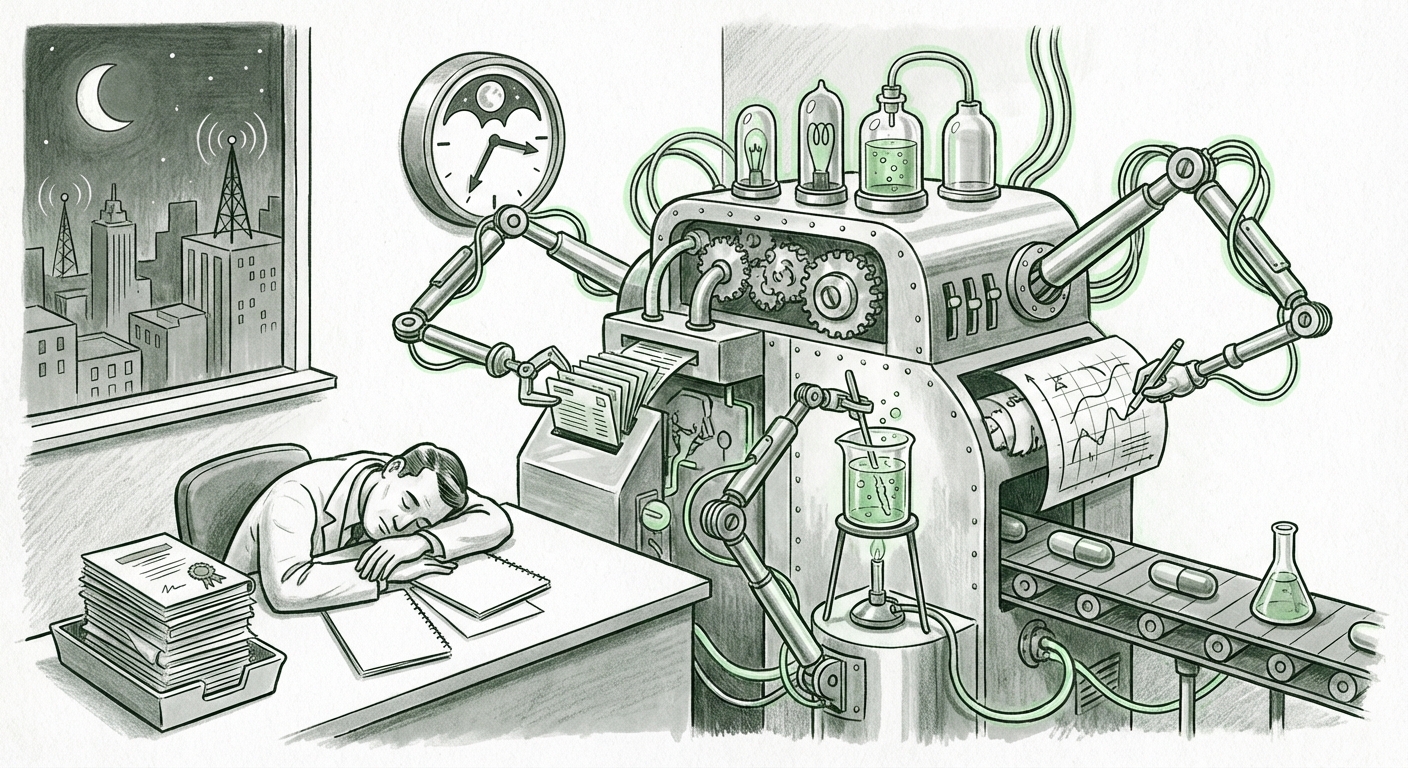
Fearing AI Disruption, White-Collar Workers Are Quitting Their Jobs: What It Means for the Future of AI
Something unusual is happening in offices right now. The people most likely to be replaced by artificial intelligence are not waiting around to find out. They are leaving.
As of November 2026, a clear pattern has taken hold: white-collar professionals, the analysts, writers, paralegals, marketers, and back-office managers whose work sits squarely in the crosshairs of generative AI, are quitting their jobs at rising rates. Not because they found better offers. Not because they are retiring. But because they are afraid of what AI is about to do to their roles, and they would rather take control of their exit than wait for a layoff notice.
This is a striking development, and it tells us far more about the future of AI than any product launch or benchmark score. It tells us that the workforce has already made up its mind about where this is heading. The question now is whether businesses and policymakers are ready for the consequences.
The Fear Is Real, and It's Rational
For years, the conversation about AI and jobs followed a predictable script. Experts would say automation would change jobs, not eliminate them. Companies would say they were "augmenting" workers, not replacing them. And employees would nod politely while quietly worrying.
That polite nodding phase is over.
What's driving the departures is not panic, but pattern recognition. White-collar workers have watched AI tools go from novelty to necessity in under three years. They have seen draft memos written in seconds, contracts reviewed in minutes, and customer emails answered without a human ever touching them. Many of them are the ones operating those tools, which means they know exactly where the limits are, and exactly how fast those limits are moving.
The result is a kind of preemptive retreat. Rather than staying in a role that feels like it is shrinking under their feet, workers are choosing to retrain, switch industries, start businesses, or simply step off the corporate ladder entirely. It is a quiet vote of no confidence in the idea that their current jobs will still exist in a form they recognize five years from now.
Why This Is Different From Past Automation Waves
Previous waves of automation hit blue-collar work first, manufacturing, logistics, data entry. The disruption was real, but it was geographically and socially contained. White-collar workers could watch from a safe distance.
AI has flipped that. The technology arrived first for the people who write the memos, crunch the numbers, and draft the strategies. The disruption started at the top of the ladder, not the bottom. That is a historically unusual dynamic, and it explains why the psychological reaction has been so intense.
What This Means for the Future of AI
1. Adoption Will Get Messier Before It Gets Cleaner
Companies deploying AI have mostly measured success in cost savings and output speed. But this trend reveals a hidden cost that rarely shows up on a spreadsheet: institutional knowledge walking out the door.
When experienced workers quit because they feel threatened, they take with them years of context, how the business actually runs, which customers need special handling, where the informal bottlenecks are. AI systems are excellent at processing what is documented. They are far weaker at inheriting what was never written down.
Businesses that treat AI rollout as purely a technology project will find themselves with faster tools and less wisdom to point them at. The smarter play is to make employees genuine partners in the transition, involving them in tool design, paying for their retraining, and being honest about which roles are changing and how.
2. Talent Will Flow Toward AI-Fluent Roles
The departures are not a net loss to the economy. They are a reallocation.
Workers leaving traditional white-collar roles are disproportionately moving toward positions where they supervise, evaluate, or build with AI rather than compete against it. This is exactly the kind of labor market adjustment that economists hope for, but it is happening fast enough to create real friction along the way.
The implication for AI's future is clear: the bottleneck on AI adoption is shifting from technology to people. Companies can buy the software. What they cannot buy quickly is a workforce that trusts the tools and knows how to use them well. That gap will define which organizations pull ahead over the next few years.
3. Expect More Pressure on Employers to Be Transparent
When workers start leaving preemptively, it signals a breakdown in trust. Employees no longer believe vague corporate assurances that "AI will enhance your role." They want specifics.
That pressure will push companies toward clearer communication about AI plans, not just because it is ethical, but because retention depends on it. Firms that hide their automation roadmaps will lose their best people first, because the most capable employees always have the most options.
Practical Implications for Businesses
If you run a team, this trend should change how you think about AI adoption. A few concrete steps matter more than any grand strategy:
- Say what you actually plan to do. Vague reassurance breeds anxiety. A clear roadmap, even one that includes hard truths, builds more loyalty than silence.
- Fund retraining before you need it. The workers most at risk are often the ones with the deepest institutional knowledge. Give them a path forward inside the company.
- Measure what leaves, not just what you save. Track attrition and expertise loss alongside efficiency gains. The full cost of AI adoption includes the people who walked out the door.
- Make AI use collaborative, not top-down. Employees who help shape how AI enters their workflow are far less likely to flee from it.
Practical Implications for Society
The bigger picture is harder. If white-collar workers are self-selecting out of their careers out of fear, the safety net has to keep up.
Retraining programs, portable benefits, and income support during career transitions are no longer abstract policy debates, they are the practical infrastructure of an AI economy. The alternative is a slow-burning crisis in which skilled workers exit the labor force not because there is no work, but because the transition is too risky to attempt.
There is also a cultural dimension. For generations, white-collar work was sold as the safe path, study hard, get the degree, climb the ladder. AI has undermined that promise faster than any institution has been able to respond. Rebuilding confidence will require more than slogans about "the future of work." It will require visible proof that people who adapt can land on their feet.
The Optimistic Case
It would be easy to read this trend as pure doom. But there is a more hopeful interpretation, and it may well be the correct one.
Workers quitting out of fear are, in a strange way, taking agency. They are not waiting to be made obsolete, they are repositioning themselves ahead of the curve. Historically, the people who move early during technological shifts tend to do better than the ones who stay put and hope. If that pattern holds, this wave of departures could produce a generation of workers who are far more skilled at working alongside AI than the ones who stayed in place.
The real risk is not that workers leave. It is that they leave without support, and that the businesses they leave behind mistake a quiet exodus for a smooth transition.
The Bottom Line
The fact that white-collar workers are quitting over AI fears tells us the technology has crossed a psychological threshold. It is no longer a promise about the future. It is a force reshaping decisions people are making today.
For leaders, the message is simple: AI adoption is a human problem as much as a technical one. The organizations that win will be the ones that move fast on the technology and take their people with them. The ones that don't will find that the hardest part of automation was never the software, it was the trust they spent years building and lost in a single, poorly explained rollout.