ChatGPT's Second Mode: Why Most People Are Still Using Only a Fraction of What AI Can Do
There is a version of ChatGPT that most people have never opened. It is not hidden behind a paywall or a secret menu. It sits one or two clicks away from the chat box everyone already knows. And yet, for the vast majority of users, it may as well not exist.
That is the real story here, not a feature leak, not a benchmark, not a new model. It is a usage gap. The distance between what AI tools can already do and what people actually ask them to do has become one of the most expensive inefficiencies in modern knowledge work. And it is quietly shaping how the next generation of AI products will be built.
The Second Mode Is a Symptom, Not a Secret
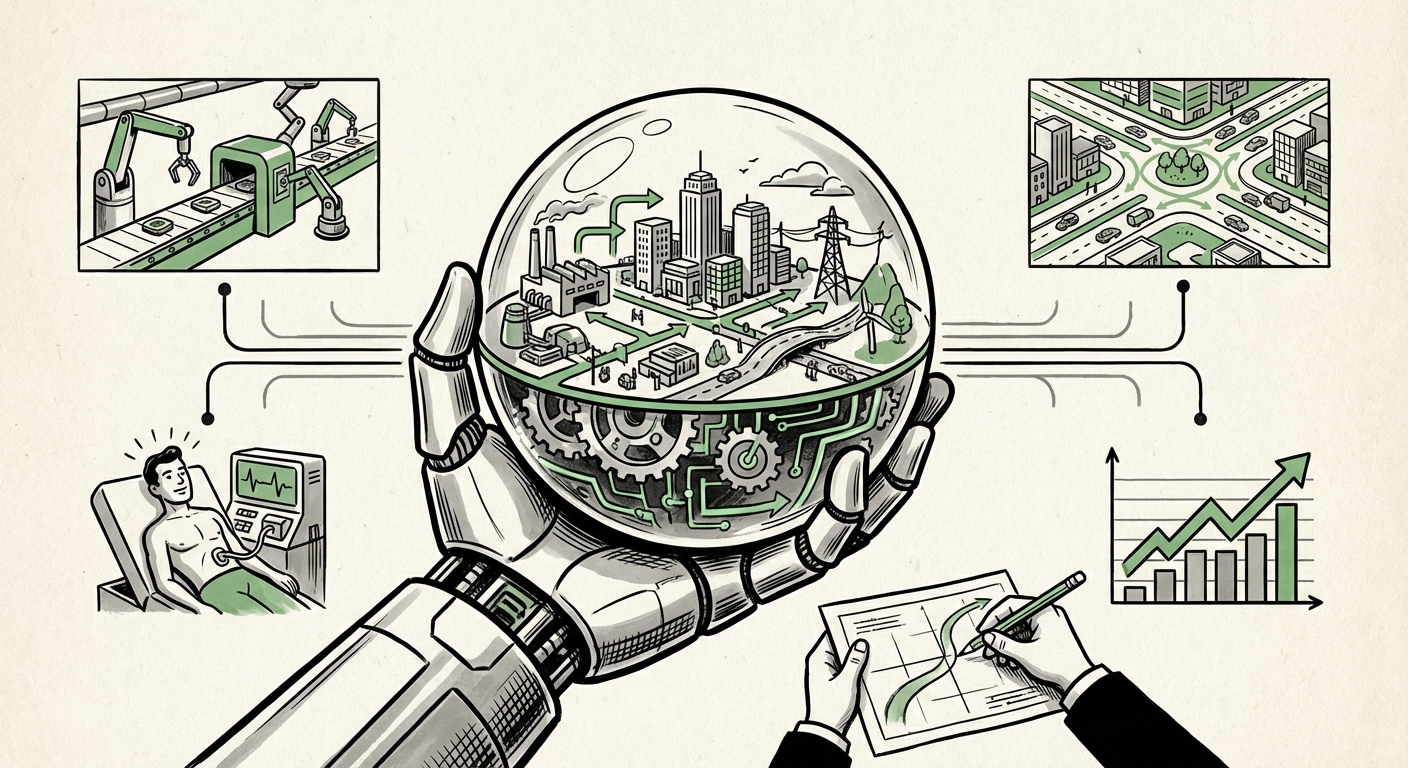
When people talk about a "second mode" in a tool like ChatGPT, they are usually describing the same pattern: a deeper, more capable way of working that sits behind the default conversation. Instead of firing off a quick question and reading a quick answer, the second mode involves giving the system a goal, context, tools, and time, and letting it work through steps rather than sentences.
You can think of it like the difference between texting a colleague a question and giving that same colleague a project brief. Same person. Very different output.
This pattern shows up across the whole industry right now, in several overlapping forms:
- Longer-running tasks. Work that unfolds over many steps instead of one reply.
- Tool use. The model reaching into files, data, or connected apps rather than only talking.
- Structured instructions. Persistent context that shapes every answer instead of being retyped each time.
- Verification loops. The system checking its own work, or being asked to, before handing it over.
None of these are exotic. All of them are available in some form today. The problem is that they require the user to know they exist and to change their habit. Most people do neither.
Why Almost Nobody Opens the Second Door
The reasons are boring, and that is exactly why they matter.
1. The default is good enough
A chat box that gives you a decent paragraph in three seconds is a genuinely great product. It solves the problem in front of you. There is no obvious signal that a better way exists, because the first way already works.
2. People have no mental model of the ceiling
If you believe AI is "a smart search engine that writes," you will never ask it to plan a project, audit a spreadsheet, or run a multi-step research task. You cannot reach for a capability you cannot imagine.
3. Interfaces hide their own power
Good software is quiet. The more capable a system becomes, the more the interface tries to keep things simple. That is the right design choice for adoption, but it means capability grows faster than user awareness. The gap widens even when the product improves.
4. Nobody was trained on it
Most organizations rolled out access and stopped there. Access is not adoption. Without examples, playbooks, and permission to experiment, people default to the one behavior they already know.
The Value Gap Is Where the Money Is
Here is the uncomfortable implication: two companies can pay for the same AI tool and get wildly different returns, not because of the model, but because of the mode their people use.
One team uses AI to rewrite emails. The other uses it to draft the analysis, check the numbers, produce the deck, and flag what looks wrong. Same subscription. Different century.
This is the part business leaders consistently underestimate. The competitive advantage in AI is shifting away from which tool you buy and toward how deeply your people operate inside it. That is a training and culture problem, not a procurement problem, which is bad news, because procurement is much easier.
The skill that matters now: delegation
The second mode rewards a very specific skill, and it is not prompt engineering. It is delegation, the ability to describe a goal clearly, supply the right context, define what "done" looks like, and know when to check the work.
That is the same skill that makes someone good at managing a junior colleague. Which means the people who thrive with advanced AI are often not the most technical ones. They are the ones who already know how to hand off work well.
What This Means for Businesses Right Now
The gap between default and deep usage is a short-term opportunity with a short shelf life. Once the second mode becomes the default experience, the advantage disappears. A few practical moves:
- Audit actual usage, not licenses. Count how many people use advanced workflows, not how many have a login. The number will be uncomfortable.
- Build a small library of real examples. Ten documented workflows from your own business beat a hundred generic tutorials. People copy what feels familiar.
- Create internal champions, not mandates. Top-down AI mandates produce resentment and theater. Peer examples produce imitation.
- Redesign one process, not all of them. Pick a workflow with real volume and real pain, and rebuild it around deeper AI use. Then measure it honestly.
- Set rules before you scale. Decide now who reviews AI output, what data is off-limits, and who is accountable when something goes wrong.
The Risks Nobody Wants to Discuss
The deeper mode is more powerful, and power that runs on its own is power that can fail on its own. Three risks deserve attention:
The confidence trap
A multi-step output looks more finished than a single-paragraph answer. Polish is not proof. Teams that skip verification because the result looks professional are walking into a predictable failure.
The accountability gap
When a person writes a document, responsibility is obvious. When a system drafts, checks, and finalizes it, responsibility gets blurry. Organizations need a clear answer to "who signs off?" before that question becomes a crisis.
The skills atrophy problem
If junior staff never do the first draft, they never learn to judge a good one. The ability to evaluate AI output depends on having once produced that kind of work yourself. Deep usage without deliberate skill-building creates teams that can approve work but not create it.
Seven Things to Do This Week
- Try one workflow in the deeper mode. Give the system a real goal, real context, and a real deadline, not a one-line question.
- Write down what "good" looks like. Specific criteria make output dramatically more useful than vague praise.
- Ask it to show its work. Request the reasoning, the assumptions, or the sources. Then check them.
- Test the failure edge. Feed it something you know is wrong. See whether it catches it.
- Save your best prompts as templates. What works once should not be retyped.
- Share one win with your team. Adoption spreads through imitation, not instruction.
- Book a review. Deep workflows need human sign-off, build that in from day one, not after an incident.
The Future: The Mode Disappears, the Expectation Stays
Here is the prediction worth writing down. The "second mode" will not stay a second mode for long. The industry's direction is obvious: deeper capability gets folded into the default experience until users never think about modes at all.
That changes the baseline for everyone. When the average user's tool quietly does multi-step work, the bar for "good enough" rises across every job function. The people who learned to delegate well will look prescient. The people who spent two years asking for email rewrites will look like they were on vacation.
There is a second-order effect too. As AI handles more execution, the scarce human skills become judgment, framing, and verification, deciding what problem to solve, describing it precisely, and knowing whether the answer is any good. Those are not technical skills. They are thinking skills, and they are not evenly distributed.
The most likely long-term outcome is not that AI replaces people, but that it widens the gap between people who can direct it and people who can only react to it. The second mode is where that gap gets built, one ignored click at a time.
The Takeaway
ChatGPT's hidden second mode is not a secret feature. It is a mirror held up to how we adopt technology: we learn the first thing that works and stop exploring. The tools will keep getting deeper. The question is whether the people using them will follow.
For businesses, the message is blunt. Your AI investment is not measured by what you bought. It is measured by how far past the chat box your people are willing to go, and whether you have given them a reason, an example, and a rulebook to get there.