Decisions API Explained: Why Real-Time Decision Layers Are the Next Big Leap for Responsive AI Apps
Speed is the feature nobody puts on a roadmap, yet everybody notices. A page that loads in a blink feels trustworthy. A checkout that hesitates for two seconds feels broken. And as apps get smarter, packed with AI models that recommend, rank, route, and personalize, the gap between "smart" and "fast" has become the hardest problem in product engineering.
That is the problem at the center of the Decisions API, announced in October 2026 with a simple, pointed promise: build more responsive apps. It is a small phrase with big implications. It signals a shift away from stuffing intelligence into the client, and toward a dedicated decision layer that answers a single question, quickly and consistently: what should happen next for this user, right now?
Here is what that shift means, why it matters beyond engineering teams, and how businesses should be preparing for it.
What a Decisions API Actually Changes
Most apps today make decisions in scattered places. A rules engine lives in one service. A recommendation model lives in another. A pricing tweak is hardcoded in the front end. A fraud check sits in a queue somewhere downstream. Each piece works, but nobody owns the full picture, and every hop between them adds milliseconds that users feel.
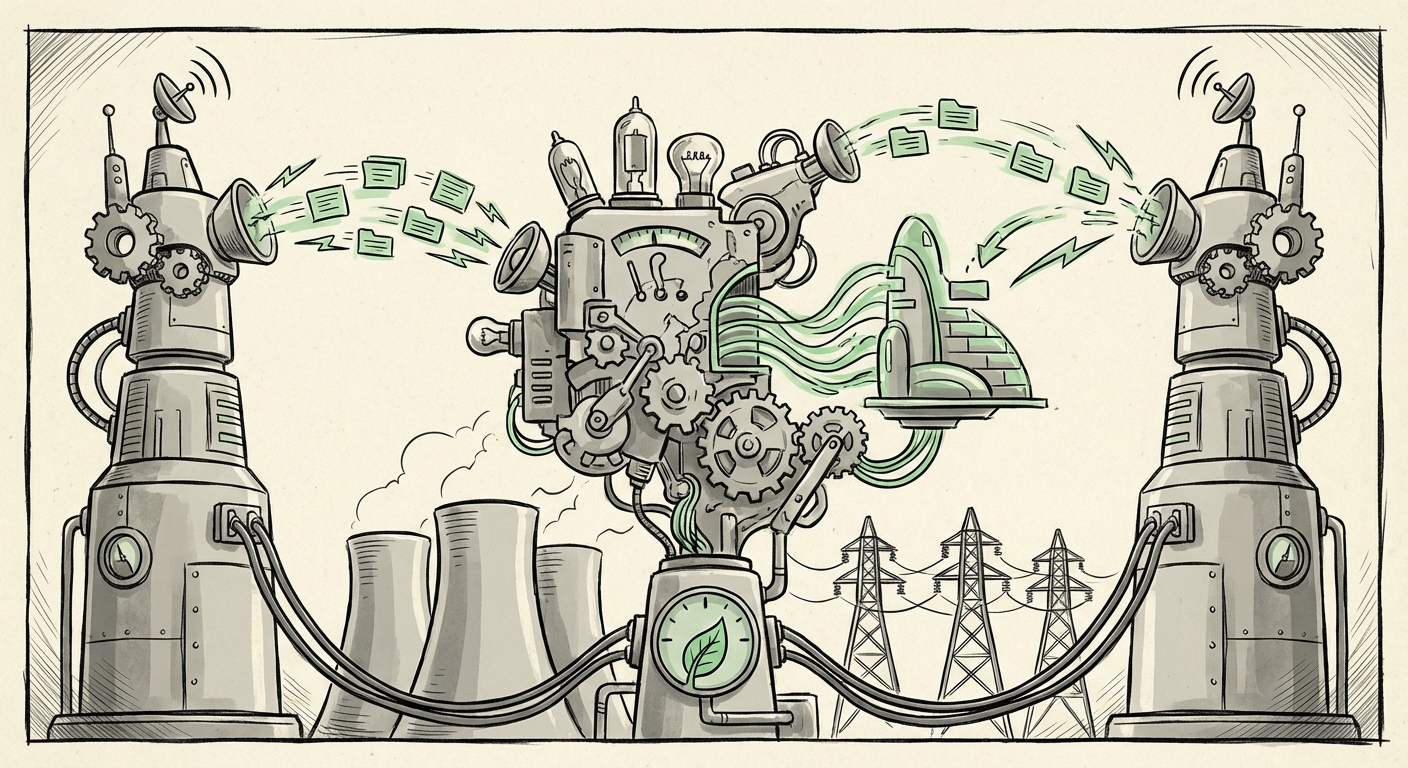
A Decisions API consolidates that mess behind one interface. Instead of the app gathering ten signals, calling five services, and merging the answers itself, it sends context to a single endpoint and gets back a decision it can act on immediately. The heavy lifting, evaluation, ranking, policy checks, fallback logic, happens in one place, close to the data, tuned for speed.
The practical effect is that responsiveness stops being a matter of heroics. Teams no longer need to bolt intelligence onto the edges of an app and hope it stays fast. They can ask for a decision and trust that the answer arrives within a predictable time budget.
Why "Responsive" Is Both a Technical and a Business Problem
Latency is not just an engineering metric. It is a revenue metric wearing a lab coat.
- Attention is fragile. Users abandon flows when they feel a stall. Every extra beat of delay is a chance to lose them.
- Personalization is worthless if it arrives late. A perfectly targeted offer that appears after the user has moved on is just clutter.
- Trust is built in milliseconds. Fast, consistent behavior teaches users that the product knows what it is doing.
- Complexity compounds. The more AI features you add, the more places can slow down, unless decisions are centralized.
This is why the framing of the Decisions API matters. It is not selling a model. It is selling predictable behavior under load, the ability to make a smart call in the moment it is needed, at the speed the moment demands.
The Quiet Shift: From Static Rules to Live Decisioning
For years, "business logic" meant rules written in advance. If the cart total is over a threshold, show free shipping. If the account is new, require verification. Rules are easy to understand and easy to audit, but they are brittle. They cannot weigh twenty signals at once, and they cannot adapt when user behavior changes.
AI models solve the flexibility problem but create a new one: they are opaque, they drift, and they can be slow. The interesting middle ground, the space a Decisions API occupies, is live decisioning with guardrails built in. Rules define the boundaries. Models handle the nuance inside those boundaries. The API returns one clean answer instead of a debate between systems.
That combination is what makes real-time personalization, dynamic pricing, adaptive onboarding, and risk scoring practical at scale. Not because the models got smarter, but because the plumbing finally caught up.
What This Means for the Future of AI
Decisions become a product, not a feature
When decision-making is exposed as a single, well-defined interface, it becomes something a company can version, monitor, and improve deliberately. Teams can A/B test a policy change the way they test a button color. They can roll back a bad decision rule in minutes. They can measure decision quality as its own metric, separate from model accuracy.
Over time, expect the decision layer to become as standard as the database layer. Most companies will not build theirs from scratch. They will rent one, extend it, and compete on the quality of their policies rather than the cleverness of their infrastructure.
Guardrails move to the center
AI systems fail in ways that are hard to predict. A recommendation model can go strange after a data shift. A pricing model can produce a number nobody intended. A decision layer is a natural place to enforce limits: spend caps, fairness checks, escalation paths, human review triggers. Rather than trusting every model individually, you constrain the output of the whole system at the point where the decision is made.
This is arguably the most important long-term consequence. As AI takes on more autonomy, the ability to bound that autonomy becomes more valuable than the ability to increase it.
Agents need fast decisions too
The next wave of software involves agents that take actions on a user's behalf, booking, buying, scheduling, negotiating. Agents are decision-hungry. They need an answer at every step, and they need it fast enough that the whole loop feels fluid. A centralized decision service is the obvious backbone for that kind of work, because it gives agents a consistent, auditable source of truth instead of scattered guesses.
Practical Implications for Businesses
For product teams: responsiveness becomes a design constraint you can actually engineer against. You can set a latency budget for decisions and hold the system to it, rather than discovering slowness after launch.
For engineering leaders: the appeal is consolidation. Fewer bespoke integrations, fewer places where logic can drift out of sync, and one place to add caching, fallbacks, and observability. That is a meaningful reduction in long-term maintenance cost.
For data and AI teams: decision quality becomes measurable in business terms. Not "did the model score well on a test set," but "did the decisions it powered produce the outcome we wanted." That feedback loop is where real improvement happens.
For risk and compliance: a single decision point is far easier to explain to a regulator or an auditor than a chain of five services with unclear ownership. Centralization is a governance win disguised as an architecture choice.
How to Get Started Without Getting Burned
- Pick one high-friction flow first. Onboarding, checkout, or search are good candidates. Prove the pattern before spreading it everywhere.
- Set a hard latency budget. Decide what "responsive" means in milliseconds and design fallbacks for when the decision service is slow or unavailable.
- Always have a default. If no decision comes back, the app should still behave sensibly. Never let a smart feature become a single point of failure.
- Log every decision and its context. You cannot debug or audit what you did not record.
- Keep humans in the loop for high-stakes calls. Lending, medical, and employment decisions deserve review paths, not just fast endpoints.
- Watch for drift. Set alerts for when decision patterns shift in ways nobody planned.
The Risks Worth Naming
Centralizing decisions also centralizes failure. If the decision layer goes down, everything that depends on it goes with it. That argues for redundancy and graceful degradation from day one, not as an afterthought.
There is also a subtler risk: convenience creep. When it becomes easy to ask a system "what should we do here?", teams ask it more often, in places they never intended. Decisions that used to be transparent become automated by default. Companies need a deliberate policy about which decisions deserve machine speed and which deserve human judgment.
And finally, lock-in. A decision layer that holds your policies, your context logic, and your history is not trivial to replace. Choose with the assumption that you will want to leave someday.
The Bottom Line
The Decisions API is not a flashy release. There is no benchmark score to argue about. But it points at something genuinely important: the realization that AI's value is delivered in the moment of decision, and that moment has a speed limit.
Companies that treat decision-making as infrastructure, fast, observable, governed, and shared, will ship products that feel effortless. Companies that keep scattering logic across their stack will keep winning demos and losing users. The gap between those two outcomes is measured in milliseconds, and it is about to get much wider.