Forward-Deployed Engineer: Why This AI Role Is About to Explode (and How to Break In)
AI is moving fast. But there is a gap between a clever demo and a system that actually works inside a real business. That gap is creating a new kind of tech job: the forward-deployed engineer. And the launch of the first forward-deployed engineer club in New York is a clear signal that this role is no longer a niche experiment. It is becoming a career path.
The club’s arrival matters for three groups. For engineers, it points to a fast-growing job with high impact. For businesses, it highlights a talent pool that can make or break AI projects. For the wider AI industry, it shows that the future of AI is not just about bigger models. It is about better deployment.
What Is a Forward-Deployed Engineer?
A forward-deployed engineer is a hybrid role. It blends software engineering with customer-facing problem solving. Instead of staying in a central product team, this engineer works directly with customers or business units. They help design, build, and deploy technical solutions in the real world.
The role is not brand new. But it is gaining fresh attention because of AI. Many AI systems need customization, integration, and trust-building before they deliver value. A forward-deployed engineer sits at that intersection. They speak both “engineer” and “business.” They translate messy real-world needs into working code. They also translate technical limits back to decision-makers.
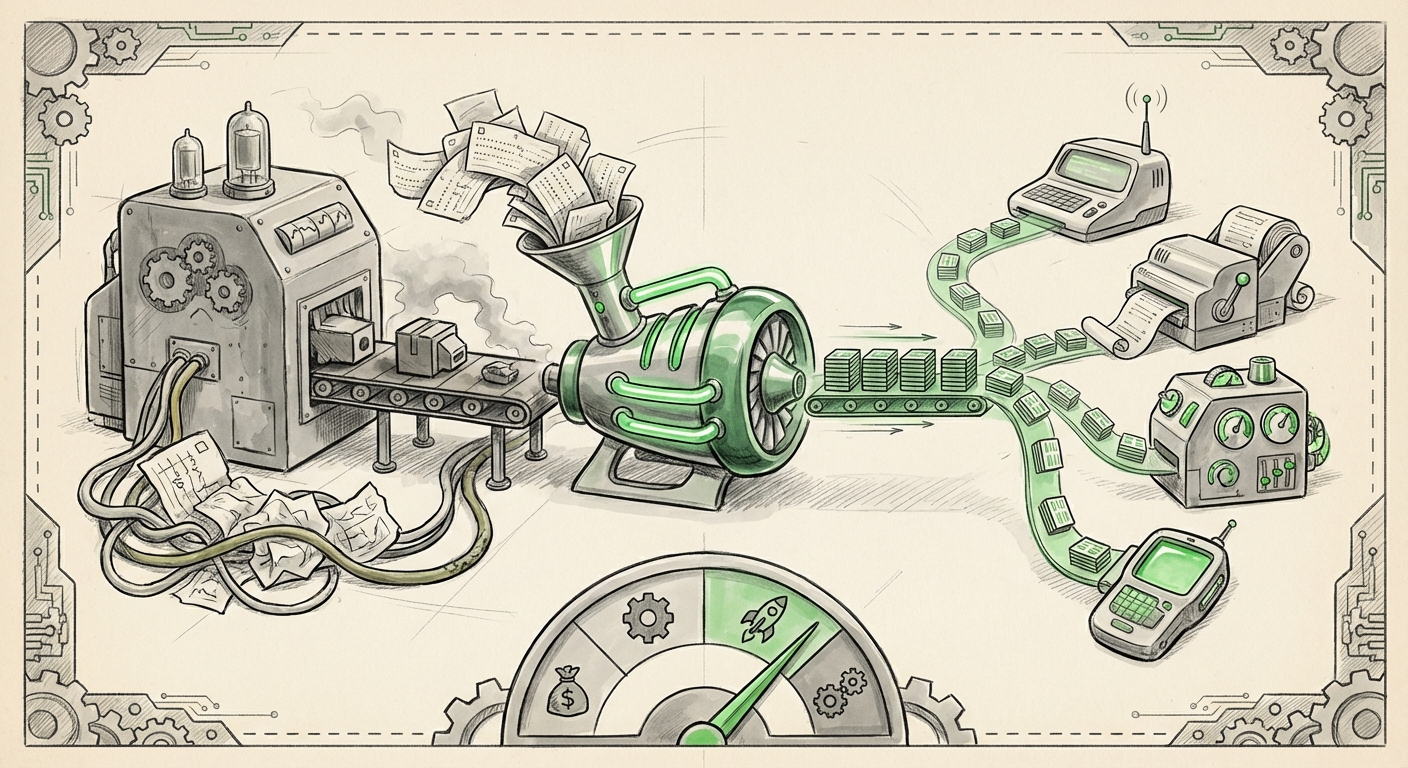
Think of it as the last mile of AI. A company may buy a powerful AI platform. But someone has to connect it to legacy data, tune it for a specific workflow, train users, and fix what breaks. That someone is often a forward-deployed engineer.
Why the Role Is Exploding Now
Three trends are driving demand.
1. AI has moved from “wow” to “how”
Early AI excitement focused on what models could do in a demo. Now the hard question is: how do we make this work in our actual business? That shift moves value from pure research to deployment. Forward-deployed engineers are deployment specialists.
2. Models are becoming easier to access
As AI capabilities become more widely available, the bottleneck moves to integration. The winning companies are not always the ones with the best model. They are the ones that can fit AI into real workflows. That requires people who understand both the technology and the customer’s world.
3. Trust is the real currency
Businesses do not buy AI in a vacuum. They need confidence. A forward-deployed engineer builds that confidence by being on the ground, listening, iterating, and showing results. In a market full of AI hype, trust is a competitive advantage.
What the First New York FDE Club Signals
The first forward-deployed engineer club in New York is more than a meetup. It is a sign that the role is maturing. When a job title starts to get its own community, it usually means three things are happening.
- Demand is outrunning supply. People need peer learning because formal training is scarce.
- A shared identity is forming. Practitioners want to compare notes, share best practices, and build a career ladder.
- Employers are taking notice. Clubs create a talent pipeline and a place to spot emerging leaders.
New York is a natural home for this. It is a global hub for finance, media, health care, and tech. Companies in those sectors are all trying to deploy AI into complex, regulated, and high-stakes environments. That is exactly where forward-deployed engineers shine.
The club also sends a message to people outside traditional tech hubs: this role is learnable. It does not require a PhD in machine learning. It requires a mix of engineering skill, curiosity, and customer empathy. That mix is rare, but it can be built.
How to Break Into the Forward-Deployed Engineer Role
Breaking in is not about having the perfect resume. It is about proving you can deliver in ambiguous, real-world settings. Here is a practical roadmap.
Build a hybrid skill set
You do not need to be the world’s best coder. But you need to be comfortable building. Focus on APIs, data integration, scripting, and cloud basics. At the same time, practice customer discovery. Learn to ask good questions, listen for pain points, and explain technical trade-offs in plain language.
Ship real projects
Forward-deployed work is judged by outcomes. Build small projects that solve a real problem. It could be an internal tool, a data pipeline, or a simple AI-powered workflow. Document what you built, why you built it, and what you learned. Public artifacts beat certificates.
Learn the deployment stack
Get hands-on with the tools that connect AI to the real world: data pipelines, evaluation methods, monitoring, and security basics. You do not need to master everything. But you should understand how a prototype becomes a reliable system.
Practice the “forward” part
The best forward-deployed engineers are great communicators. Join a club, present at a meetup, or write about your work. The new New York club is a model: find or start a community where you can learn from people doing the job. Peer feedback is faster than solo study.
Target companies that deploy AI
Look for roles with titles like solutions engineer, deployment engineer, technical account manager, or AI engineer. These are often on-ramps to forward-deployed work. In interviews, emphasize your ability to handle ambiguity, work with customers, and deliver under real constraints.
Show business empathy
Companies do not hire forward-deployed engineers to write code in isolation. They hire them to create value. Learn how to tie technical work to business metrics: time saved, revenue gained, risk reduced. That mindset will set you apart.
What This Means for Businesses
For business leaders, the rise of the forward-deployed engineer is a wake-up call. AI projects fail for many reasons, but a common one is a gap between the technology team and the business. Forward-deployed engineers close that gap.
Here is what to do with this insight.
- Hire for deployment, not just research. If your AI strategy is stuck in pilot mode, you may need more people who can ship.
- Create a career path. Forward-deployed work is demanding. Give people clear levels, support, and recognition so they stay.
- Measure outcomes, not activity. Track adoption, time-to-value, and customer satisfaction. That is the true scorecard for deployment roles.
- Support communities. Clubs and meetups are low-cost ways to build talent and share knowledge. The New York club is a template.
The companies that win with AI will not just have the best models. They will have the best deployment engine. Forward-deployed engineers are a core part of that engine.
What This Means for the Future of AI
The forward-deployed engineer is a bridge to the next phase of AI. In the future, AI will not be a product you buy and switch on. It will be a system you shape, integrate, and trust. That work is human-heavy.
As AI agents become more common, the role may evolve. Forward-deployed engineers may supervise fleets of AI agents, design guardrails, and handle exceptions. They may become the human face of AI operations. That makes the role even more important.
Society will feel this too. AI adoption depends on trust. Trust depends on people who can explain, adapt, and fix systems in context. Forward-deployed engineers are trust builders. Their growth is a sign that AI is maturing from spectacle to infrastructure.
There are risks. The role can lead to burnout if companies treat forward-deployed engineers as travel-heavy firefighters. Scope can creep. Success can be hard to measure. The New York club can help by sharing best practices and setting norms. That is why community matters.
Actionable Insights
For individuals: Build a public portfolio of real deployments. Learn one AI integration stack deeply. Practice explaining technical trade-offs to non-technical people. Join a community like the new New York FDE club, or start one in your city.
For managers: Treat forward-deployed engineers as a strategic role, not a support function. Give them clear goals, access to customers, and a path to grow. Pair them with product and sales teams so they are not isolated.
For educators: Create project-based programs that combine coding, data, and customer discovery. The role is teachable. The gap is practice, not theory.
Conclusion
The first forward-deployed engineer club in New York is a small signal with a big meaning. It shows that AI’s future will be built by people who can connect technology to real human needs. The role is demanding, but it is also one of the most direct ways to shape how AI is used.
If you are an engineer looking for impact, this is a path worth exploring. If you are a business leader, this is a talent pool worth investing in. The AI revolution will not be won by demos alone. It will be won by deployment. Forward-deployed engineers are the people who make that happen.