How Grab Improved Mobile App Stability by Safely Handling a Surge in AI-Generated Code Changes
Something strange started happening inside modern software teams over the past couple of years. The amount of code flowing into their apps went up sharply, but the number of engineers writing it did not. The reason is simple: AI coding tools got good enough that developers began accepting large volumes of machine-written suggestions, patches, and fixes every single day.
That sounds like a pure win, until you remember that every line of code is a potential bug, a potential crash, and a potential bad review in an app store. Grab, the Southeast Asian super-app that millions of people rely on for rides, deliveries, and payments, ran straight into this problem. And the way the company responded says a lot about where AI-assisted software development is heading.
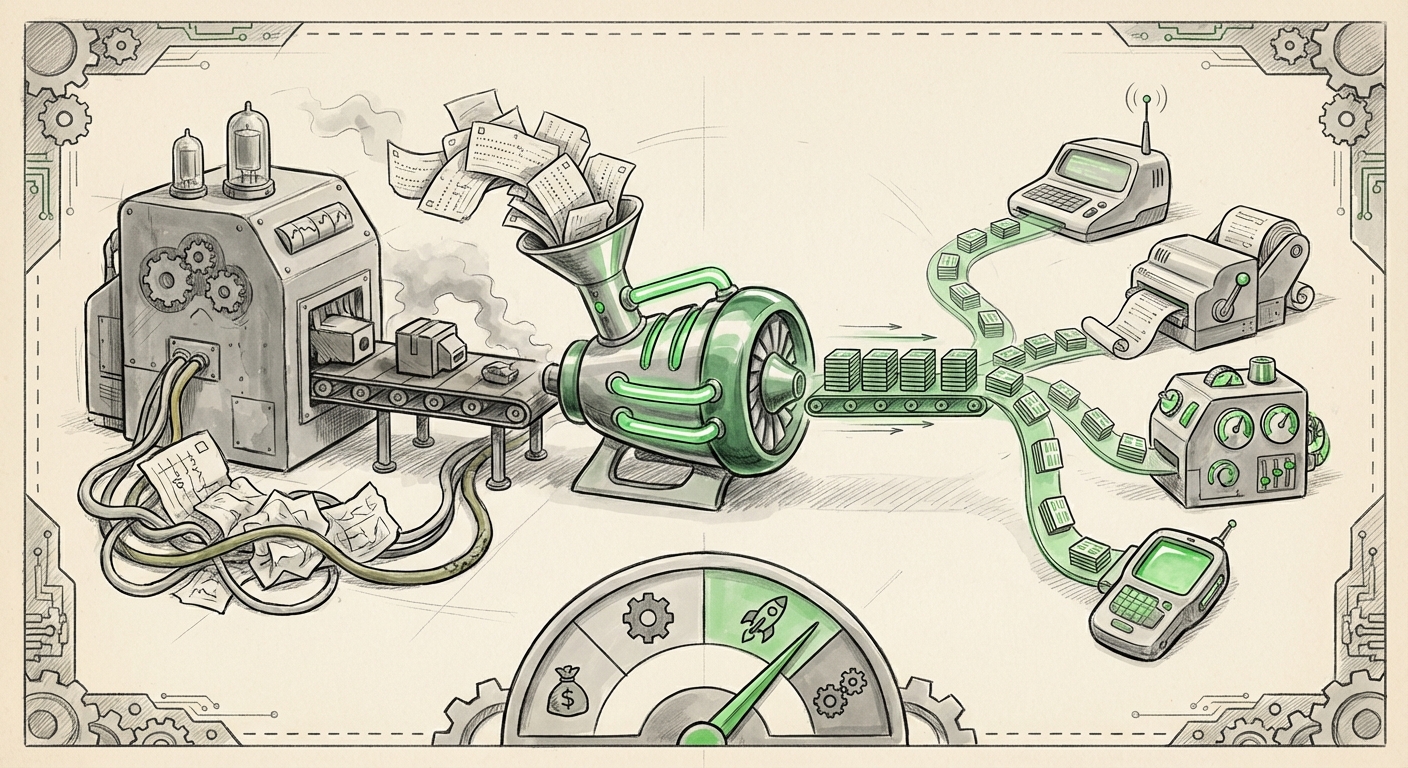
Grab's answer was not to slow down. It was to build a safety net strong enough that speed stops being dangerous. That distinction, between using less AI and governing AI better, is the single most important lesson in this story.
The Surge: When Every Developer Becomes a Small Team
For most of software history, output was tied to headcount. Want to ship twice as fast? Hire twice as many engineers. That link is now breaking. An AI assistant can draft a feature, write unit tests, refactor a messy function, or patch a bug in seconds. A single developer working with these tools can produce more changes in a week than a small squad used to produce in a month.
But there is a catch hidden in that sentence. AI tools do not just multiply the volume of code, they multiply the volume of unreviewed decisions. Every generated snippet reflects assumptions: about how a system behaves, how a user will interact with a screen, what a library does under stress, and what happens on a slow network with a dying battery. When a human writes code slowly, those assumptions get questioned along the way. When a machine writes it fast, they can slip through unnoticed.
For a mobile app, the consequences show up in the worst possible place: on the user's phone. A crash, a frozen screen, or a checkout button that fails at the wrong moment is not an abstract engineering metric. It is a broken promise to a customer, and for a platform that handles payments, bookings, and deliveries in real time, it is a direct hit to trust and revenue.
What Grab Actually Faced
Grab's engineering organization found itself managing exactly this shift: a rising tide of code changes flowing into its mobile apps, with a growing share of them originating from AI-assisted development. The volume was the opportunity. The unpredictability was the risk.
The core problem is not that AI writes bad code. Often it writes perfectly fine code. The problem is that AI-written code arrives with high confidence and low context. A generated patch may be syntactically clean and logically correct in isolation, yet wrong for this app, this version of the operating system, this device tier, or this payment flow. Multiply that by thousands of changes across a large mobile codebase, and you get a stability problem that traditional review processes were never designed to catch.
So Grab focused on building a system in which a surge of AI-generated changes could be absorbed safely, where the default outcome of a risky change is that it gets caught, contained, or reversed before a real user ever feels it.
The Guardrails: How You Make Speed Safe
The most useful way to understand Grab's approach is to think of it as layering safety at every step a change takes on its journey from an AI suggestion to a live feature. No single gate is enough. Together, they form a mesh.
1. Checks That Scale With the Volume
If change volume goes up sharply, human review capacity does not. The only way to keep quality steady is to push the first layer of scrutiny into automation: static analysis, linting, type checks, dependency scanning, and automated test suites that run on every proposed change without anyone needing to ask. Done well, this layer is not a blocker, it is a filter that removes the obvious problems and frees human reviewers to spend their attention on the changes that genuinely need judgment.
The important design choice here is treating AI-generated code as a distinct risk category, not as business-as-usual code. That means being stricter about coverage and less willing to wave a change through because it "looks right."
2. Smaller Changes, Reviewed Honestly
Big AI-generated patches are seductive, you can produce a thousand lines in a minute. But big patches are almost impossible to review carefully, which means they get approved on trust. That trust is exactly the thing that erodes stability. Breaking work into smaller, self-contained changes keeps human review meaningful and makes it far easier to pinpoint the cause when something goes wrong.
3. Staged Rollouts and Fast Reversal
This is where mobile engineering gets distinctive. You cannot simply "undo" a bad release on a phone the way you can on a server. Updates reach users gradually, on their own schedule. So the safety net has to live inside the app's release mechanics: staged rollouts that reach a small slice of users first, feature flags that let a risky capability be switched off without shipping a new version, and monitoring that turns a spike in crashes into an immediate signal rather than a slow-dawning mystery.
The mindset is acceptance: some bad changes will get through. The goal is not zero risk. The goal is that a bad change does small, recoverable damage instead of a large, permanent one.
4. Keeping Humans Accountable
Perhaps the subtlest and most important guardrail is cultural. When a tool generated a line of code, the temptation is to assume someone else validated it, the AI, the reviewer, the test suite. Grab's direction points the other way: the engineer who submits a change owns it, regardless of who or what typed it. AI is a collaborator, not a scapegoat. That single norm prevents the quiet diffusion of responsibility that lets errors travel unexamined.
What This Means for the Future of AI
Grab's story is a preview of the next phase of enterprise AI, and it flips the usual narrative. For the last few years, the question everyone asked was: can AI write code well enough to be useful? That question is largely answered. The question now dominating boardrooms and engineering leadership meetings is different: can our organization absorb what AI produces without breaking things?
That shift has three big implications.
First, the bottleneck moves. When generating code becomes cheap, the scarce resource becomes verification, tests, observability, review capacity, and the ability to detect and reverse problems quickly. Companies that invest in that layer will be able to run AI at full throttle. Companies that don't will find that their AI productivity gains get eaten by incidents, hotfixes, and lost customer trust.
Second, AI adoption becomes an infrastructure story, not a tooling story. Buying an AI coding assistant is the easy part. The hard part is everything around it: the CI pipeline, the test coverage, the release process, the monitoring dashboards, and the on-call culture. The organizations that win will be the ones that treat AI as a change to how work flows through the whole system, not as a plugin bolted onto individual laptops.
Third, trust becomes an engineering discipline. As AI systems take on more autonomous work, writing code, proposing fixes, making changes without a human in the loop at every step, the ability to bound and audit that autonomy becomes the product differentiator. Safety is no longer the opposite of speed. It is what makes speed sustainable.
Practical Implications for Businesses and Society
For business leaders outside engineering, the lesson generalizes well beyond code. Anywhere AI starts producing work at volume, customer support replies, marketing copy, financial reconciliations, contract summaries, medical documentation, the same pattern appears. Output goes up. Errors become cheaper to make and harder to spot. The organizations that thrive are the ones that build review, sampling, and rollback into the workflow before scaling up the AI, not after the first embarrassing incident.
For society, there is a quieter message. We are entering a period where much of the digital infrastructure around us is partly machine-authored. That is not inherently good or bad. What matters is whether the institutions building that infrastructure have the discipline to test it, monitor it, and take responsibility for it. Grab's approach, treating a surge of AI output as a risk to be engineered around rather than a gift to be unwrapped, is a reasonable template for that discipline.
Actionable Insights
- Measure the surge before you manage it. Know what share of your code changes are AI-assisted. You cannot design safety for a flow you have not measured.
- Invest in verification before you invest in generation. Test coverage, static analysis, and automated checks are the shock absorbers of AI-assisted development.
- Never let change size grow with change speed. Encourage small, reviewable units of work, even when AI could produce something much larger.
- Build for reversal, not just for release. Feature flags, staged rollouts, and strong monitoring turn a potential outage into a minor blip.
- Keep ownership human. Make it explicit that the person submitting a change is accountable for it, no matter who or what drafted it.
- Watch your leading indicators. Crash-free session rates and error spikes are the early warning system. Treat them as a first-class product metric, not an engineering afterthought.
- Apply the same playbook beyond engineering. Any AI-generated output that reaches customers needs a review layer and an escape hatch.
The Bottom Line
The most interesting thing about Grab's experience is what it did not do. It did not ban AI from its development process, and it did not pretend the risks were imaginary. It accepted that a flood of machine-generated changes was coming, and it went to work building the channels that flood would flow through safely.
That is likely how the AI era actually unfolds inside serious organizations: not as a dramatic leap, but as a steady accumulation of guardrails, tests, flags, and cultural norms that let people use powerful tools without breaking the things millions of others depend on. Grab's mobile app stability story is really a story about maturity, and it is the template most companies will end up following, whether they plan to or not.