NotebookLM Now Turns Your Notes Into AI Videos: What It Means for the Future of AI
For most people, the hardest part of learning something new is not finding information. It is turning a messy pile of notes, PDFs, and research links into something they can actually understand and remember. Google's NotebookLM has been chipping away at that problem for a while. Now it is taking a big step forward: the tool can turn your own notes into AI-generated videos.
That single change sounds small. It is not. It points to a much bigger shift in how AI tools are being built, and how ordinary workers, students, and businesses will use them every day. This article breaks down what the update means, why it matters, and how you can take advantage of it right now.
The Short Version: Your Notes Become a Watchable Explanation
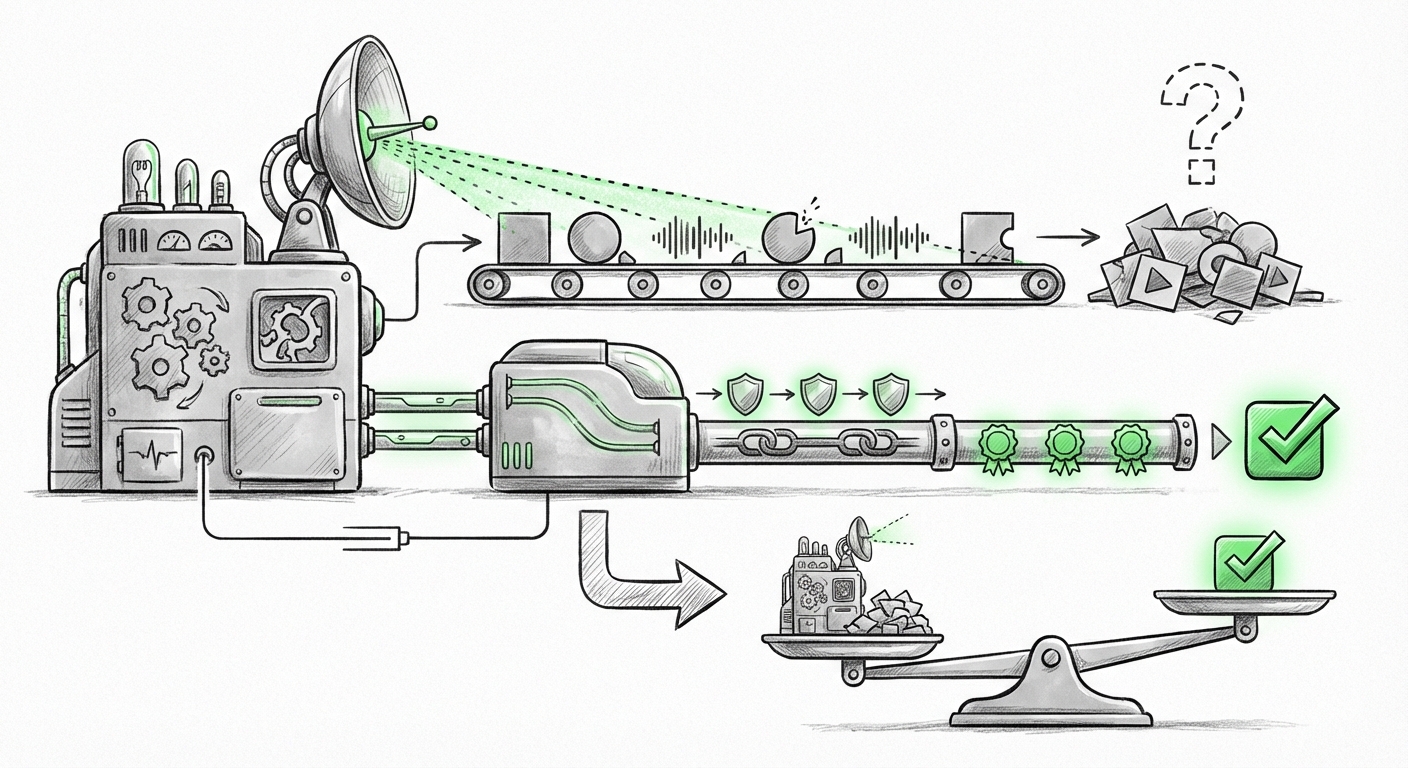
NotebookLM is built around a simple idea. You give it your own material, notes, documents, research, source files, and it works only from that material. It does not go searching the open internet and guess. It sticks to what you gave it.
The new video feature builds on that same idea. Instead of just answering questions in text, or talking back to you in an audio-style overview, NotebookLM can now produce a video that walks through your material. Think of it as a short visual explainer generated from your own source documents.
This matters because video is the format most people actually absorb. A dense ten-page report might sit unread in a folder forever. A three-minute explainer built from that same report is something a person will actually watch on a lunch break.
From Text to Audio to Video: The Multimodal March
The pattern here is hard to miss. AI assistants started out as text boxes. Then they learned to talk. Now they are learning to show.
Each step lowers the effort required from the user. Writing a summary still requires you to read the summary. Listening to an overview lets you do it while commuting or walking the dog. Watching a video lets you see structure, order, and relationships between ideas in a way that paragraphs struggle to convey.
The deeper trend is that AI is moving from answering questions to building explanations. That is a different job. Answering a question is a lookup. Building an explanation requires understanding what matters, what order to present it in, and what a learner needs to see first. The move into video is a signal that AI companies now believe their models can do the second job well enough to ship it.
Why "source-grounded" changes the risk profile
Most AI video tools generate content from nothing but a prompt. You type an idea, and the model invents a script. That is fine for entertainment. It is dangerous for anything that needs to be true.
NotebookLM's approach is different. It builds from your sources. That does not make the output perfect, AI can still misread, over-simplify, or drop a caveat. But it changes the job from "trust the model" to "check the model against the material I already own." For businesses and schools, that is a far easier thing to audit.
What This Means for the Future of AI
1. The interface is becoming the product
Underneath, the models are getting better at a steady pace. But the bigger competitive battle is now about how the output reaches you. A model that can only produce text competes with every other text model. A model that can produce a video explainer from your own documents is competing on a different field entirely.
Expect every major AI assistant to follow this path. Text, audio, video, and interactive walkthroughs will stop being separate products and become buttons on the same tool. The winner will not be the one with the cleverest model. It will be the one whose output fits most naturally into how people already work.
2. Knowledge work gets a "translator layer"
Most organizations are sitting on enormous amounts of written material that almost nobody reads: internal wikis, compliance documents, onboarding guides, research archives, meeting notes. The bottleneck was never storage. It was translation, turning dense writing into something a busy person can absorb quickly.
AI video generation is exactly that translator layer. It does not create new knowledge. It reshapes knowledge you already have into a form that more people can use. That is a quiet but enormous productivity gain, and it is the kind of gain that shows up in onboarding time and training costs rather than in flashy demos.
3. Verification becomes the new skill
When anyone can turn a document into a polished video in minutes, the supply of polished video explodes. The scarce resource flips from production to verification. Who checked that the explainer is accurate? Who confirmed the numbers? Who made sure the caveats survived the edit?
This is the central challenge of the next few years of AI. Tools that help people check AI output, source links, side-by-side comparisons, clear "this came from page 4" tracing, will matter as much as the generation itself. NotebookLM's habit of working from named sources is a strong starting position for that fight.
Practical Implications for Businesses
- Training and onboarding. Turn policy manuals and process docs into short videos new hires will actually watch. Update the source document, and the explainer can be rebuilt.
- Sales enablement. Convert product research and competitive notes into quick briefings for reps who will never read a twenty-page deck.
- Internal communications. Reformat leadership notes and strategy documents into visual summaries that travel further than an email ever would.
- Customer education. Turn technical documentation into explainer videos without hiring a production team for every release.
- Research review. Give analysts a fast visual pass over long reports before they dig into the detail.
There is a catch worth stating plainly. These videos are summaries, not sources of truth. Any company using them should keep a simple rule: the original document remains the authority, and the video is a doorway to it.
Practical Implications for Society and Education
The education angle may be the most important one. Students already use AI to summarize readings. Turning those readings into short visual explainers is a natural next step, and a genuinely useful one for people who struggle with dense text, are learning in a second language, or need a different entry point into a difficult subject.
But the same power creates a new kind of shortcut. If a student can watch a three-minute AI video instead of reading the chapter, have they learned the material? Sometimes yes. Sometimes they have only learned the summary of the summary. Teachers and institutions will need to be deliberate about when AI explainers are a bridge to the source and when they become a replacement for it.
Outside the classroom, the risk is misinformation with production value. A well-made video feels authoritative in a way that a blog post does not. As generation gets cheap, the habit of asking "what was this built from?" needs to become as automatic as asking "who wrote this?"
An Actionable Playbook
For individuals
- Build a clean source folder before you generate anything. Good input is the whole game.
- Use videos for review and orientation; use the source text for decisions.
- Keep a short list of the claims that matter most and check those against the original every time.
For teams
- Pick one high-friction document, an onboarding guide or a compliance policy, and test a video version this month.
- Set a simple accuracy rule: anything that touches money, safety, or law gets a human review before it is shared.
- Track whether people actually finish the videos. Completion rate is the honest measure of whether this works.
For leaders
- Treat AI video as a distribution tool, not a knowledge tool. It spreads what you already know; it does not validate it.
- Decide now who owns accuracy sign-off, before the volume of generated content makes the question urgent.
The Bigger Picture
The most interesting thing about NotebookLM turning notes into video is not the video. It is the direction of travel. AI tools are moving away from being a chat window you visit and toward being a layer that reshapes your own material into whatever form you need next.
That has real consequences. When the same source material can become a summary, a podcast-style conversation, a study guide, or a short video, the format stops being a constraint. What is left is the harder question: is the underlying material any good, and did anyone check?
The organizations that win with this will not be the ones that generate the most content. They will be the ones with the cleanest source material and the clearest rules for verifying what comes out the other end. The tool is impressive. The discipline around it will decide whether it helps or hurts.