BigCodeArena: Why Executing Generated Code Is the Future of AI Coding Evaluation
Artificial intelligence has become remarkably good at writing code. But how do we know if the code it produces actually works? For years, the standard way to judge AI-generated code was to compare it to a reference solution, like checking if a student's essay matches the teacher's answer key. That approach has a big flaw: code can look correct but fail the moment you run it. On October 7, 2025, a new platform called BigCodeArena introduced a better way. It judges code generations end to end by actually executing the code. This shift from static matching to real execution is a major turning point for AI coding tools, and it has huge implications for developers, businesses, and society.
What BigCodeArena Does, and Why It's Different
BigCodeArena is a new evaluation platform that tests AI-generated code by running it. Instead of just looking at the text of the code and comparing it to a known answer, BigCodeArena executes the code to see if it produces the right results. This is what "end to end" means: the process starts with a prompt, the AI generates code, and then the platform runs that code to check for correctness, errors, and real behavior.
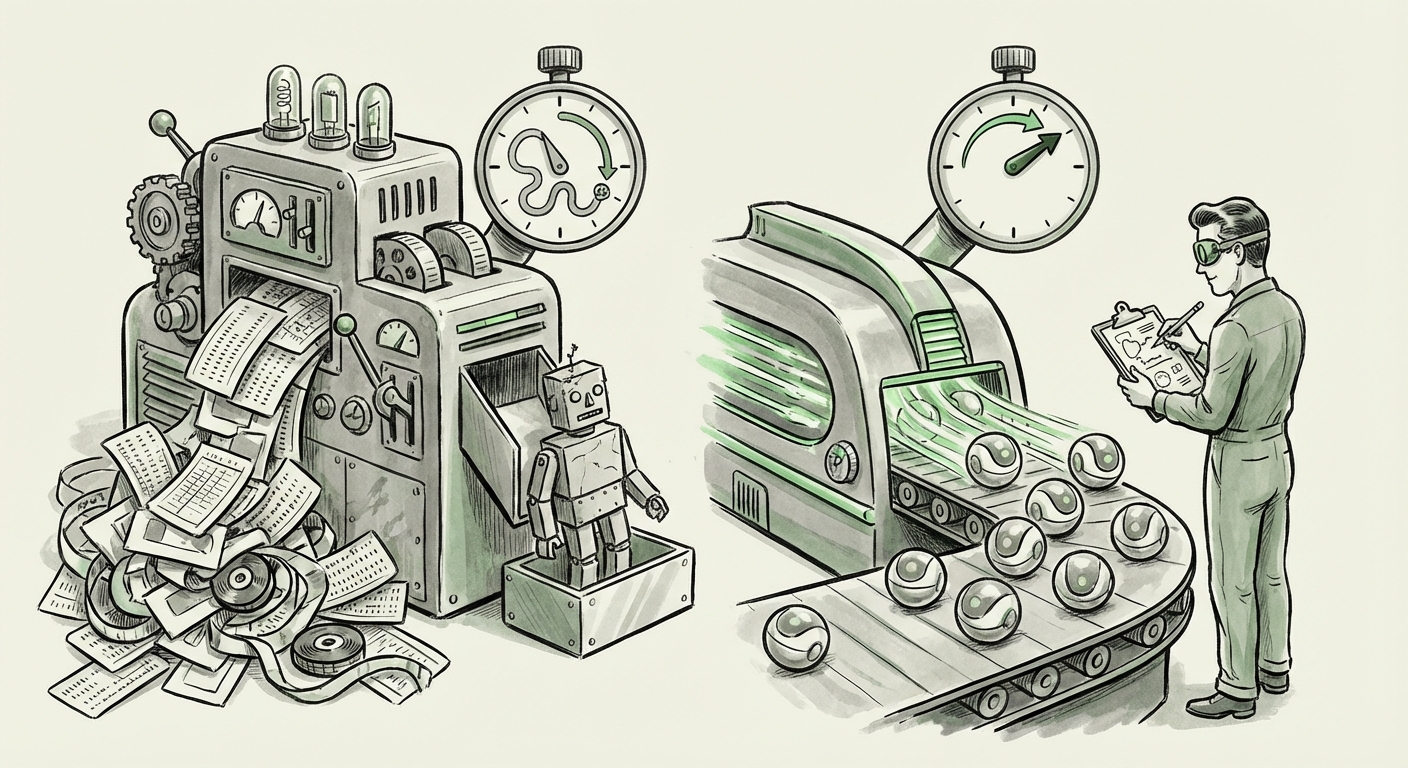
Traditional benchmarks have a serious weakness. They often rely on surface-level similarity, does the generated code look like the reference code? But two pieces of code can look very different and still both be correct. More importantly, code that looks perfect can crash, produce wrong answers, or have security holes. By executing the code, BigCodeArena measures what actually matters: does the code do the job?
This is not just a small technical tweak. It changes the entire signal we get from evaluating AI models. A model that writes beautiful but broken code will score poorly in BigCodeArena. A model that writes unusual but working code will score well. That pushes AI development toward real functional correctness, not just cosmetic similarity.
The Big Trend: From Text Matching to Execution-Based Evaluation
BigCodeArena is part of a larger trend in AI research: moving from static evaluation to dynamic, execution-based evaluation. As AI models get better at coding, the tests need to get harder and more realistic. Static benchmarks are easy to game. Models can memorize patterns or produce code that passes simple text checks without being truly useful. Execution-based evaluation is much harder to fake because the code either runs correctly or it doesn't.
This trend matters because it aligns AI evaluation with how code is actually used in the real world. Developers don't care if their code looks like someone else's code. They care if it compiles, runs, and solves the problem. BigCodeArena brings that same standard to AI benchmarking. It's a reality check for the entire field.
Of course, execution-based evaluation comes with challenges. You need a safe sandbox to run untrusted code. You need test cases that cover many scenarios. You need to handle timeouts, memory limits, and security risks. But these challenges are solvable, and the benefits are enormous. A benchmark that runs code gives a much more trustworthy signal than one that only compares text.
What This Means for AI Developers
For teams building AI coding models, BigCodeArena signals a new direction. If you want your model to rank well, it needs to produce code that actually executes correctly. That means training with execution feedback, not just next-token prediction. Developers can use execution-based rewards to fine-tune models, a technique often called reinforcement learning from code execution. Models learn to avoid syntax errors, fix runtime bugs, and handle edge cases because they get direct feedback from running the code.
This also encourages the development of coding agents that can write, run, debug, and iterate. Instead of generating code once and hoping for the best, an AI agent can test its own code, see the errors, and try again. BigCodeArena provides the evaluation framework that makes this possible. It's a step toward autonomous software engineering, where AI systems can reliably produce working code with minimal human intervention.
Another implication: model comparison becomes more meaningful. When you see that Model A scores higher than Model B on BigCodeArena, you know it's because Model A's code actually works more often. That's a much stronger claim than "Model A's code looks more like the reference." For AI researchers, this is a better way to measure progress.
What This Means for Businesses
Businesses are increasingly using AI coding assistants to speed up software development. But trust is a major barrier. If a company can't be sure the AI-generated code works, they have to spend time reviewing and testing it, which reduces the productivity gains. BigCodeArena-style evaluation helps solve this problem by giving businesses a clear, execution-based metric for model quality.
When choosing an AI coding tool, companies can now demand evidence that the model's code actually runs correctly. They can compare vendors using execution-based benchmarks rather than marketing claims. This will push the entire industry toward higher quality. It also reduces risk: deploying broken code can be costly, and execution-based evaluation catches problems early.
There's also a security angle. Running untrusted code requires a secure sandbox. Businesses that adopt execution-based evaluation need to invest in safe environments. But once in place, these environments can also be used for continuous testing and monitoring of AI-generated code in production. This creates a feedback loop where AI models improve over time based on real execution data.
Finally, execution-based evaluation can speed up development cycles. Developers can trust AI suggestions more when they know the code has been validated by running it. That means less time debugging and more time building. For businesses, that translates directly into faster time-to-market and lower development costs.
What This Means for Society
The broader impact of execution-based AI evaluation is significant. More reliable AI coding tools can democratize software creation. People with limited coding experience can use AI to generate working code, test it, and build useful applications. That opens up technology creation to a much wider audience.
But there are risks. If AI-generated code is executed automatically without proper oversight, security vulnerabilities could spread. Society needs strong standards for sandboxing and code review. BigCodeArena's emphasis on execution is a positive step because it makes correctness visible, but it also highlights the need for responsible deployment.
There's also an educational angle. As AI writes more code, human developers need to focus on higher-level design, testing, and verification. Execution-based evaluation encourages a mindset of "run it and see", which is exactly how good software engineering works. It teaches both AI and humans to value working code over beautiful code.
The Future: Where This Leads
BigCodeArena is likely just the beginning. In the coming years, we can expect more execution-based benchmarks for different programming languages, domains, and complexity levels. We can also expect integration with popular development tools. Imagine an AI coding assistant that automatically runs your code in a sandbox and tells you if it works before you even ask. That's the future BigCodeArena points toward.
Another trend to watch is agentic coding. AI agents that can plan, write, execute, debug, and deploy code will need robust execution environments. BigCodeArena provides a model for how to judge these agents fairly. As agents become more autonomous, execution-based evaluation will be the only way to know if they are actually helping or just generating plausible-looking text.
We may also see real-time evaluation in production. Instead of just benchmarking models once, companies could continuously run execution tests on AI-generated code as it is used. This would create a live feedback loop that improves models over time. BigCodeArena's end-to-end approach is a foundation for that future.
Actionable Insights
- For AI teams: Start using execution-based evaluation in your model development. Don't rely only on text-matching benchmarks. Build a sandbox and test your models on real code execution tasks.
- For businesses: Ask AI vendors for execution-based performance metrics. Choose tools that have been validated by running code, not just by comparing text. Invest in secure sandboxing for testing AI-generated code.
- For developers: Use AI tools that can execute and test code automatically. Treat execution as the ultimate judge. Don't trust code just because it looks right.
- For policymakers: Support the development of safe execution environments for AI code evaluation. Encourage transparency in how AI coding models are tested.
BigCodeArena represents a maturation of the AI coding field. It moves us away from superficial metrics and toward real, functional correctness. Execution is the ultimate test of code, and it is now becoming the ultimate test of AI models that write code. This shift will make AI coding tools more trustworthy, more useful, and more aligned with how software is actually built. The future of AI coding is not just about writing code, it's about running it, testing it, and making sure it works.