Light-Powered AI Detects Deepfakes With Nearly 98% Accuracy, What It Means for the Future of AI
Fake video is getting very good, very fast. A cloned face can now blink, smile, and turn its head in ways that fool most people watching on a phone screen. That is why a new result matters so much: an AI system that uses light instead of electricity to do its thinking can spot deepfakes with nearly 98% accuracy.
That single number is a big deal. But the bigger story is how the system gets there. It points to a future where AI is not only smarter, but also faster, cheaper to run, and built on a completely different kind of hardware. This article breaks down what that means for the future of AI, and how businesses and everyday people will end up using it.
What Actually Happened
The headline result is simple to state. A light-powered AI system, often called photonic or optical computing, was used to separate real video from manipulated video. It landed at nearly 98% accuracy.
Two things make that impressive. First, deepfake detection is a hard task. The fakes are designed to look real, and the people making them keep changing their methods. Second, the detection was done with light-based hardware rather than the usual silicon chips that run most AI today.
That combination is what makes this more than a lab curiosity. It suggests that the next wave of AI progress may not come only from bigger models trained on more data. It may come from rethinking the machine itself.
Why Deepfake Detection Is So Hard
To understand why this matters, it helps to see the problem from the defender's side.
Deepfake tools are cheap now. Anyone with a laptop and some patience can make a convincing video of a person saying something they never said. Scammers use this to impersonate bosses on video calls. Bad actors use it to spread fake political clips. Criminals use it to fake identity checks.
Every time a detector gets good at spotting one type of fake, the fakes change. The detector has to catch up again. It is a race that never ends.
There is also a speed problem. A fake video can go viral in minutes. If the detection system takes hours to run, the damage is already done by the time an answer arrives. Detection that is accurate but slow is only half useful.
What "Light-Powered AI" Actually Means
Regular computers push electricity through transistors. Light-powered computers push photons, particles of light, through tiny optical pathways.
Light has some natural advantages for AI work:
- Speed. Light travels extremely fast, and many calculations can happen at the same moment rather than one after another.
- Lower energy use. Moving light through a chip creates far less heat than pushing electricity through dense circuits. Heat is one of the biggest limits on today's AI hardware.
- Natural fit for certain math. A huge share of AI work is matrix math, multiplying and adding big grids of numbers. Optical systems can, in principle, do some of that math just by letting light pass through the hardware.
That last point is the key. If the hardware itself does part of the calculation, you do not need as much software or as many chips to get an answer. You get faster results with less power.
Why This Matters More Than One Accuracy Score
A 98% accuracy score is a snapshot. The architecture behind it is the trend.
For years, the story of AI has been "make the model bigger." That path is hitting real walls: enormous electricity bills, scarce chips, and data centers that strain local power grids. Light-based computing offers a different direction, make the hardware better instead of only making the model bigger.
If that direction holds up, it changes the economics of AI. Cheap, fast, low-power inference means AI can run in places it cannot easily run today: on a phone, on a camera, at the edge of a network, in a small business with no server room.
Why Fast, Local Detection Changes the Game
Think about where deepfake detection is actually needed. Not in a lab. In the middle of a live video call. On a social platform processing millions of uploads. On a phone during a bank identity check.
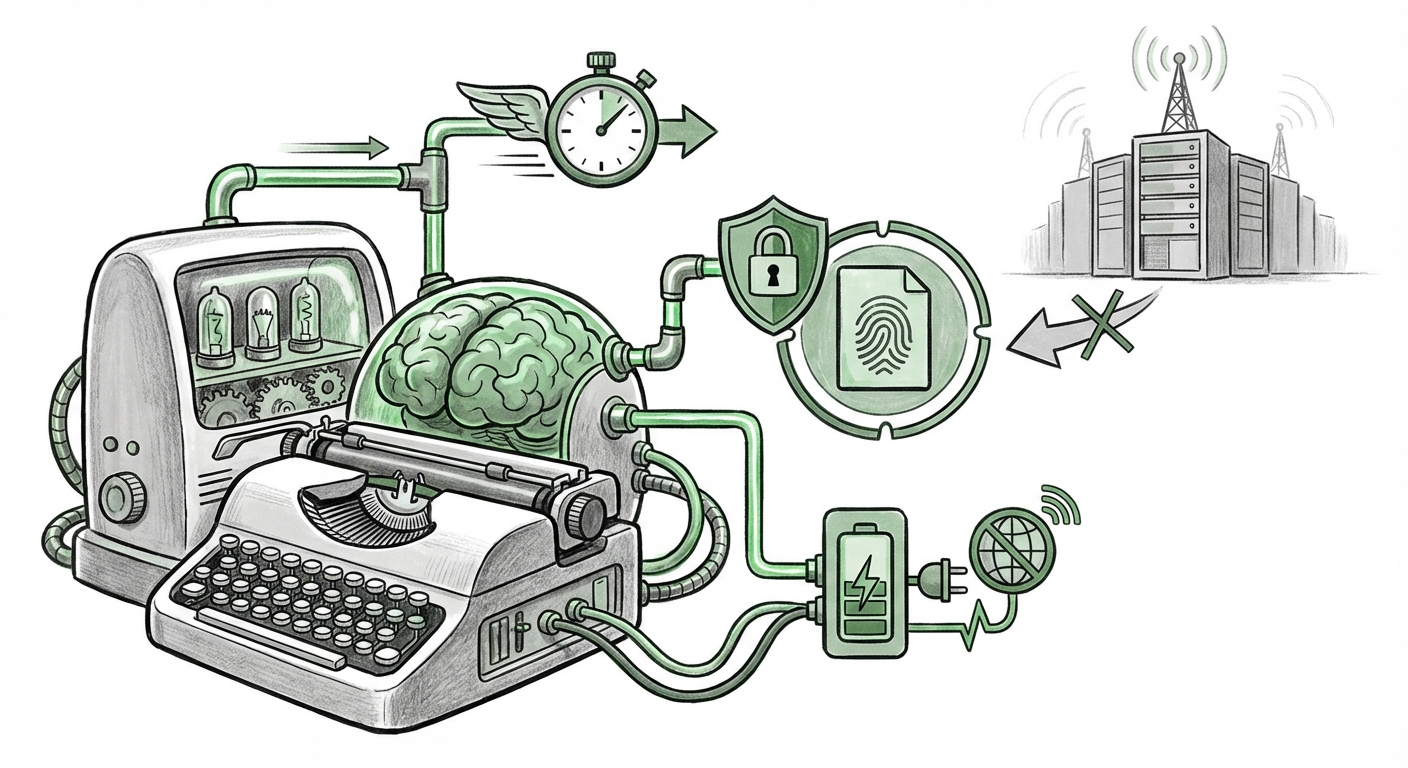
Those settings all demand the same three things: speed, low cost, and privacy.
A light-powered detector that is fast and cheap could run right where the video is. That means:
- A video call platform could flag a synthetic face in real time, before money gets wired.
- A newsroom could screen a leaked clip in seconds instead of sending it to a specialist.
- A phone could check a caller's face without sending a video of that person to a distant server.
That last example is important for trust. People are wary of every video they record being uploaded for analysis. On-device checking keeps the data where it belongs.
What This Means for Businesses
The near-98% result is a signal, not a product you can buy tomorrow. But it points to a set of practical shifts that business leaders should start planning for now.
1. Identity checks will need a second layer
Passwords and ID documents are already weak against synthetic media. Voice and face verification is the next target. Companies should assume that any single check can be faked, and design systems that combine several signals, liveness cues, device signals, behavioral patterns, and detection models.
2. Fraud teams should prepare for video
Most fraud playbooks are built for text, email, and phone calls. Video is arriving fast. A finance team that approves transfers after a video call with an executive needs a policy that assumes that face might be generated.
3. Content platforms will face regulatory pressure
As detection gets better and cheaper, the excuse "we cannot check that at our scale" gets weaker. Platforms that host user video should expect questions from regulators, advertisers, and users about how they screen for synthetic content.
4. Energy costs become a competitive edge
AI teams are being asked to do more with less power. Hardware that delivers the same output at a lower energy cost is not a science project, it is a line item on the budget. Watch this space closely if your AI bills are climbing.
What This Means for Society
The social stakes are just as big as the business ones.
Trust in evidence. Courts, insurers, journalists, and election officials all rely on video as proof. As fakes improve, the burden shifts to verification. Better, faster detectors help, but they also create a world where everything may need a check before it is believed.
The liar's dividend. When fakes are common, real footage gets dismissed as fake. A politician caught on camera can simply claim it was generated. Strong detection tools help push back against that, but they do not solve it on their own.
Access to protection. Today, strong detection tends to sit with big platforms and well-funded labs. Low-power, low-cost detection hardware could spread that protection to smaller newsrooms, local election offices, and schools, the places that need it and can least afford it.
The Honest Limits
It would be a mistake to treat nearly 98% as a finish line. Some fair questions:
- What is the other 2%? Real-world conditions are much messier than lab tests. Compression, bad lighting, and low-resolution phone video all make detection harder.
- How does it handle new fake types? A detector trained on one generation of fakes can struggle with the next. Testing against fresh, unseen material is what matters.
- Can it explain itself? A yes-or-no answer is not enough when the stakes are high. Investigators need to know why a clip was flagged.
- When does light-based hardware ship? Photonic systems are advancing quickly, but building them at scale, and making them easy for developers to use, is a separate challenge.
None of these points undercut the result. They simply define the work that comes next.
Actionable Takeaways
Here is what to do with this news, depending on who you are.
If you run a business
- Add synthetic media detection to your fraud and identity workflows.
- Write a clear internal rule: no money moves based on a single video call.
- Track energy per inference as a real metric, not an afterthought.
If you build AI systems
- Treat hardware as part of your roadmap, not just models and data.
- Test detectors against new fakes, not the ones they were trained on.
- Design for edge deployment, where speed and privacy both matter.
If you are a regular user
- Slow down on urgent video requests involving money or secrets.
- Verify through a second channel, a phone call, a known number, a person you trust.
- Expect detection tools to become built into the apps you already use.
The Bigger Picture
Two curves are crossing. On one side, tools for making fake media are getting cheaper and more convincing. On the other, tools for catching fake media are getting faster and more accurate, and now they are moving onto a new kind of hardware.
The near-98% accuracy result is a strong signal that the second curve can keep up. But the deeper lesson is about how AI will evolve next. The next big leaps may not come from adding more parameters. They may come from changing what the machine is made of.
Light-based AI is a bet that the future of intelligence is not just bigger, it is faster, cooler, and cheaper. If that bet pays off, deepfake detection will be one of the first places we feel it, and one of the clearest examples of what comes next.