Philip Rivers and the NC State Coaching Search: What a Football Hiring Decision Teaches Us About the Future of AI
On November 8, 2026, word broke that Philip Rivers has emerged as a top candidate for the head coaching job at NC State, his alma mater. On the surface, this is a sports story. A beloved former quarterback, a school he once played for, a program looking for its next leader.
But look a little closer and it is something else entirely. It is a story about how big decisions actually get made in 2026, and that is the same question every business, hospital, school district, and government agency is wrestling with as artificial intelligence moves from the lab into the conference room.
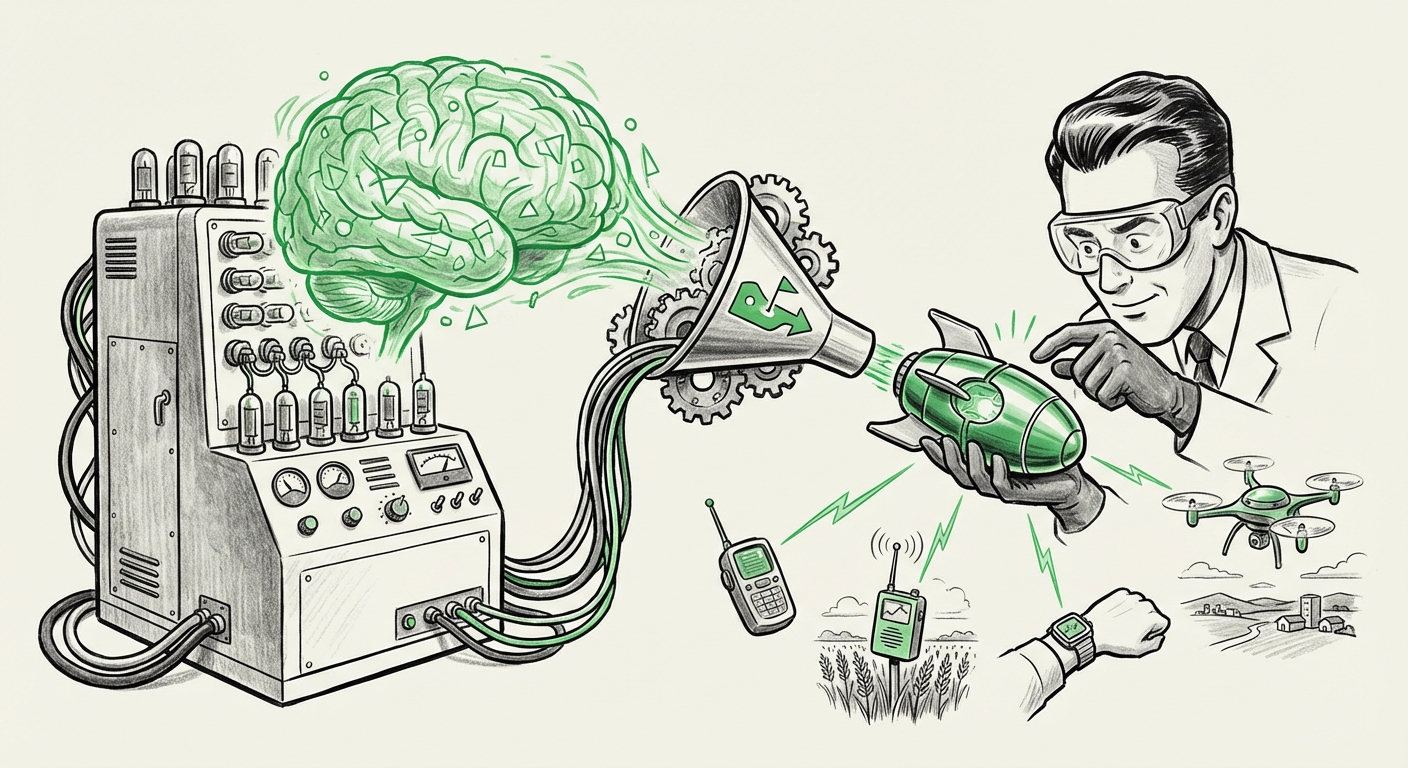
Here is the real headline hiding inside the coaching search: the most important decisions in any organization are still made by humans, but they are now surrounded by machines that rank, score, predict, and recommend. The future of AI is not about replacing the person who makes the call. It is about changing what that person knows before they make it.
A Coaching Search Is Really a Prediction Problem
Strip away the helmets and the hype, and hiring a head coach is a forecasting exercise. You are trying to predict which person will produce the best results over the next five years. That prediction depends on a messy mix of inputs: past performance, leadership style, recruiting ability, staff-building, fit with the school's culture, and a hundred small signals that are hard to write down.
That is exactly the shape of the problems AI is getting very good at. Modern systems can ingest enormous amounts of structured data, win-loss records, recruiting rankings, player development curves, retention rates, staff turnover, and surface patterns no human analyst would catch. In business, the equivalent is sales pipeline data, customer churn signals, hiring outcomes, or equipment failure logs.
The lesson is not that a model should pick the coach. The lesson is that the model should arrive at the table before the argument starts, carrying evidence that makes the human conversation sharper.
Where AI Actually Helps in Talent Decisions
Organizations that have moved past the hype cycle are using AI in hiring and promotion in a few concrete ways:
- Pattern surfacing: Spotting which combinations of experience actually correlate with success in a specific role, not across all roles, but in yours.
- Bias audits: Running the same candidate pool through a scoring system repeatedly to see whether small wording changes flip the outcome.
- Scenario simulation: Asking "what happens in year three if this person struggles early?" before the contract is signed.
- Market mapping: Building a live picture of who is available, who is rising, and who is quietly unhappy where they are.
None of these replace judgment. All of them make judgment better informed. And crucially, each one produces a record, a trail of reasoning that can be reviewed later when the decision turns out badly.
The "Alma Mater" Factor: Why Context Beats Raw Data
The most interesting detail in this story is the word alma mater. Rivers is a top candidate at the school he is connected to. That connection is not a statistic you can easily put in a spreadsheet. It is history, trust, identity, and shared memory.
For years, the standard AI story has been that machines out-analyze humans because they are not sentimental. But the last few years of real-world deployment have taught the opposite lesson: context is the most valuable data there is, and it is the hardest to capture.
This is why the most successful AI deployments in 2026 are not the ones with the biggest models. They are the ones with the deepest institutional memory, systems that know this company's quirks, this team's history, this community's expectations. A generic model knows what a good coach looks like. A well-grounded system knows what a good coach looks like here.
Companies are learning to build that context deliberately: fine-tuning on internal documents, connecting models to real operational data, and hiring people whose job is to translate human knowledge into machine-readable form. That work is unglamorous and it is where most of the value sits.
What This Means for Leadership Everywhere
If you are a business leader reading this, the coaching search is a mirror. You are probably about to make a high-stakes people decision, a hire, a promotion, a reorg, a vendor choice. And you are probably being handed AI-generated recommendations for it, whether you asked for them or not.
Three shifts follow from that:
1. The job changes from deciding to interrogating
When a system hands you a ranked list, your value as a leader is no longer in generating the list. It is in asking why the list looks the way it does. What data was left out? What did the model optimize for? Who benefits if this ranking is right?
2. Accountability stays human
No fan base will accept "the algorithm picked him" as an explanation after a losing season. The same is true in business. Boards, regulators, and customers still want a person's name on the decision. AI can inform accountability; it cannot absorb it.
3. Speed becomes the default, and that is a risk
AI makes it cheap to produce a confident-sounding answer in seconds. That is a genuine productivity gain and a genuine hazard. The organizations that win will be the ones that build in deliberate friction, a required second review, a documented dissent, a "what would change our mind" question, before acting on machine output.
Practical Steps to Take Right Now
Whether you run a football program or a logistics company, the playbook looks similar:
- Start with decisions you repeat. AI pays off fastest where the same judgment happens over and over, screening, triage, forecasting, routing.
- Write down your criteria first. Define success before you look at a model's output, or you will unconsciously reverse-engineer reasons to agree with it.
- Keep a human in the loop for anything irreversible. Firing, hiring, medical, legal, and financial calls need a named person signing off.
- Log the reasoning. If you cannot explain six months later why a decision was made, you cannot learn from it or defend it.
- Invest in context, not just capability. The model that knows your organization beats the model that is merely bigger.
- Test for fairness on purpose. Run the same scenario with different names, backgrounds, and phrasing. If results swing, you have a problem.
The Risks Nobody Talks About at the Press Conference
There are real dangers in handing AI more influence over human decisions. Models learn from the past, and the past is full of biased outcomes. A system trained on decades of hiring data will happily reproduce the patterns in that data, including the unfair ones, while sounding completely neutral.
There is also the confidence problem. AI systems are very good at sounding certain. Decision-makers are very bad at noticing when that certainty is unearned. In a coaching search, that might mean overlooking a candidate whose path does not look like the historical template. In a business, it might mean missing the outsider who would have changed everything.
The fix is not to distrust the technology. It is to use it as a challenger rather than an oracle, something that argues with your instincts instead of confirming them.
The Bigger Picture
Whatever happens with the NC State job, the pattern is set. Human institutions will keep making human decisions, but those decisions will increasingly be shaped by machine-generated evidence, rankings, and simulations. The organizations that thrive will not be the ones that hand the wheel to AI or the ones that refuse to look at the dashboard. They will be the ones that learn to read both at once.
A coaching hire is a bet on the future made with incomplete information, under public pressure, with no way to run the experiment twice. So is almost every important decision in business. AI does not remove that uncertainty. It just gives you better instruments, and the responsibility to use them honestly.