5 Useful Python Automation Scripts for Beginners: What It Means for the Future of AI
Python automation has quietly become one of the most important entry points into the world of artificial intelligence. A new beginner-focused collection of 5 Useful Python Automation Scripts for Beginners, published on November 9, 2026, highlights a trend that is reshaping how people learn to work with machines: before anyone builds a neural network or fine-tunes a large language model, they usually start by making a computer do something small and repetitive for them.
That simple act, writing a few lines of Python to rename a hundred files, pull data from a web page, or send a weekly email, is more than a time-saver. It is the first step on a path that leads directly to the modern AI economy. The story here is not really about five scripts. It is about what happens when millions of ordinary workers, students, and small business owners learn that they can command a computer to do their boring work for them.
Why Beginner Automation Matters More Than It Sounds
For years, the popular image of AI was something remote and expensive: research labs, giant data centers, and teams of PhDs. That image is now out of date. The tools that power modern AI have become cheap, open, and approachable, and the on-ramp is often a beginner Python script.
Consider what a beginner actually learns when they write an automation script. They learn to break a task into steps. They learn to read documentation. They learn to handle errors when something breaks at 2 a.m. They learn that a computer will do exactly what you tell it, no more and no less. These are the same mental muscles required to build, test, and trust an AI system.
Automation is also where people first experience the leverage of code. A script that saves ten minutes a day saves more than forty hours a year. Once someone feels that leverage, they start asking a bigger question: what else could I hand off to a machine? That question is the doorway to AI adoption.
The Five Scripts and the Skills Behind Them
Beginner automation collections tend to focus on the same handful of high-value, low-risk tasks, and each one teaches a transferable skill. The pattern matters more than the specific code.
1. File and Folder Cleanup
Sorting downloads, renaming photos, and archiving old documents is usually the first script anyone writes. It teaches loops, file paths, and safe handling of data. It is also the perfect metaphor for what AI does at scale: take a messy pile of inputs and organize it into something useful. The same logic powers document classification systems, image tagging, and inbox triage tools.
2. Pulling Data From the Web
Scraping a webpage or calling a public API is often a beginner's first taste of working with real, messy, live data. That skill is the foundation of every AI pipeline. Models are only as good as the data feeding them, and the people who understand how to collect and clean data are the ones who can actually ship AI products.
3. Spreadsheet and Report Automation
Reading a CSV, merging sheets, and generating a summary report is unglamorous work, and exactly where most businesses lose the most hours. Teaching a beginner to automate it builds comfort with structured data, which is the native language of business AI. Every dashboard, forecast, and recommendation engine starts here.
4. Email and Notification Workflows
Scripts that send reminders, route messages, or post alerts to a chat channel teach beginners about triggers and conditional logic. That is the same event-driven thinking behind AI agents that watch for a condition and then act on it without a human in the loop.
5. Scheduled Job Running
Putting a script on a timer, running it every morning or every hour, is the moment automation becomes infrastructure. A task that runs without you is a task you can build on. This is how small scripts grow into systems, and how systems eventually grow into AI-powered workflows.
The Bigger Trend: Automation Is Becoming the Front Door to AI
What makes this moment significant is the direction of travel. The line between "automation script" and "AI application" is thinning fast.
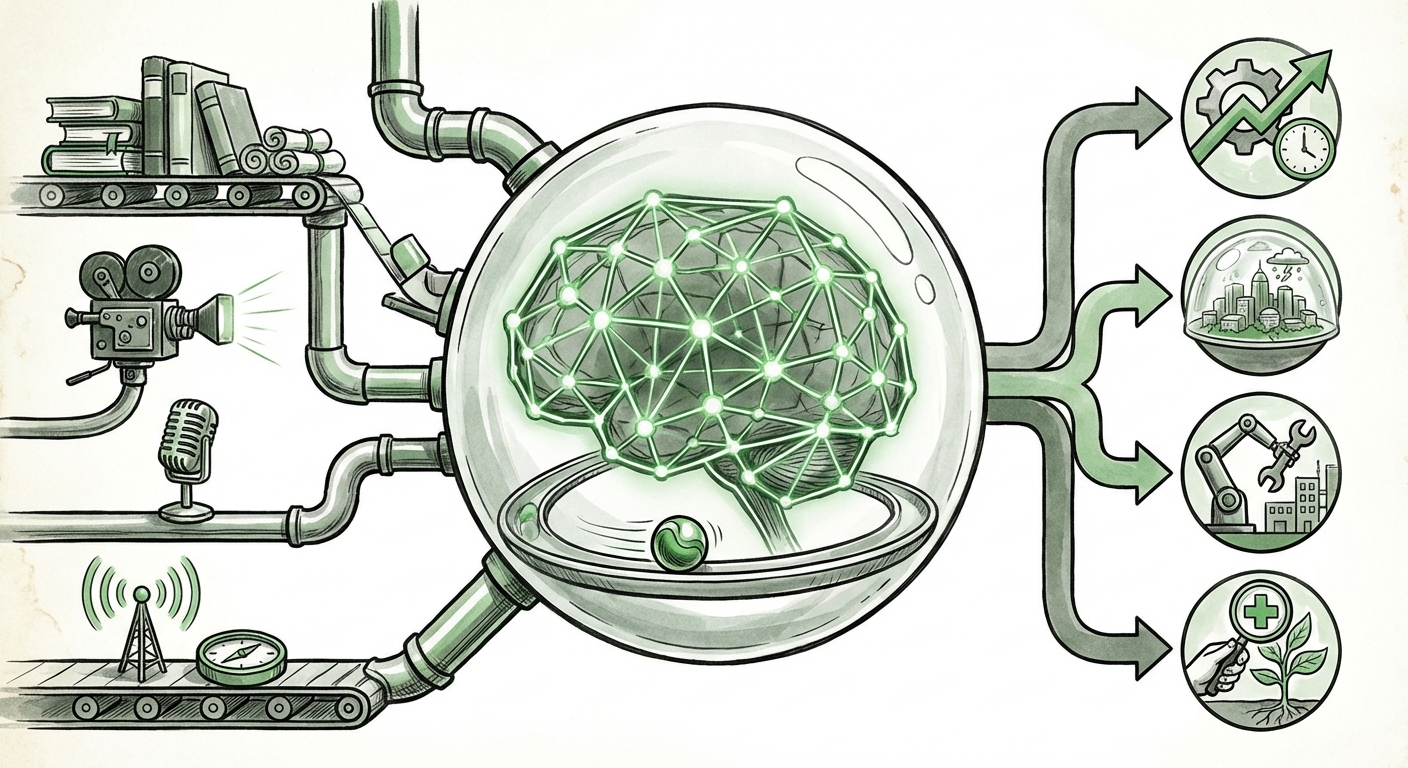
A few years ago, a script that sorted files used fixed rules: if the filename contains "invoice," move it here. Today, a beginner can drop a pre-trained model into that same script and have it read the document, understand what it is, and decide where it belongs. The scaffolding is identical. Only the brain in the middle has changed.
This is why beginner automation content keeps showing up at the top of search results and developer forums. It is not just a coding tutorial category. It is the training ground for a workforce that will be expected to work alongside AI every day.
Three forces are pushing this forward:
- Lower barriers. The libraries, tutorials, and free tools needed to automate a task have never been more accessible. A motivated beginner can go from zero to a working script in an afternoon.
- AI as a coding partner. New learners increasingly write their first scripts with an AI assistant looking over their shoulder, explaining errors and suggesting fixes. That changes how fast skills compound.
- Business pressure. Companies are under real pressure to cut manual work. Employees who can automate their own workflows become dramatically more valuable, and they know it.
What This Means for Businesses
For business leaders, the lesson is not "teach everyone to code." It is that automation literacy is becoming a baseline skill, the way spreadsheet proficiency was thirty years ago.
Companies that treat Python automation as a niche IT concern will find themselves outmaneuvered by smaller competitors whose staff quietly automate their own busywork. The compounding effect is real: a team that saves five hours a week per person frees up enormous capacity over a year, without a single large technology purchase.
There are practical steps any organization can take:
- Create safe spaces to experiment. Let employees automate low-risk, repetitive tasks and share what works.
- Build a library of internal scripts. Small automations become reusable assets when they are documented and shared rather than hidden on one person's laptop.
- Pair automation with AI deliberately. Start with a working script, then ask where a model could replace a hard-coded rule. That is a far cheaper path to AI than a big-bang transformation project.
- Invest in the middle layer. The biggest wins often come from employees who understand both the business process and enough code to automate it.
What This Means for Society and Work
The social implications are just as important. Automation skills are unusually democratic. You do not need a degree or a expensive setup to write a script that saves your small business ten hours a week. That makes automation one of the few technology trends that can genuinely lift productivity at the small end of the economy.
But there is a real risk of a new divide. Workers who learn to automate will pull ahead of those who do not, and the gap can widen quickly because automation compounds. The answer is not to slow the technology down; it is to make the on-ramp wider, through accessible beginner resources, workplace training, and public education that treats automation as a core literacy rather than an optional extra.
There is also a healthy caution to keep in mind. Beginner scripts run with whatever permissions they are given. A badly written automation can delete the wrong folder or send the wrong email to a thousand people. As AI gets layered into these workflows, the stakes rise. Learning to test carefully, log what happens, and keep a human in the loop is not a nice-to-have, it is part of the skill.
Actionable Insights for Anyone Starting Out
For individuals, the path is clear and surprisingly short:
- Start with the task you hate most. The best first script automates something you already do every week.
- Automate one step, not the whole process. Small wins build skill and confidence faster than ambitious failures.
- Write down what your script does. Future you, and your teammates, will thank you.
- Add AI only after the workflow works. Get the plumbing right first, then upgrade the decision-making.
- Treat errors as information. Every broken script teaches you something a tutorial cannot.
For organizations, the equivalent advice is to reward the people who eliminate their own busywork. Recognize automation, share it, and connect it to the company's AI roadmap. The organizations that do this well will find their AI projects move faster, because the groundwork is already laid.
The Road Ahead
The most important AI story of the next few years may not be a new model release. It may be the quiet spread of automation skills into ordinary jobs. Every beginner who writes a script to sort their downloads is learning the grammar of a machine-driven economy, and once that grammar is learned, the leap to AI is smaller than it looks.
The real signal is that beginner automation content keeps being treated as essential reading. That tells us where the demand is: people want to stop doing repetitive work, and they want to do it themselves. The future of AI will be built on that appetite, one small script at a time.