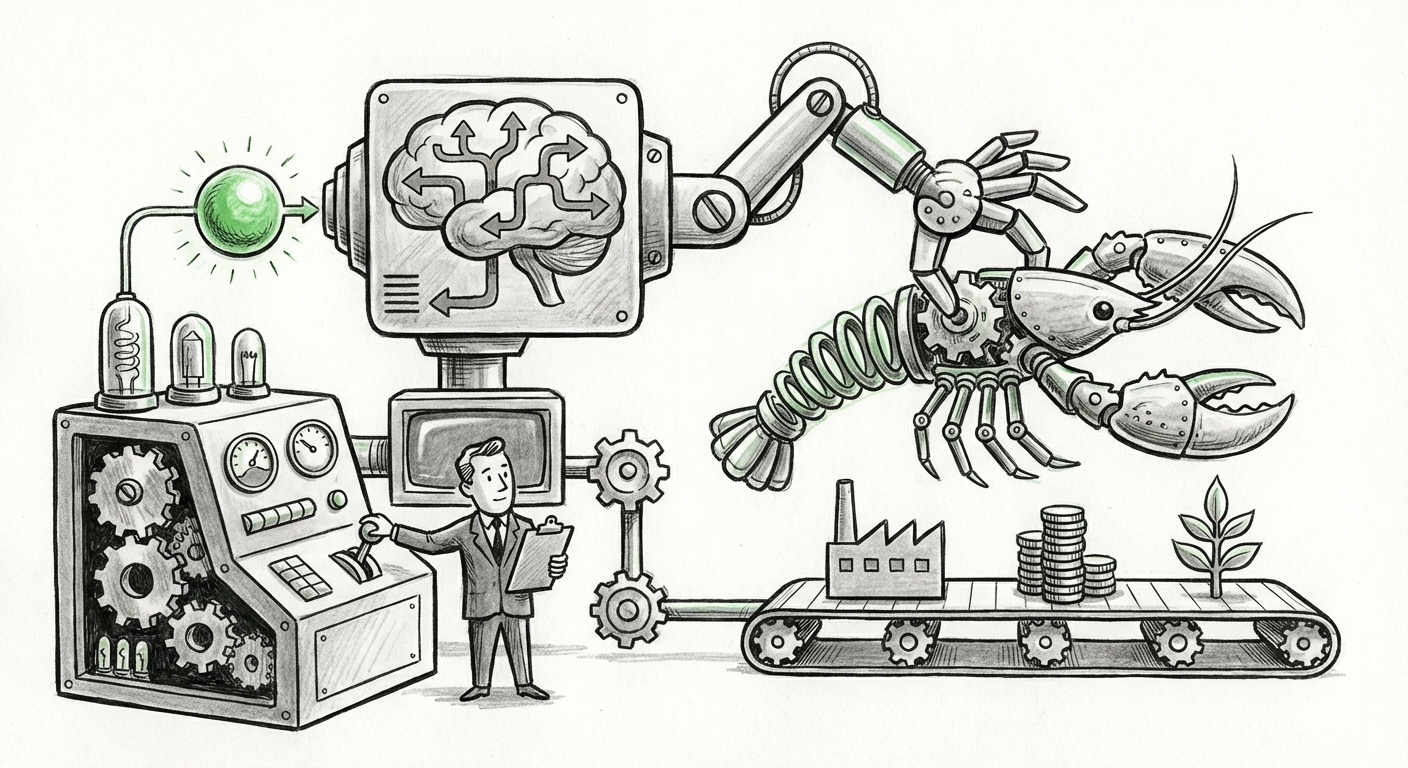
Which of Your Land Leases Expire in 60 Days? The Simple Question That Is Reshaping Enterprise AI
Ask a land manager, a solar developer, a telecom planner, or a farm operator a question that should take ten seconds: which of your land leases expire in the next 60 days? In a surprising number of organizations, the honest answer is a long pause, a shared drive, a scanned PDF, and a spreadsheet that nobody fully trusts.
That gap, between a question anyone can ask and an answer almost no one can produce quickly, is where AI is quietly moving next. Not in chatbots. Not in demos. In the unglamorous work of reading thousands of pages of contracts and surfacing the one date that actually matters this quarter.
This is the story of a small, practical question that turns out to be a very big test of what AI is really good for.
The Question Sounds Easy. It Isn't.
Land leases are the backbone of a huge share of the physical economy. Ground leases under buildings. Rooftop and cell tower leases. Solar and wind farm land agreements. Farmland rentals. Grazing rights. Mineral and pipeline easements. Billboards, parking lots, rail spurs, substations.
Nearly every one of them has a term. Some have renewal windows that close quietly. Some have automatic rollover clauses. Some have notice periods measured in months, not days. Some have rent escalations tied to indexes. Some have multiple amendments stacked on top of each other, each one changing a single line.
And where do those documents live? Usually in a mix of formats:
- Scanned paper from decades ago, sometimes handwritten, sometimes faint.
- PDFs emailed between lawyers, with redlines and attachments.
- Amendments that exist only as side letters.
- Spreadsheets built by someone who has since left the company.
- Local knowledge that lives in one person's head, and retires with them.
So the answer to "what expires in 60 days?" requires reading everything, understanding legal language, and connecting a date buried on page 14 to a business decision happening next month. That is exactly the kind of work traditional software has never been able to do.
What Changed: AI Learned to Read the Boring Stuff
For years, contract analytics tools worked by pattern matching. They looked for keywords, then forced a human to clean up the results. It worked for clean, standardized documents. It fell apart on the messy reality of land records.
Large language models changed the shape of the problem. Instead of searching for a phrase, a model can read a lease the way a junior analyst would, understanding that "the term shall commence upon the Effective Date and continue for a period of twenty (20) years" means something different from "twenty (20) years, with one automatic renewal of ten (10) years unless notice is given."
Three capabilities now combine into something genuinely useful:
1. Extraction into structure
Modern document AI can turn a lease into clean data: parties, parcel identifiers, effective dates, expiration dates, renewal options, notice windows, rent amounts, escalation rules, and termination rights. Not as free text, as fields a system can query and act on.
2. Grounded answers with citations
The best systems do not just say "expires March 15." They show the page and the sentence it came from. That traceability is what makes a legal or finance team willing to trust the output. It is also what separates a useful tool from a liability.
3. Proactive monitoring
This is the real shift. Instead of waiting for a person to ask the question, the system watches the calendar. It knows that a notice deadline is 90 days before a renewal date. It sends the alert before the window closes, not after.
That move, from search to watch, is the difference between a filing cabinet and an early warning system.
Why Land Leases Are the Perfect Stress Test
You can learn a lot about an AI system by what happens when you point it at a portfolio of land leases. The documents are long, inconsistent, legally consequential, and often decades old. There is no clean training set. Errors cost real money.
It is a good test because it forces the technology to be honest about its limits. A model that confidently guesses a date is dangerous. A model that flags uncertainty, points to the source clause, and asks for human review is valuable.
And the stakes are not abstract. A missed renewal window on a key parcel can mean losing access to a site outright. A missed escalation clause can mean years of overpaying rent. A missed notice deadline on a ground lease under a building can put an entire asset at risk. These are not edge cases; they are the routine risks of owning or operating land at scale.
Where the Business Value Actually Shows Up
Strip away the technology and the value comes down to a handful of concrete outcomes.
Fewer surprises
A portfolio-wide calendar of expirations, renewal windows, and notice deadlines turns a reactive scramble into planned work. Teams see what is coming in 30, 60, and 90 days, and can decide what to renew, renegotiate, or walk away from.
Faster due diligence
When a company buys a portfolio of sites, the lease review is often the slowest part of the deal. Machine-readable abstracts can compress weeks into days, and give the deal team a clear picture of which leases are assets and which are liabilities.
Better negotiating position
Knowing that a lease auto-renews in five months, and that the notice window is in seven weeks, changes the conversation. You negotiate from a calendar, not from memory.
Institutional memory that survives turnover
When the knowledge is in the system rather than in one person's head, a retirement or resignation stops being a crisis.
The Failure Modes to Watch For
This is not a "set it and forget it" category. Anyone deploying document AI on land records should go in with eyes open.
- Confident wrong answers. A model that invents a date is worse than no system at all. Insist on source citations and confidence signals.
- Amendment blindness. The original lease is only half the story. A system that reads the base document but ignores side letters and amendments will produce answers that are precisely wrong.
- Ambiguous clauses. Some language genuinely requires legal judgment. The system should route those to a human, not guess.
- Permission and privacy. Lease data often includes personal information and commercially sensitive terms. Access controls need to be as strong as the extraction is good.
- Unverified automation. An alert that fires on a wrong date trains people to ignore alerts. Trust is built slowly and lost instantly.
The pattern that works is straightforward: machine reads everything, human approves anything that triggers an action. AI does the reading at scale; a person signs off on the decision.
The Bigger Shift: Every Industry Has an Expiry Clock
Land leases are the clearest example, but they are not the only one. The same pattern, read a pile of documents, extract the one date that matters, watch the calendar, alert a human, applies almost everywhere.
Contracts with auto-renewal clauses. Insurance policies with notice periods. Supplier agreements with price review dates. Equipment warranties. Regulatory filings with fixed windows. Licenses, permits, certifications, and grants.
Most organizations are sitting on thousands of documents that contain deadlines, and most of them found out about those deadlines the hard way. The shift from "look it up when you need it" to "the system tells you before you need it" is one of the most underrated changes AI is bringing to everyday business operations.
It is also a reminder that the most valuable AI deployments are often not the most dramatic ones. Nobody demos a renewal alert on stage. But the team that avoids losing a critical site because of one missed notice window will remember it.
What This Means for AI's Future
Three things stand out.
First, the winning use cases are narrow and specific. "Answer any question about any document" is a demo. "Which land leases expire in 60 days, with citations" is a product. Specificity is what makes AI reliable enough to trust.
Second, trust is the real product. The technical work of extracting a date is becoming commoditized. The hard part is proving the answer is right, showing where it came from, and knowing when to defer to a human. That is where the durable value sits.
Third, the workforce changes shape rather than disappearing. Land managers and analysts will spend less time hunting through files and more time on judgment: which leases to renew, which terms to fight over, which parcels to exit. The job gets more strategic, not less.
How to Start, Practically
- Pick one question. Start with the 60-day expiration question, or something equally concrete. Resist the urge to boil the ocean.
- Gather the worst documents first. If the system handles the handwritten 1978 lease and the 2019 amendment, it will handle the clean ones.
- Require citations. Every extracted field should point to a page and a clause. No exceptions.
- Build a human review step. Anything that triggers a business action gets a second look by a person.
- Track accuracy, not just speed. Measure how often the system is right, and where it struggles. That data drives everything else.
- Connect it to the calendar. An answer in a dashboard is useful. An alert in someone's inbox 90 days before a deadline is transformative.
The Takeaway
The question "which of your land leases expire in the next 60 days?" sounds mundane. It is actually a near-perfect test of whether an AI system can do something genuinely hard: read messy, high-stakes documents at scale, extract the facts that matter, and act before a deadline slips past.
Organizations that can answer that question instantly have something rare, a clear view of their own obligations. Organizations that cannot are carrying a hidden risk they may not discover until the renewal window has already closed.
The future of AI is not just about models that can write. It is about systems that remember, watch, and warn, and about the quiet, expensive mistakes they help us stop making.